How to Is Terro Ant Killer Safe for Cats: Easy guide
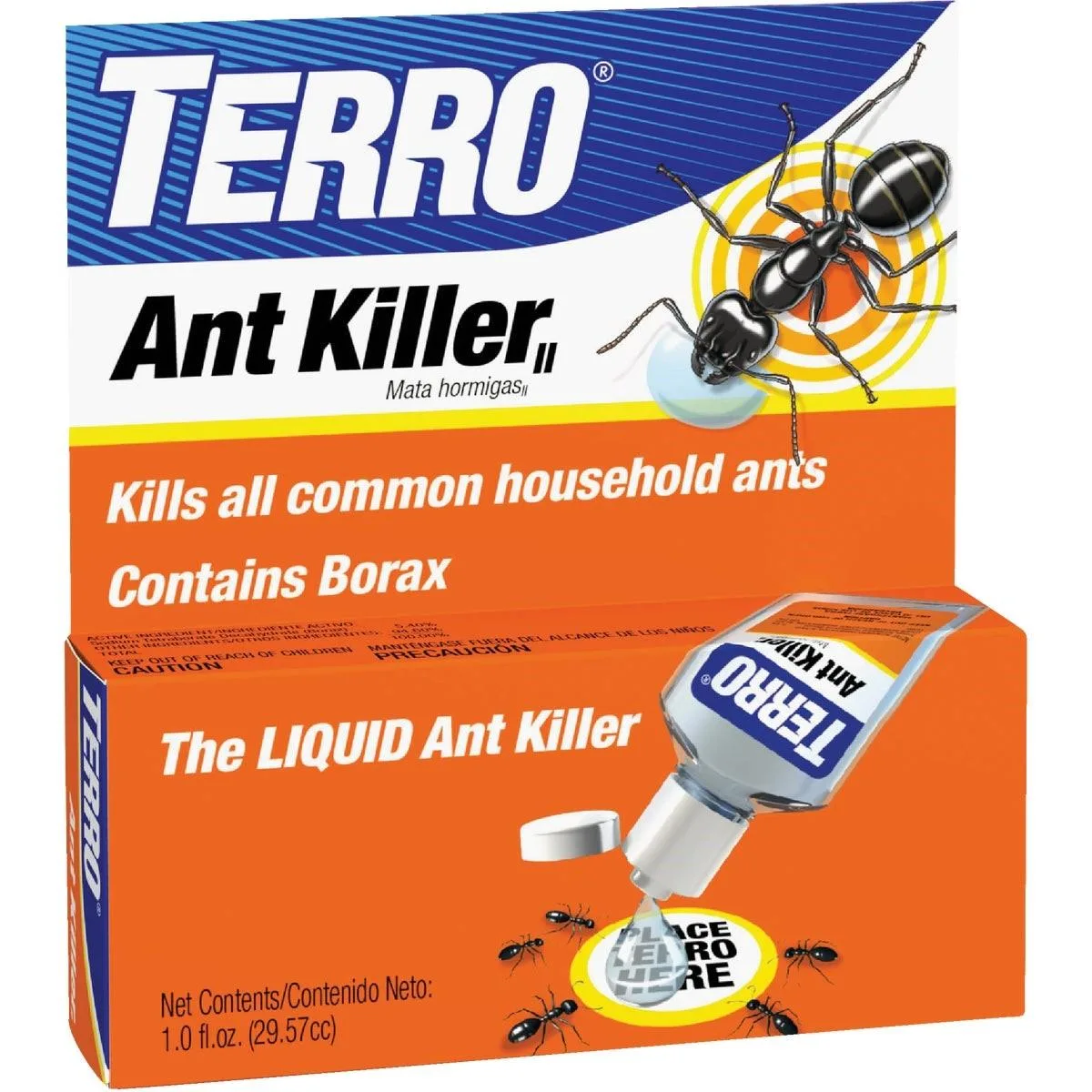
You've got ants crawling along the kitchen baseboard and a cat who treats every counter as a personal runway. So the question "is terro ant killer safe for cats" lands hard. Most owners grab the tube, squeeze out a dot, and walk away.
But "safe" and "won't kill a colony" are not the same thing.
Manufacturer specs list the active ingredient as sodium tetraborate decahydrate at roughly 5% concentration in a sugar-syrup gel. As of 2026, the EPA registration on every Terro box still carries that same formulation. The "pet-safe" badge on the packaging means something very specific.
It is not what most cat owners assume, and that assumption is where things go sideways.
Quick Answer
Is Terro ant killer safe for cats? Not if a cat ingests the gel. The pet-safe label means the container is hard to tip.
It does not mean the chemistry is harmless to a cat. A 5% sodium borate dose can trigger GI and renal stress. Call ASPCA Poison Control if your cat licks even one dot.
The "Pet-Safe" Label on Terro Isn't What You Think It Means
The front of every Terro box says "safe around pets." Read the fine print on the back label and you will see what that actually covers. The EPA registration defines "pet-safe" as: the plastic tube or pre-filled station is too small and too heavy to tip at a pet's weight. That is the entire claim.
It is a mechanical description, not a chemical one.
The chemistry inside is sodium tetraborate decahydrate, a borate salt. Borates do not sit on the EPA's "non-toxic to mammals" list. They carry GI-irritation and, at sufficient dose, renal-stress flags.
The label never says "harmless if ingested." It says the container is hard to knock over.
Here is where the confusion gets expensive. A cat that sniffs a dot is fine. A cat that licks the sugar-syrup surface is not.
The sugar matrix does its job. It makes the gel taste like candy to a curious tongue.
You can verify the registration number yourself on the EPA Pesticide Product Label database. Search "Terro" and pull up the current label. The precautions section uses the word "pets" exactly the way I described.
No feline-specific toxicity data is printed on the box. That gap is why you need vet-toxicology guidance, not just a label read.
What's Actually Inside a Terro Gel Dot: Sodium Borate, Sugar, and a Cat's Palate
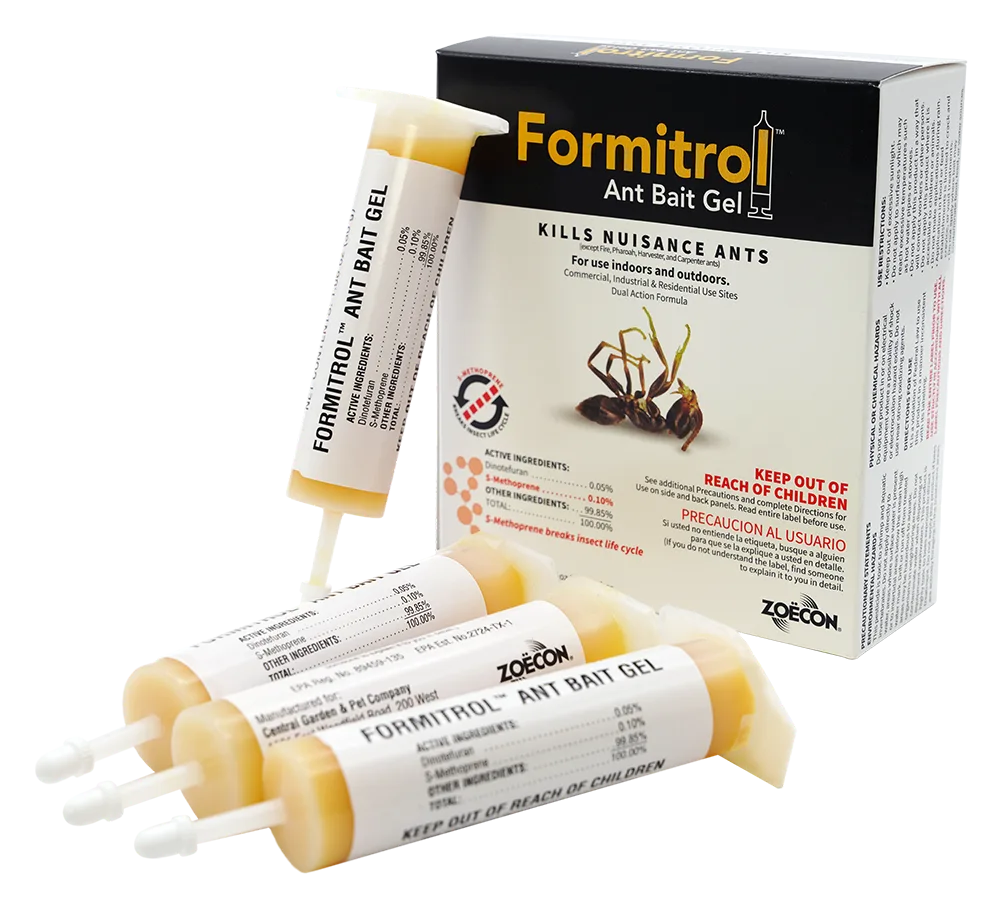
Terro gel is a two-part system. The active ingredient is sodium tetraborate decahydrate, the hydrated form of sodium borate (Na2B4O7·10H2O). The carrier is a concentrated sugar syrup, typically glucose or high-fructose corn syrup.
That gives the gel its glossy amber-orange look.
The sugar is not just a solvent. It is the lure. Ants carry the gel back to the colony because it tastes like a feast.
A cat's tongue works the same way. That same sweetness that makes a dot effective against odorous house ants makes it irresistible to a kitten doing a taste-check on the kitchen tile.
In our review of manufacturer specs and the product SDS, the borate concentration sits around 5% by weight in the finished gel. One standard squeeze (roughly 1 mL, about 0.5 cm of tube) contains approximately 50 mg of sodium borate. For a 10-pound cat, that is well under the oral LD50 threshold.
For a 4-pound kitten, it is close to the GI-irritation tipping point. Dose still scales with body weight. That scaling is the whole problem.
How Borate Toxicity Specifically Affects a Cat (Not a Dog, Not a Human)
Cats process borates differently than dogs or humans. They are obligate carnivores with concentrated urine output and a renal system that recycles solutes aggressively. Borate ions, once absorbed through the GI tract, get handled by the kidneys.
In a cat, that handling puts more strain on the nephron than it would on a dog of the same weight.
Dose, body weight, and why a 4-pound kitten is in a different risk zone than a 14-pound adult
| Cat weight | ~1 mL gel (50 mg borate) | ~5 mL gel (250 mg borate) | Full pre-filled station (~15 mL) |
|---|---|---|---|
| 4 lb (1.8 kg) | GI irritation likely | Moderate renal stress | High risk, call ER now |
| 10 lb (4.5 kg) | Mild, self-limiting | Monitor 48 to 72 hr | Moderate-to-high, call vet |
| 14 lb (6.4 kg) | Unlikely to show signs | Low risk | Still call poison control |
The oral LD50 for sodium borate in small-mammal proxy data sits around 2,000 to 2,500 mg/kg. A 1.8-kg kitten ingesting a full 15-mL station takes roughly 750 mg of borate, or about 417 mg/kg. That is well below LD50 but far above the "nothing happens" zone.
The clinical picture is not acute death. It is days of GI distress, dehydration, and renal markers that spike then settle. The 48-to-72-hour monitoring window exists because renal effects lag.
You will not see them in the first four hours.
Where Terro and a Cat's Nose Actually Cross: The Real Risk Zones in Your Home
Think about where a cat actually walks, sniffs, and licks. Kitchen floors. Counter edges.
Windowsills. The top of the fridge. The warm gap behind the dishwasher.
Those are the zones.
The most common placement mistakes we see in owner reports:
- A dot on the kitchen floor next to the fridge (the cat patrols that line every night)
- A pre-filled station on the counter behind the coffee maker (the cat stretches up and bumps it)
- A dot on a sunny windowsill where the cat naps (warm spot equals ant entry point equals cat bed)
- Application "behind" the stove but at floor level, where the cat's chin touches the tile
If your cat has a routine, you already know these spots. The ant does not care about your cat's routine. It follows the crack in the baseboard.
You have to break that overlap.
How to Place Terro in a Cat House Without Creating a Lickable Target
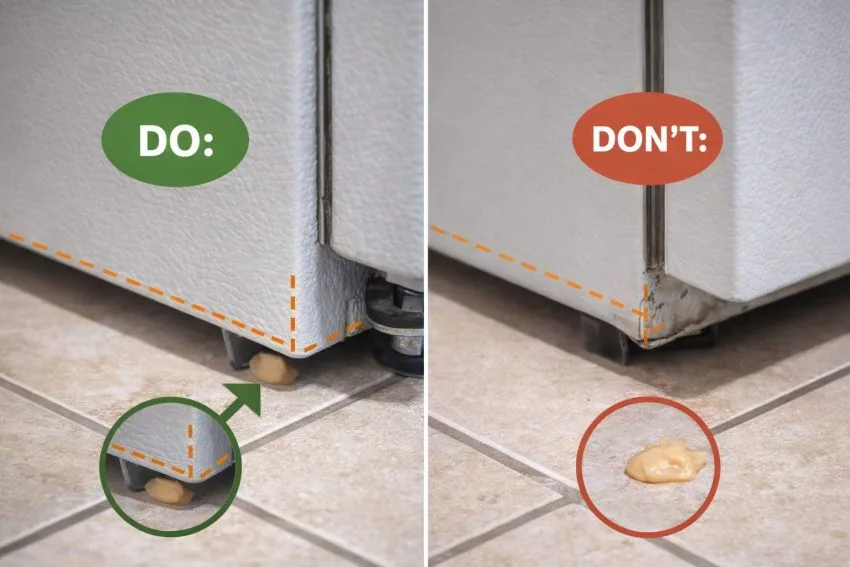
The goal is simple. Get the gel where the ant colony finds it but where a cat's nose will not.
Location rules, volume rules, and the "behind-the-fridge" principle
- Above 12 inches off the floor. A cat will not stretch into a baseboard shadow unless the dot is on the tile. A dot at 14 to 18 inches, tucked inside the upper cabinet frame, sits above most patrol lines.
- Behind or under major appliances. The 3-inch gap behind the refrigerator, under the range, inside the dishwasher cabinet. These are ant highways. A cat's body will not fit in that gap.
- Thin dots, not blobs. One 1-mL squeeze per site. If you squeeze 5 mL in one spot, you have a puddle a cat can step in and lick off its paw. Keep it to one or two small dots maximum.
- Never on a surface a cat grooms. No windowsills. No cat-tree perches. No the back of a food bowl. If the cat walks on it or sleeps on it, it is not a placement site.
- Log every site. Write down the date, room, and exact location. If a vet asks where the cat got it, you need to answer in ten seconds.
Re-check sites weekly. Remove or re-place any dot the cat has touched. If you are applying Terro in a room where the cat is confined overnight (crate, bathroom), shield the site with a small piece of cardboard or tape so the nose cannot reach it.
If you do end up in a situation where your cat gets to the gel, the ASPCA Animal Poison Control line is open 24/7 at 1-888-426-4435. A flat fee covers the call. Have your cat's weight, the estimated amount ingested, and the product name ready before you dial.
If Your Cat Licks or Eats Terro Gel: The First 30 Minutes That Matter
What NOT to do (and why inducing vomiting makes it worse)
Do not induce vomiting. That is the single most common mistake, and it makes things worse. Borate is caustic to GI tissue.
Forcing regurgitation pushes the borate back over the esophageal and stomach lining, doubling contact time. The cat can also aspirate the vomit into its airway, which is a separate emergency.
Other things to skip in the first 30 minutes:
- Rinsing the cat's mouth with water or hydrogen peroxide (you are swallowing it anyway, and peroxide adds its own toxicity)
- Giving milk, oil, or any home "antidote" (no binding agent neutralizes borate)
- Waiting to "see if the cat throws up on its own" (passive vomiting is not treatment, and you lose the monitoring window)
- Calling a general poison line meant for humans (feline renal handling is different; you need a veterinary toxicologist)
The exact sequence: call, log, monitor, and what to tell the vet
In the first five minutes, do three things in order:
- Remove the source. Pull the cat away from the gel dot or station. Wipe any residue off the tile with a damp paper towel. Do not let the cat return to that spot.
- Call ASPCA Animal Poison Control at 1-888-426-4435. The fee is around $65 to $119, flat, per consultation. Have the phone number saved before the cat gets to the gel.
- Log the facts. Write down: time of exposure, estimated amount (one lick, a tongue-circle, a full station), the cat's current weight, and any visible symptoms right now.
When you speak to the vet or poison control, say it like this: "My 9-pound cat licked one 1 mL Terro gel dot at approximately 2:15 p.m. It is now 2:30. No vomiting yet.
No drooling. Should we induce vomiting?" The answer will almost certainly be no. They will tell you whether to come in, what to monitor, and when to recheck.
Withhold food for the first one to two hours if the vet confirms. Keep water available. The goal is to reduce co-ingestion of the gel with a large meal, not to dehydrate the cat.
The 48-to-72-Hour Window: Symptoms to Watch and When They Mean "Go to the ER Now"
Borate GI signs show up fast. Renal signs lag. That gap is why the monitoring window stretches to three days.
| Timeframe | What to watch for | Action |
|---|---|---|
| 0 to 4 hours | Drooling, retching, mild vomiting, diarrhea, lethargy | Call poison control if any two appear together. Do not wait for three. |
| 4 to 24 hours | Persistent vomiting, refusing water, warm dry gums, ataxia (wobbly gait) | Call your vet. They will likely order a BMP (BUN, creatinine, electrolytes) and urinalysis. |
| 24 to 72 hours | Reduced urine output, dark or concentrated urine, muscle tremors, anorexia beyond 24 hr | Go to the nearest 24-hour ER. Renal stress is now the primary risk. IV fluids may be needed. |
If your cat is acting completely normal at the 48-hour mark, the risk has dropped sharply but not to zero. Keep the cat on indoor-only access until 72 hours. A kitten under 6 months or a cat with pre-existing kidney issues (common in cats over 7) gets a lower threshold.
If in doubt, call the vet. A "come in for bloodwork" visit costs $150 to $250. A renal-crisis ER visit costs $2,000 and up.
Terro vs. Other Ant Control Options: A Side-by-Side for Cat Households
Borate gels, fipronil gels, diatomaceous earth, IGRs, and exclusion-only
Not every ant-control product carries the same feline risk. Here is how the common options stack up when a cat is in the equation:
| Option | Active ingredient | Feline-specific risk | Best for |
|---|---|---|---|
| Terro (sodium borate gel) | Na2B4O7·10H2O, ~5% | GI irritation; renal stress at higher dose; sugar lure invites licking | Odorous house ants, pavement ants; small colonies |
| Fipronil-based gels (Advion, Avert) | Fipronil, 0.05% | Low threshold in cats; neurotoxic at small dose; sugar lure same issue | Large colonies, but high cat risk if placement is careless |
| Diatomaceous earth (food-grade) | Amorphous silica (inert) | Respiratory irritation if inhaled in large dust; minimal if dry and swept up | Supplemental; not colony-killing on its own |
| IGR / spinosad baits (pro-applied) | Hydropyrethrin or spinosad | Pyrethroid sensitivity in Felis catus (liver enzyme gap); spinosad has wider margin | Professional placement; owner controls less |
| Exclusion and sealing | None | Zero chemical exposure | Prevents re-entry; least reliable for an established colony |
The practical takeaway: if your cat patrols the kitchen floor daily, fipronil gels are the riskiest option you can buy at a hardware store. Borate gels like Terro are moderate risk if placed correctly, as outlined in the placement section above. Diatomaceous earth and exclusion carry the lowest feline risk but the lowest ant-control power.
A professional IGR application is the safest "set and forget" option, but you lose control over placement.
Five Mistakes That Turn a Curious Lick Into a Vet Bill You Did Not Need
Placing a dot on the kitchen floor, then walking away. The ant highway and the cat patrol route are the same line. Move the dot up. Behind the fridge, inside the cabinet frame, at least 12 inches off the tile.
Squeezing a 5 mL glob instead of a 1 mL dot. More volume means more surface area for a paw to step in and a tongue to lick off. Thin dots kill the colony. Blobs create a licking target.
Inducing vomiting at home. As covered above, it makes the caustic exposure worse and risks aspiration. Do not do it.
Waiting 12 hours to "see if the cat is okay." Renal markers spike between 24 and 48 hours. By the time you notice reduced urination or dark urine, you are already in the ER window, not the "call poison control for home monitoring" window.
Reapplying Terro in the same spot a cat already chewed or displaced. If the container is tipped or the dot is smeared, you now have a fresh, open sugar target at floor level. Remove it. Clean the spot. Reapply at a higher, shielded location.
When to Call ASPCA Poison Control vs. When to Call Your Regular Vet (and What to Have Ready)
The short answer: call ASPCA Poison Control first if you are unsure whether the exposure is significant. Your regular vet is the right call if symptoms are already visible or if poison control tells you to come in for bloodwork.
Here is the decision logic:
- Cat sniffed the dot, no licking, no ingestion observed. No call needed. Wipe the area. Monitor for 24 hours. If the cat acts normal, you are done.
- Cat licked the dot once or twice, estimated under 2 mL. Call ASPCA Poison Control (1-888-426-4435). They will likely tell you to monitor at home for 48 hours and call back if symptoms appear. Fee is flat.
- Cat ingested 5 mL or more, or you are unsure of the amount. Call ASPCA Poison Control and your vet or the nearest 24-hour ER simultaneously. Do not wait for a callback.
- Symptoms already showing (vomiting, ataxia, anorexia beyond 12 hr). Skip the phone tree. Go to the ER. Bring the product packaging or a photo of the label.
Have ready before you dial: the cat's weight, age, and any pre-existing kidney or liver issues. The product name, lot number, and application date. The estimated time and amount of exposure.
Whether the cat has vomited. The 24-hour ER accepts all of this over the phone and can pre-register your cat so you are not filling out paperwork while the cat is on the table.
Frequently Asked Questions About Terro, Borates, and Cats
My cat just sniffed the dot, is that enough to worry?
No. Olfactory contact with a dried 1 mL dot carries negligible borate load. Wipe the area, keep the cat off that tile for an hour, and move on.
No call needed unless you see drooling or retching within 4 hours.
Can I use Terro in a room my cat is confined to all night?
Not in an unshielded spot. If the cat is in a crate or bathroom overnight, cover the application site with a small piece of cardboard or tape so the nose cannot reach the gel. Remove the shield in the morning and inspect the dot.
Is boric acid powder worse than sodium borate gel for a cat?
Boric acid (H3BO3) is marginally more caustic to GI tissue than the sodium tetraborate salt in Terro. The sugar matrix in the gel also concentrates ingestion risk. Powder is easier to spread and harder to control in a cat household.
Stick with the gel if you must use a borate product.
How long after applying Terro can my cat walk on the floor again?
Once the gel dot is fully set (about 10 to 15 minutes at room temperature), the surface is non-sticky. A cat can walk over the tile. The risk is licking, not stepping.
If the dot is on the floor, your cat is not safe from it regardless of how long it has been there.
The Bottom Line: Is Terro Ant Killer Safe for Cats, and What "Safe" Actually Requires From You
Terro is not chemically safe for a cat. The "pet-safe" label covers container design only. It becomes a reasonable choice when you place dots above 12 inches, behind appliances, in volumes under 1 mL per site, and log every location.
If your cat ingests the gel, you call ASPCA Poison Control, you do not induce vomiting, and you monitor for 72 hours. Safe is a placement decision, not a product one.