Best Solar Powered Bug Zapper: Top 5 Outdoor Picks
The best solar powered bug zapper should offer reliable solar charging, strong electric protection, weather resistance, and easy outdoor placement.
A warm evening on an American patio should be relaxing. But mosquitoes, flies, and other flying insects can quickly spoil dinner or a backyard gathering. Running an electric bug zapper also means dealing with outdoor outlets and extension cords. A solar model can make things easier. It uses sunlight to recharge its battery and gives you more freedom to place it around a yard, garden, campsite, or pool area. I compared five solar bug zappers based on their listed features, charging options, voltage claims, and outdoor designs. Here is what stands out and what I would consider before buying.
🏆 Top 3 Products

Solar Bug Zapper 4500V With Dual LEDs
Its listed one-acre coverage, dual LEDs, and flexible stake-or-hang design make it a strong choice for larger outdoor spaces.
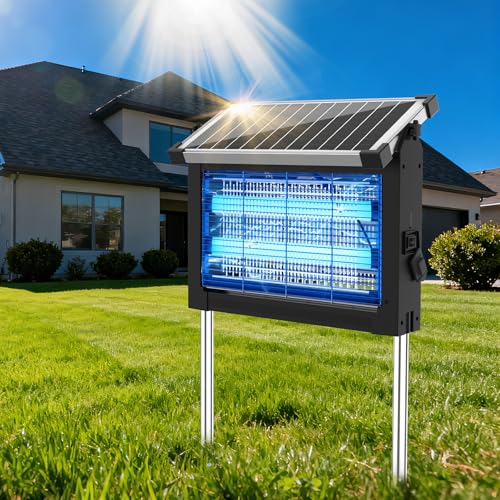
OnBeam Solar Bug Zapper With 10W Panel
The listed 10W solar panel, USB-C charging, and IPX5 rating offer a useful mix of charging and outdoor protection features.

Solar Bug Zapper With 4500V Protection
Its cordless design, rechargeable battery, waterproof claim, and advertised half-acre coverage make it a practical option to consider.
Solar Bug Zapper 4500V Outdoor
This solar bug zapper is designed for people who want outdoor insect control without a permanent power connection. Its product listing highlights a 4500V electric grid, solar charging, and a rechargeable battery. It also advertises coverage of up to half an acre. That makes it worth considering for a small yard, patio, garden, or outdoor seating area. The cordless design gives you more freedom when choosing where to put it.
I like the idea of having a solar charging option for a device that may run during the evening. You can place the unit where it receives direct sunlight during the day and move it when needed. The listing also describes it as waterproof and portable. However, I would check the exact weather protection instructions before leaving it outside during heavy rain. The advertised coverage should also be treated as a manufacturer’s claim rather than a guaranteed result.
✅ Pros
- ✔ Solar charging can reduce the need for a wall outlet.
- ✔ A rechargeable battery supports cordless outdoor use.
- ✔ The listed 4500V grid provides electric insect-killing action.
- ✔ Advertised half-acre coverage may suit many residential outdoor areas.
- ✔ Portable construction makes placement more flexible.
- ✔ The waterproof claim makes it worth considering for outdoor use.
- ✔ It can fit patios, gardens, backyards, and camping setups.
- ✔ A cordless design avoids the need for long extension cords.
- ✔ Solar charging can help reduce routine electricity use.
- ✔ The electric grid offers a direct way to kill insects that reach it.
⚠️ Cons
- ✖ The advertised half-acre coverage may not reflect real-world mosquito control.
- ✖ Solar charging depends on sunlight and weather conditions.
- ✖ The supplied listing does not state the battery capacity or exact runtime.
- ✖ The waterproof claim does not establish protection against every type of storm.
- ✖ A solar panel may need several hours of direct sunlight to recharge.
- ✖ Electric grids need regular cleaning to remove dead insects.
My Recommendation
I would consider this model for someone who wants a simple solar powered bug zapper for a residential outdoor space. Its main attraction is the combination of a rechargeable battery, cordless operation, and advertised half-acre coverage. The 4500V rating also gives shoppers a clear idea of the claimed electric grid voltage. Before buying, I would confirm the battery capacity, charging time, and actual weather-use instructions. I would not rely on the coverage figure alone when planning mosquito control. Mosquitoes often respond more to body heat, carbon dioxide, and other cues than to light. For better results, I would place this zapper away from the main seating area and combine it with basic mosquito prevention.
| Best For | Why |
|---|---|
| Small Backyards | The advertised half-acre coverage offers a useful starting point for outdoor placement. |
| Cordless Outdoor Use | Its rechargeable battery and solar charging reduce dependence on outdoor outlets. |
| Garden Owners | Its portable design gives users more options for placing the unit near garden areas. |
Solar Bug Zapper With USB-C Charging

This solar bug zapper combines a 4500V electric grid with solar and USB-C charging. Its product title also lists automatic on/off operation, waterproof construction, and a portable cordless design. These features make it an interesting choice for people who use patios, backyards, and campsites. The two charging methods are especially useful because sunlight is not always available when you need it. USB-C charging gives you another way to prepare the unit before an outdoor event.
The automatic on/off feature may help simplify daily use. Instead of switching the unit manually every time, users can take advantage of its automatic operating mode if the controls support that function as described. I also like the flexibility of having both solar and wired charging options. Still, I would check the instructions to understand how the automatic mode works and whether it uses a light sensor or another control. The listing does not provide enough information to confirm battery size, charging speed, or nighttime runtime.
✅ Pros
- ✔ Offers both solar and USB-C charging options.
- ✔ The listed 4500V grid provides electric insect control.
- ✔ Automatic on/off operation may make daily use easier.
- ✔ Cordless construction allows flexible outdoor placement.
- ✔ The waterproof claim makes it suitable for consideration as an outdoor device.
- ✔ Portable construction can help with camping and travel.
- ✔ USB-C charging provides an alternative when sunlight is limited.
- ✔ It can be considered for patios, gardens, and backyard seating areas.
- ✔ Rechargeable operation avoids constant dependence on disposable batteries.
- ✔ The automatic mode may reduce the need for repeated manual switching.
⚠️ Cons
- ✖ The product title does not state its exact battery capacity.
- ✖ No verified runtime is included in the supplied specifications.
- ✖ The automatic mode may offer limited control over operating hours.
- ✖ USB-C charging still requires access to a suitable power source.
- ✖ The listing does not provide a clear coverage figure.
- ✖ The waterproof description does not explain every weather-use limitation.
My Recommendation
This model is worth considering if you want a solar powered bug zapper with a backup charging method. I see its solar and USB-C combination as its biggest advantage. Solar power can support regular outdoor use, while USB-C can help when cloudy weather reduces charging. Automatic on/off operation may also suit people who prefer a simple setup. I would choose it for a patio, garden, or campsite where flexible charging matters more than a stated large coverage area. Before purchasing, I would look for clear information about battery capacity, automatic mode settings, and operating time.
| Best For | Why |
|---|---|
| Frequent Campers | Solar and USB-C charging provide two ways to prepare the unit for outdoor use. |
| Patio Owners | Automatic operation and cordless construction can make everyday placement easier. |
| Flexible Charging | USB-C offers a backup option when sunlight is not enough. |
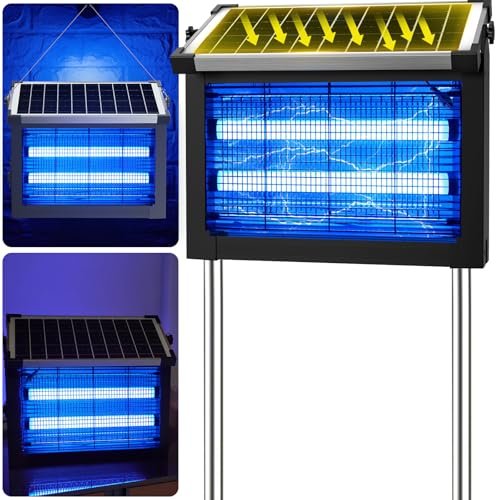
4500V Solar Bug Zapper With Dual LEDs
This model stands out because its listing advertises up to one acre of coverage and includes dual LEDs. It also features a 4500V electric grid, solar charging, and a rechargeable battery. Its portable design supports both staking and hanging, which gives users more placement choices. These features make it an interesting option for larger yards, gardens, pool areas, and outdoor gathering spaces. The combination of two LEDs and flexible mounting gives it a different approach from simpler solar bug zappers.
I would pay close attention to its placement options when comparing it with other models. A stake can help position the unit in an open garden area, while a hanging setup may work near a suitable outdoor structure. The automatic mode may also make regular operation easier. However, the advertised one-acre range needs careful interpretation. It does not mean every mosquito within that area will fly toward the device. The real results will depend on insect behavior, surrounding light, wind, placement, and the number of competing attractions.
✅ Pros
- ✔ Advertises up to one acre of coverage.
- ✔ Dual LEDs provide two light sources in the listed design.
- ✔ The 4500V grid offers electric insect-killing action.
- ✔ Solar charging can reduce the need for regular outlet access.
- ✔ Rechargeable construction supports cordless operation.
- ✔ Stake and hanging options provide flexible placement.
- ✔ Automatic mode may make operation more convenient.
- ✔ The waterproof claim supports consideration for outdoor settings.
- ✔ Portable construction can suit gardens and camping areas.
- ✔ The design offers more placement choices than a fixed plug-in unit.
⚠️ Cons
- ✖ The one-acre coverage figure is an advertised claim, not a guaranteed control area.
- ✖ The listing does not provide the exact battery capacity.
- ✖ Dual LEDs do not guarantee better mosquito attraction.
- ✖ Solar charging performance may drop during cloudy periods.
- ✖ Stake or hanging installation may require choosing a suitable location.
- ✖ The supplied details do not confirm exact runtime or charging time.
My Recommendation
I would put this model near the top of my comparison for shoppers who need flexible outdoor placement. Its advertised one-acre coverage is the largest stated range among the supplied products. The dual LEDs, 4500V grid, and stake-or-hang design also make its feature list attractive. I especially like the choice between ground placement and hanging. However, I would not buy it based only on the one-acre figure. A bug zapper works best when its location matches insect activity. I would place it away from people, doors, and food areas, then check how well it performs over several evenings. Based on the listed features, it is my overall top pick in this group.
| Best For | Why |
|---|---|
| Large Outdoor Areas | Its advertised one-acre coverage makes it an interesting option for larger properties. |
| Garden Placement | The stake design allows users to position it in suitable open areas. |
| Flexible Installation | The listed hanging and staking options offer more placement freedom. |
Solar Bug Zapper With USB Charging

This solar bug zapper offers another combination of solar and backup charging. Its listing highlights a 4500V grid, waterproof construction, and advertised one-acre coverage. It also includes USB charging and automatic and manual operating modes. These features may appeal to people who want more control over how their outdoor insect trap works. The rechargeable design can also reduce the need to keep replacing batteries.
I find the automatic and manual mode combination useful in theory because different outdoor situations call for different operating habits. Automatic operation may suit regular use, while manual control can help when you want to decide exactly when the unit runs. USB charging also provides another option when solar charging falls short. Still, I would check whether the battery can support a full evening after a cloudy day. The supplied product details do not confirm the charging time, battery size, or exact runtime.
✅ Pros
- ✔ Offers solar charging for outdoor use.
- ✔ USB charging provides a second charging method.
- ✔ The listed 4500V grid offers electric insect control.
- ✔ Advertises coverage of up to one acre.
- ✔ Automatic and manual modes provide operating flexibility.
- ✔ Rechargeable construction supports cordless placement.
- ✔ The waterproof claim makes it worth considering for outdoor locations.
- ✔ Suitable for consideration around patios and gardens.
- ✔ Manual operation may suit users who prefer direct control.
- ✔ Solar charging can help reduce reliance on household electricity.
⚠️ Cons
- ✖ The one-acre coverage claim is not a guarantee of mosquito removal.
- ✖ The listing does not state the exact battery capacity.
- ✖ USB charging requires access to a compatible power source.
- ✖ No confirmed runtime is included in the supplied product information.
- ✖ Solar charging may be slow in shaded or cloudy conditions.
- ✖ The automatic and manual settings may require some initial setup.
My Recommendation
I would consider this product for someone who wants both automatic and manual control. Its solar and USB charging options also offer more flexibility than a solar-only design. The advertised one-acre coverage makes it interesting for gardens and larger outdoor spaces. However, I would compare its battery specifications with other models before making a final choice. A large coverage claim means little if the battery cannot support the operating schedule you need. If the manufacturer provides clear charging and runtime information, this model could be a useful option for a patio or backyard.
| Best For | Why |
|---|---|
| Users Who Want Control | Automatic and manual modes offer different ways to operate the zapper. |
| Larger Gardens | Its advertised one-acre coverage may suit larger outdoor spaces. |
| Backup Charging | USB charging provides an alternative to solar power. |
OnBeam Solar Bug Zapper With 10W Panel
The OnBeam solar bug zapper is an interesting choice for people who pay close attention to charging hardware. Its listing highlights a 10W solar panel, a 4500V electric grid, and an IPX5 waterproof rating. It also supports USB-C charging and automatic operation. These features make it suitable for comparison with other rechargeable outdoor bug zappers. The 10W panel is a useful detail because it gives buyers a stated solar panel power rating instead of a vague solar charging claim.
I particularly like the combination of a solar panel and USB-C charging. A solar panel can recharge the battery during sunny periods, while USB-C can help when the weather does not cooperate. The listed IPX5 rating also gives shoppers a clearer starting point for understanding water resistance. However, IPX5 does not mean the product can remain underwater or withstand every possible outdoor condition. I would still follow the manufacturer’s instructions for rain, storage, cleaning, and long-term exposure.
✅ Pros
- ✔ Features a listed 10W solar panel.
- ✔ USB-C charging provides a convenient backup option.
- ✔ The 4500V grid offers electric insect-killing action.
- ✔ IPX5 water resistance is a more specific protection claim than a general waterproof label.
- ✔ Automatic mode may simplify regular operation.
- ✔ Rechargeable construction supports cordless use.
- ✔ Solar charging can reduce dependence on outdoor power outlets.
- ✔ The stated panel wattage helps shoppers compare solar hardware.
- ✔ Suitable for consideration in gardens and patio areas.
- ✔ Two charging methods offer more flexibility during changing weather.
⚠️ Cons
- ✖ The supplied product title does not state the exact battery capacity.
- ✖ A 10W panel does not guarantee a specific charging time.
- ✖ USB-C charging still needs a compatible power source.
- ✖ IPX5 does not mean the unit is fully waterproof or submersible.
- ✖ The supplied information does not state a confirmed coverage area.
- ✖ Actual solar charging depends on sunlight, panel position, and weather.
My Recommendation
I would recommend comparing this OnBeam model closely if solar charging is your main priority. The 10W panel is its most notable listed feature. It gives shoppers a useful specification to consider when comparing solar powered bug zapper options. I also like the addition of USB-C charging because it offers another way to recharge the battery. The IPX5 rating provides a clearer water-resistance reference, although it does not remove the need for proper care. I would choose this model for a patio, garden, or backyard where the panel can receive good sunlight. Before buying, I would check the full battery and runtime details.
| Best For | Why |
|---|---|
| Solar Charging Focus | The listed 10W panel gives buyers a clear solar hardware specification. |
| USB-C Users | The extra charging method offers flexibility when sunlight is limited. |
| Outdoor Patio Use | Its IPX5 rating and automatic mode make it worth considering for suitable outdoor placement. |
Final Verdict: Which Should You Buy?
After comparing these five options, the dual LED 4500V solar bug zapper is my top pick based on its listed one-acre coverage, rechargeable design, and stake-or-hang installation. The OnBeam model is another strong choice for shoppers who value its 10W panel, USB-C charging, and IPX5 rating. The half-acre model is worth considering for smaller outdoor spaces. I would compare battery capacity and runtime before making a final purchase.
The best solar powered bug zapper should match your yard, sunlight, and charging needs. Compare weather protection, battery life, placement, and maintenance before buying. Use it with basic mosquito prevention for better outdoor comfort.
FAQs Of best solar powered bug zapper
Q Does a solar powered bug zapper work at night?
Q How long does it take to charge a solar bug zapper?
Q Is a 4500V solar bug zapper powerful enough?
Q Can I leave a solar bug zapper outside in the rain?
Q Where should I place a solar powered bug zapper?
Q Do solar bug zappers kill mosquitoes?
Q Are solar powered bug zappers safe around pets?
Q Is a solar bug zapper better than a plug-in bug zapper?