Best Carpenter Ant Traps: My Top Picks For 2026
**My top pick is BASF Advance Carpenter Ant Bait Granules for targeted carpenter ant control, while bait stations offer simple options for indoor ant activity.**
You spot large black ants near your kitchen, deck, or window frame. At first, you may think they are just looking for food. Then you notice them again near a damp wall or wooden beam. Carpenter ants can nest in moist or damaged wood, so this problem needs care. The best carpenter ant traps can help control some ant activity, but not every bait works for every ant. I compare five options to help you choose a practical product for your home. I also explain when bait alone may not solve the problem.
🏆 Top 3 Products

BASF Advance Carpenter Ant Bait Granules
This product is made for carpenter ant control, making it the most targeted choice in this group.

TERRO Outdoor Liquid Ant Bait Stakes
These ready-to-use stakes offer a simple way to place liquid bait outdoors where the label allows.

48-Pack Slow-Acting Carpenter Ant Bait Stations
The large pack may suit people who need many bait points, provided the product label and quality meet their needs.
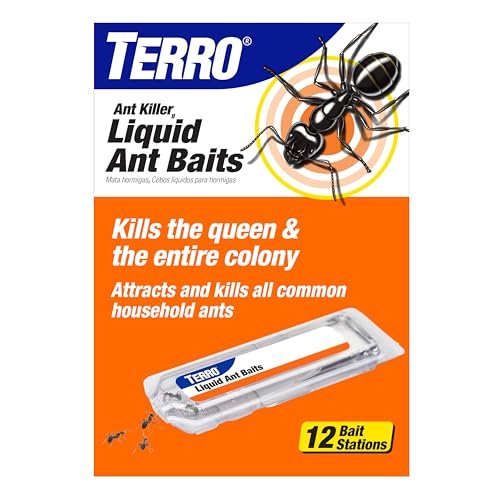
TERRO Liquid Ant Killer Bait Stations, 12-Pack

TERRO Liquid Ant Killer Bait Stations offer a simple way to place bait around the home. Each station holds liquid bait that attracts ants that feed on it. Worker ants can carry food back to other ants in the colony. This makes bait different from a spray that kills only the ants it touches.
I would consider this 12-pack for small indoor ant problems, such as activity near a kitchen or pantry. Still, these stations are not made only for carpenter ants. Carpenter ants may prefer other food sources, so results can vary. If you suspect a nest inside a wall or a damp wooden frame, do not rely on these stations alone.
✅ Pros
- ✔ Ready to use with little setup.
- ✔ Offers several stations for different areas.
- ✔ Liquid bait can attract ants that prefer sweet food.
- ✔ Can help workers carry bait back toward the colony.
- ✔ Useful for monitoring ant activity indoors.
- ✔ Small stations are easy to place near ant trails.
- ✔ Does not require mixing or measuring bait.
⚠️ Cons
- ✖ Not designed specifically for carpenter ants.
- ✖ May fail if the ants do not feed on the liquid bait.
- ✖ Liquid bait can spill if a station breaks or tips.
- ✖ Must stay away from children, pets, food, and food surfaces as directed by the label.
- ✖ Cannot repair wood damage or remove a hidden nest.
My Recommendation
I recommend this TERRO 12-pack for people who want a simple indoor bait option for common household ants. It may help when ants accept sweet liquid bait, but I would not make it my first choice for a confirmed carpenter ant problem. Watch the trail and check the product label before use. If large ants keep coming from a wall, ceiling, or damp wood, inspect the area and consider a licensed pest control professional.
| Best For | Why |
|---|---|
| Small indoor ant trails | The ready-to-use stations are easy to place near visible activity. |
| People who want simple setup | There is no need to mix or measure the liquid bait. |
| Monitoring ant activity | The stations can help show whether ants visit the bait. |
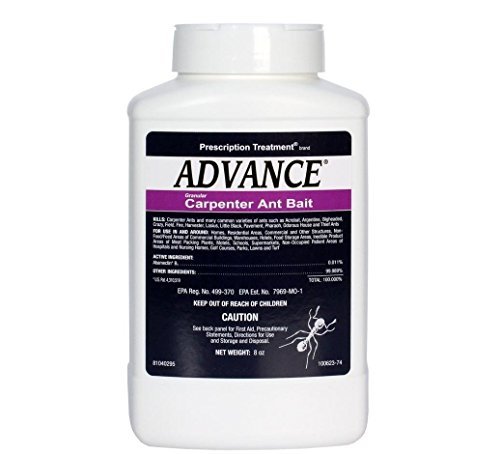
BASF Advance Carpenter Ant Bait Granules
BASF Advance Carpenter Ant Bait Granules stand out because the product is made for carpenter ant control. The granule form gives users another option beyond small liquid bait stations. It may be useful where ants forage outdoors or in other areas allowed by the label. Always read the current package directions before you apply it.
Carpenter ants do not eat wood like termites do. They make nests in wood and push out small bits as they dig. Damp wood, leaks, and decayed timber can make a home more inviting. A suitable bait may help control ants that feed on it, but bait alone may not reach every nest. I would pair proper bait use with a search for moisture and likely nesting sites.
✅ Pros
- ✔ Designed for carpenter ant control.
- ✔ Granules offer an alternative to liquid bait stations.
- ✔ Ready-to-use format can reduce preparation time.
- ✔ May suit outdoor foraging areas when allowed by the label.
- ✔ Can be useful as part of a wider pest control plan.
- ✔ Targets ants that accept and carry the bait.
- ✔ The product type is more closely matched to carpenter ants than general sweet ant bait.
⚠️ Cons
- ✖ Granules may not work if local ants do not accept them.
- ✖ Weather and site conditions can affect outdoor bait use.
- ✖ Users must follow the label for placement, amount, and safety.
- ✖ It will not fix leaks or replace damaged wood.
- ✖ A large or hidden nest may need professional treatment.
My Recommendation
Of these five options, I would start by checking BASF Advance Carpenter Ant Bait Granules for a confirmed carpenter ant problem. Its stated purpose makes it the most directly relevant choice in this group. Use it only in the places and ways listed on its label. If you see ants indoors, find the entry point and inspect nearby wood for moisture or damage. For steady activity, piles of wood shavings, or ants emerging from a wall, seek professional help.
| Best For | Why |
|---|---|
| Carpenter ant control | The product is specifically presented as carpenter ant bait. |
| Outdoor foraging areas | The granule format may fit suitable outdoor sites listed on the label. |
| A targeted pest control plan | It can be used alongside moisture repair and nest inspection. |
TERRO Liquid Ant Killer Bait Stations, 18-Count

The TERRO 18-count bait station pack follows the same basic idea as the smaller TERRO option. It gives you more stations to place where ants travel, as long as the label allows those locations. This can help when several rooms or entry points show ant activity. The extra count may also make it easier to keep replacement stations ready.
More stations do not always mean better carpenter ant control. The ants must find the bait and choose to feed on it. Carpenter ants may seek insects, protein, or other food instead of sweet liquid bait. I would use this product only when it suits the ant activity I see, and I would switch strategies if the ants ignore it.
✅ Pros
- ✔ Includes 18 ready-to-use bait stations.
- ✔ Offers more placement options than a smaller pack.
- ✔ Requires no mixing.
- ✔ Can help track whether ants visit a bait point.
- ✔ Useful for several indoor areas when permitted by the label.
- ✔ Liquid bait can suit ants that prefer sweet food.
- ✔ May be convenient for households that need multiple stations.
⚠️ Cons
- ✖ Not a carpenter-ant-specific bait.
- ✖ Ants may ignore the liquid if they prefer other food.
- ✖ More stations can be wasteful if only one area needs treatment.
- ✖ Stations need safe placement and regular checks.
- ✖ Bait cannot correct the damp wood or hidden nest that may support carpenter ants.
My Recommendation
I would choose the 18-count TERRO pack when I need several indoor bait points for ants that readily take sweet liquid bait. It may be more convenient than buying a small pack and then running out. However, I would not assume that a larger pack is more effective against carpenter ants. Check the label, observe whether ants feed, and focus on finding the nest if large ants keep appearing in the same spot.
| Best For | Why |
|---|---|
| Homes with several ant trails | The larger count gives more options for placing bait stations. |
| People who prefer ready-made bait | The stations need no mixing or special tools. |
| Comparing bait activity | Separate stations can help show which areas ants visit. |
48-Pack Slow-Acting Carpenter Ant Bait Stations
This 48-pack is marketed as a slow-acting carpenter ant bait station set for indoor and outdoor use. The large count may appeal to people who want many bait points around a property. The listing also mentions gel bait and dual-sided tape. Before buying, I would check the full label and seller details to confirm the allowed locations and directions.
Slow-acting bait may give worker ants time to carry food back toward other ants. Yet the number of stations alone does not prove that a product works well. I would look for clear ingredient details, a valid label, safe-use directions, and reliable seller information. If those details are unclear, a better-documented product may be the safer choice.
✅ Pros
- ✔ Large pack may cover many bait points.
- ✔ Marketed for carpenter ant control.
- ✔ Slow-acting bait may allow time for ants to carry it back.
- ✔ The listed station design may make placement simple.
- ✔ Dual-sided tape may help secure stations where the directions allow.
- ✔ Can be useful for people managing several activity areas.
- ✔ Ready-to-use stations may reduce setup work.
⚠️ Cons
- ✖ A large pack may be more than one home needs.
- ✖ Product details and label information should be checked before purchase.
- ✖ The listing alone does not prove the bait will attract every carpenter ant colony.
- ✖ Indoor and outdoor use must match the product’s actual label.
- ✖ Tape does not replace safe placement or prevent all access by children and pets.
- ✖ Hidden nests and moisture damage may still need separate treatment.
My Recommendation
I would consider this pack only after checking its current label, active ingredient, seller, and permitted use sites. The large count may suit a property with many separate ant trails, but it is not automatically the best value. For carpenter ants, the right bait and proper placement matter more than the number of stations. If the product lacks clear instructions or reliable details, I would choose a well-documented option instead.
| Best For | Why |
|---|---|
| Properties with many activity points | A 48-pack may offer enough stations for multiple sites if the label allows. |
| People comparing bulk bait options | The pack size makes it possible to compare cost per station. |
| Buyers willing to check product details | Reviewing the label and seller information helps avoid unsuitable bait. |
TERRO Outdoor Liquid Ant Bait Stakes, 12-Pack
TERRO Outdoor Liquid Ant Bait Stakes offer a simple way to place bait outside. The stake format can keep the bait in a set spot near outdoor ant activity. A 12-pack gives you several units to use where the label permits. This may help when ants forage near a patio, path, or the outside of a home.
Outdoor bait can help reduce some ant activity, but carpenter ants often nest in wood rather than soil alone. The ants may travel from a nest in a tree, stump, deck, or damp part of a building. I would use these stakes only for the types of ants and sites covered by the label. Keep them away from children, pets, food gardens, and other sensitive areas as directed.
✅ Pros
- ✔ Designed for outdoor bait placement.
- ✔ Ready-to-use stake format is simple to set up.
- ✔ A 12-pack offers several placement options.
- ✔ Can help target outdoor foraging activity.
- ✔ May be useful near permitted entry areas.
- ✔ Does not require mixing liquid bait.
- ✔ Can form part of a wider home pest control plan.
⚠️ Cons
- ✖ Not a carpenter-ant-specific product.
- ✖ May not attract ants that do not prefer the bait.
- ✖ Outdoor conditions can affect bait performance.
- ✖ Cannot remove a nest hidden inside a wall or wooden beam.
- ✖ Placement must follow the label to protect children, pets, and wildlife.
My Recommendation
I would choose these stakes for outdoor ant activity when a ready-to-use liquid bait fits the problem. They may be convenient around a yard or near an exterior ant trail, subject to label directions. For carpenter ants, I would also inspect nearby trees, stumps, decks, and damp wood. If ants enter the home or keep returning, use a carpenter-ant-specific plan rather than relying on outdoor stakes alone.
| Best For | Why |
|---|---|
| Outdoor ant trails | The stake design gives you a set location for bait placement. |
| Simple yard treatment | The ready-to-use format avoids mixing or measuring. |
| Exterior monitoring | Checking the stakes can help show whether ants visit the bait. |
Final Verdict: Which Should You Buy?
My top choice among these products is BASF Advance Carpenter Ant Bait Granules because it is specifically marketed for carpenter ant control. TERRO outdoor stakes may suit outdoor trails, while TERRO liquid stations offer a simple option for ants that accept sweet bait. Check labels and placement rules before use.
The best carpenter ant traps work best as part of a wider plan. Find the ant trail, repair leaks, remove damaged wood, and inspect likely nesting sites. If ants keep returning, contact a licensed pest control professional.
FAQs Of best carpenter ant traps
Q What are the best carpenter ant traps?
Q Do carpenter ant traps really work?
Q Where should I place carpenter ant bait?
Q How long does carpenter ant bait take to work?
Q Can carpenter ants damage my house?