Best Ant Traps Safe For Pets: My Top 5 Picks
**The best ant traps safe for pets are enclosed bait stations and covered sticky traps placed where dogs and cats cannot reach them.**
You come home after a long day at work and find a line of ants marching across your kitchen counter. Your dog is waiting for dinner, or your cat is sniffing around the pantry. You want to stop the ants, but you do not want your pets near harmful chemicals. This is a common problem in American homes, especially during warm weather. The good news is that you have several ways to fight ants. I reviewed five options, including sticky traps, bait stations, sprays, and repellent products. In this guide, I explain their strengths, limits, and safe-use tips so you can choose the best ant traps safe for pets.
🏆 Top 3 Products

Safer SH400SR Indoor Insect Traps
I rate this as a strong option for homes that want a trap without exposed liquid bait or a sprayed chemical barrier.

STEM Liquid Ant Bait Stations
Its enclosed bait stations offer a practical way to target ants, provided pets cannot reach or chew the stations.

TERRO Spider and Insect Sticky Traps
The 10-pack provides several traps for monitoring crawling pests in pet-free areas without using liquid bait.
NCSIFDD Ant Away Repellent for Indoor Use

The NCSIFDD Ant Away Repellent is designed for people who want to discourage ants from entering common areas. The listed six-piece pack may suit homes with several problem spots, such as kitchen cabinets, pantry edges, and entry points. Its stated purpose is to help keep sugar ants and black ants away rather than attract them to a poison bait. That makes it a different choice from a traditional ant trap.
I would consider this product for people who want a preventive approach to indoor ant control. However, the product title alone does not confirm its full ingredients, exact mode of action, or safety for every pet. Read the package and check the label before use. Keep every piece away from curious dogs and cats unless the manufacturer’s directions clearly allow the intended placement.
✅ Pros
- ✔ Designed to discourage ants rather than lure them to an exposed food bait.
- ✔ May help address common ant entry points around the home.
- ✔ The six-piece pack may provide several placement options.
- ✔ Its stated target includes sugar ants and black ants.
- ✔ May suit homeowners who prefer prevention over killing visible ants.
- ✔ Can complement cleaning and sealing measures.
- ✔ Does not require spraying a liquid across every surface if used as directed.
⚠️ Cons
- ✖ The product title does not provide enough information to verify its ingredients.
- ✖ The pet-safe claim should not replace a review of the complete label.
- ✖ A repellent may redirect ants instead of eliminating the colony.
- ✖ Effectiveness may vary with ant species and the source of the infestation.
- ✖ It may not solve a large infestation on its own.
My Recommendation
I would consider NCSIFDD Ant Away for people who want to discourage ants at entry points. I would not treat it as a proven pet-safe solution until I had checked its active ingredients and directions. It is also important to know that repellents and traps serve different purposes. A repellent may help keep ants away from one spot, while a bait station aims to attract worker ants and carry bait back to the colony. For homes with pets, place the product only where your animals cannot sniff, lick, chew, or move it.
| Best For | Why |
|---|---|
| Preventive ant control | Its stated purpose is to discourage ants around selected areas. |
| Homes with several entry points | The six-piece pack may allow placement in more than one location. |
| Pet owners who check labels | A careful ingredient and placement check helps reduce avoidable exposure. |
GoneNaturally Peppermint Oil Ant Spray

GoneNaturally is a 16-ounce ant spray marketed for indoor and outdoor use. Its title highlights peppermint oil and names carpenter ants, pavement ants, and little black ants among its targets. This may appeal to people who prefer a spray and want to treat selected areas instead of setting out several traps. The product is also marketed for use around homes with children and pets.
I would be careful with any essential-oil spray in a home with animals. Peppermint oil is not automatically safe just because it comes from a plant. Cats can be especially sensitive to some essential oils, and dogs may also react to certain products or concentrated residues. Follow the full label, keep pets away during application, and do not spray bedding, food bowls, toys, or surfaces that animals lick unless the label expressly permits that use.
✅ Pros
- ✔ The 16-ounce bottle offers a ready-to-use spray format.
- ✔ Its listed targets include several common household ant types.
- ✔ The product is marketed for both indoor and outdoor use.
- ✔ A spray can help treat selected cracks or entry points when the label allows it.
- ✔ The peppermint oil formula may appeal to shoppers seeking an alternative to some conventional sprays.
- ✔ It may be useful for spot treatment rather than treating an entire room.
- ✔ Its liquid format makes it easy to apply to permitted areas.
⚠️ Cons
- ✖ Peppermint oil can pose risks to pets, so the product should not be assumed harmless.
- ✖ Spraying does not always eliminate the ant colony.
- ✖ Wet spray and residue may expose pets through contact or licking.
- ✖ Its scent may bother people or animals who are sensitive to strong odors.
- ✖ The bottle size may not suit a large or persistent infestation.
My Recommendation
I would consider GoneNaturally for someone who specifically wants a peppermint oil spray and can follow its label closely. I would not make it my first choice for a home where a cat or dog can reach treated surfaces. A spray is not the same as an enclosed trap, and the phrase pet safe does not mean safe to lick or inhale. Check the full ingredient list and pet-related instructions before buying. If you need a product for a busy pet area, an inaccessible trap may be easier to manage.
| Best For | Why |
|---|---|
| Spot treatment | A spray can target selected areas where its label permits application. |
| Indoor and outdoor use | The product is marketed for both settings, subject to its directions. |
| Pet owners who can isolate treated areas | Keeping animals away during and after treatment can help limit exposure. |
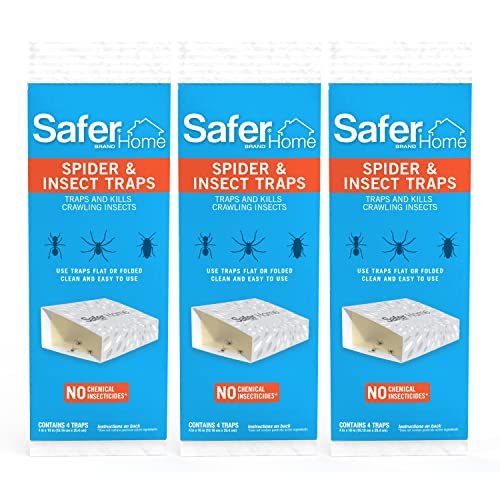
Safer SH400SR Indoor Crawling Insect Traps
Safer SH400SR is an indoor trap designed for crawling insects. Its listed targets include spiders, ants, cockroaches, centipedes, and other crawling pests. Unlike a spray, a trap can work without spreading liquid across a room. This can make it worth considering for people who want to monitor insect activity in selected areas.
For pet owners, the key question is whether an animal can reach the trap. A trap that uses adhesive can catch fur or paws if a curious pet steps on it. I would place it behind a secure appliance, inside a closed cabinet, or in another location that pets cannot enter. Check the actual package for placement instructions and do not assume that every trap in this category has the same ingredients or construction.
✅ Pros
- ✔ Designed for indoor crawling insect control.
- ✔ Lists ants among its target pests.
- ✔ Can also help monitor several other crawling insects.
- ✔ Does not require spraying a room to set out the trap.
- ✔ May help reveal where insect activity is highest.
- ✔ Can be placed near a suspected route if the label allows it.
- ✔ May suit targeted monitoring in areas pets cannot reach.
⚠️ Cons
- ✖ Adhesive traps can catch pet fur or paws if animals reach them.
- ✖ A trap may catch individual ants without addressing the colony.
- ✖ It needs regular checks and replacement when full or dirty.
- ✖ It may not attract every ant species equally well.
- ✖ Safe placement can be difficult in homes with very curious pets.
My Recommendation
This is one of my leading options for people who want to avoid spraying chemicals indoors. I especially like the idea of using a trap to find where ants travel. Still, the adhesive itself can create a problem if a pet touches it, so placement matters. I would use this product in a secure, inaccessible area and check it often. If your dog or cat can get behind appliances or open cabinets, choose a safer placement or another control method.
| Best For | Why |
|---|---|
| Monitoring ant routes | A trap can help show where crawling insects are active. |
| Homes that avoid room sprays | The trap format does not require a broad spray application. |
| Pet-free hidden spots | Inaccessible placement helps prevent pets from touching the adhesive. |
STEM Liquid Ant Bait Stations
STEM Liquid Ant Baits come in a pack of four spill-resistant bait stations for indoor use. The product is marketed to target the queen and colony, which reflects how many ant baits work. Worker ants find the bait and carry some of it back to the nest. This can help reach ants that you do not see walking across the counter.
I see enclosed bait stations as a practical option for many ant problems, but they still contain bait designed to affect insects. Spill-resistant does not mean chew-proof or safe for pets to eat. A dog may bite through a plastic station, while a cat may bat it around. Read the active ingredient and label, place each station where pets cannot reach it, and follow every warning. If a pet chews or swallows a station, contact a veterinarian or an animal poison service promptly.
✅ Pros
- ✔ The four-station pack can cover several permitted placement areas.
- ✔ The enclosed format helps keep liquid bait contained during normal use.
- ✔ Designed for indoor ant control.
- ✔ Bait may be carried back to the nest by worker ants.
- ✔ Targets the colony rather than relying only on contact with visible ants.
- ✔ Does not require spraying an entire kitchen or room.
- ✔ Can be useful along ant trails when placed as directed and kept away from pets.
⚠️ Cons
- ✖ The bait may harm pets if a station is chewed, opened, or swallowed.
- ✖ Spill-resistant does not mean fully bite-proof.
- ✖ Ant activity may rise around the station before it falls.
- ✖ Results may take time and depend on the ant species and bait acceptance.
- ✖ It may not suit homes where no inaccessible placement area exists.
My Recommendation
I would choose STEM Liquid Ant Baits when the goal is to reach ants beyond the ones visible on the floor or counter. The four-station format may help with several trails. For a home with pets, however, secure placement is essential. Do not put a station beside a food bowl or on an open floor where an animal can nose it. I would also avoid using bait and repellent spray together in the same area unless both labels allow it, because a repellent may stop ants from finding the bait.
| Best For | Why |
|---|---|
| Ants with a hidden nest | Worker ants may carry bait back to the colony. |
| Several indoor ant trails | Four stations offer multiple placement options. |
| Homes with secure bait locations | A location pets cannot reach reduces the chance of accidental contact. |
TERRO Spider and Insect Sticky Traps
TERRO Spider and Insect Traps come in a 10-pack of sticky glue traps. They are designed to catch crawling pests that walk across the adhesive surface. For ant control, this style of trap can help you spot activity in a limited area and catch some of the ants that pass over it. A multi-pack also gives you more flexibility when monitoring several places.
These traps do not use a liquid bait station, but that does not make them completely pet-proof. A cat can step on the glue, and a dog may lick or chew a trap. I would place them only in spots pets cannot reach, such as a secured cabinet or a protected area behind an appliance. I would use them to monitor ant movement rather than rely on them as the only solution for a large colony.
✅ Pros
- ✔ The 10-pack provides several traps for different locations.
- ✔ The sticky surface catches crawling insects that cross it.
- ✔ The trap format does not require liquid ant bait.
- ✔ Can help reveal where ants and other crawling pests travel.
- ✔ May be useful for checking low-traffic areas.
- ✔ Requires no spraying when used as a standalone trap.
- ✔ Can support a broader ant-control plan based on cleaning and sealing entry points.
⚠️ Cons
- ✖ Sticky glue can cling to pet fur, paws, or whiskers.
- ✖ It usually catches individual insects rather than eliminating the colony.
- ✖ The adhesive may collect dust and lose usefulness over time.
- ✖ Traps must be checked and replaced as needed.
- ✖ It is not a good choice for open areas where pets roam freely.
My Recommendation
I would consider TERRO sticky traps for monitoring and catching crawling insects in hidden locations. The 10-pack may offer good flexibility if you have several areas to inspect. I would not put one beside a pet’s food bowl, under an accessible couch, or anywhere an animal likes to explore. If your pet can reach every likely placement area, choose another method. For a persistent ant trail, pair safe monitoring with food cleanup, sealed entry points, and a control product suited to the ant species.
| Best For | Why |
|---|---|
| Monitoring several areas | The 10-pack lets you check more than one suspected route. |
| Homes that prefer no spray | The trap catches crawling pests without a room-wide spray. |
| Hidden, protected spaces | Secure placement helps prevent pets from touching the adhesive. |
Final Verdict: Which Should You Buy?
For many pet-owning households, I would start with the Safer SH400SR indoor traps for targeted monitoring, provided I could place them well out of reach. For a colony-focused approach, STEM Liquid Ant Baits may be worth considering when the stations can remain fully inaccessible to pets. TERRO sticky traps offer another option for hidden areas. No product should be treated as completely pet-safe without checking its label, ingredients, and placement rules.
The best ant traps safe for pets are only one part of good pest control. Clean food spills, seal entry points, and choose a product that fits your home and your animals. Keep every trap or treatment out of reach, follow the label, and seek professional help for a large or persistent infestation.
FAQs Of best ant traps safe for pets
Q What are the best ant traps safe for pets?
Q Are ant bait stations safe for dogs and cats?
Q Are sticky ant traps safer than ant sprays?
Q Are peppermint oil ant sprays safe for pets?
Q How can I keep ants away without putting my pets at risk?