Yes, DIY ant traps can attract and kill some ants, but homemade baits work best when ants carry the bait back to their colony.
In American homes, ants often appear near kitchen sinks, pantry shelves, pet food bowls, and doors during warm weather. A few ants can soon become a long trail across the counter. A homemade ant trap may help, but its success depends on the bait, the ant species, and where you place it. Simply killing the ants you see may not solve the problem because the nest can remain active.
Sugar, water, and borax are common ingredients in DIY ant bait. Sugar can attract ants that seek sweet food, while borax can act as a slow-acting poison when used in a suitable bait. However, a recipe shared online is not automatically effective or safe. Some ants prefer protein or fat, and poorly prepared bait may kill foraging ants before they carry enough back to the nest.
This guide explains what homemade ant traps can do, which methods have a reasonable basis, how to place bait, and what to change when ants keep returning. It also covers household safety, pets, children, and situations where a labeled commercial bait or pest control professional may be the better choice.
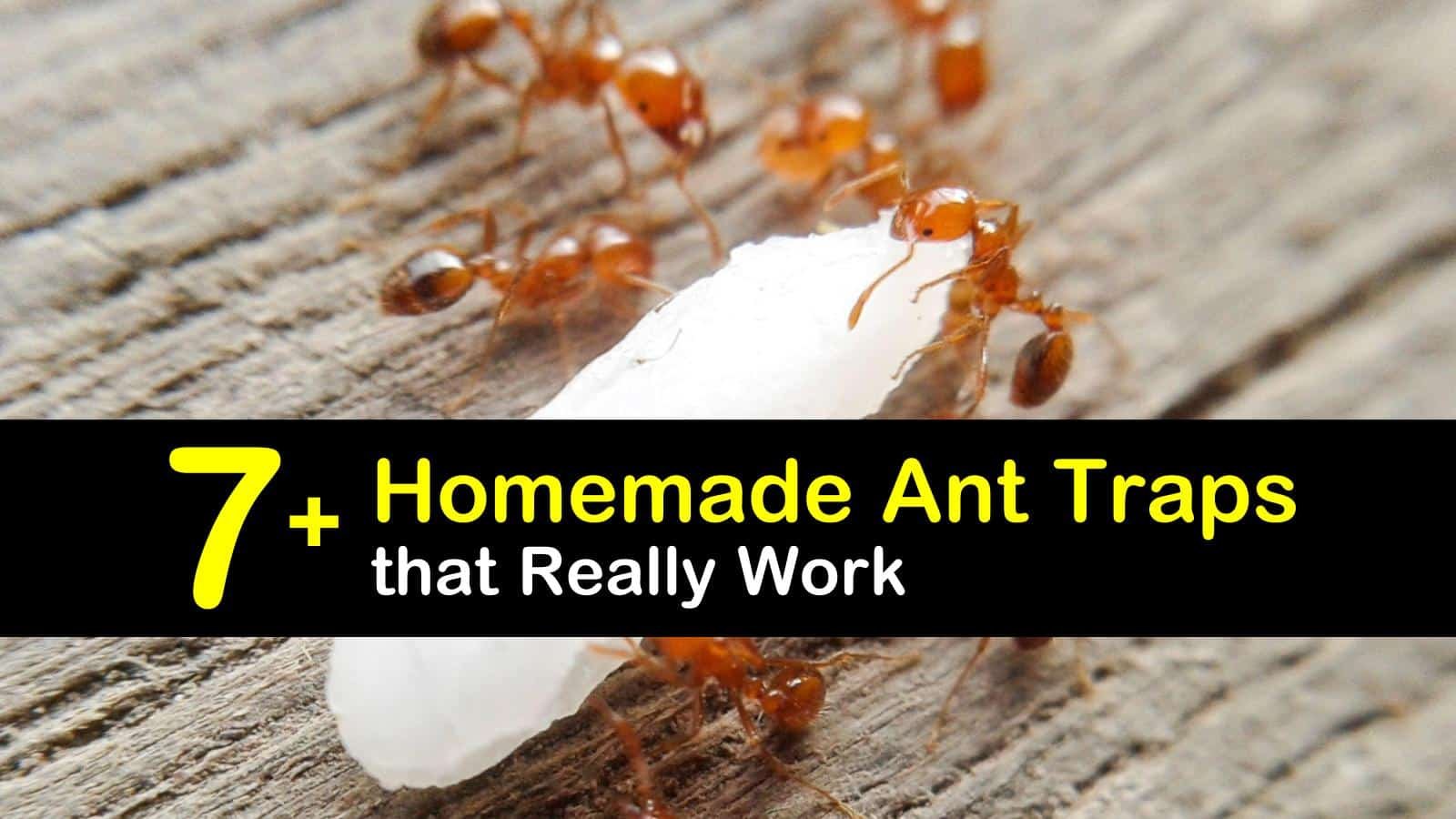
Source: thespruce.com
Do DIY Ant Traps Really Work?
DIY ant traps can work, but they do not all work in the same way. A homemade bait can attract ants and expose them to an ingredient that kills them. The best results come when worker ants collect the bait and carry some of it back to other colony members. A trap that only catches or kills the ants walking past it may have a much smaller effect.
Ant colonies often contain many workers, a queen, and developing young. The exact structure varies by species. Killing a few workers does not necessarily remove the nest, so ants may continue to appear even after a homemade trap catches several of them.
The key question is not simply whether a DIY ant trap kills ants. It is whether the bait suits the ants, remains accessible long enough, and reaches enough of the colony to reduce the infestation. A recipe may work in one kitchen but fail in another because the ant species and available food differ.
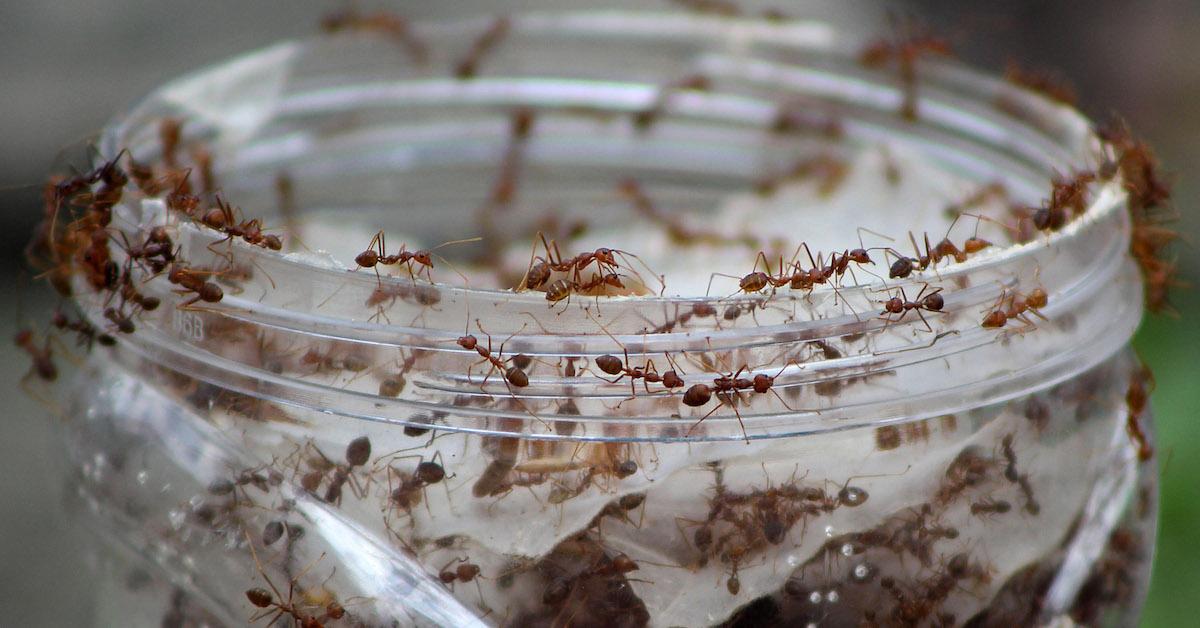
Source: greenmatters.com
Attracting ants
Sweet liquids can draw ants that are seeking carbohydrates, while other baits may appeal to ants looking for protein or fat.
Killing ants
A toxic bait can kill ants after they eat it, but the result depends on the active ingredient and the amount consumed.
Reducing the colony
A suitable slow-acting bait may reach ants beyond the visible trail, although success depends on species, colony structure, and bait acceptance.
Preventing a return
Cleaning food spills, fixing leaks, and closing entry points help reduce the chance of ants returning after baiting.
Why Killing Visible Ants Is Not Enough
Most ants seen on a counter are workers searching for food or water. The nest may be inside a wall, beneath a floor, outdoors near the foundation, or in another hidden spot. Wiping away the trail can remove the visible ants without affecting the source.
A baiting method aims to use the ants’ normal food-gathering behavior. Workers collect food and share it with other members of the colony. When a suitable slow-acting bait enters this process, it may affect ants that never visit the trap themselves.
A short-term improvement
Fewer ants on the counter may mean the bait is helping, but it does not prove that the nest has been eliminated.
A lasting improvement
Sustained reductions in activity, together with fewer new trails and better food control, provide stronger signs that the problem is improving.
Which Homemade Ant Traps Work Best?
The most useful DIY ant traps are bait stations that match the ants’ food preferences and contain an effective ingredient. Sugar-based bait may attract some household ants, while other species may ignore it in favor of grease, protein, or other foods. No single homemade recipe works equally well for every ant species.
A simple sweet bait can help you observe whether ants are interested in sugary food, but attraction alone does not mean the ants will die. A bait containing borax has a stronger basis as a killing method, provided the concentration and placement allow ants to feed and transport it.
Homemade mixtures are less standardized than labeled commercial baits. Their strength can vary with measuring methods, ingredients, and storage. For that reason, a registered, labeled bait product may offer more predictable instructions and clearer safety requirements.
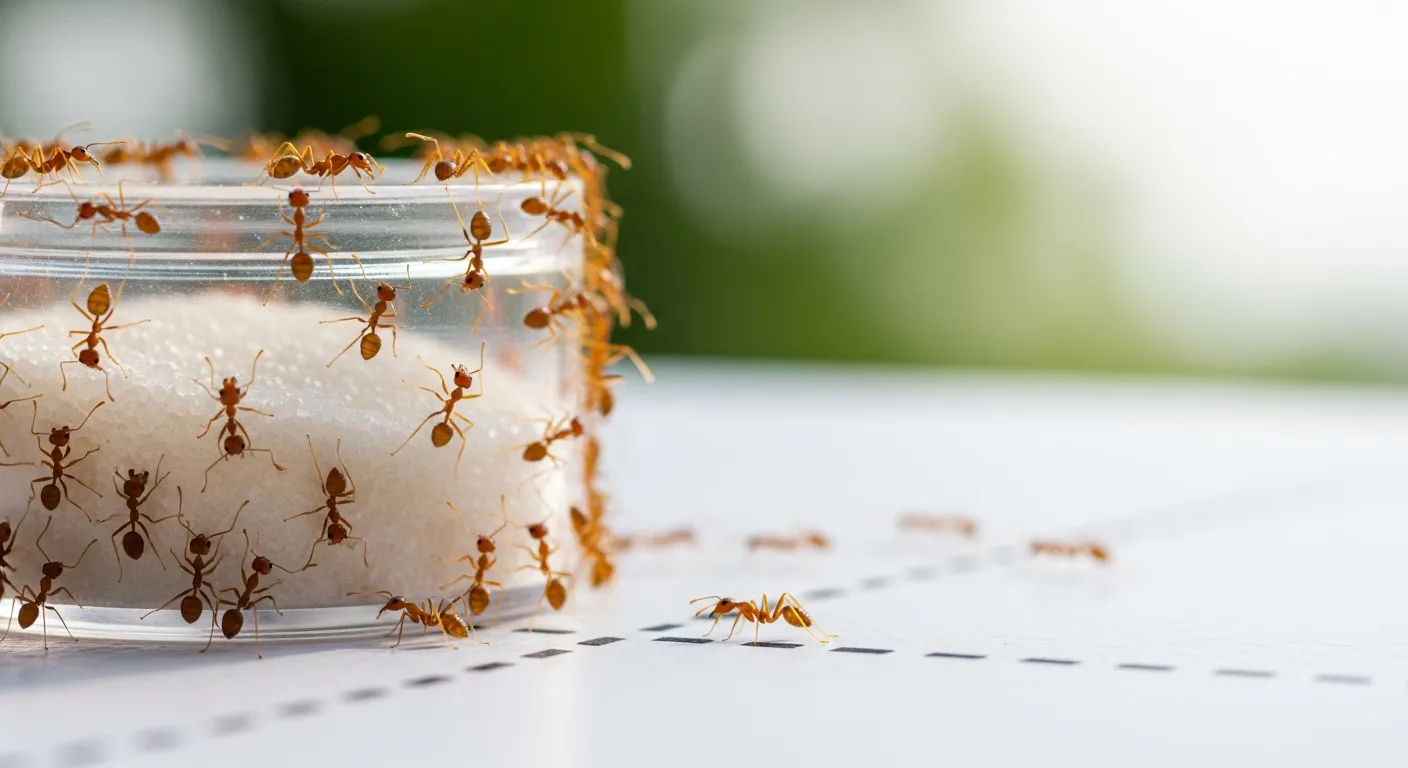
Source: tipsbulletin.com
Sugar and water
This mixture may attract ants that seek sweet liquids. It does not reliably kill ants on its own, so treat it as an attractant rather than a complete ant control solution.
Sugar, water, and borax
Borax can kill ants when they ingest it. However, an unsuitable concentration may make the bait less useful, and borax can harm people or animals if swallowed.
Honey or syrup bait
A small amount may attract sweet-feeding ants. Honey and syrup alone do not provide dependable colony control.
Food-based protein bait
Some ants seek protein or fat instead of sweet food. A food attractant may help reveal this preference, but ordinary food alone is not a reliable insecticide.
Sticky traps
Sticky traps can catch some ants and help monitor activity. They usually do not provide the food-sharing effect needed to target a hidden colony.
Does Sugar Water Kill Ants?
Sugar water does not reliably kill ants. Its main role is to attract ants that are looking for carbohydrates. If ants visit a dish of sugar water and then leave, they may simply have found a food source.
A sweet liquid can still be useful when observing a trail. If ants consistently gather around it, that suggests a sweet bait may be worth considering. Remove the test bait after observing the ants, and do not leave an open dish where children or pets can reach it.
What it can do
Attract ants that prefer sugary liquids and help reveal their feeding behavior.
What it cannot promise
It cannot reliably poison the colony or prevent future ant activity.
Does Borax Ant Bait Work?
Borax is a boron compound that can harm ants when they ingest it. In a suitable bait, the food component attracts ants while the borax provides the toxic effect. The intended benefit is that workers can feed on the bait and share it before the toxic effect stops them from foraging.
The concentration matters. A mixture that is too strong may cause ants to die before enough bait reaches other colony members, while a mixture that is too weak may not provide effective control. Homemade recipes can vary, so it is difficult to guarantee a consistent result from a general online formula.
For many households, a labeled ant bait is the more predictable choice. Follow its exact directions, keep it away from children and pets, and never assume that a household chemical is harmless because it is sold for cleaning or laundry.
Use caution with borax
Do not place loose borax powder or open toxic bait near food, dishes, pet bowls, children’s play areas, or surfaces used to prepare meals.
Avoid mixing chemicals
Never mix ant bait with bleach, ammonia, cleaners, or other pesticides. Combining products can create hazards or change how they work.
Follow product directions
If you choose a commercial bait, use only the labeled amount, placement, and method of application.
How to Make and Use a DIY Ant Trap
A useful homemade ant trap needs a suitable attractant, a controlled bait placement, and a way to prevent accidental contact. Before preparing any mixture, decide whether a homemade method is appropriate for your household. If children or pets can reach the area, a securely enclosed, labeled bait station is generally a better choice than an open homemade mixture.
The steps below focus on safe observation and placement rather than promising a universal poison recipe. They can help you understand the ants’ behavior and decide whether a suitable bait may work. For a toxic bait, use a labeled product according to its instructions instead of guessing at chemical concentrations.
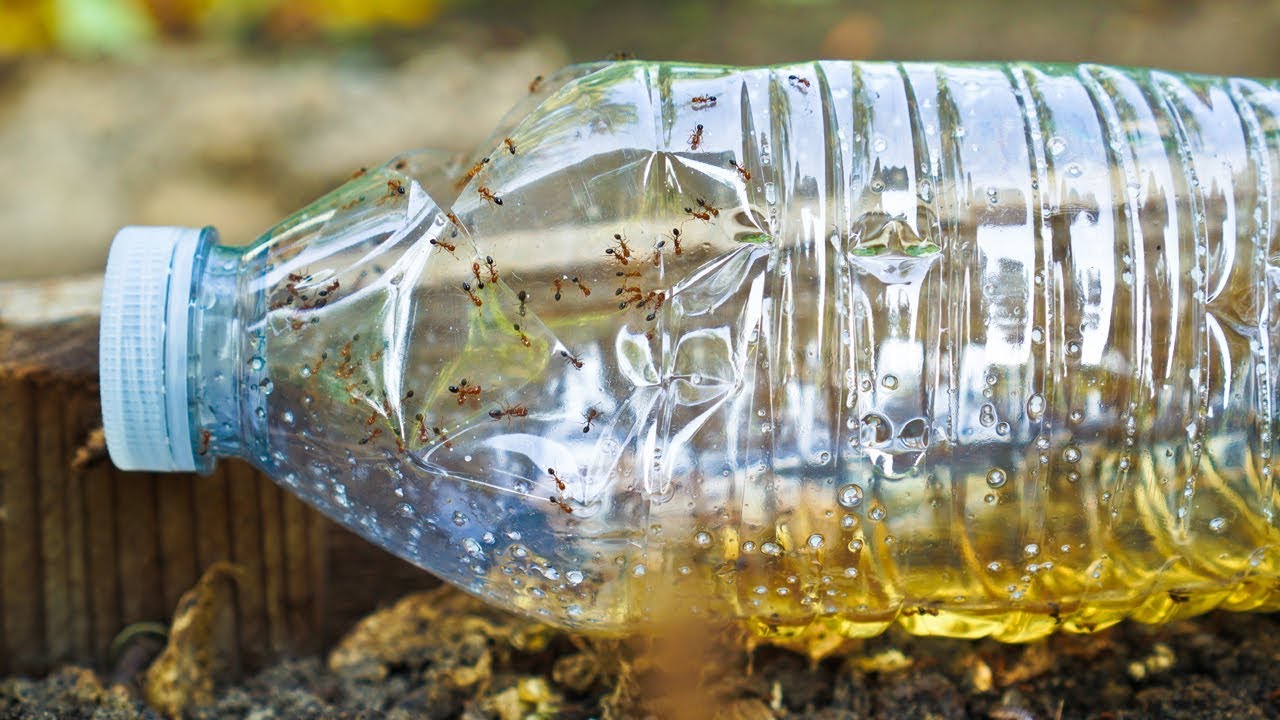
Source: YouTube, Daisy Creek Farms with Jag Singh
Step 1: Find the ant trail
Watch where ants enter, where they travel, and which food source attracts them. Avoid touching or crushing ants while tracing the route.
Step 2: Remove competing food
Wipe away crumbs and spills, seal sweet foods, clean sticky containers, and put pet food away when it is not in use.
Step 3: Observe the food preference
Notice whether ants gather around sweet liquids, greasy residue, or other foods. Do not leave an open test dish unattended.
Step 4: Choose a suitable bait
Use a labeled ant bait that fits the intended location and follow its instructions. Avoid improvising toxic mixtures around food or where children and pets may go.
Step 5: Place the bait near the trail
Use the placement allowed by the product label, ideally near ant activity but away from food preparation areas and inaccessible to children and animals.
Step 6: Monitor the results
Check the bait and ant trail regularly. Keep the bait available as directed, replace it when the label says to do so, and record whether activity declines.
Step 7: Close off the cause
After activity falls, seal accessible gaps, repair moisture problems, and maintain good food storage to reduce future visits.
Where Should You Place an Ant Trap?
Place bait close to the ants’ route, not randomly in the middle of a room. Ants often travel along edges, cabinet seams, plumbing openings, baseboards, and gaps around doors. A bait station near an active trail has a better chance of being found than one hidden far from the ants’ normal path.
Do not put bait directly on a food preparation surface, inside a pantry beside unsealed food, or where water can wash it away. Follow the label for indoor or outdoor use. Some products are intended only for specific locations, and using them elsewhere may be unsafe or ineffective.
Near active trails
Choose a location where ants already travel, while maintaining the safety distances and access restrictions required by the product label.
Away from children and pets
Use a secure station and place it where it cannot be handled, chewed, or knocked over.
Away from water
Avoid wet sinks, leaking pipes, and places where cleaning water can dilute or spread the bait.
How Can You Tell Whether the Trap Is Working?
The first sign of bait acceptance may be ants gathering around the station. This does not mean the colony is already dying. Some ants may visit repeatedly before you notice a clear decline in the number of workers on the trail.
Over time, look for a sustained reduction in ant activity. If ants ignore the bait, the mixture may not match their food preference, the bait may have dried out, or the placement may be poor. If activity remains high despite correct use, reassess the approach rather than adding more chemical.
Likely progress
Ants feed on the bait, and the trail gradually becomes less active over the period allowed by the product instructions.
A possible mismatch
Ants walk past the bait or visit another food source instead. Recheck the bait type, freshness, and location.
A reason to reassess
Ants continue appearing in several rooms, return after repeated attempts, or seem to emerge from walls or damaged wood.
How Long Do Homemade Ant Traps Take to Work?
DIY ant traps may take several days or longer to produce a clear reduction in activity. The timeline depends on the ant species, the bait ingredient, how much bait the ants consume, and how large or spread out the colony is. A trap that attracts ants immediately may still need time to affect the colony.
Do not judge a bait only by the number of dead ants near it. A slow-acting bait may be intended to let workers feed and share food before the toxic effect occurs. If the bait kills workers too quickly, it may not spread through the colony as intended.
Commercial products provide their own expected timelines and replacement instructions. Follow those directions rather than relying on a fixed number of hours or days that may not apply to your situation.
Source: www.pinterest.com
Early activity
Ants may discover the bait quickly, but initial visits show attraction rather than complete control.
A gradual decline
A sustained decrease in the trail can suggest that baiting is helping, although other changes, such as food removal, may also contribute.
No improvement
If ants ignore the bait or activity does not decline within the stated treatment period, check placement, food competition, species, and label directions.
Should You Kill Ants Around the Bait?
Avoid spraying insecticide directly on ants that are feeding at a bait station unless the product instructions specifically permit that combination. Sprays can repel ants, contaminate the bait, or reduce the chance that workers will carry the bait back to the nest.
You can remove ants from food preparation surfaces when needed, but keep the bait station itself undisturbed. Clean competing food sources without washing away or contaminating the bait, and follow the directions for the selected product.
Do not spray the bait
Keep incompatible insecticides and cleaning products away from the bait and its feeding area.
Keep the area clean
Remove food scraps and standing water while leaving the bait in its intended location.
Why DIY Ant Traps Sometimes Fail
A homemade ant trap usually fails for a practical reason rather than because all baiting methods are useless. The ants may reject the food, the toxic ingredient may be unsuitable, or the trap may sit too far from the trail. Other food sources can also make the bait less attractive.
Ants change their feeding patterns in response to the needs of the colony and the food available. A sweet bait that attracts ants today may be ignored later. If you keep seeing ants around the same station, observe what they actually eat before changing the method.
Another common problem is treating the visible trail while ignoring the source. If ants enter through a gap beside a pipe or door, they may return as long as the entry point and nearby conditions remain favorable. Baiting works best as part of a wider plan.
Source: southernreside.com
The ants ignore the bait
Try to identify their food preference and check whether the bait is fresh. Use a labeled bait suitable for the target ants instead of adding more poison.
The bait dries out
Drying can reduce the appeal of a liquid bait. Follow the product’s replacement instructions and avoid adding water to a formulated bait unless the label allows it.
Food is easier to find elsewhere
Crumbs, grease, open sugar containers, and pet food can compete with the bait. Improve food storage and clean spills.
The placement is wrong
Move or replace the station only as allowed by the instructions, keeping it close to active ant movement and away from unsafe areas.
The colony is difficult to reach
Ants may nest in wall cavities, under floors, or outdoors. Persistent activity may need a different bait strategy or professional inspection.
The species is not suited to the method
Some ants respond poorly to common household baits. Correct identification can help determine whether another method is needed.
What If Ants Keep Coming Back?
Repeated ant activity can mean that the colony was not fully affected, a nearby colony remains active, or a new route has opened. It can also mean that ants are entering from outdoors to collect food and water rather than nesting inside the home.
Inspect window frames, door seals, pipe openings, and areas with moisture. Seal accessible gaps after identifying likely entry points, and remove food sources that draw ants indoors. If a trail continues from damaged wood or a wall cavity, consider a pest inspection rather than relying on more homemade mixtures.
For small, occasional trails
Improve sanitation, track the route, and use an appropriate labeled bait if needed.
For widespread activity
Check multiple rooms, moisture sources, and possible outdoor entry routes. Seek professional help if the infestation persists.
For possible carpenter ants
Look for signs such as large ants, coarse wood debris, or activity near damp or damaged timber. A professional can determine whether a nest is affecting the structure.
DIY Ant Traps vs. Commercial Ant Baits
Homemade ant traps can be inexpensive, but commercial bait products often provide more consistent formulations and clearer safety directions. A labeled bait may also be designed for a particular setting, such as indoor cracks, outdoor trails, or a secured station. The right choice depends on the ants, the location, and the risks in your home.
A commercial product is not automatically safe in every situation. Read its label, use it only in permitted locations, and keep it away from food, children, pets, and other animals as directed. A homemade mixture can also be hazardous, especially if it contains borax or another toxic ingredient and sits in an open container.
For a small ant problem, begin with prevention and observation. If bait is needed, choose an option with clear directions and an appropriate use site. When a nest is hidden or activity continues despite correct use, a licensed pest control professional can help identify the species and select a suitable treatment.
Source: YouTube
Cost
A DIY mixture may use common household ingredients, but wasted bait, repeated preparation, and unsuccessful attempts can reduce any savings.
Consistency
Commercial baits are formulated for a defined use, while homemade mixtures may vary in concentration and texture.
Safety information
Labeled products provide instructions and precautions for their intended use. Homemade mixtures do not come with a product label tailored to that formula.
Colony control
Either approach can fail if ants reject the bait or the placement is wrong. The product and its correct use matter more than whether it is homemade.
When Is a Commercial Bait the Better Option?
A labeled bait is often preferable when you need a defined application method, a specified active ingredient, and clear directions for indoor or outdoor use. It may be especially helpful when you cannot safely supervise an open homemade bait or when a repeatable treatment method matters.
Choose a product whose label covers the target ants and intended location. Do not assume that every ant bait is suitable for every species, every room, or every outdoor surface. If the label does not permit the intended use, choose another approach.
Use the right label
Check the target pest, permitted placement, active ingredient, and all required precautions.
Avoid unnecessary spraying
Do not combine baits and sprays unless the directions permit it, because incompatible treatments may interfere with bait acceptance.
Are Homemade Ant Traps Safe Around Children and Pets?
Homemade ant traps are not automatically safe for children, cats, dogs, or other pets. Sugar and water may seem harmless, but an open container can spill, attract pests, or become contaminated. Adding borax or another toxic ingredient changes the risk and requires careful handling.
Cats and dogs may lick a bait station, chew its container, or investigate a mixture with their paws. Young children may touch the bait and then put their hands in their mouths. The safest plan is to prevent access rather than assume that a small amount cannot cause harm.
Use only products according to their labels and keep all toxic baits out of reach. If you cannot make a placement inaccessible to children and pets, do not use an open homemade toxic bait there. Consider a properly secured station or professional advice.
Source: www.pinterest.com
Keep bait away from food
Do not prepare or store toxic bait on counters used for meals, and keep it separate from dishes, utensils, and pantry items.
Prevent pet access
Place bait where pets cannot reach or chew it, and follow any restrictions on use around animals.
Do not reuse food containers
Never store bait in drink bottles, cups, food jars, or containers that someone could mistake for food.
Respond to accidental exposure
If a child or pet swallows a toxic bait, contact an appropriate poison service or veterinary professional promptly. Keep the product packaging or ingredient information available.
What Should You Do If a Pet Eats Ant Bait?
If a pet eats or chews a bait station, remove any remaining bait from reach and contact a veterinarian or animal poison service promptly. Do not wait for symptoms before asking for guidance. The risk depends on the active ingredient, concentration, and amount swallowed.
Do not induce vomiting or give home remedies unless a qualified professional tells you to do so. Keep the package or ingredient details available so the professional can assess the exposure. If the pet has trouble breathing, collapses, or develops severe symptoms, seek emergency veterinary care.
Identify the product
Keep the label, packaging, or ingredient list available for the veterinarian.
Avoid unproven remedies
Do not give milk, oil, or other home treatments unless instructed by a qualified professional.
Natural Ways to Make Ant Traps More Effective
The best way to support ant control is to make your home less attractive to foraging ants. Food crumbs, sugary spills, pet food, and moisture can keep drawing ants back even when a bait station is present. Removing these resources helps reduce competing food and makes it easier to track the remaining activity.
Natural methods can help prevent ants, but they do not all kill colonies. Vinegar-based cleaning, for example, may remove food residue and disrupt scent trails for a time, but it is not a dependable way to eliminate a hidden nest. Essential oils and other popular home remedies also lack a reliable, universal effect across ant species.
Use prevention alongside a suitable bait rather than expecting one household ingredient to do every job. Small changes, such as wiping counters, storing food in sealed containers, fixing a dripping faucet, and sealing accessible gaps, can make a real difference.
Source: www.pinterest.com
Clean trails and spills
Wipe up food residue and clean ant trails with a suitable household cleaner. Keep cleaning products away from bait stations.
Store food securely
Use sealed containers for sugar, cereal, snacks, and other foods that ants may reach.
Control moisture
Repair leaking pipes, dry wet areas, and avoid leaving standing water near sinks or pet bowls.
Seal entry points
Close accessible gaps around doors, windows, and utility openings when appropriate.
Manage outdoor conditions
Keep plants and mulch from pressing against the structure where practical, and remove debris that may shelter ants near entry points.
Do Vinegar, Cinnamon, or Essential Oils Get Rid of Ants?
Vinegar, cinnamon, and essential oils are often suggested as natural ant repellents. Some scents may discourage ants from crossing a treated area for a short time, but the effect varies, and these methods do not reliably destroy a colony.
Vinegar can help clean some surfaces and remove food residue, but it may damage certain materials. Essential oils can irritate skin or harm pets if misused, and concentrated oils should never be assumed safe just because they are plant-derived. Use household products according to their directions and avoid applying them where they could contaminate food or bait.
Best use for vinegar
Cleaning suitable surfaces after removing food residue, rather than treating it as a colony-killing pesticide.
Limit of cinnamon
A scent-based deterrent may not stop ants from finding another route or returning to the same food source.
Essential oil caution
Do not assume concentrated oils are safe for cats, dogs, children, or every household surface.
Choosing the Right Ant Control Method
The best ant control method depends on the size of the problem, where the ants appear, and whether you can locate their route. A small trail near a kitchen window calls for a different response than ants emerging from several wall openings or appearing around damp wood.
Start with the least disruptive steps that fit the problem. Clean the area, identify the trail, and remove easy food sources. If ants remain, use a suitable labeled bait and monitor the results. Avoid combining multiple chemicals or escalating treatment without understanding why the first method failed.
If you suspect a structural nest, carpenter ants, or a persistent infestation that spreads through the home, a pest control professional can identify the likely species and nesting site. This is more useful than repeatedly testing recipes without knowing what you are treating.
Source: artofit.org
A few ants near food
Clean spills, seal food, trace the entry point, and monitor whether the trail returns.
A steady trail indoors
Consider a suitable labeled bait placed near the route, with all required safety precautions.
Ants around damp wood
Check for leaks or damaged timber and seek an inspection if carpenter ants are a concern.
Repeated failure
Review bait acceptance, placement, food competition, and product directions. Seek professional help if activity continues.
A Simple Troubleshooting Table
Use this table to match the most visible symptom with a sensible next step. It is a practical guide, not a diagnosis of the ant species or nest location.
Symptom: Ants ignore the bait
Likely causes include a food mismatch, poor placement, or stale bait. Observe their feeding behavior and check the product directions.
Symptom: Ants gather but activity continues
The bait may be attractive without providing adequate colony control. Allow the labeled treatment period and reassess the product and placement.
Symptom: Ants appear in new rooms
Look for additional food sources, moisture, or entry points. Widespread activity may need professional assessment.
Symptom: Ants return after treatment
A colony may remain active or new ants may be entering. Improve prevention and confirm whether the selected method suits the species.
Research Notes and Important Evidence Limits
The main conclusion is supported by established principles of ant baiting and integrated pest management: a suitable bait can exploit ant feeding behavior, while sanitation and exclusion reduce the conditions that support an infestation. The effectiveness of a particular homemade recipe, however, cannot be established from its ingredients alone.
This article does not report a hands-on comparison of homemade recipes or laboratory tests of ant colonies. No measured kill rate, success percentage, or guaranteed treatment time is claimed. Results will vary with the species, bait formulation, placement, and household conditions.
The article also does not claim that every natural remedy is ineffective or that every commercial bait is superior. The practical distinction is that a labeled product provides a defined formulation and use instructions, while an improvised mixture can be inconsistent. Readers should follow current product labels and relevant public pest control guidance.
Documented principle
Ant baiting can use food collection and sharing behavior to expose more than the workers that directly visit a bait station.
Condition-dependent result
A bait’s usefulness depends on species, food preference, formulation, placement, and whether ants accept it.
Not established here
No specific homemade formula is proven to eliminate every ant colony, and no universal time to success can be promised.
Next-Question Gap Map
The following map identifies useful follow-up needs inferred from the reader’s task. These are editorial judgments, not verified search-volume findings or confirmed questions from a live search results page. No competitor coverage is labeled as missing because no set of competing pages was opened and systematically compared for this draft.
Reader stage: Before use. Basis: Inferred next need because toxic bait raises exposure concerns. Competitor coverage: Not checked. Benefit: Helps readers avoid accidental poisoning. Evidence needed: Current poison control and veterinary guidance. Priority: High. Placement: Safety section.
Question: How long should ant bait take to work?
Reader stage: After placement. Basis: Inferred next need because readers need a way to judge progress. Competitor coverage: Not checked. Benefit: Prevents premature changes and unrealistic expectations. Evidence needed: Product-specific labels and pest control guidance. Priority: High. Placement: Timeline section.
Question: Why do ants ignore homemade bait?
Reader stage: Troubleshooting. Basis: Inferred next need because bait acceptance is essential to success. Competitor coverage: Not checked. Benefit: Helps readers identify food mismatch or placement problems. Evidence needed: Ant feeding behavior and bait label instructions. Priority: High. Placement: Failure section.
Question: Should I use DIY or commercial bait?
Reader stage: Choosing a method. Basis: Inferred next need because readers may need a predictable and safer application. Competitor coverage: Not checked. Benefit: Clarifies consistency, directions, and household risks. Evidence needed: Product labels and relevant regulatory guidance. Priority: High. Placement: Comparison section.
Question: What if ants keep returning?
Reader stage: After treatment. Basis: Inferred next need because a visible decline may not mean the source is gone. Competitor coverage: Not checked. Benefit: Connects baiting with exclusion and professional inspection. Evidence needed: Integrated pest management guidance. Priority: High. Placement: Troubleshooting section.
Frequently Asked Questions
Q
Do DIY ant traps work as well as store-bought ant traps?
They can help in some situations, but the results are less predictable when the homemade bait has an inconsistent concentration or does not match the ants’ food preference. Commercial baits usually provide a defined formulation and instructions for placement and use. Neither option is guaranteed to work for every ant species or infestation.
Q
What is the best homemade bait for ants?
There is no single best homemade bait for every ant species. Sugar-based bait may attract ants seeking carbohydrates, while other ants prefer protein or fat. Borax can provide a toxic effect in suitable bait, but its concentration and placement affect the outcome. A labeled ant bait is often the more predictable option.
Q
Will sugar and water get rid of an entire ant colony?
No. Sugar water can attract some ants, but it does not reliably kill them or eliminate a colony. To control an infestation, the bait must provide an effective treatment and reach enough of the colony. Food cleanup, moisture control, and sealing entry points also help.
Q
Can I leave a homemade ant trap out overnight?
Leaving an open bait unattended can create risks, especially if it contains borax or another toxic ingredient. Children and pets may reach it, and the bait may spill or attract other pests. Use a secure, suitable bait station and follow the relevant product instructions. Do not leave an open toxic mixture where anyone could contact or swallow it.
Q
Why are more ants showing up after I put out bait?
More ants may gather because they have found an attractive food source. This does not necessarily mean the treatment has failed. Observe whether the ants feed on the bait, follow the label’s monitoring period, and avoid spraying the feeding trail unless the directions allow it. If activity does not decline, check the bait type and placement.
Q
Are DIY ant traps safe for cats and dogs?
Not automatically. A mixture containing borax or another toxic ingredient can harm a pet if swallowed, and open containers may spill or be chewed. Keep bait inaccessible, use a properly secured product when appropriate, and follow all safety directions. If a pet eats bait, contact a veterinarian or animal poison service promptly.
Q
Do vinegar and cinnamon work better than ant bait?
Vinegar may help clean food residue and disrupt scent trails temporarily, while cinnamon may deter some ants from certain areas. Neither is a reliable replacement for effective colony control. When ants continue to return, use sanitation, exclusion, and an appropriate bait rather than relying on scent-based remedies alone.
✦ Wrapping Up
Conclusion
DIY ant traps can work, but success depends on the type of bait, the ants’ feeding habits, and how the trap is used. Sugar water can attract ants without killing them, while a suitable borax bait can provide a toxic effect. Neither method guarantees that a hidden colony will disappear.
For a small ant problem, start by cleaning food spills, storing food securely, tracing the ant trail, and removing easy sources of moisture. If bait is needed, choose a suitable product and follow its directions. Keep all toxic bait away from children, pets, food, and water, and avoid mixing incompatible pest control products.
If the ants ignore the bait, spread through the house, or return after correct treatment, reassess the species and likely nesting location. A pest control professional can help with persistent infestations or suspected carpenter ants. The goal is not just to kill the ants you see, but to reduce the conditions that keep bringing them inside.
💡 Key Takeaway
Start by finding the ant trail and removing nearby food sources. Then use an appropriate, securely placed bait if needed, monitor activity according to its directions, and seal accessible entry points. Avoid open toxic homemade mixtures around children and pets.
You spot a line of ants marching across the kitchen counter. You grab the Terro bottle from the pantry and… do what? If you’re asking how to use terro ant…
You’ve got a can of ant killer on the shelf and you’re wondering, will ant killer kill termites? You spray what you think is a termite. It dies on the spot.…