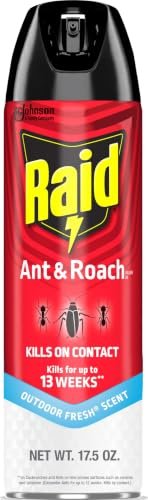
Yes, some Raid ant and roach sprays can kill spiders, but the exact product label matters.
If you spot a spider in your kitchen, garage, basement, or bathroom, you may reach for the Raid can already sitting under your sink. Many American households keep insect sprays on hand for quick pest control. But a spray made for ants and roaches does not automatically have a label-approved use against every spider.
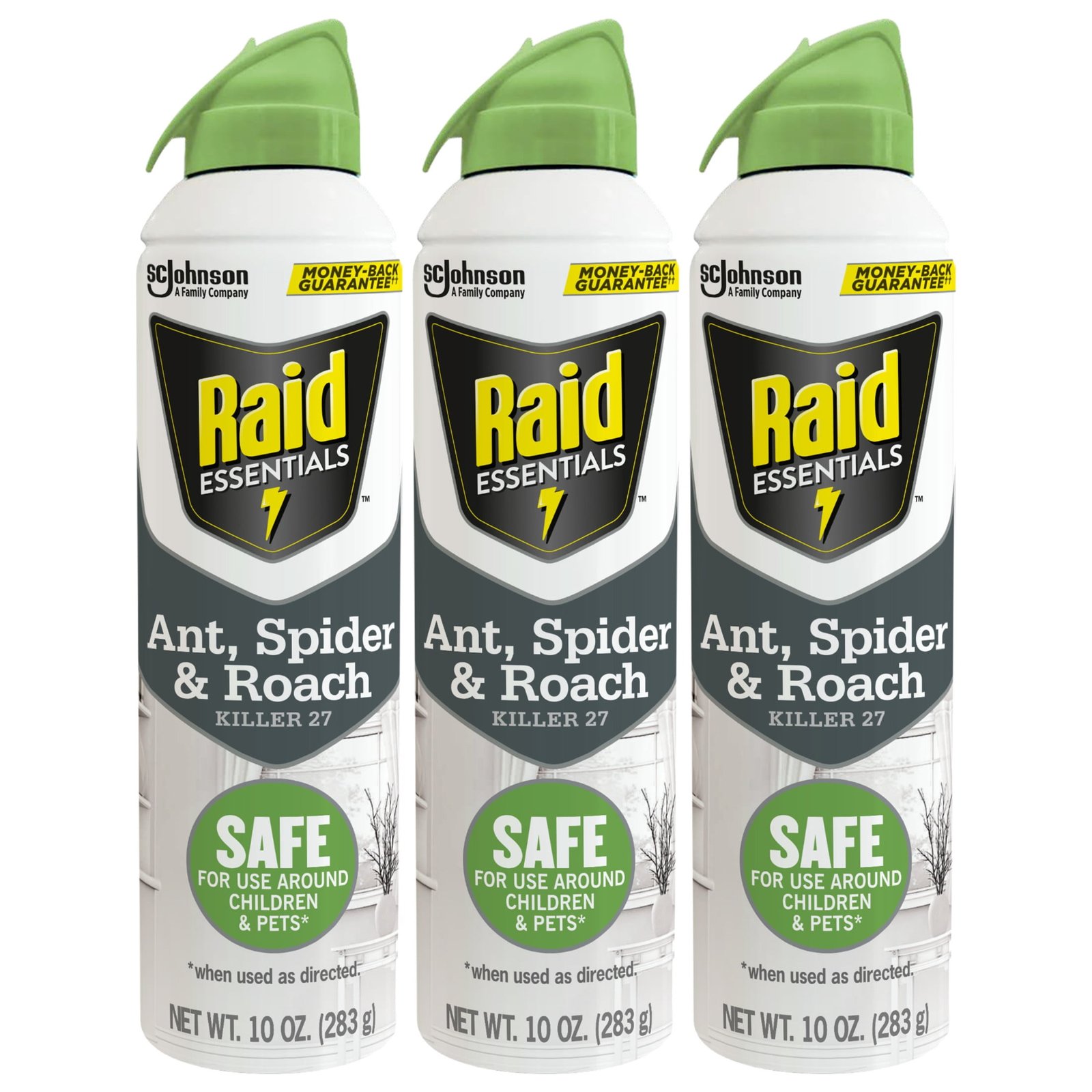
The answer depends on the Raid formula. Some products, including Raid essentials Ant, Spider & Roach Killer, specifically name spiders as target pests. Other Raid Ant and Roach products may list only ants and roaches. Their active ingredients may affect spiders, but that does not mean every formula is labeled or tested for spider control.
Before spraying, check the front label, pest list, directions, and safety warnings. This guide explains what Raid can do, why spiders may respond differently from ants and roaches, how to use a labeled product, and what to do when spiders keep returning.
Source: walmart.com
Does Raid Ant And Roach Killer Actually Kill Spiders?
Yes, Raid can kill spiders when the particular formula is labeled for spider control and the spider receives an effective dose. The important detail is the product name and label, not simply the Raid brand. Raid sells different pest-control formulas, and their approved target pests can vary.
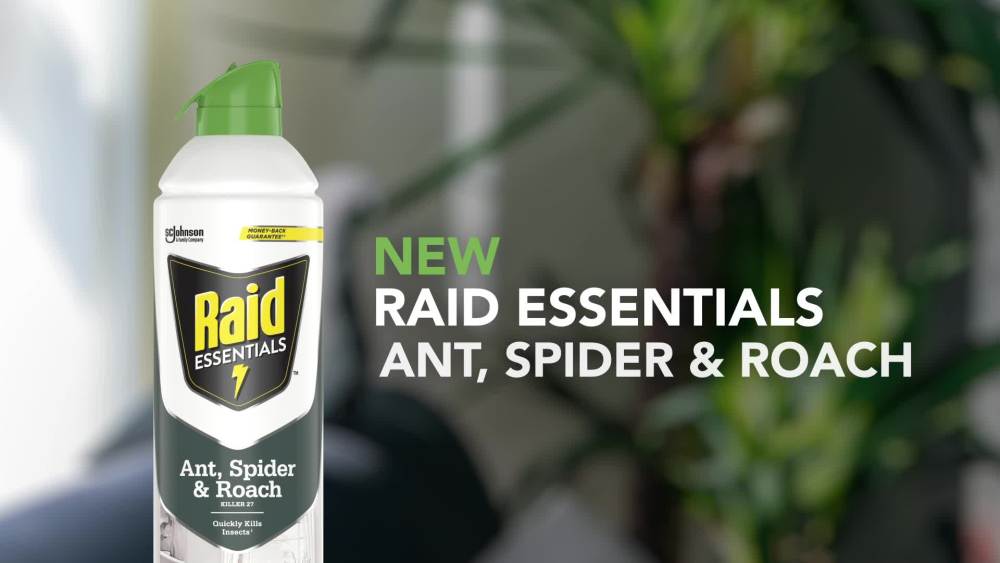
For example, Raid Essentials Ant, Spider & Roach Killer specifically names all three pests. That makes it a more direct match for someone looking for one spray to address ants, spiders, and roaches. A can labeled only Ant and Roach Killer should not be treated as interchangeable with this product.
The distinction matters because pesticide labels describe the pests and uses the manufacturer has registered for that product. A chemical that can affect a spider in theory does not automatically make every use against spiders an approved use.
So, if your question is whether you can spray a spider with the Raid product in your home, start by reading the exact can. Look for spiders in the listed target pests and follow the directions for that specific formula.
Source: thefreshgrocer.com
Spider listed on the label
The product is intended for the listed spider-control use when applied according to its directions.
Only ants and roaches listed
Do not assume the product is approved for spiders. Choose a product whose label specifically covers the pest.
Unknown or damaged label
Do not guess about the product’s use. Find the exact product information or choose a clearly labeled alternative.
Why the Exact Raid Formula Matters
Raid is a brand with several insecticide products. Some are designed for direct contact, while others provide residual control on approved surfaces. Some target a narrow group of pests, and others list a broader range.
The words Ant and Roach on the front of a can do not prove that spiders are included. Even products that look alike may have different ingredients, directions, and approved uses. Check the full product name and label rather than relying on the color of the can or a familiar brand logo.
Check the full product name
Look for the words Spider or Spiders among the listed target pests.
Read the use directions
Confirm whether the spray is meant for direct contact, cracks and crevices, or another approved application.
How Does Raid Kill Spiders?
Raid insecticides work by using chemicals that interfere with an insect or other target pest’s nervous system or other vital biological functions. Many household bug sprays use pyrethrins or synthetic pyrethroids. These chemicals can disrupt normal nerve signaling in susceptible pests.
Spiders have a nervous system too, so certain insecticides can affect them. After sufficient exposure, a spider may lose normal movement, become unable to coordinate its legs, and eventually die. The result depends on the active ingredients, dose, spider species, and application method.
A direct spray can place insecticide on the spider’s body. Some labeled products may also leave a residue on approved surfaces. However, residual action depends on the exact formulation and label directions. Do not assume that a surface treated for roaches will provide lasting spider control.
Spiders also behave differently from many household insects. They may remain in webs, hide in cracks, or move along walls and ceilings. A spray that reaches one visible spider will not necessarily reach others hiding in a wall gap or storage box.
Source: amazon.com
Direct contact
The spider receives insecticide on its body during application. This is the most relevant method when dealing with one visible spider.
Nervous system disruption
Some insecticide ingredients interfere with normal nerve activity, which can cause loss of movement and death.
Residual exposure
Some products leave a treated surface, but the length and effectiveness of that treatment depend on the product label and conditions.
Do Spiders Die Immediately After Being Sprayed?
Not always. Some spiders may show a rapid reaction after direct exposure, while others may continue moving for a period. The time needed to die depends on the chemical, amount received, spider species, and how much of its body was exposed.
A spider that stops moving may still be alive. Avoid touching it with bare hands or assuming that the spray has made the area safe. Follow the label’s instructions for removing dead pests and cleaning treated surfaces.
Fast reaction
A spider may quickly lose coordination or movement after receiving a sufficient dose.
Slow reaction
A spider may move after spraying because exposure was limited or the chemical takes time to act.
No visible effect
The formula may not target that spider, the dose may be too low, or the spray may not have reached it properly.
Which Raid Products Can Be Used Against Spiders?
The safest way to choose a Raid spray is to match the exact product label to the pest you want to control. Do not rely on a general claim that Raid kills bugs. The brand name alone does not establish that a particular can is intended for spider treatment.
Raid Essentials Ant, Spider & Roach Killer is an example of a product that explicitly identifies spiders. Its name makes the intended pest range clear. Still, check the current can for the full directions, active ingredients, application sites, and safety limits before use.
Other Raid products may have different target lists. A conventional Ant and Roach Killer might be useful against its listed pests but may not include spiders. If the label does not name spiders, choose a product that does rather than extending the directions yourself.
Source: www.heb.com
Raid Essentials Ant, Spider & Roach Killer
The product name specifically includes spiders. Check the current label for approved locations, directions, and precautions.
Raid Ant and Roach Killer
A product with this name may be intended for ants and roaches only. Confirm the target pest list on your exact can.
Raid multi-insect products
Some broader formulas may list spiders. Read the full target-pest list instead of assuming that all multi-insect sprays have the same coverage.
How to Read the Product Label
Turn the can around and read the small print. The front panel helps identify the product, but the directions and legal labeling provide the details needed for safe use.
Look for the target pest list, approved indoor or outdoor locations, direct-spray instructions, ventilation requirements, and any restrictions involving children, pets, food, or surfaces. If the label gives a specific waiting period, follow it rather than making up your own.
Target pests
Confirm that spiders are named.
Application sites
Check whether the product allows use in the room or area where the spider was found.
Safety instructions
Follow the directions for people, pets, food, ventilation, and re-entry.
How to Use Raid Against a Spider
If your Raid product specifically lists spiders and allows the intended indoor or outdoor use, follow its label. The goal is to control the pest without exposing people, pets, food, or household surfaces to unnecessary insecticide.
Before applying anything, identify the spider if you can do so safely. If it may be a black widow, brown recluse, or another medically significant species, avoid handling it. Keep children and pets away and consider professional pest control if the spider is in a hard-to-reach area or several are present.
Aerosol spray is not a reason to soak a room or coat every wall. Use only the amount and application method stated on the can. More product does not necessarily mean better control, and excess spray can increase exposure.
Source: amazon.com
Step 1: Read the label
Confirm that the product lists spiders and permits use in the location where you found one.
Step 2: Clear the area
Move people and pets away. Remove or cover food, dishes, pet bowls, and other items as directed by the label.
Step 3: Prepare the room
Follow the label’s ventilation and application instructions. Avoid spraying near flames, pilot lights, or hot surfaces if the product is flammable.
Step 4: Apply as directed
Use the labeled distance, spray duration, and treatment location. Do not spray toward people, animals, or electrical equipment.
Step 5: Allow the area to clear
Observe the stated drying, ventilation, and re-entry directions before allowing people or pets back into the treated space.
Step 6: Remove the spider safely
Once the label permits, use a suitable tool or disposable material to remove the dead spider. Avoid direct contact.
Where Should You Spray?
The correct location depends on the product. A direct-contact spray may be intended for the spider itself, while another product may allow treatment of specific cracks or crevices. These uses are not interchangeable.
Common spider hiding spots include corners, storage spaces, gaps around doors, and areas behind stored items. However, do not spray every suspected hiding place unless the label permits that application.
Visible spider
Use a labeled direct-contact method if the product directions allow it.
Cracks and gaps
Treat only the locations and surfaces permitted by the label.
A successful treatment may cause the spider to lose normal movement and eventually die. However, the response time varies, so there is no reliable universal number of seconds or minutes that applies to every Raid formula and spider.
If the spider continues moving, do not repeatedly spray the entire area. Check the product directions, keep your distance, and use a suitable alternative method if needed. If spiders keep appearing, address the entry points and hiding places rather than relying on repeated aerosol use.
Likely success
The spider stops normal movement and does not recover.
Possible incomplete treatment
The spider continues moving or escapes before receiving enough exposure.
Recurring sightings
More spiders may be entering the home or hiding in untreated areas.
Does Raid Kill Different Types of Spiders?
A labeled spider spray may affect more than one type of spider, but that does not mean every species responds in the same way. Size, body structure, exposure, and the exact chemical formula can all affect the outcome.
Common house spiders, cellar spiders, jumping spiders, and wolf spiders may be encountered in American homes and yards. A product label may name spiders as a general target without listing every species. Follow the label and do not assume that a general pest claim proves equal effectiveness against every spider.
Some spiders are medically significant. Black widows and brown recluses are examples that deserve extra care. Do not try to pick them up, crush them with your hand, or reach into a dark area where one may be hiding.
Source: amazon.com
House spiders
These spiders often build webs in quiet corners. Remove webs and reduce clutter along with any labeled treatment.
Jumping spiders
They move quickly and may escape a spray before receiving sufficient exposure.
Wolf spiders
They often roam rather than remain in a web, so controlling entry points can be especially useful.
Black widows
Avoid close contact. Use caution around webs and dark storage spaces, and seek professional help when needed.
Brown recluses
Do not reach into boxes, shoes, or clothing without checking. A professional inspection may be appropriate when these spiders are suspected.
Does Raid Kill Large Spiders?
A larger spider may require more exposure than a small one, but size alone does not tell you whether a product will work. The active ingredients, amount of contact, and label-approved application all matter.
Do not compensate for a large spider by spraying an excessive amount. If a large spider is difficult to reach, keep people and pets away and use a safe removal method or contact a pest-control professional.
Avoid overapplication
Extra spray can increase chemical exposure without ensuring a better result.
Keep a safe distance
Do not put your hands near an unknown spider or its hiding place.
Raid Ant And Roach Killer vs. Spider-Specific Spray
A product that specifically lists spiders is usually the clearer choice when spider control is your main goal. An ant and roach formula may contain ingredients that affect spiders, but its label may not support that use.
The best product is not necessarily the one with the longest pest list or strongest-sounding name. Choose based on the exact target pest, approved application site, and safety instructions. If you need to control several pest types, check that the product lists each one.
Source: amazon.com
Pest coverage
A spider-specific or multi-pest product that names spiders gives clearer guidance for the task.
Application method
Compare direct-contact instructions and any permitted residual treatment.
Indoor restrictions
Check room-use limits, ventilation, food-area precautions, and pet restrictions.
Long-term prevention
Neither spray removes the conditions that attract spiders. Physical prevention remains important.
Can You Use Ant And Roach Spray on a Spider Anyway?
Do not use a pesticide against a pest that is not included in its labeled directions simply because the chemicals may have an effect. In the United States, pesticide labels provide the legal directions for use, and users should follow them.
If your current can lists only ants and roaches, look for a product whose label includes spiders. This avoids guessing about approved uses and gives you clearer instructions for application and safety.
Do not rely on the brand name
Different products under one brand can have different labels and target pests.
Choose a labeled alternative
Use a product whose current label specifically includes spiders.
Important Safety Precautions When Using Raid
Raid is a pesticide, not an ordinary household cleaner. Even products sold for home use can cause harm if people or animals breathe the spray, swallow it, or get it on their skin or eyes. Read the entire label before opening the can.
Never spray a room simply to make it smell like insecticide. Use only the amount needed for the labeled purpose. Keep the spray away from food, dishes, toys, bedding, pet food, and drinking water unless the label gives specific instructions for those items.
Aerosol products may also be flammable. Keep them away from open flames, cigarettes, pilot lights, sparks, and hot surfaces when the label warns of this risk. Do not spray near an operating stove or water heater.
Children and pets need special care. Move them away during treatment and keep them out until the product’s label says it is safe to return. Do not assume that a product described as botanical, essential-oil-based, or natural is harmless.
Source: bidfta.com
Protect your breathing
Avoid breathing the mist. Follow ventilation instructions and leave the treatment area when directed.
Protect pets
Remove pets, bowls, toys, and bedding as directed. Pay close attention to cats, dogs, birds, and small animals.
Protect food and dishes
Do not allow spray to contact food, food-preparation surfaces, or utensils unless the label specifically permits the use.
Prevent accidental exposure
Store the can in its original container, away from children, heat, and direct sunlight.
Never mix pesticides
Do not combine Raid with bleach, cleaners, other bug sprays, or homemade chemical mixtures.
What If Raid Gets on Your Skin or in Your Eyes?
Stop the application and follow the first-aid instructions printed on the can. For skin exposure, the label may direct you to remove contaminated clothing and rinse the affected skin. For eye exposure, follow the stated flushing instructions and seek medical advice when directed.
If someone has trouble breathing, collapses, has a seizure, or cannot be awakened, seek emergency medical help immediately. In the United States, Poison Control can also provide guidance at 1-800-222-1222. Keep the product container or label available when asking for help.
Skin exposure
Follow the product’s first-aid directions and remove contaminated clothing as instructed.
Eye exposure
Use the label’s eye-flushing instructions and obtain medical guidance.
Swallowing or serious symptoms
Contact Poison Control or emergency services as appropriate. Do not make someone vomit unless a medical professional or label specifically instructs you to do so.
Is Raid Essentials Safe Around Pets?
The word Essentials does not mean a spray is safe to use directly on pets or around them without precautions. Essential oils and other active ingredients can still cause unwanted effects, especially if an animal licks a wet treated surface or breathes concentrated spray.
Never spray a household insecticide on a dog, cat, bird, or other pet. Follow the product’s pet-related warnings and ask a veterinarian if an animal may have been exposed.
Keep pets out during spraying
Move animals to a separate, untreated area.
Wait as directed
Do not let pets return until the label’s re-entry and drying requirements have been met.
Watch for exposure
Contact a veterinarian or animal poison service if your pet shows unusual signs after contact.
Why Do Spiders Keep Coming Back After Spraying?
Seeing another spider after using Raid does not always mean the spray failed. A product may kill the spider it contacts but leave other spiders untouched. New spiders can also enter through gaps or move into a room where food and shelter are easy to find.
Think of spray as one tool, not the whole solution. Long-term spider control works better when you remove webs, reduce hiding places, manage other insects, and block common entry points.
Spiders often enter through gaps under doors, cracks around windows, openings near pipes, and damaged screens. A few simple repairs can reduce the number of places they use to enter your home.
Source: detroitchinatown.org
Remove webs
Use a vacuum or suitable cleaning tool to remove webs and egg sacs where safe and practical.
Reduce clutter
Keep cardboard boxes, unused clothing, and stored items organized, especially in basements, garages, and closets.
Seal entry points
Repair screens and seal gaps around doors, windows, pipes, and other openings.
Control other insects
Reduce flies, ants, and other prey that may attract spiders.
Improve outdoor maintenance
Keep vegetation, wood piles, and other stored materials away from the home’s exterior where practical.
How to Prevent Spiders in Your Garage and Basement
Garages and basements often provide dark, quiet spaces where spiders can hide. Start by removing unused cardboard, cleaning corners, and storing belongings in sealed plastic containers when practical.
Check the edges of garage doors, basement windows, and utility openings. Repair damaged screens and seal suitable gaps. If spiders keep appearing in large numbers, inspect for other insect problems that may be providing a food source.
Inspect storage areas
Check boxes, shoes, and stored materials before moving them.
Clean regularly
Vacuum corners and remove webs before they build up.
Improve sealing
Use suitable weatherstripping and sealants around approved openings.
When Should You Call a Pest Control Professional?
One ordinary house spider usually does not require professional treatment. However, repeated sightings, suspected dangerous species, or spiders in areas that are difficult to inspect may call for a more careful approach.
A licensed pest-control professional can help identify the spider, inspect hiding places, assess entry points, and select a treatment suited to the pest. This can be more useful than repeatedly spraying visible spiders without finding the source.
Consider professional help if you find several spiders in the same area, repeatedly see black widows or brown recluses, discover many egg sacs, or cannot safely reach the affected location. If someone is bitten and develops severe pain, breathing problems, muscle cramps, or other serious symptoms, seek medical care rather than relying on insect spray.
Repeated infestations
Frequent sightings may point to an ongoing entry or shelter problem.
Potentially dangerous spiders
Avoid handling suspected black widows or brown recluses.
Hard-to-reach locations
Do not climb or reach into unsafe spaces to spray a spider.
Uncertain identification
Ask a qualified professional to identify the spider when the risk is unclear.
Should You Spray a Spider Egg Sac?
An egg sac may contain many developing spiders, but spraying it is not a reliable substitute for proper removal. The effectiveness of an insecticide on an egg sac depends on the product and the pest, and ordinary contact-spray directions may not claim egg control.
Do not handle an unknown egg sac with bare hands. If the label allows treatment of the relevant area, follow its directions. For a large infestation or a suspected dangerous spider, let a pest-control professional handle the inspection and removal.
Do not crush unknown sacs by hand
Use a safe removal method or professional help.
Check the label
Do not assume that a spray that kills adult spiders also kills eggs.
Frequently Asked Questions
Q
Does Raid Ant and Roach Killer kill spiders on contact?
Some Raid formulas can kill spiders through direct contact, but the exact product must list spiders as a target pest. A formula labeled only for ants and roaches should not automatically be used against spiders. Check the can before applying it.
Q
How long does Raid take to kill a spider?
There is no single time that applies to every Raid product or spider. Some spiders may react quickly, while others may continue moving for a while. The active ingredients, amount of exposure, and spider species affect the result. Follow the label rather than repeatedly spraying.
Q
Does Raid kill spiders hiding in their webs?
Spraying a web does not guarantee that a spider hiding nearby will receive a lethal dose. The spider may be elsewhere or may avoid the spray. Remove accessible webs safely and use only the application method permitted by the product label.
Q
Does Raid Essentials Ant, Spider & Roach Killer work on house spiders?
The product specifically names spiders among its intended pests. However, the result depends on exposure and correct application. Read the current label for its exact directions, approved treatment locations, and safety requirements.
Q
Can I spray Raid on walls, floors, or furniture to prevent spiders?
Only apply the product to surfaces and locations permitted by its label. Do not spray furniture, bedding, floors, or other household items unless the directions specifically allow that use. Excessive treatment can create unnecessary exposure.
Q
Will Raid keep spiders away permanently?
No. A spray may kill spiders it reaches, but it cannot permanently prevent new spiders from entering. Remove webs, reduce clutter, control other insects, repair screens, and seal gaps to lower the chance of future sightings.
Q
Is Raid stronger than a spider-specific insecticide?
There is no universal answer. Product strength alone does not determine which spray is better. Compare the target pest list, active ingredients, application method, approved locations, and label directions. A product specifically labeled for the spider and treatment site is the more appropriate choice.
✦ Wrapping Up
Conclusion
So, does Raid ant and roach killer kill spiders? Yes, some Raid formulas can kill spiders, but you must check the exact product. Raid Essentials Ant, Spider & Roach Killer specifically names spiders, while a can labeled only for ants and roaches may not be approved for spider control.
For a visible spider, use a labeled product only as directed. Keep children and pets away, protect food and household surfaces, and follow all ventilation and re-entry instructions. Never assume that more spray will produce faster or better results.
For lasting control, look beyond the spray can. Remove webs, reduce clutter, seal entry gaps, and control other insects that may attract spiders. If you suspect a dangerous species or have a repeated infestation, contact a qualified pest-control professional.
💡 Key Takeaway
Before spraying, turn the Raid can around and confirm that spiders appear on its target-pest list. Then follow the exact label directions and combine treatment with simple home-prevention steps.
Does fire ant killer kill regular ants? Learn how fire ant treatments work, which ants they can kill, when they may fail, and how to choose the right ant control.