Best Non Toxic Roach Killer: Safe Home Pest Control
EcoVenger is my leading choice for plant-based roach control, while Harris Diatomaceous Earth offers a useful dry treatment.
A cockroach in the kitchen can ruin your day. It gets worse when you have kids, pets, or food near the area. Many American families want to get rid of roaches without filling their homes with strong chemical sprays. That is why natural pest control has become an appealing option. The best non toxic roach killer should target roaches while helping you limit unwanted exposure. I compared five products, including plant-based sprays and natural insect dust. I also looked at their uses, limits, and safety needs. One thing matters from the start: natural does not mean harmless. Every pesticide needs careful use.
🏆 Top 3 Products

EcoVenger Roach and Ant Killer
Its plant-based positioning, direct-kill use, and claimed four-week deterrence make it a strong choice for shoppers seeking a roach spray.

Harris Diatomaceous Earth Crawling Insect Killer
This dry insect treatment offers a different way to control crawling pests in suitable cracks and dry hiding spots.

STEM Plant-Based Bug Spray
Its compact spray format and plant-based positioning make it a practical option for targeted household pest control.
Wondercide Indoor Peppermint Pest Control Spray

Wondercide Indoor Pest Control Spray is a plant-based option for people who want a different approach to household pest control. This 16-ounce spray uses a peppermint scent and natural essential oils. The product title lists several target pests, including ants, roaches, spiders, flies, fleas, and other bugs. It is designed for indoor home and kitchen use. I like the idea of one ready-to-use spray for several common household pests. However, I would still check the full label before using it near food, pets, or children.
Peppermint oil gives this spray a strong botanical identity. That may appeal to people who dislike the smell of some traditional bug sprays. Still, a pleasant or natural scent does not prove that a product is harmless. Essential oils can bother pets and people, and direct contact may cause problems. I would use Wondercide only on the surfaces and in the places listed on its label. It may help with visible pest activity, but a spray alone may not solve a large roach problem.
✅ Pros
- ✔ Uses a plant-based pest control approach.
- ✔ Peppermint scent may appeal to people who dislike harsh chemical odors.
- ✔ Targets several common household pests.
- ✔ The 16-ounce bottle provides a ready-to-use spray format.
- ✔ Can be useful for targeted indoor pest control when the label permits.
- ✔ Does not require the user to mix a concentrate.
- ✔ Offers an option for shoppers seeking essential-oil-based pest products.
- ✔ May fit a home pest routine that also includes cleaning and sealing entry points.
⚠️ Cons
- ✖ Natural essential oils can still cause irritation or other unwanted effects.
- ✖ The strong peppermint scent may not suit everyone.
- ✖ A contact spray does not remove hidden roach eggs or nests.
- ✖ The product should not be treated as harmless around pets or children.
- ✖ Repeated use may be needed, depending on the pest problem and label directions.
- ✖ It may not provide enough control on its own during a serious infestation.
My Recommendation
I would consider Wondercide for people who want a peppermint-based spray for general household pest control. It is especially worth considering when visible insects appear in a few small areas. Its broad pest list gives it more uses than a roach-only product. However, I would not make it my only tool against a large cockroach infestation. Roaches hide in narrow spaces and can keep breeding out of sight. Pair any permitted spray treatment with food storage, regular cleaning, leak repairs, and suitable roach monitoring. Read the label before every use. If you have cats, dogs, birds, or small children, take extra care with essential oils and treated surfaces.
| Best For | Why |
|---|---|
| Peppermint scent fans | The product uses peppermint oil and has a botanical scent. |
| Small household pest problems | Its listed uses cover several common indoor insects. |
| Ready-to-use spray shoppers | The 16-ounce bottle offers a simple spray format. |
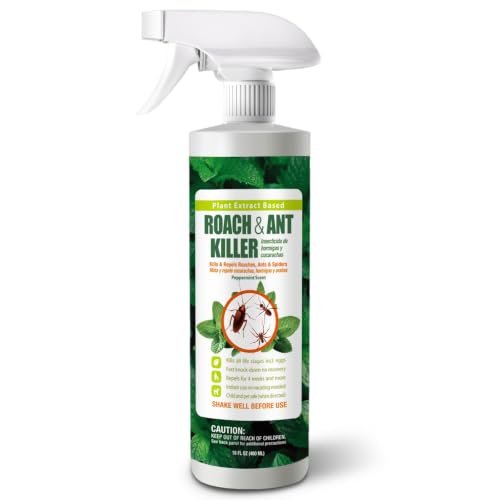
EcoVenger Plant-Based Roach and Ant Killer
EcoVenger Roach and Ant Killer is one of the most interesting choices in this roundup. The 16-ounce product is marketed as a plant-based insect spray. Its product title highlights contact killing and claims up to four weeks of deterrence. It also lists a peppermint scent. These features make it worth a close look for people who want a natural-style approach to roach control. I would still check the current package and full directions before buying, since the exact use conditions matter.
I like that EcoVenger is presented as a targeted spray rather than a room fogger. A spray can help users focus on a known pest area instead of treating an entire room. That is a useful feature in a home with kitchen cabinets, entry points, and other areas that need careful treatment. The claimed four-week deterrence is another selling point, but it should not be taken as a promise that every home will remain roach-free for a month. Results depend on the surface, pest pressure, and correct application.
✅ Pros
- ✔ Uses a plant-based pest control positioning.
- ✔ The product title lists both roaches and ants as target pests.
- ✔ Offers a direct-contact spray format.
- ✔ The manufacturer claims up to four weeks of deterrence.
- ✔ Peppermint scent gives it a botanical profile.
- ✔ The 16-ounce size is convenient for household use.
- ✔ May suit shoppers who prefer a spray over loose insect dust.
- ✔ Can be used as one part of a wider pest prevention plan.
- ✔ Offers a targeted alternative to whole-room fogging.
⚠️ Cons
- ✖ The four-week deterrence claim may vary with surface and use conditions.
- ✖ Plant-based ingredients do not make the spray risk-free.
- ✖ Peppermint scent may be too strong for sensitive users.
- ✖ A spray may not reach roaches hiding deep inside walls or appliances.
- ✖ It does not replace sanitation, sealing, or monitoring.
- ✖ Users must follow all label rules about pets, children, and treated surfaces.
My Recommendation
EcoVenger is my first choice among these five products for shoppers who want a plant-based roach spray. Its contact-use design and claimed deterrence make it appealing for targeted pest work. I would use it only in places approved by its label and would never spray it over food, dishes, or food preparation areas. I would also avoid assuming that the product is safe for every pet simply because its marketing uses plant-based language. For a serious roach issue, combine it with monitoring traps, good sanitation, and a proper plan for hidden nesting areas. If roaches keep appearing, contact a licensed pest control professional.
| Best For | Why |
|---|---|
| Plant-based spray shoppers | Its product positioning focuses on a botanical insect control formula. |
| Targeted roach treatment | The spray format is suited to direct application where the label allows. |
| Homes with more than one pest issue | The product title lists both roaches and ants. |
Harris Natural Diatomaceous Earth Roach Killer
Harris Diatomaceous Earth Crawling Insect Killer takes a different path from liquid sprays. It uses diatomaceous earth, a fine mineral dust that works through physical action. The dust damages the protective outer layer of insects and helps them lose moisture. This process is known as desiccation. The product title lists roaches, ants, bed bugs, and fleas among its target pests. I like this approach because it does not depend on a strong scent or a liquid spray.
Diatomaceous earth can remain active while it stays dry and undisturbed. That makes it useful for certain hidden spaces where crawling insects travel. However, dust needs careful handling. Breathing fine particles can irritate the nose and airways. I would never spread it across an open kitchen floor or leave piles where children and pets can touch it. The goal is a light, label-approved application in a suitable area, not a cloud of powder around the house.
✅ Pros
- ✔ Uses diatomaceous earth as its active pest control material.
- ✔ Works through physical action rather than a scented contact spray.
- ✔ Can target roaches and several other crawling insects listed on the label.
- ✔ Does not rely on peppermint or other fragrance oils.
- ✔ Can remain effective while the dust stays dry and undisturbed.
- ✔ May suit dry cracks and other approved hiding places.
- ✔ Offers a different option for people who dislike liquid sprays.
- ✔ Its dry format can be useful in areas where liquid treatment is unsuitable.
- ✔ The product is designed for indoor and outdoor use as directed by its label.
⚠️ Cons
- ✖ Fine dust can irritate the nose and airways if inhaled.
- ✖ It is not a good choice for wet or damp areas.
- ✖ Application needs care to prevent dust from spreading.
- ✖ Children and pets must stay away from treated areas as directed.
- ✖ Visible powder may be unwanted in some rooms.
- ✖ It may work slowly because insects need to contact the dust.
- ✖ Heavy or careless application can create unnecessary exposure.
My Recommendation
Harris is my preferred option in this group for shoppers who want a dry treatment instead of a liquid spray. It can be useful in suitable cracks and hidden spaces where roaches travel. I would not call it completely non-toxic. Its dust can cause breathing and eye irritation, so careful use matters. Choose a product labeled for the pest and location you need to treat. Apply only as directed, keep people and pets away during application, and avoid areas where dust can become airborne. Never use pool-grade diatomaceous earth as a substitute for a labeled pest control product. For homes with crawling toddlers or pets that explore every corner, a different treatment may be easier to manage.
| Best For | Why |
|---|---|
| Dry cracks and crevices | The dust can work in suitable dry hiding places. |
| People avoiding scented sprays | It uses mineral dust instead of a peppermint spray. |
| Multi-pest control | The product label lists several crawling insect targets. |
STEM Plant-Based Indoor and Outdoor Bug Spray
STEM Plant-Based Bug Spray is a compact 10-ounce product for people who want a botanical option for common household pests. Its product title lists ants, roaches, and spiders. It also describes the formula as plant-based and suitable for indoor and outdoor use. This broad use can make the product appealing to homeowners who deal with more than one kind of insect. I also like the smaller bottle size for people who want a simple spray to keep with their household cleaning supplies.
The main appeal here is the plant-based positioning and broad pest list. It gives shoppers another option when they want to avoid traditional strong-smelling bug sprays. Still, the phrase plant-based does not tell the whole safety story. The exact active ingredients, concentration, label directions, and exposure warnings matter much more. I would check the current package before using it around pets, children, or sensitive surfaces. It may help with visible insects, but I would not expect a small spray bottle to solve a major roach infestation by itself.
✅ Pros
- ✔ Uses a plant-based insect control approach.
- ✔ The product title lists roaches, ants, and spiders.
- ✔ The 10-ounce bottle is compact and easy to store.
- ✔ Designed for indoor and outdoor use according to its product description.
- ✔ Offers a spray format for visible pest activity.
- ✔ May appeal to people seeking botanical pest control.
- ✔ Can fit a basic household pest prevention routine.
- ✔ Targets several common insects rather than roaches alone.
- ✔ Does not require users to prepare a separate liquid mixture.
⚠️ Cons
- ✖ The smaller bottle may run out quickly during repeated treatment.
- ✖ Plant-based does not mean harmless or safe to ingest.
- ✖ It may not reach roaches hiding inside walls or deep cabinet gaps.
- ✖ The product does not replace a complete infestation control plan.
- ✖ Users must confirm the current label before indoor or outdoor application.
- ✖ A spray may need repeat use according to the label.
My Recommendation
I would consider STEM for people who want a small botanical bug spray for occasional household pest problems. It is a practical format when the target insect is visible and the label allows treatment in that location. Its smaller size may also suit apartments or homes with limited storage space. However, I would not choose it as my only treatment for a heavy German cockroach infestation. Those roaches can hide in tiny spaces and reproduce quickly. Use monitoring traps and remove food and water sources. Keep the product away from food, dishes, and pet supplies. Always follow the full label rather than relying on the phrase non-toxic in product marketing.
| Best For | Why |
|---|---|
| Small homes and apartments | The compact 10-ounce bottle is easy to store. |
| Botanical pest control shoppers | The product is marketed as a plant-based spray. |
| Homes with several insect pests | The listed targets include roaches, ants, and spiders. |
GoneNaturally Peppermint Oil Roach Killer Spray

GoneNaturally Roach Killer is marketed as a peppermint oil spray for indoor and outdoor pest control. The product title highlights roach killing and repellent use. It also describes the product as suitable for homes with kids and pets. Its 16-ounce bottle offers a ready-to-use format for people who prefer not to mix pest control products. Peppermint oil may also appeal to shoppers who want a botanical scent instead of the smell of a traditional insect spray.
I would place this product in the natural-style spray category. Its main selling points are peppermint oil, a broad home-use message, and a simple spray format. However, I would verify the active ingredients, registration details where applicable, and complete label before buying. A pet-safe claim does not mean every animal can safely contact wet spray or treated surfaces. Some essential oils can be harmful to certain pets, especially when swallowed or applied directly to their bodies. I would use this product only for its labeled purpose and keep pets away for the required period.
✅ Pros
- ✔ Uses peppermint oil as its main marketing feature.
- ✔ The 16-ounce size offers a practical household spray format.
- ✔ The product title lists indoor and outdoor use.
- ✔ Designed specifically for shoppers seeking roach control.
- ✔ Also marketed as a roach repellent.
- ✔ May appeal to people who prefer botanical pest products.
- ✔ Ready-to-use spray format avoids the need for mixing.
- ✔ Can be considered as one part of a wider pest prevention routine.
- ✔ The peppermint scent may suit users who prefer mint-based fragrances.
⚠️ Cons
- ✖ Peppermint oil is not harmless to all pets.
- ✖ The strong scent may bother people who are sensitive to fragrances.
- ✖ The pet-safe marketing claim still requires careful label review.
- ✖ A spray may not reach hidden roach nests.
- ✖ Repellent action does not guarantee that roaches will leave the home.
- ✖ The product should not be used on food or food preparation surfaces unless its label clearly permits it.
My Recommendation
GoneNaturally may suit shoppers who prefer peppermint-based pest products and want a ready-to-use roach spray. I would consider it for small, targeted pest problems after checking the current product label. Its indoor and outdoor positioning gives it potential flexibility, but the label must decide where it can be used. I would be extra careful in homes with cats, birds, or other sensitive pets. Never spray essential oils directly on an animal. Do not assume that a product is safe simply because it uses natural ingredients. For a large infestation, add sanitation, monitoring, entry-point repairs, and professional help when needed.
| Best For | Why |
|---|---|
| Peppermint oil fans | The product is marketed around peppermint oil. |
| Ready-to-use spray users | The 16-ounce bottle offers a simple spray format. |
| Small roach problems | Its roach-focused spray format may suit targeted treatment. |
Final Verdict: Which Should You Buy?
EcoVenger is my top pick for the best non toxic roach killer among these five options. It offers a plant-based spray format and a claimed four-week deterrence period. Harris Diatomaceous Earth is a useful alternative for suitable dry spaces, while STEM is a compact botanical spray choice. Remember that natural does not mean risk-free. Always follow the label and protect children and pets.
The best non toxic roach killer is only one part of a clean, roach-free home. Remove food and water sources, seal entry points, and monitor hidden areas. Choose a product that fits your needs, use it with care, and seek professional help if roaches keep returning.
FAQs Of best non toxic roach killer
Q What is the best non toxic roach killer for homes?
Q Are natural roach killers safe around pets?
Q Does peppermint oil really kill cockroaches?
Q Is diatomaceous earth safe to use indoors for roaches?
Q Can a natural roach spray eliminate a large infestation?