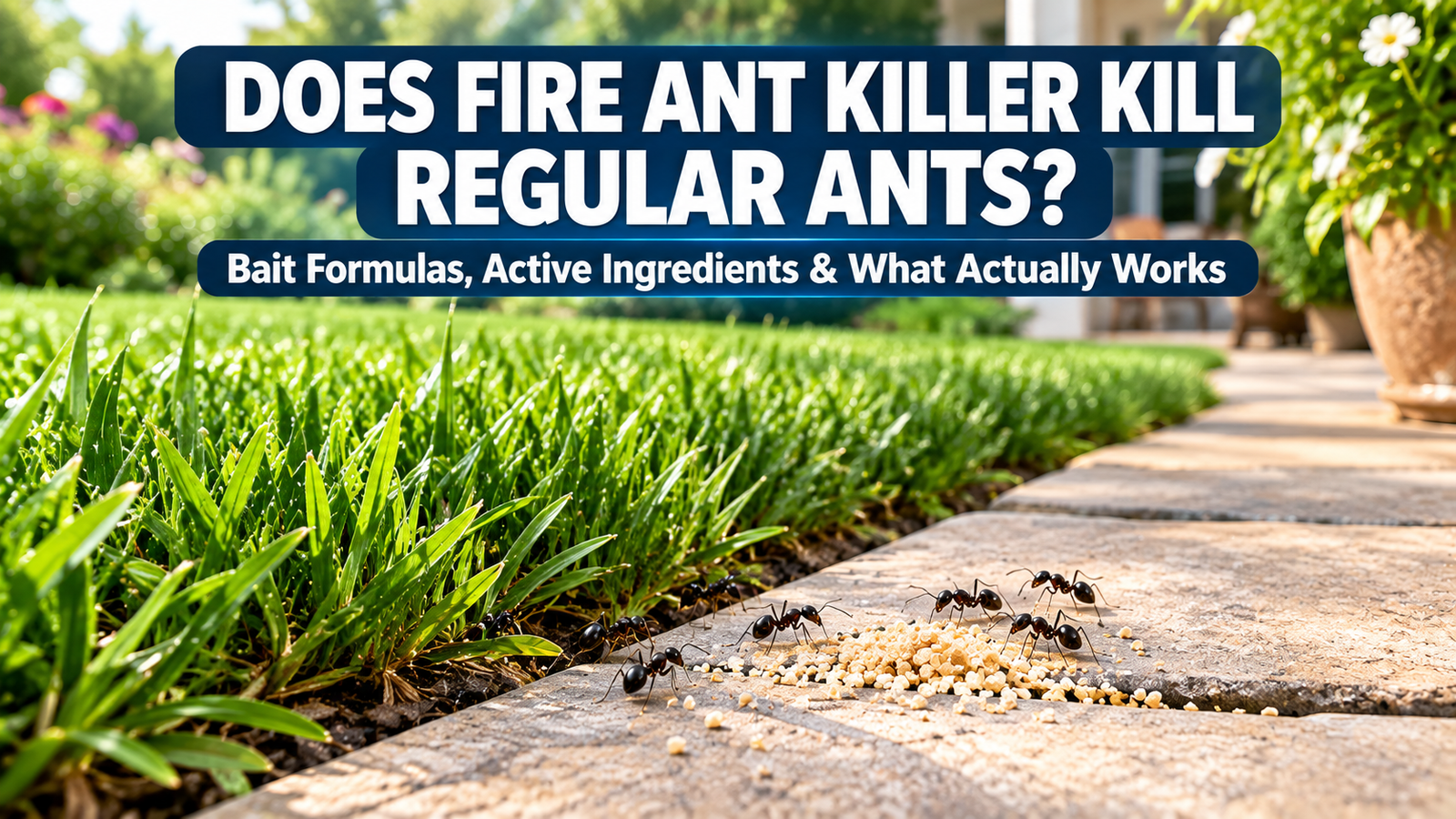
Does Fire Ant Killer Kill Regular Ants? What Homeowners Need to Know
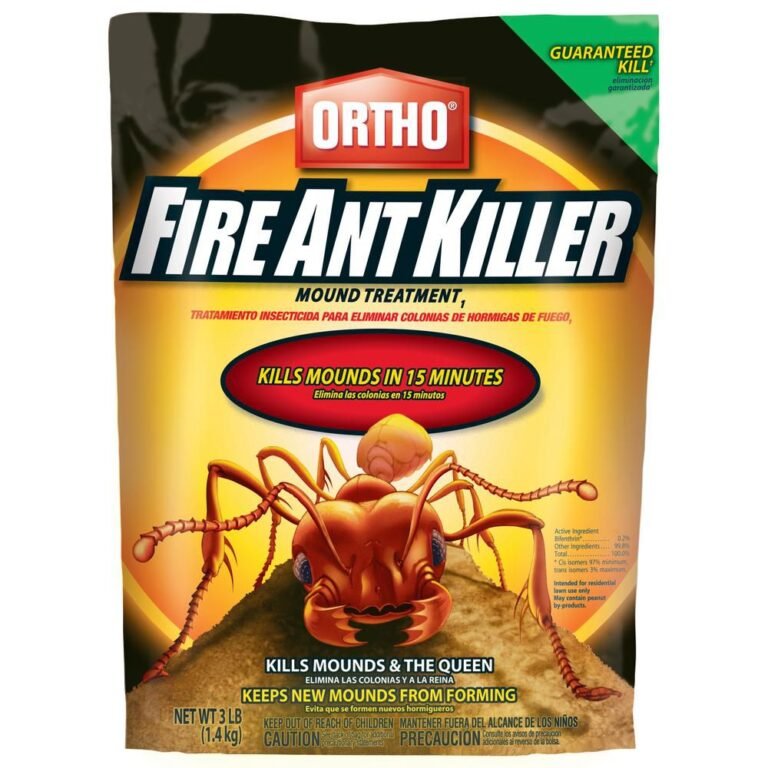
If you see ants in your yard, you may wonder if the fire ant killer already sitting in your garage will work. The short answer is often yes. Many fire ant products contain insecticides that can harm or kill other ants too.
But there is an important catch. Not every fire ant product works in the same way. Some are fast contact killers. Others are slow baits that ants eat and carry to the nest. A product can kill an ant on contact and still fail to control the colony if the bait does not attract that species.
A useful rule is simple: **do not judge an ant product only by the words on the front of the package.** Check the active ingredient, the listed pests, the application site, and the directions. This matters even more when you are treating areas near children, pets, gardens, or food.
This guide explains exactly what happens when you use fire ant killer on regular ants, why some treatments work better than others, and when you should choose a different ant control method.
:max_bytes(150000):strip_icc()/ortho-insect-killer-granules-020550605-64_1000-654edb341bf4458ebdfe7a6b2421e0d3.jpg "Granular insect killer used for outdoor ant and insect control")
Does Fire Ant Killer Kill Regular Ants?
Yes, **fire ant killer can kill regular ants** when the product contains an insecticide that affects those ants and the product is approved for use against them. Many insecticides do not work on only one ant species. They can affect several insects that share similar biological traits.
Still, killing a few visible ants is not the same as controlling an entire colony. Some products kill ants quickly after contact. Others work more slowly so worker ants can take the bait back to the nest.
This difference is important. If you have a trail of small ants in your kitchen, a lawn treatment made for fire ant mounds may not solve the problem. The product may kill ants that touch it while leaving the main nest untouched.
So, when asking does fire ant killer kill regular ants, the better question is: **Will this specific product control the type of ant I have in the place where I found it?**
- ✦ Active ingredient
The active ingredient is the chemical or substance that controls the pest. Different ingredients act in different ways.
- ✦ Product type
Granules, sprays, dusts, and baits can work very differently even when they target the same pest.
- ✦ Ant species
Ants vary in food choice, nesting habits, and behavior. A bait that attracts one species may be ignored by another.
- ✦ Application site
A product approved for lawns may not be approved for indoor use. The label determines where it can be applied.
Why One Ant Killer Can Affect Several Ant Species
Most insecticides do not identify an ant by its common name. They affect biological systems shared by many insects. That is why a product sold for fire ants may also harm other ants when those ants contact or consume it.
However, exposure does not guarantee good control. The ant must contact the product or accept the bait at a useful dose. If the ants avoid it, the treatment may have little effect.
- ✦ Contact exposure
The ant comes into direct contact with the treated surface or insecticide.
- ✦ Feeding exposure
The ant eats a treated bait or food source and takes part of it back to the nest.
How Fire Ant Killer Works on Ants
To understand whether fire ant killer will work on regular ants, first look at how the product kills ants. There are two broad approaches: **contact control and bait control**.
Contact products are designed to affect insects that touch treated areas. They can give quick visible results. But fast knockdown does not always mean the colony is gone.
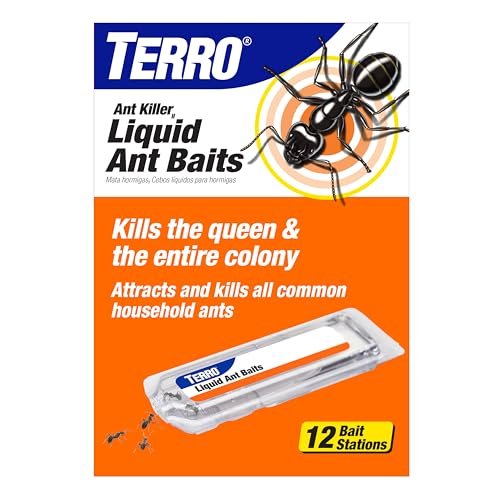
Baits take a different approach. Worker ants feed on the bait or carry it into the nest. The active ingredient then spreads through the colony. This can make bait useful when the goal is long-term colony control.
Neither method is automatically right for every ant problem. The best choice depends on where the ants are nesting, what species they are, and what the product label allows.

- ✦ Contact killers
These products are meant to kill ants that directly encounter the treated insecticide. They can work quickly but may not reach the queen or deeper parts of the colony.
- ✦ Ant baits
These products use food or another attractive material to get worker ants to pick up the active ingredient and move it into the nest.
- ✦ Granular treatments
Granules may be used around lawns or other outdoor areas when the label permits. Some act as contact treatments, while others are designed for baiting.
Why Bait Can Be Better Than Spray for a Colony
Seeing fewer ants after a spray can feel like success. Yet the nest may still be active. If the product only kills ants that cross the treated area, new workers may keep coming from the colony.
A suitable bait can reach parts of the colony that a surface spray cannot. The key is that ants must accept the bait and carry it into the nest. This is why using the right bait for the right ant species matters.
- ✦ Slow action can help
A slower product can give workers time to move the bait through the colony before they die.
- ✦ Ant acceptance matters
A bait only helps when the target ants find it attractive and feed on it.
Fire Ant Killer vs. Regular Ant Killer
The words fire ant killer and regular ant killer can make these products sound very different. In practice, there can be a lot of overlap. Both may contain insecticides that affect several types of ants.
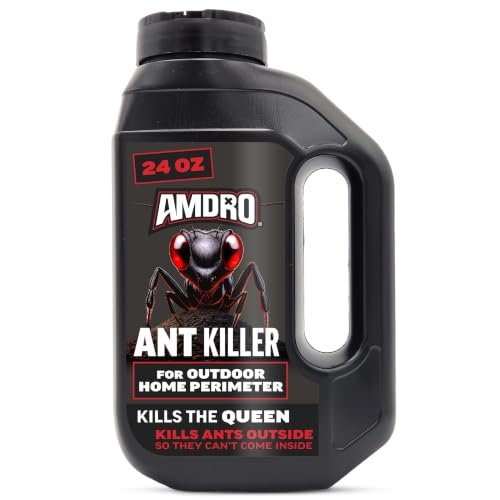
The main difference is often the product design and the pests listed on the label. Fire ant products may focus on outdoor mounds, lawns, or broadcast treatment. Indoor ant products may focus on cracks, trails, entry points, or food-based bait stations.
This distinction matters because the best product for a fire ant mound may be poorly suited to an indoor ant trail. The wrong product can also create safety problems if you use it in a place that the label does not allow.
If you are deciding between two products, compare the active ingredient and label directions instead of relying only on the product name.
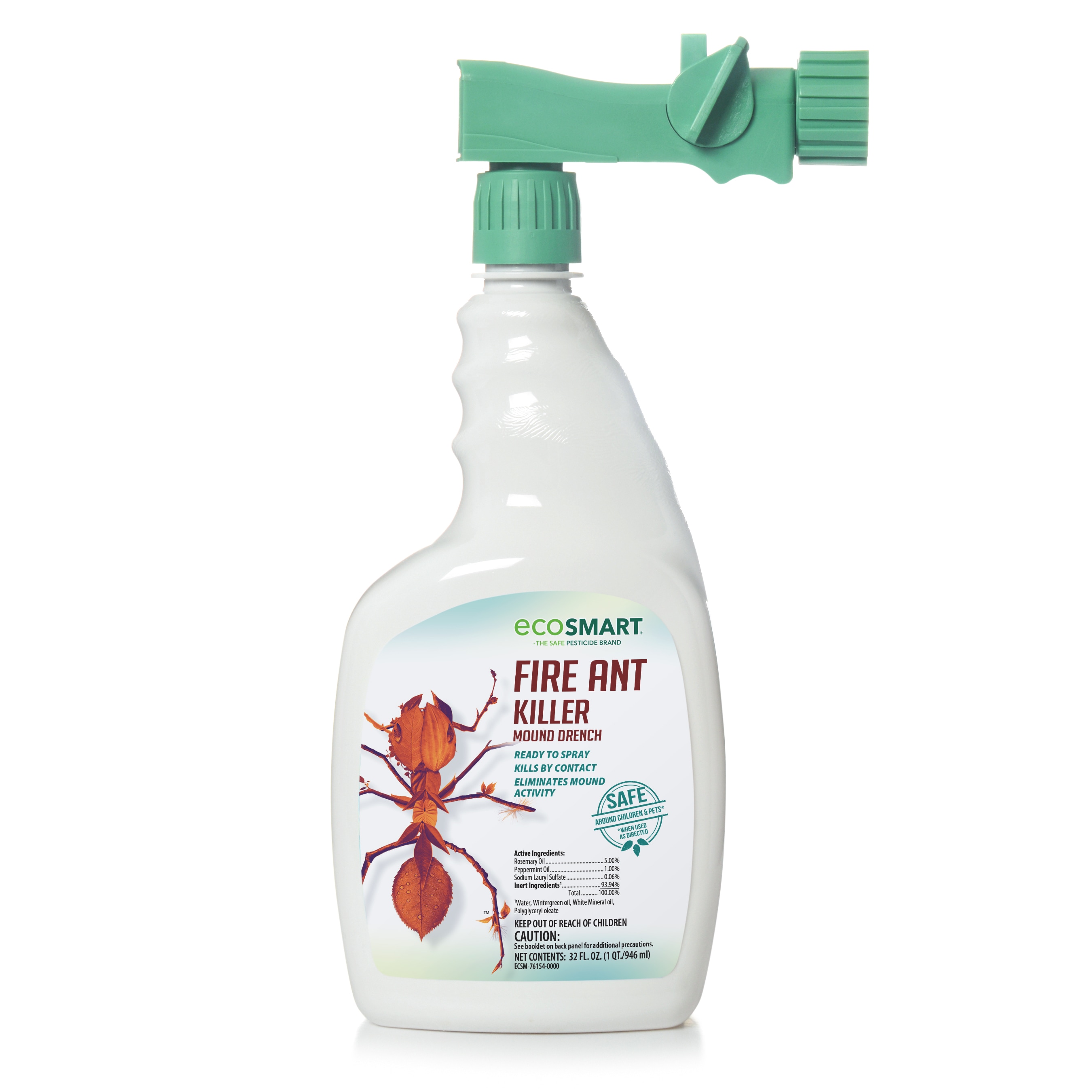
- ✦ Fire ant products
These are often designed for outdoor areas and may target fire ant mounds or wider lawn areas.
- ✦ General ant products
These may target a wider range of ants and can include indoor bait stations, sprays, dusts, or outdoor treatments.
- ✦ Bait products
These are intended to attract ants and use their normal food-gathering behavior to move the treatment into the colony.
- ✦ Professional treatments
A pest professional can identify the ant and match the treatment to its nesting and feeding behavior.
The Label Matters More Than the Product Name
In the United States, pesticide labels are not just marketing material. They give legally important directions for use. The label tells you which pests the product is intended to control, where it can be used, how much to apply, and what precautions to follow.
So even if a fire ant killer can kill a regular ant, that does not mean you should use it anywhere you find regular ants. Follow the label for that exact product and application site.
- ✦ Check listed pests
Look for the ant species or ant group named on the product label.
- ✦ Check the use site
Confirm that the label allows use on lawns, gardens, cracks, foundations, indoor areas, or other places where you plan to apply it.
Will Fire Ant Killer Work on Common Household Ants?
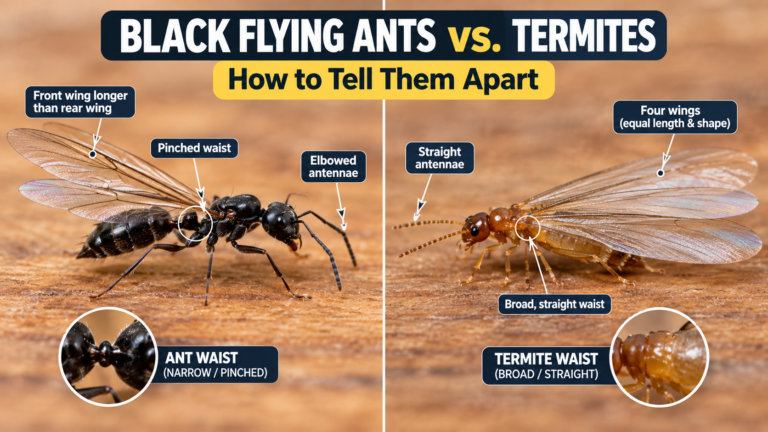
If regular ants are entering your home, the answer depends on the species and the product. Common household ants may include odorous house ants, pavement ants, carpenter ants, Argentine ants, and other species. They do not all behave the same way.
For indoor ants, bait is often useful because workers can carry food back to the nest. A spray may kill the ants you see but may not remove the source. In some cases, heavy spraying can also make ants change their path and become harder to track.
If you are dealing with carpenter ants, the situation is different. Carpenter ants can nest in damp or damaged wood. Killing visible workers may not solve the underlying nest problem.
This is why the question does fire ant killer kill regular ants should not be treated as a simple yes-or-no question. **It can kill them, but effective control requires matching the treatment to the ant problem.**

- ✦ Kitchen ants
Look for the food source and entry point. A suitable indoor ant bait may work better than treating the whole room with an outdoor product.
- ✦ Pavement ants
These ants often nest near buildings and pavement. Outdoor control may help when the product label permits that use.
- ✦ Odorous house ants
These ants can form large colonies and may move when disturbed. Bait can be useful when it is accepted by the colony.
- ✦ Carpenter ants
Look for moisture, damaged wood, or a possible nest. A quick-kill product may not address the colony.
Why Indoor Ants Can Be Hard to Control
The ants you see may be only a small part of the colony. Workers often travel along hidden routes behind walls, under floors, through cracks, or along pipes and wiring.
A strong treatment can kill many workers and still leave the nest active. For long-term control, finding the colony or using a suitable bait that workers carry back can be more useful than simply killing the ants you can see.
- ✦ Hidden nests
The main colony may be far from the visible ant trail.
- ✦ Multiple colonies
Some ant species can maintain more than one connected nest, making control more difficult.
What Active Ingredients Should You Look For?
If you want to know whether a fire ant killer will affect regular ants, the active ingredient is one of the first things to check. Product names can change, but the active ingredient tells you what actually does the pest-control work.
Different products may use ingredients such as bifenthrin, hydramethylnon, indoxacarb, spinosad, or other insecticides. Their uses, speeds, risks, and target pests differ. Some are used in baits, while others are used in contact treatments.
Do not assume that one active ingredient is always better. The right choice depends on the ant species, location, formulation, and label directions. A bait ingredient can be useful for colony control, while a contact insecticide may be useful for rapid reduction of exposed ants.
When comparing products, read the full label rather than relying on online product descriptions. This is especially important because formulations can differ even when products sound similar.

- ✦ Read the active ingredient
Find the active ingredient section on the package. It gives you a better idea of what type of treatment you are buying.
- ✦ Check the formulation
The same general insecticide can behave differently when formulated as a bait, spray, granule, dust, or other product.
- ✦ Follow the label
Use only the amount, location, method, and frequency stated on the product label.
- ✦ Avoid mixing products
Do not mix pesticides unless the label specifically allows it. More pesticide does not mean better control.
Bait Ingredients and Contact Ingredients Are Not the Same
A bait must do more than kill an insect. It must also be acceptable to the target ants. That means the food base, scent, texture, and active ingredient all matter.
A contact product does not need the same level of feeding behavior. The ant only needs to encounter the treated area. This makes contact products useful for exposed ants but does not automatically make them better for colony control.
- ✦ Bait goal
Get worker ants to feed on the product and move it toward the nest.
- ✦ Contact goal
Expose ants to an insecticide through direct contact with a treated surface or material.
When Fire Ant Killer May Not Work on Regular Ants
There are several reasons a fire ant treatment may fail on regular ants. The most common issue is not that the insecticide cannot affect the ants. The issue is that the product does not match the ants’ behavior or the place where they live.
For example, a fire ant bait may be designed around the feeding habits of fire ants. Another ant species may ignore it. Likewise, a lawn granule may have little value against ants nesting inside a wall or under a kitchen cabinet.
Weather can also affect outdoor treatments. Rain, irrigation, heat, sunlight, and soil conditions can change how a product behaves. Always use the product as directed rather than trying to increase the dose.
If ants keep returning after treatment, look for the nest, food source, moisture source, and entry point. Repeatedly killing visible workers without addressing the colony often gives only temporary relief.

- ✦ Wrong ant species
The bait or treatment may not attract or control the species you have.
- ✦ Wrong location
A product designed for outdoor lawns may not be approved or useful for indoor ant trails.
- ✦ Wrong product type
A fast contact killer may reduce visible ants but leave the nest active.
- ✦ Ants avoid the bait
Ants may ignore a bait if its food source does not match what the colony wants at that time.
- ✦ The colony is elsewhere
The visible trail may lead to a nest located outside, inside a wall, beneath a slab, or in another hidden area.
Signs You Need a Different Approach
If ant activity stays high after you follow the label directions, stop and reassess instead of simply applying more product. Watch where the ants travel and note where they enter or disappear.
If you find moisture damage, wood damage, a large outdoor colony, or ants appearing in many rooms, professional identification may save time. Correct identification can be more useful than trying several random products.
- ✦ Ant trails keep returning
Persistent trails can mean the nest remains active or new workers are entering from another location.
- ✦ Ants appear in many areas
Widespread activity may point to a larger colony or several connected nests.
- ✦ Wood damage is present
Possible carpenter ant activity deserves closer inspection for moisture and structural damage.
How to Choose the Right Ant Killer for Your Problem
The best way to choose an ant killer is to start with the problem, not the product aisle. First decide whether the ants are inside or outside. Then identify the ant if you can, find where the ants are coming from, and check whether the product is labeled for that use.
For a small indoor trail, a labeled indoor ant bait may be a better fit than an outdoor fire ant treatment. For a fire ant mound in a lawn, a product specifically labeled for fire ants may make more sense.
If you have pets or children, pay close attention to application rules, bait station placement, re-entry directions, and storage. Keep pesticides in their original containers and follow all label precautions.
The goal is not to use the strongest product you can find. The goal is to use the **right product in the right place at the right rate**.

- ✦ For indoor ants
Look for a product labeled for indoor ant control and the specific use area. Baits are often useful when colony control is the goal.
- ✦ For lawn ants
Choose a product labeled for lawns and outdoor ant control. Check whether it specifically lists the ant species you are treating.
- ✦ For fire ant mounds
Use a product labeled for fire ants and follow the mound or broadcast directions exactly.
- ✦ For unknown ants
Take a clear photo or collect a sample safely for identification before choosing a treatment.
- ✦ For repeated infestations
Look for the nest, entry point, food source, and moisture source. Consider professional pest identification when the problem continues.
A Simple Decision Process
Start by asking where the ants are. If they are inside, use an indoor-labeled product. If they are in the lawn, use an outdoor product that allows treatment of that area.
Next, ask what you want to achieve. If you only need quick reduction of exposed ants, a contact product may help. If you want to affect the colony, look for a suitable bait and give it enough time to work.
- ✦ Step 1
Find out where the ants are nesting or entering.
- ✦ Step 2
Identify the ant when possible.
- ✦ Step 3
Choose a product labeled for that pest and location.
- ✦ Step 4
Apply it exactly as the label says.
- ✦ Step 5
Monitor activity instead of adding more pesticide without a clear reason.
Safety Tips When Using Fire Ant Killer
Pesticides can be useful tools, but they should be handled with care. The safest approach is to read the entire label before opening the container. Do not assume that a product is safe for a particular area just because it is sold for ants.
Keep children and pets away from treated areas as directed on the label. Do not place outdoor pesticide products on kitchen counters, food preparation surfaces, dishes, or other areas unless the label specifically permits that use.
Avoid applying more product than the label calls for. A higher dose can increase exposure without giving better control. Never transfer pesticide into a food or drink container.
If you are unsure about a product, ask a licensed pest professional or your local extension service for guidance. Good pest control starts with correct identification and careful use.
- ✦ Read the full label
Check the target pest, application site, rate, timing, protective steps, and storage directions.
- ✦ Protect children and pets
Keep them away from treated areas according to the label instructions.
- ✦ Use protective equipment
Wear the protective clothing or equipment listed on the product label.
- ✦ Store pesticides safely
Keep products in their original containers and store them where children and pets cannot reach them.
- ✦ Do not overapply
More pesticide is not automatically more effective and can increase unnecessary exposure.
What to Do If You Are Unsure About a Product
If the label does not clearly allow the use you have in mind, do not improvise. Look for another product whose label matches the pest and location.
For difficult infestations, a licensed pest professional can identify the ant and select a treatment based on its nesting and feeding behavior. This can prevent repeated, ineffective applications.
- ✦ Check the label
The label is the first source for approved use and safety directions.
- ✦ Ask for identification
Correct ant identification can make treatment more precise and reduce unnecessary pesticide use.