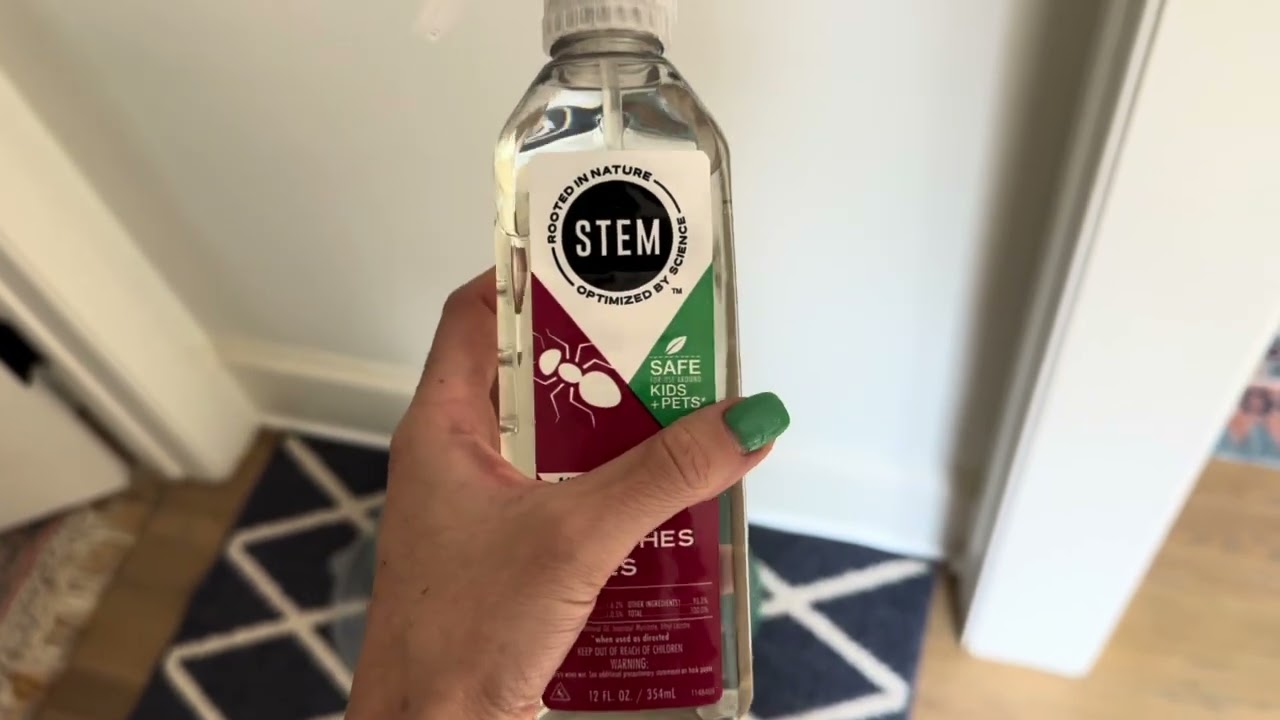
To open STEM bug spray, remove any outer packaging or protective seal, check the spray head, and point the nozzle away from your face. Most standard STEM trigger bottles are ready to use without removing the spray head. Shake the bottle, hold it upright, and press the spray button or trigger firmly to release the product.
In the United States, homeowners often keep bug spray in a kitchen cabinet, garage, or cleaning closet to deal with ants, roaches, flies, and other pests. STEM bug spray is one option for household pest control. However, opening its bottle can be confusing if you have never used this type of sprayer before. Some bottles have a push-down spray button, while other spray packages may have different protective parts.
The good news is that opening a standard STEM bug spray bottle is usually simple. You generally do not need to unscrew the entire top or remove the spray mechanism. First, inspect the bottle, check for a protective cover, and find the spray opening. Then follow the directions printed on your exact product label. This guide explains how to prepare the bottle, operate the nozzle, solve common problems, and handle the insecticide with care.
Source: stemforbugs.com
How To Open STEM Bug Spray Step By Step
Opening STEM bug spray starts with identifying the bottle design. The common STEM Kills Ants, Roaches, and Flies 12-ounce product uses a spray dispensing head. Its manufacturer describes pressing the spray nozzle to release the product. This means you normally operate the dispensing button rather than remove the whole top.
Before handling the bottle, place it on a stable surface. Read the front and back labels so you know which insects the formula targets and where it can be used. Keep your face away from the nozzle during preparation.
Source: www.homedepot.com
Step 1: Inspect the bottle
Look at the spray head, nozzle opening, bottle neck, and any plastic packaging. Check whether a protective cap, seal, or other shipping material is present. Do not assume every STEM bottle has the same opening system.
Step 2: Remove the outer packaging
If the bottle has removable plastic wrapping or a protective cover, remove only the packaging intended to come off before use. Do not cut into the bottle or pull apart the spray assembly.
Step 3: Find the spray opening
Inspect the front of the dispensing head. The opening may be a small hole or a shaped outlet near the button or trigger. Make sure it is not covered by loose packaging.
Step 4: Check the spray control
Look for any visible OFF, ON, CLOSE, or SPRAY markings. If your model has a rotating nozzle, follow the markings and turn it gently to the permitted operating position. Do not force a part that does not rotate.
Step 5: Prepare the liquid
Shake the bottle well if the product label directs you to do so. STEM’s standard Kills Ants, Roaches, and Flies instructions recommend shaking before use.
Step 6: Test the dispensing mechanism safely
If the label permits operation, point the nozzle away from your face, other people, pets, food, and sensitive surfaces. Press the spray button or trigger as directed. Do not test it by spraying into the air.
Step 7: Confirm that it works
A functioning sprayer releases liquid through its intended opening when pressed. If nothing comes out, stop and check the nozzle, packaging, and bottle instructions instead of applying excessive force.
Do You Need To Remove the Entire STEM Spray Head?
Usually, no. The standard STEM Kills Ants, Roaches, and Flies bottle is designed to dispense product through its built-in spray mechanism. The manufacturer’s instructions say to shake the bottle, hold it upright, and press the spray nozzle. They do not instruct users to unscrew the entire spray head.
Removing the spray assembly can cause spills, damage the dispensing parts, or expose you to the liquid. Leave the bottle top in place unless the instructions for your specific product clearly explain otherwise.
Standard spray bottle
Keep the dispensing head attached and use its built-in button or trigger.
Bottle with a protective cover
Remove the cover only if it is designed to come off before use.
Bottle with a different dispensing system
Follow the printed instructions for that model instead of copying steps from another STEM product.
Understand the Different STEM Bug Spray Bottle Designs
Not every insect spray bottle opens in the same way. A push-button bottle, a trigger sprayer, and an aerosol can have different dispensing systems. Knowing which one you have can prevent damage and help you use the product correctly.
STEM sells different insect-control products for different pests. The bottle design and directions may vary with the formula and package. Always identify the exact product before trying to operate its nozzle.
Source: amazon.com
Push-button spray bottle
This design has a dispensing button on the bottle top. The user presses the button firmly to release the liquid. Some STEM products use this type of mechanism.
Trigger spray bottle
A trigger bottle has a handle that you squeeze with your fingers. Some designs include a rotating nozzle with different settings. Follow the printed ON and OFF markings when present.
Protective-cap bottle
Some packages may have an additional cover to protect the dispensing mechanism during shipping and storage. Remove only the intended cover without pulling apart the spray head.
Aerosol container
An aerosol can uses a pressurized dispensing system rather than a standard liquid trigger. Never puncture, heat, cut, or attempt to dismantle an aerosol container.
How To Recognize a Push-Button STEM Bottle
A push-button model usually has a compact dispensing head with a button that releases liquid when pressed. The spray outlet is built into or positioned close to the button assembly. The button may look different from the handle found on a traditional garden sprayer.
The STEM Kills Ants, Roaches, and Spiders 10-ounce product, for example, has instructions to hold the bottle upright and press the spray nozzle for about one second. Its directions also specify an application distance of about 18 inches. These instructions are product-specific, so do not automatically use that distance for another formula.
Look for a fixed spray head
The top generally stays attached to the bottle during normal use.
Look for a dispensing button
The button releases liquid when pressed according to the product directions.
How To Recognize a Trigger-Style Bottle
A trigger-style bottle has a handle that moves when squeezed. It may also have a nozzle that rotates to control the spray pattern or close the outlet. If you see these parts, inspect their markings before operating the sprayer.
Do not assume that a rotating nozzle must turn in a particular direction. Different manufacturers and models use different designs. If there are no clear markings, check the product instructions or contact the manufacturer.
Check the handle
A trigger handle is usually easy to recognize because it moves toward the bottle when squeezed.
Inspect the nozzle
Look for a spray opening and any printed operating positions.
What To Do Before Using STEM Bug Spray
Opening the bottle is only the first part of the process. You should also prepare the room or outdoor area before spraying. This helps prevent accidental contact with people, pets, food, and surfaces that may be damaged by the product.
The U.S. Environmental Protection Agency advises users to read pesticide labels and follow all listed precautions. It also recommends removing children, toys, and pets from treatment areas and covering or removing food during indoor applications.
Source: storage.googleapis.com
Read the complete label
Check the target insects, approved application sites, directions, warnings, and first-aid information.
Prepare the treatment area
Remove food, dishes, toys, and other items that could come into contact with the spray.
Move children and pets away
Keep them out of the area during application and for the period specified on the product label.
Protect your hands
Use gloves or other protective equipment when the label calls for them. Avoid direct skin contact with the liquid.
Check the surface
Some STEM formulas may stain or damage painted surfaces, polished furniture, wood floors, or plastics. Test an inconspicuous area if the label allows the intended application.
Check the weather outdoors
Avoid spraying in windy or rainy conditions when the product label or outdoor application guidance warns against it.
Why Reading the Label Matters
The label is more than a product description. It explains where the insecticide can be applied, which pests it targets, how to dispense it, and what precautions are needed. It may also include special instructions for people, pets, plants, and household surfaces.
For example, STEM Kills Ants, Roaches, and Flies instructions say not to apply the product to surfaces used to store, prepare, or eat food. The manufacturer also warns that excess liquid may make floors slippery. These details can change how you prepare a room.
Target pests
Make sure the insect you want to control is listed for your particular formula.
Application distance
Follow the distance stated on the exact bottle rather than guessing.
Surface restrictions
Avoid food-contact surfaces and any material excluded by the label.
How To Use STEM Bug Spray After Opening It
Once the dispensing mechanism is ready, use the spray only as directed on the bottle. The goal is to apply the correct amount to the intended pest or treatment area, not to cover every nearby surface with liquid.
STEM’s official directions differ by product. Its 12-ounce Kills Ants, Roaches, and Flies formula recommends holding the bottle upright about 12 inches from the target insect and pressing the nozzle two or three times. The 10-ounce Kills Ants, Roaches, and Spiders product gives a different distance and dispensing instruction.
Source: www.youtube.com
Step 1: Shake the bottle
Shake well when instructed by the product label. Keep the container closed during this step.
Step 2: Identify the insect
Confirm that the insect is listed as a target for your STEM formula.
Step 3: Hold the bottle upright
Maintain the position specified on the label. Do not point the spray toward your face.
Step 4: Follow the stated distance
Use the distance printed on your exact product. Do not treat all STEM products as having the same application distance.
Step 5: Press the dispensing control
Apply the product as directed. Avoid unnecessary spraying or excessive amounts.
Step 6: Clean up as directed
Wipe or clean damp surfaces when the product instructions require it. Pay attention to slippery floors and sensitive materials.
Should You Spray Directly Into the Air?
Do not spray STEM insecticide into the air unless the exact product label specifically permits that type of application. The standard Kills Ants, Roaches, and Flies instructions tell users to wait for flying insects to land before treating them.
This approach helps direct the product toward the intended target instead of creating unnecessary airborne droplets. It also reduces the chance of accidental exposure.
For flying insects
Wait for the insect to land if your product directions specify this method.
For crawling insects
Apply only to the target insects or approved treatment locations listed on the label.
How To Store the Bottle After Use
After spraying, stop pressing the dispensing control and follow the storage directions on the bottle. If the model has a rotating OFF setting, return it to that position when instructed. Do not remove the spray head simply to store the product.
Keep the original bottle and label together. Store the product in its original packaging, away from children, pets, food, and conditions prohibited by the label. Never transfer pesticide into a drinking-water bottle or another food container.
Keep the cap or nozzle secure
Use the intended storage position or protective cover.
Store safely
Follow the temperature and storage restrictions printed on the package.
Avoid accidental access
Keep the bottle out of reach of children and pets.
Why Your STEM Bug Spray Will Not Open
A STEM spray bottle that will not dispense liquid may have a closed nozzle, blocked outlet, damaged button, or an empty container. The problem does not always mean the product is defective. Start with simple visual checks and avoid using sharp tools or excessive force.
If the dispensing head looks damaged or the container is leaking, stop using it. A pesticide bottle should remain intact so that the liquid stays contained and can be applied through its intended mechanism.
Source: iheartkroger.com
The nozzle appears blocked
Inspect the outlet for visible packaging material or dirt. Do not insert a pin, needle, toothpick, or other sharp object into the opening.
The button will not move
Check whether a protective part is still attached. If the button remains stuck, do not force it or try to pry it loose.
The bottle sprays unevenly
Check the bottle position and follow the shaking directions. A damaged or clogged dispensing mechanism may need manufacturer assistance.
Nothing comes out
Check whether the bottle is empty, whether the spray control is in its operating position, and whether the dispensing assembly appears damaged.
The bottle leaks
Stop handling it more than necessary. Keep the liquid away from people, pets, food, and sensitive surfaces, and follow the label’s spill and disposal instructions.
What If the Spray Button Is Stuck?
A stuck spray button can be frustrating, especially when you need to deal with insects quickly. However, pressing harder is not a safe solution. Excessive force can break the button or damage the seal around the dispensing assembly.
Set the bottle upright on a stable surface and inspect the top without dismantling it. If there is no obvious removable protective cover, check the package instructions or contact STEM customer support. A damaged mechanism should not be repaired by opening the pesticide container.
Do not force the button
Stop if it does not move with normal operation.
Do not remove the entire head
The dispensing assembly may contain seals that help prevent leaks.
Ask for product support
Provide the product name, bottle size, and a description of the problem.
Can You Clean a Blocked STEM Nozzle?
Do not assume that every blocked nozzle can be repaired at home. Avoid blowing into the opening, sucking liquid through the nozzle, or using compressed air. These actions may cause accidental exposure or damage the dispensing system.
If the label provides a cleaning method, follow it exactly. Otherwise, contact the manufacturer for instructions. Do not mix water or cleaning chemicals into the insecticide bottle.
Safe inspection
Look for visible damage or loose packaging without touching the spray outlet unnecessarily.
Manufacturer guidance
Use official support instructions if the mechanism remains blocked.
Common Mistakes To Avoid When Opening STEM Bug Spray
Most problems with spray bottles happen when people assume that every bottle works like the last one they used. A familiar-looking top does not guarantee that the opening system is the same. Taking a few seconds to inspect the product can prevent spills and damage.
Avoid the following mistakes when preparing or using STEM bug spray.
Source: amazon.com
Unscrewing the entire spray head
Do not remove the dispensing assembly unless the product instructions specifically require it. Standard STEM spray products are designed to dispense through their attached spray heads.
Using pliers or knives
Tools can break plastic parts, damage seals, or puncture the container. Use only the normal controls provided with the package.
Forcing a rotating nozzle
A nozzle may have a limited operating range. Follow its markings instead of twisting it beyond its normal position.
Pointing the nozzle toward your face
Keep the spray outlet directed away from yourself and other people during preparation and application.
Ignoring the product label
Different STEM formulas may have different target pests, spray distances, and application methods.
Leaving the bottle open
Do not leave the product unattended or accessible to children and pets.
Using the product on every surface
Some formulas may damage plants, furniture, polished surfaces, or floors. Check the surface restrictions first.
Why You Should Never Puncture or Cut the Bottle
Cutting or puncturing an insecticide container can release liquid in an uncontrolled way. It can also create sharp plastic edges and make safe storage impossible. Even if the bottle seems difficult to open, damaging the package is not a suitable workaround.
If the product is defective, leaking, or impossible to operate, stop and seek instructions from the manufacturer. Keep the container away from heat and sources of accidental contact.
Prevent spills
Keep the original container intact.
Prevent exposure
Avoid direct contact with the product and its spray outlet.
Is STEM Bug Spray Safe To Handle?
STEM bug spray should be handled as a pesticide, even when its formula contains plant-derived active ingredients. Plant-based does not mean that a product can be swallowed, inhaled, or applied anywhere without precautions. The exact risks and safe-use instructions depend on the formula.
The manufacturer describes certain STEM formulas as suitable for use around people and pets when used as directed. That statement does not mean people or animals should touch wet spray or remain in a treatment area when the label says to keep away.
Source: secrettohappypets.com
Avoid eye contact
Keep the spray away from your eyes and face. Follow the label’s first-aid instructions if exposure occurs.
Avoid swallowing the liquid
Never drink or taste the product. Keep it away from food and drink containers.
Avoid unnecessary skin contact
Use protective equipment as directed and wash your hands after handling the product.
Protect household pets
Keep pets away during application and follow the exact re-entry directions on the bottle.
Protect indoor surfaces
Remove food and cover or remove kitchen items that could become contaminated.
What Should You Do If STEM Bug Spray Gets on Your Skin?
If the liquid gets on your skin, stop handling the bottle and follow the first-aid instructions on the product label. Wash the affected skin as directed. Remove contaminated clothing if the label recommends doing so.
If the product gets into your eyes, follow the eye-exposure instructions immediately. Seek medical advice or contact Poison Control if symptoms occur or you are unsure what to do. In the United States, Poison Control can be reached at 1-800-222-1222.
Read the first-aid section
Use the instructions printed on your exact product.
Get medical help when needed
Seek urgent help for serious symptoms or significant exposure.
Can You Use STEM Bug Spray Around Cats and Dogs?
Some STEM products are marketed for use around people and pets when used according to their directions. However, this does not mean that you should spray directly on an animal or allow a pet to lick a treated surface.
Keep animals away while spraying and for the period specified on the label. Never use a household insecticide as a pet treatment unless the product is specifically labeled for that purpose.
Do not spray pets
Use only veterinary products specifically intended for the animal and purpose.
Prevent licking
Keep pets away from wet or recently treated surfaces as directed.
Seek veterinary help
Contact a veterinarian if an animal swallows the product or develops unusual symptoms after exposure.
STEM Bug Spray Opening Problems and Solutions
A quick troubleshooting check can help you decide whether the bottle is ready to use or needs manufacturer support. The table below separates common symptoms from reasonable next steps. It does not replace the instructions for your specific product.
Source: walmart.com
Check the bottle before troubleshooting
Look for leaks, broken parts, visible packaging, and the correct spray control.
Quick Troubleshooting Guide
Use the following guide when the bottle does not work as expected. If you notice damage or leakage, stop rather than continuing to test the mechanism.
Problem: The bottle will not spray
Possible cause: The dispensing control may be closed, the bottle may be empty, or the mechanism may be damaged. Check the label and visible controls.
Problem: The nozzle is covered
Possible cause: A protective cover or packaging remains attached. Remove only the part designed to be removed.
Problem: The button is difficult to press
Possible cause: The button may be damaged or stuck. Do not use excessive force. Contact product support.
Problem: Liquid leaks around the top
Possible cause: A damaged seal or dispensing assembly. Stop using the product and follow the manufacturer’s spill guidance.
Problem: The spray comes out unevenly
Possible cause: The nozzle or dispensing mechanism may not be working correctly. Check the bottle position and label instructions.
Problem: The spray smells unusual
Possible cause: The product may have changed, become contaminated, or differ from another STEM formula. Stop using it if the package appears damaged or the product seems abnormal.
How To Know When Your STEM Bug Spray Is Ready To Use
A bottle is ready for use when its intended dispensing mechanism is intact, its spray opening is unobstructed, and the product label has been reviewed. You should not need to dismantle the top or expose the liquid to make a standard spray bottle work.
The first controlled spray should follow the product’s directions. If the mechanism does not release liquid under normal operation, do not keep pressing or attempt an improvised repair.
Source: stemforbugs.com
The packaging is removed
Any intended protective shipping material has been taken off.
The dispensing head is intact
There are no visible cracks, loose parts, or leaks.
The spray opening is clear
There is no visible packaging blocking the outlet.
The bottle is prepared
The container has been shaken if required by the label.
The instructions are understood
You know the correct application distance, target pest, and safety precautions.
When Should You Replace the Bottle?
Consider replacing or reporting a bottle when its spray head is broken, the container leaks, or the dispensing mechanism cannot operate normally. Do not continue using a damaged container simply because it still contains liquid.
If the product is old, check its package for an expiration date, storage instructions, or other product-specific guidance. Contact STEM if you cannot determine whether the product remains suitable for use.
Damaged container
Do not use a bottle with cracks, broken seals, or persistent leaks.
Unusable dispensing head
Ask the manufacturer about replacement or disposal options.
Uncertain product condition
Seek guidance instead of guessing about its condition or effectiveness.
Frequently Asked Questions
Q
Do I need to unscrew the top of STEM bug spray?
No, most standard STEM spray bottles are designed to dispense liquid through their attached spray heads. The manufacturer instructs users of its standard Kills Ants, Roaches, and Flies formula to shake the bottle and press the spray nozzle. Do not unscrew the entire top unless your exact product instructions specifically require it.
Q
How do you unlock a STEM bug spray bottle?
First, check whether your bottle has a protective cap or a nozzle with an OFF and SPRAY setting. Remove an intended protective cover or gently adjust a marked rotating nozzle as directed. Some STEM bottles use a push-button mechanism and do not have a separate rotating lock. Check the package before trying to turn any part.
Q
Why is my STEM bug spray nozzle not working?
A nozzle may fail to work because the bottle is empty, the outlet is blocked, the spray control is closed, or the dispensing mechanism is damaged. Check the bottle and its instructions. Do not use needles, knives, pliers, or compressed air to clear the opening. Contact STEM if normal operation does not work.
Q
Can I remove the STEM bug spray nozzle to clean it?
Do not remove the nozzle unless the instructions for your particular product specifically tell you to do so. Removing the dispensing assembly may cause leaks or damage its seals. Follow any cleaning directions printed on the package or ask the manufacturer for help.
Q
Should I shake STEM bug spray before opening it?
Follow the instructions on your bottle. The standard STEM Kills Ants, Roaches, and Flies and Kills Ants, Roaches, and Spiders products instruct users to shake well before use. Keep the dispensing head attached while shaking the container.
Q
Can I spray STEM bug spray directly on insects?
Some STEM formulas are designed for direct application to listed insects. For example, the Kills Ants, Roaches, and Flies product gives direct-spray instructions. Use the distance and number of presses stated on your exact bottle. Do not assume that every STEM product has the same application method.
Q
Can STEM bug spray be used around pets?
Some STEM products are labeled for use around people and pets when used as directed. However, keep animals away during application and follow the label’s instructions about treated areas and re-entry. Never spray the product directly on a pet unless the product is specifically labeled for that use.
Q
What should I do if STEM bug spray gets into my eyes?
Follow the eye-exposure first-aid directions on the exact product label immediately. Contact Poison Control in the United States at 1-800-222-1222 for guidance. Seek urgent medical attention if symptoms are serious or exposure requires emergency care.
Q
Can I use STEM bug spray if the bottle is leaking?
No. Stop using a leaking or damaged bottle. Avoid direct contact with the liquid and keep children, pets, and food away. Follow the label’s spill and disposal instructions, and contact the manufacturer for further guidance.
Q
How should I store STEM bug spray after opening it?
Keep the product in its original container and follow the storage instructions on its label. Secure the intended cap or nozzle setting and store the bottle where children and pets cannot reach it. Avoid transferring the liquid to another container.
✦ Wrapping Up
Conclusion
Learning how to open STEM bug spray is usually a simple task once you identify the bottle design. Most standard STEM spray bottles do not require you to remove the entire top. Instead, check for protective packaging, inspect the spray opening, shake the bottle when instructed, and use its built-in button or trigger as directed.
The most important part is to follow the instructions for your exact STEM product. Different formulas can have different dispensing designs, application distances, and safety precautions. Never force a stuck nozzle, puncture the container, or dismantle the spray head to make the product work.
Before applying the insecticide, prepare the treatment area, protect food and household surfaces, and keep children and pets away as directed. If the bottle leaks or the dispensing mechanism is damaged, stop using it and contact the manufacturer. A few careful checks can help you operate the bottle without unnecessary spills or exposure.
💡 Key Takeaway
Inspect your STEM bottle, remove only its intended protective packaging, and use the built-in spray control according to the label. If the nozzle is stuck or damaged, do not force it. Check the official STEM product instructions or contact customer support before using the bottle.
You spot a few winged insects on the windowsill, grab the ant gel from the garage, and start wondering: does ant killer kill termites? Short answer: probably…