Best Carpenter Ant Killer For Trees: Top Picks
The best carpenter ant killer for trees depends on the infestation, treatment area, and product label directions.
You notice large black ants moving up an old oak tree in your yard. At first, it may seem like a small pest issue. Then you see more ants near a branch, stump, fence, or the side of your home. This is common in many U.S. yards, where mature trees, mulch, damp wood, and old stumps can give carpenter ants places to nest. When I look for the best carpenter ant killer for trees, I focus on more than quick kill claims. I also look at how the product is meant to be used, how easy it is to apply, and whether it fits the problem without harming the tree.
🏆 Top 3 Products

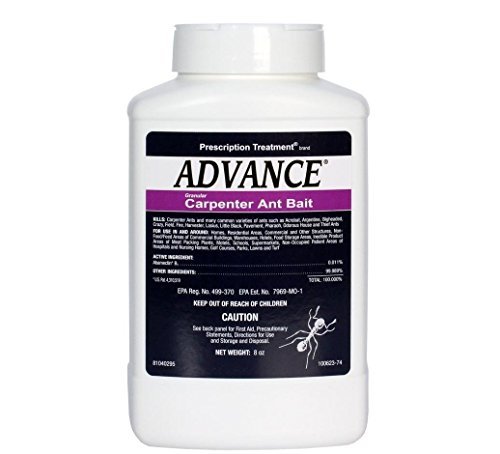
BASF Advance Carpenter Ant Bait Granules
Its bait format makes it a useful option when you want an ant-focused treatment rather than a general surface spray.

BioAdvanced Carpenter Ant & Termite Killer
The concentrate format gives homeowners a flexible option for larger treatment areas when the label permits the intended use.
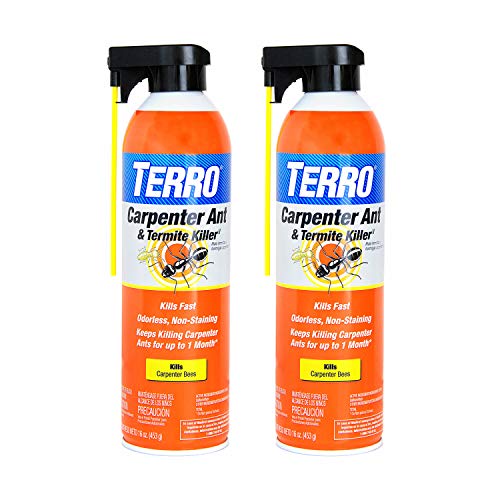
TERRO Carpenter Ant Killer Aerosol Spray
Its ready-to-use aerosol format can be convenient for targeted treatment around accessible ant activity.
BASF Advance Carpenter Ant Bait Granules
BASF Advance Carpenter Ant Bait Granules are made for people who want a bait-based way to target ants. The ready-to-use granule format can be simpler than mixing a liquid concentrate. For homeowners dealing with carpenter ants around outdoor areas, a bait can be worth considering when the product label allows use in the specific treatment area. I like the basic idea because bait focuses on ant behavior rather than only trying to kill ants on contact.
For tree problems, the key point is proper placement. I would not assume that any ant bait can be scattered directly on a tree or placed into a tree cavity. Instead, I would read the current label and use the granules only where that label permits. If ants are nesting inside a damaged tree, bait alone may not fix the reason they chose the tree. Moist wood, decay, stumps, and dead limbs can all matter when planning long-term control.
✅ Pros
- ✔ Ready-to-use granule format
- ✔ Designed specifically around carpenter ant control
- ✔ Can be useful for outdoor ant activity when label directions allow it
- ✔ Avoids the need to mix a concentrate before use
- ✔ Bait approach can complement other control steps
- ✔ Useful for homeowners who prefer an ant-focused product
- ✔ Small package size can suit limited treatment needs
⚠️ Cons
- ✖ It may not be the right choice for every tree treatment site
- ✖ Bait placement needs care around children, pets, and wildlife
- ✖ A serious nest inside a damaged tree may need a broader pest-control plan
My Recommendation
I would consider BASF Advance when the main goal is carpenter ant control and a bait format fits the site. It can be a practical option for homeowners who want a ready-to-use product. For trees, I would first identify where the ants are coming from and check the current label for approved outdoor placement. If the tree has major cavities, soft wood, dead branches, or signs of decay, I would also inspect the tree itself. The best carpenter ant killer for trees should be part of a wider plan when the tree provides the ants with shelter.
| Best For | Why |
|---|---|
| Homeowners wanting bait | The granule format offers a simple bait-based approach. |
| Small outdoor ant problems | The ready-to-use format can suit limited treatment areas. |
| Targeted carpenter ant control | The product is focused on carpenter ants rather than only broad insect control. |
Spectracide Terminate Ant & Termite Killer

Spectracide Terminate Termite & Carpenter Ant Killer comes in a 1.33-gallon package with an AccuShot sprayer. It is aimed at home barrier treatment and is also labeled for carpenter ants and several other insects. That broader focus can be useful when you see several types of pests around the same outdoor space. The ready-to-use design also removes the need to mix a concentrate before application.
For tree-related ant activity, I would treat this as a product that needs careful label reading. A product made for home barrier treatment should not automatically be treated as a tree spray. The tree, soil, nearby plants, water, and wildlife can all change what is appropriate. If I used this product around a tree, I would follow the current label exactly and avoid applying it to areas that the label does not cover.
✅ Pros
- ✔ Large 1.33-gallon ready-to-use package
- ✔ Includes an AccuShot sprayer
- ✔ Designed for barrier treatment around the home
- ✔ Targets carpenter ants and other listed insects
- ✔ No concentrate mixing is required
- ✔ Useful for homeowners dealing with more than one pest
- ✔ Can be convenient for repeated outdoor treatment where permitted
⚠️ Cons
- ✖ Its home barrier focus may not match every tree treatment need
- ✖ Ready-to-use liquid can be less convenient to store than a small bait
- ✖ Users must avoid treating trees or plants unless the current label specifically permits it
My Recommendation
I would look at Spectracide Terminate when carpenter ants are part of a wider insect problem around a home. The large ready-to-use container and included sprayer can make outdoor work simple. Still, I would not pick a product for a tree based only on the words carpenter ant killer. The treatment site matters. If your ants move between a tree and your home, finding the trail and treating the approved areas can be more useful than spraying every visible ant.
| Best For | Why |
|---|---|
| Home perimeter treatment | The product is designed around indoor and home barrier treatment. |
| Multiple outdoor pests | Its listed target range goes beyond carpenter ants. |
| Users wanting ready-to-use spray | The included sprayer removes the need for mixing. |
BioAdvanced Carpenter Ant Killer Concentrate
BioAdvanced Carpenter Ant & Termite Killer Plus Concentrate is a 40-ounce concentrate designed for people who want to mix a treatment before use. Concentrates can make sense when a homeowner needs to cover a larger area and wants more control over the amount prepared. The product is focused on carpenter ants and termites, so it fits homes where those pests are a key concern. I also like concentrate formats when storage space and treatment volume matter.
The main caution is that mixing adds one more step. You must use the correct amount of product and water based on the current label. For tree use, never assume that a concentrate can be sprayed on bark, roots, foliage, or into a cavity just because it controls carpenter ants. The label should decide where the product can go, how much to use, and what precautions apply.
✅ Pros
- ✔ 40-ounce concentrate format
- ✔ Targets carpenter ants and termites
- ✔ Can suit larger treatment areas when label directions allow
- ✔ Concentrate format can reduce ready-to-use container waste
- ✔ Useful for homeowners who already own a suitable sprayer
- ✔ Lets users prepare the amount needed for a treatment
- ✔ Useful when ant control is part of a broader pest plan
⚠️ Cons
- ✖ Requires mixing before application
- ✖ Incorrect dilution can reduce safe and proper use
- ✖ Tree application must follow the current product label
My Recommendation
I would consider BioAdvanced for homeowners who need a concentrate and are comfortable following mixing instructions. It can be a practical fit when the treatment area is larger than a small spot. For tree infestations, I would first confirm that the intended location is listed on the current label. If carpenter ants are entering a house from a nearby tree, I would also trace the ant path and inspect nearby wood rather than treating the tree without finding the source.
| Best For | Why |
|---|---|
| Larger treatment areas | The concentrate format can be prepared for broader approved applications. |
| Experienced DIY users | Users who are comfortable measuring and mixing can use the concentrate format. |
| Ant and termite concerns | It is designed around both carpenter ants and termites. |
Revenge Termite & Carpenter Ant Killer

Revenge Termite & Carpenter Ant Killer is a 32-ounce concentrate for users who want a liquid treatment that they prepare before application. Its focus on termites and carpenter ants makes it relevant to homeowners who are dealing with either pest. A concentrate can be useful when you need more flexibility than a small ready-to-use spray provides. It can also make sense for routine exterior pest work when the label permits the planned application.
For tree infestations, I would use a careful, site-first approach. Carpenter ants often use wood that already has moisture or decay, so killing visible ants may not solve the whole problem. I would look for trails, dead wood, stumps, damaged limbs, and points where the tree meets nearby structures. Before treating any tree, I would check the current label and confirm that the exact application is allowed.
✅ Pros
- ✔ 32-ounce concentrate format
- ✔ Targets termite and carpenter ant concerns
- ✔ Useful for homeowners who prefer liquid treatments
- ✔ Can be practical for approved exterior applications
- ✔ Concentrate format can be useful for larger areas
- ✔ Can fit a wider pest-control routine
- ✔ Requires less storage space than an equivalent ready-to-use liquid
⚠️ Cons
- ✖ Requires careful mixing
- ✖ A separate sprayer may be needed
- ✖ It is not automatically suitable for direct tree treatment
My Recommendation
I would consider Revenge for users who prefer concentrates and need to address carpenter ants or termites over an approved outdoor area. It is more involved than a ready-to-use product because the user must prepare the mixture. That can be a benefit for some jobs, but it also means more room for user error. If your main goal is finding the best carpenter ant killer for trees, focus first on the label, the nest location, and the condition of the tree.
| Best For | Why |
|---|---|
| Concentrate users | The 32-ounce bottle is made for users who want a mix-before-use product. |
| Ant and termite control | The product targets both pest groups. |
| Routine exterior pest work | The liquid format can suit approved outdoor applications. |
TERRO Carpenter Ant Killer Aerosol Spray
TERRO T1901SR is a ready-to-use aerosol spray sold here as a two-pack with 32 total ounces. The product is positioned for indoor and outdoor carpenter ant, termite, and carpenter bee control. The aerosol format can be useful when you need a targeted product and do not want to mix liquid concentrate. For small, accessible areas, that simplicity can make pest treatment less of a chore.
The important issue is where you spray it. I would never treat the bark, leaves, flowers, soil, or a tree cavity unless the current label clearly permits that use. A tree can support many useful insects, birds, and other wildlife, so broad spraying is not a good substitute for finding the ant trail. When the label allows the intended use, a targeted approach is usually easier to control than spraying an entire tree.
✅ Pros
- ✔ Ready-to-use aerosol format
- ✔ No dilution or mixing required
- ✔ Two-pack provides two cans
- ✔ Designed for carpenter ants and termites
- ✔ Also targets listed carpenter bee activity
- ✔ Useful for targeted treatment of accessible areas
- ✔ Convenient for homeowners who want a simple application method
⚠️ Cons
- ✖ Aerosol format may not be ideal for large treatment areas
- ✖ Wind can affect spray placement outdoors
- ✖ Direct tree use must follow the current label
My Recommendation
I would look at TERRO when convenience and targeted application are high on my list. The ready-to-use aerosol means there is no measuring or mixing. It can be handy for accessible areas where the label permits treatment. For a tree infestation, however, I would first locate the ant activity and check whether the product is approved for that exact surface. If the colony appears to be deep inside a large or valuable tree, professional inspection may be more useful than repeated surface spraying.
| Best For | Why |
|---|---|
| Small targeted jobs | The aerosol format works well for controlled applications. |
| No-mix convenience | The product is ready to use. |
| Several listed pests | It is designed for carpenter ants, termites, and carpenter bees. |
Final Verdict: Which Should You Buy?
For my overall pick from these five products, I would start with BASF Advance Carpenter Ant Bait Granules when a bait approach fits the site and the current label allows the planned outdoor use. BioAdvanced is a useful alternative for people who prefer a concentrate and need to cover a broader approved area. TERRO is a convenient choice when a ready-to-use aerosol makes more sense for a small, targeted job. The best carpenter ant killer for trees is not simply the strongest spray. It is the product that matches the pest, treatment site, tree condition, and label directions.
If you are searching for the best carpenter ant killer for trees, start with the ant trail, not the bottle. Check for damaged wood, moisture, cavities, dead limbs, and nearby stumps. Then choose a product that clearly allows the intended use. This simple approach can help protect your trees, limit unnecessary pesticide use, and deal with carpenter ants in a more focused way.
FAQs Of best carpenter ant killer for trees
Q What is the best carpenter ant killer for trees?
Q Can carpenter ants kill a healthy tree?
Q Should I spray the whole tree for carpenter ants?
Q Is bait better than spray for carpenter ants?
Q When should I call a professional for carpenter ants in a tree?