Black Flying Ants vs Termites: How to Tell Them Apart

Are Black Flying Ants Easy to Identify?
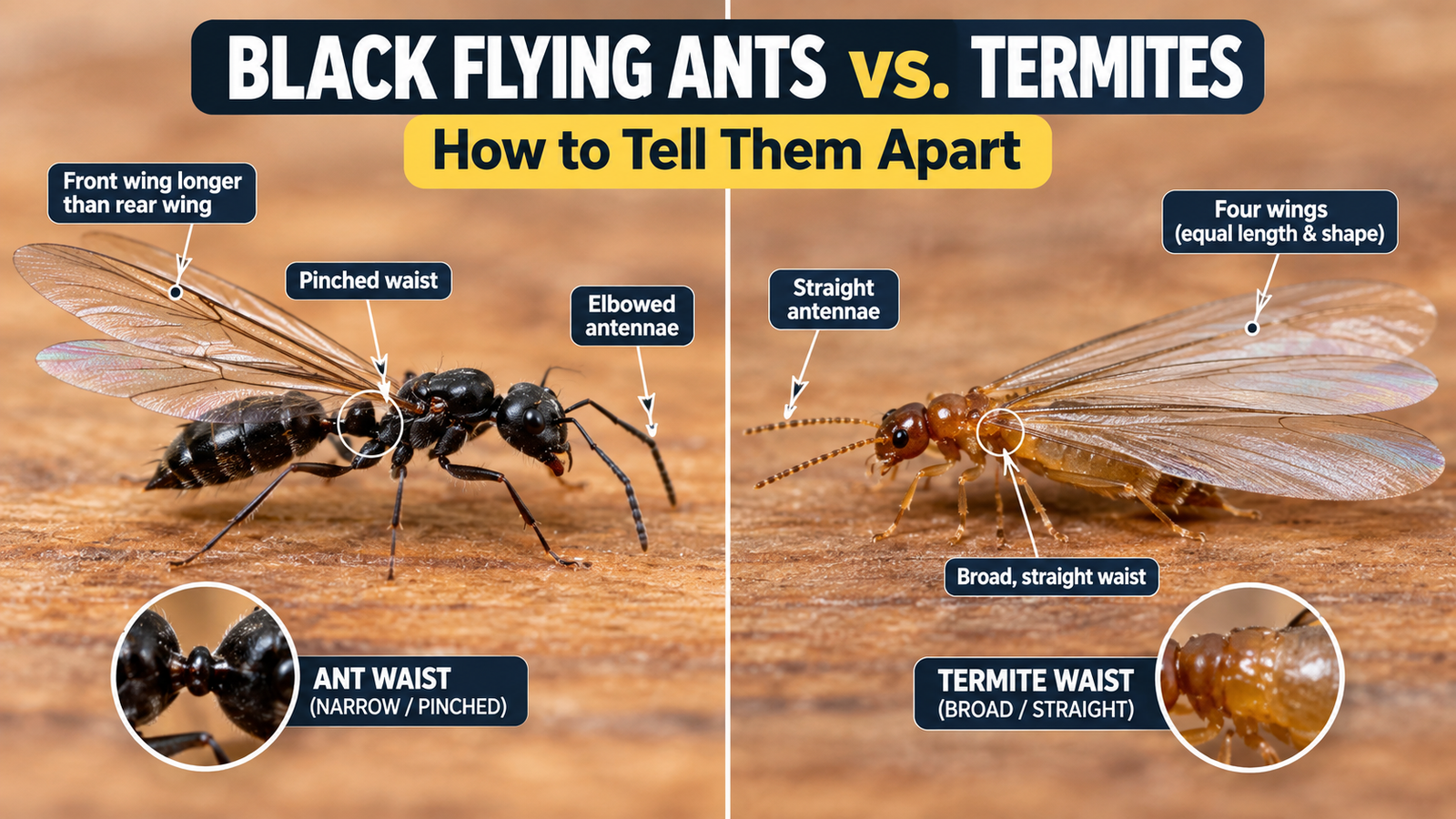
Yes, in many cases. Black flying ants are winged ants that leave a colony to mate and start new colonies. The key clue is the waist. An ant has a narrow section between the thorax and abdomen. Its antennae also bend at an elbow. Those two signs are more useful than color.
I would first look at the insect with a phone camera or a simple magnifier. If I saw a clear waist and bent antennae, I would lean toward a flying ant. I would also check the area around the swarm. Flying ants may appear around lawns, soil, tree stumps, patios, or damp wood. Their presence alone does not prove that the house has a termite problem.
What Makes It Stand Out / Key Features
- Pinched WaistA narrow waist separates the thorax from the abdomen.
- Bent AntennaeAnt antennae usually have a noticeable elbow or bend.
- Unequal WingsThe front wings are usually longer than the rear wings.
- Segmented BodyThe body shows distinct sections, including a narrow connection between major parts.
- Swarming BehaviorWinged ants may swarm during warm or favorable weather as part of reproduction.
- Wide Habitat RangeThey can live in soil, wood, wall voids, tree areas, and other protected spaces, depending on the species.
My Recommendation
Consider flying ants when you see a clear waist, bent antennae, and front wings longer than the rear wings. If those clues are missing, check for termites before assuming the insects are harmless.
| Best For | Why |
|---|---|
| Outdoor swarms | Flying ants often swarm near soil, trees, lawns, or other outdoor nesting sites. |
| Quick visual checks | The waist and bent antennae are easy clues to inspect. |
| Photo identification | A clear close-up can show the body shape and antennae. |
Are Termites Easy to Identify?
Termites can be harder to spot because their winged adults can look very similar to flying ants. The most useful clues are different. Termites have a broad, fairly straight body. Their antennae are straight rather than elbowed. Their four wings are also close to equal in length and shape.
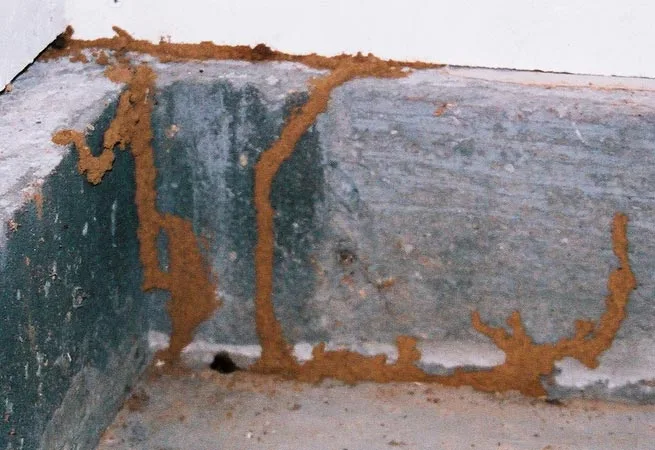
When I compare black flying ants vs termites, I pay special attention to what happens after the swarm. Shed wings near windows, doors, foundations, or other entry points can be a warning sign. I would also inspect wood for damage. If I found mud tubes, hollow-sounding wood, or repeated indoor swarms, I would treat the situation as a reason to get a professional inspection.
What Makes It Stand Out / Key Features
- Straight BodyTermites do not have the narrow waist that ants have.
- Straight AntennaeTermite antennae look relatively straight and bead-like rather than sharply bent.
- Equal WingsWinged termites have four wings that are generally similar in length.
- Wood FeedingMany termite species feed on cellulose found in wood and other plant material.
- Shed WingsAfter mating flights, termites may leave discarded wings near windows, doors, lights, or other areas.
- Structural RiskSome termite species can damage wooden parts of buildings over time.
My Recommendation
Take termites seriously when you see straight bodies, straight antennae, equal wings, shed wings, or signs of wood damage. A professional inspection can confirm the species and colony risk.
| Best For | Why |
|---|---|
| Home inspections | Termite signs can point to hidden activity in or around a building. |
| Wood damage checks | Termites can feed on cellulose and damage wood. |
| Indoor swarms | Repeated indoor termite swarms deserve closer attention. |
black flying ants vs termites: Side-by-Side Test
The best way to understand black flying ants vs termites is to compare several clues at once. One feature can fool you. A group of features gives a much clearer picture.
In my black flying ants vs termites checklist, I would start with the waist, then check the antennae and wings. After that, I would look at the location and any signs of wood damage.
Body Shape: Which Looks Different?
Body shape is often the fastest way to separate the two.
| Feature | Black Flying Ants | Termites |
|---|---|---|
| Waist | Narrow or pinched | Broad and straight |
| Body sections | Clearly separated | Less pinched between sections |
| Overall shape | Ant-like and segmented | Straight and more uniform |
⭐ Black Flying Ants – 9/10 | Termites – 9/10
Both are easy to compare when you can see the waist clearly.
Antennae: A Simple Clue
The antennae can help when the insects look almost identical at first glance.
| Feature | Black Flying Ants | Termites |
|---|---|---|
| Antenna shape | Bent or elbowed | Straight |
| First segment | Often visibly longer and curved | Less elbowed |
| Easy to spot | Usually clearer in a close photo | Usually clearer in a close photo |
⭐ Black Flying Ants – 9/10 | Termites – 8/10
Bent antennae point toward ants, while straight antennae point toward termites.
Wings: Check All Four
Wing shape is another strong clue, especially during a swarm.
| Feature | Black Flying Ants | Termites |
|---|---|---|
| Front wings | Usually longer | Similar in length to rear wings |
| Rear wings | Usually shorter | Similar in length to front wings |
| Overall wing look | More unequal | More equal |
⭐ Black Flying Ants – 9/10 | Termites – 9/10
Unequal wings suggest ants; four similar wings suggest termites.
Wood Damage: What Should Concern You?
The insects matter, but the signs around them matter too.
| Feature | Black Flying Ants | Termites |
|---|---|---|
| Feeds on structural wood | Generally no | Some species do |
| Wood damage concern | Usually low | Can be significant |
| Mud tubes | Not typical | Common sign for some termites |
⭐ Black Flying Ants – 8/10 | Termites – 10/10
Wood damage and mud tubes make termites the insect to investigate more closely.
Swarming: Why Are They Flying?
Both can produce winged adults, so a swarm alone cannot solve the mystery.
| Feature | Black Flying Ants | Termites |
|---|---|---|
| Winged adults | Yes | Yes |
| Main purpose | Reproduction and colony formation | Reproduction and colony formation |
| Indoor swarm concern | Needs context | Worth investigating |
⭐ Black Flying Ants – 8/10 | Termites – 9/10
A swarm tells you that winged adults are present, not which insect you have.
Shed Wings: What Do They Mean?
A pile of tiny wings can be easy to miss, yet it can provide a useful clue.
| Feature | Black Flying Ants | Termites |
|---|---|---|
| Shed wings after flight | Possible | Common after mating flights |
| Near windows or lights | Possible | Possible |
| Meaning | Supports a flying-ant event | Can support a termite-swarm clue |
⭐ Black Flying Ants – 8/10 | Termites – 9/10
Shed wings are useful evidence, but they should be paired with body and wing shape.
Home Risk: What Matters Most?
This is where the practical difference between the two becomes important for homeowners.
| Feature | Black Flying Ants | Termites |
|---|---|---|
| Direct structural risk | Usually low | Potentially high |
| Need for inspection | Depends on location and species | Often wise when found indoors |
| Main concern | Colony location and nuisance | Possible wood damage |
⭐ Black Flying Ants – 8/10 | Termites – 10/10
For home damage risk, termites deserve more attention than typical flying ants.
Final Verdict: Which Should You Buy?
There is nothing to buy between these two insects. The real goal is correct identification. In the black flying ants vs termites debate, look at the waist, antennae, and wings first. Black flying ants have a narrow waist, bent antennae, and usually unequal wings. Termites have a straighter body, straight antennae, and four wings that are similar in length.
If I found a few flying ants outside, I would usually focus on finding the colony and reducing conditions that attract pests. If I found suspected termites inside, especially with shed wings, mud tubes, or wood damage, I would arrange a professional inspection. When it comes to black flying ants vs termites, the right answer starts with the insect’s shape, not its color.