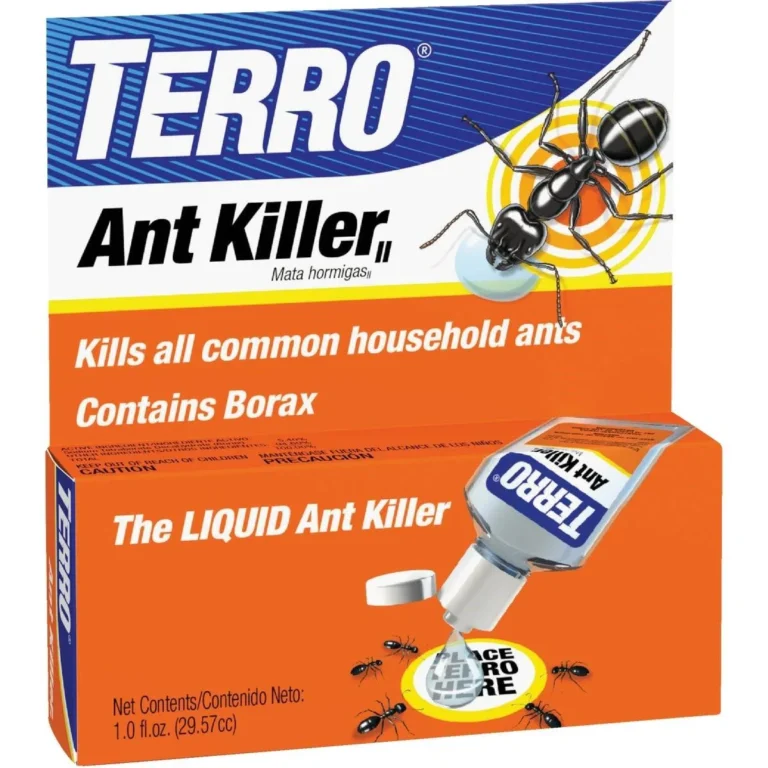
How to use terro ant killer: The Complete Guide
You spot a line of ants marching across the kitchen counter. You grab the Terro bottle from the pantry and… do what? If you're asking how to use terro ant killer without wasting money on a station that sits there doing nothing, you're in the right place.
The station isn't a spray. It's not even a "killer" in the way most people picture one.
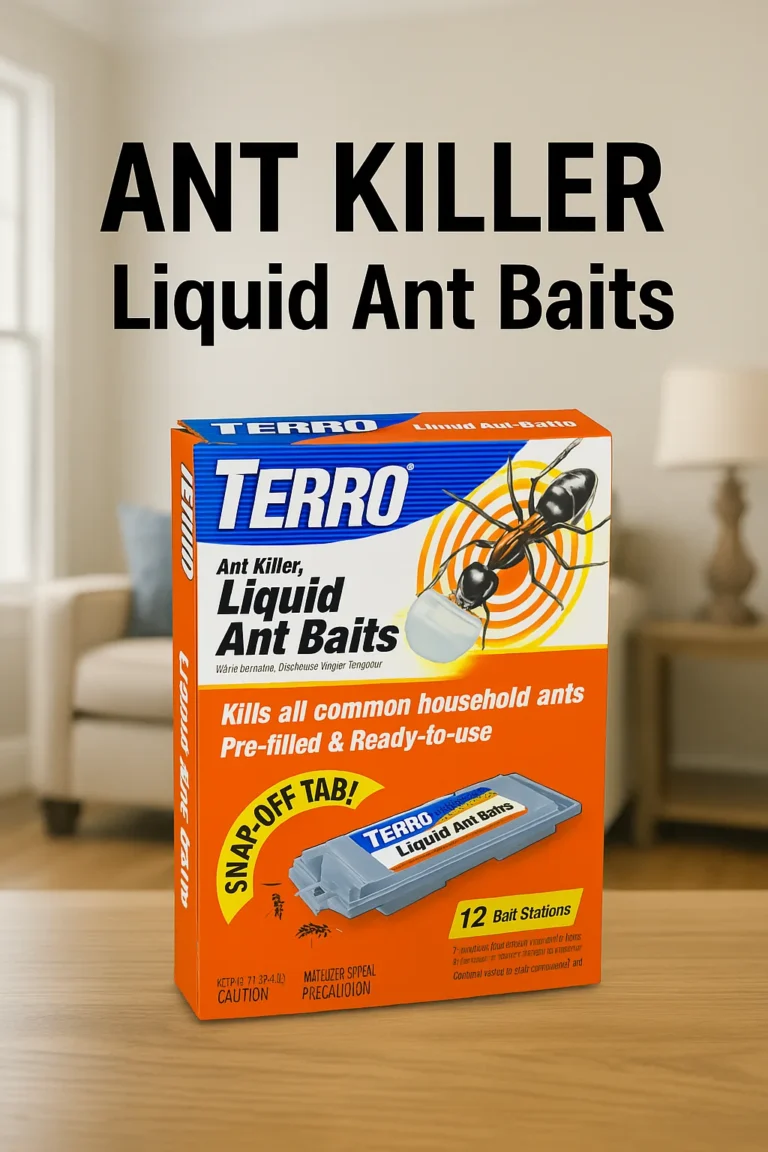
Terro's liquid bait carries hydramethylnon, a slow-acting toxicant at roughly 0.24% concentration in a sugar solution. EPA registration data and manufacturer specs confirm the colony takes three to seven days to collapse once workers start hauling it home. That timeline changes everything about where and how you set the station.
Let's walk through what's actually happening on that counter before you place a single one.
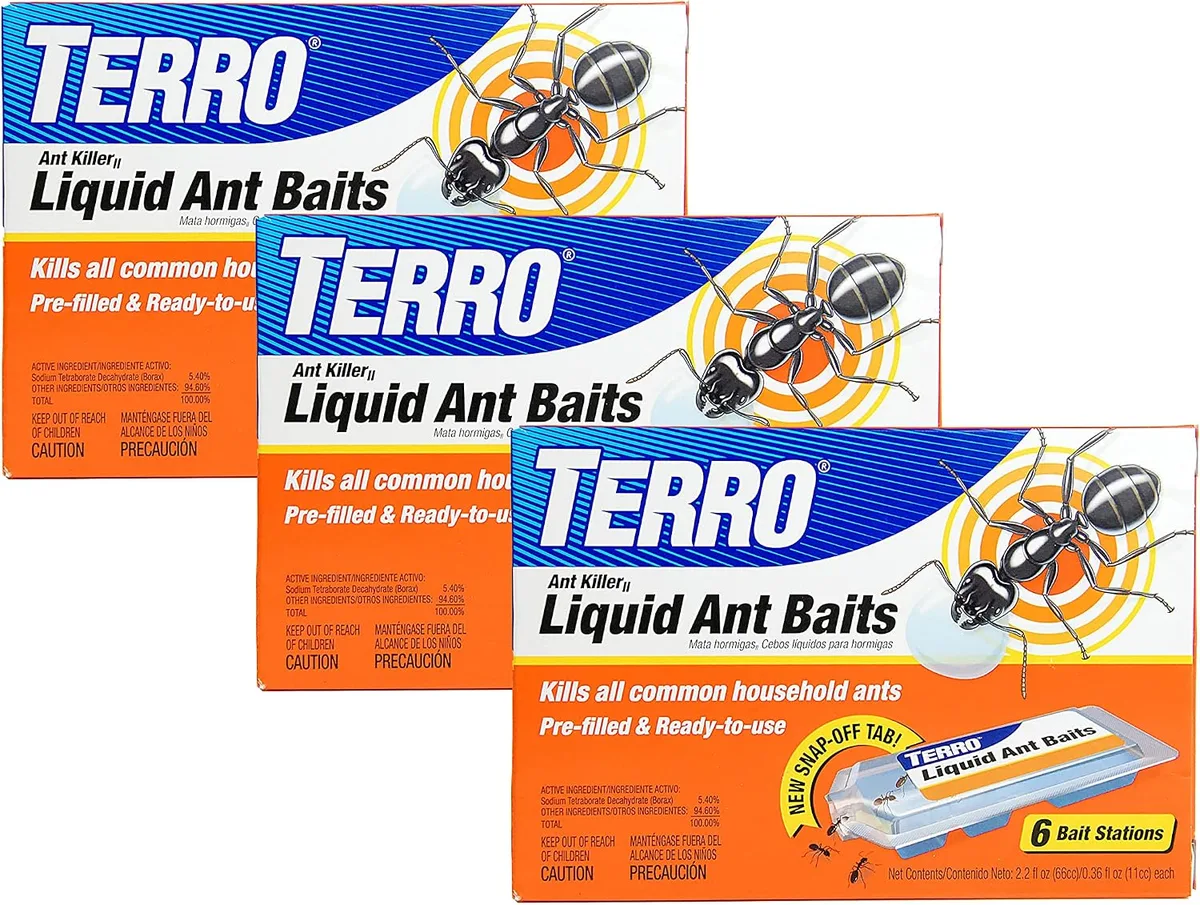
How to use terro ant killer
Quick Answer
To use terro ant killer, set a station directly on the foraging trail. Don't spray it. Don't move it for three to seven days.
Workers carry hydramethylnon back to the queen. Colony collapse follows. One station handles a ten-foot indoor trail.
Your Ants Aren't Just There: You're Looking at a Foraging Trail
Those ants on your counter aren't lost. They're following a pheromone highway to a specific food source. Extension entomologists at Texas A&M IPM confirm a single worker can recruit 50 to 200 nestmates within hours of finding a sugary spot.
That means the problem isn't the ants on the counter. It's the trail leading to them. If you place a Terro station on an open countertop and the real foraging line runs behind the range, you'll see zero visits.
Spend ten minutes watching where the ants actually walk. Mark that path with a piece of masking tape. Your station goes on that line, not wherever is convenient.
The One Thing Most People Get Wrong About Terro Ant Bait
The biggest mistake in aggregate user reviews is treating Terro like a contact spray. People open the flip-top, tilt it, pour the liquid on the ants, or shake the station thinking they're "applying" the product. None of that is the mechanism.
Terro works through a carry-back cycle. A worker enters the station, licks up a few drops of sweetened hydramethylnon, and walks home. She doesn't die at the counter.
She regurgitates a portion to larvae and the queen via trophallaxis, the mouth-to-mouth transfer that spreads the toxicant through the colony.
If you move the station, wipe it down, or set a competing spray three inches away, you interrupt that cycle. The ants get a partial dose. The colony adapts.
Traffic returns in four days. The EPA-registered label says to leave the station undisturbed for the full three-to-seven-day window.
How Hydramethylnon Actually Kills the Colony
Hydramethylnon is a synthetic ovicide and systemic insecticide. It doesn't knock an ant down on contact. It interferes with egg development and, at cumulative doses, kills the queen and brood.
Here's the sequence in plain terms:
- Day 1: Workers discover the station. Traffic spikes. You'll see 20 to 40 ants clustered at the open flip-top.
- Day 2 to 3: Traffic thins. Workers are still foraging but carrying the toxicant home.
- Day 4 to 7: The visible trail goes quiet. The queen's egg-laying drops. The colony shrinks from the inside out.
| What you see | What's actually happening |
|---|---|
| Ants clustering at the station (Day 1) | Workers recruiting nestmates to the food source |
| Trail goes empty (Day 4+) | Queen and brood dying; fewer workers foraging |
| No dead ants at the station | Toxicant is slow-acting; workers don't die at the placement site |
As of 2026, Terro Corporation still formulates its indoor liquid stations around this single active ingredient. No synergistic knockdown. No instant kill.
The entire value is in the patience window.
Before You Place a Station: Three Conditions That Change Everything
Run through these three forks before you open the flip-top:
Indoor or outdoor trail? If the ants are on your kitchen counter, you want the indoor T300 station. If they're working up your foundation or at a fire ant mound, the outdoor formulation has a weather-resistant base and a heavier sugar load. Putting the indoor station on a damp porch dries it out in a day.
Which species? Terro's sugar bait works on sweet-feeding species: odorous house ants, Argentine ants, ghost ants. If your ants are carpenter ants hollowing structural wood, or fire ants building mounds, a liquid sugar station alone won't solve the nesting problem.
Pets, kids, food-prep proximity. If a toddler crawls on the floor or a dog chews on anything within reach, don't set a station on the open floor. Elevate it. Tuck it behind a cabinet or in a baseboard gap where a child's hand can't slide in.
The EPA label carries a "Caution" signal word, but the sweetened liquid is still an ingestion hazard for small children.
If/then logic for placement:
- If the trail runs behind the range, the station goes there, not on the counter.
- If a pet drinks from a bowl on the same surface, move the station up or to a different trail junction.
- If you've used a contact spray in the same zone in the last 72 hours, wait it out before placing the station.
Step-by-Step: Placing Terro Liquid Bait Indoors
Follow this sequence and resist the urge to "help."
Track the real trail
Spend ten minutes with a phone light in a dark kitchen. Watch where the ants walk. They'll form a thin single-file line from an entry crack, along a baseboard, behind an appliance, to whatever food source triggered them.
Mark that line with masking tape.
Position the station on the line, not next to it
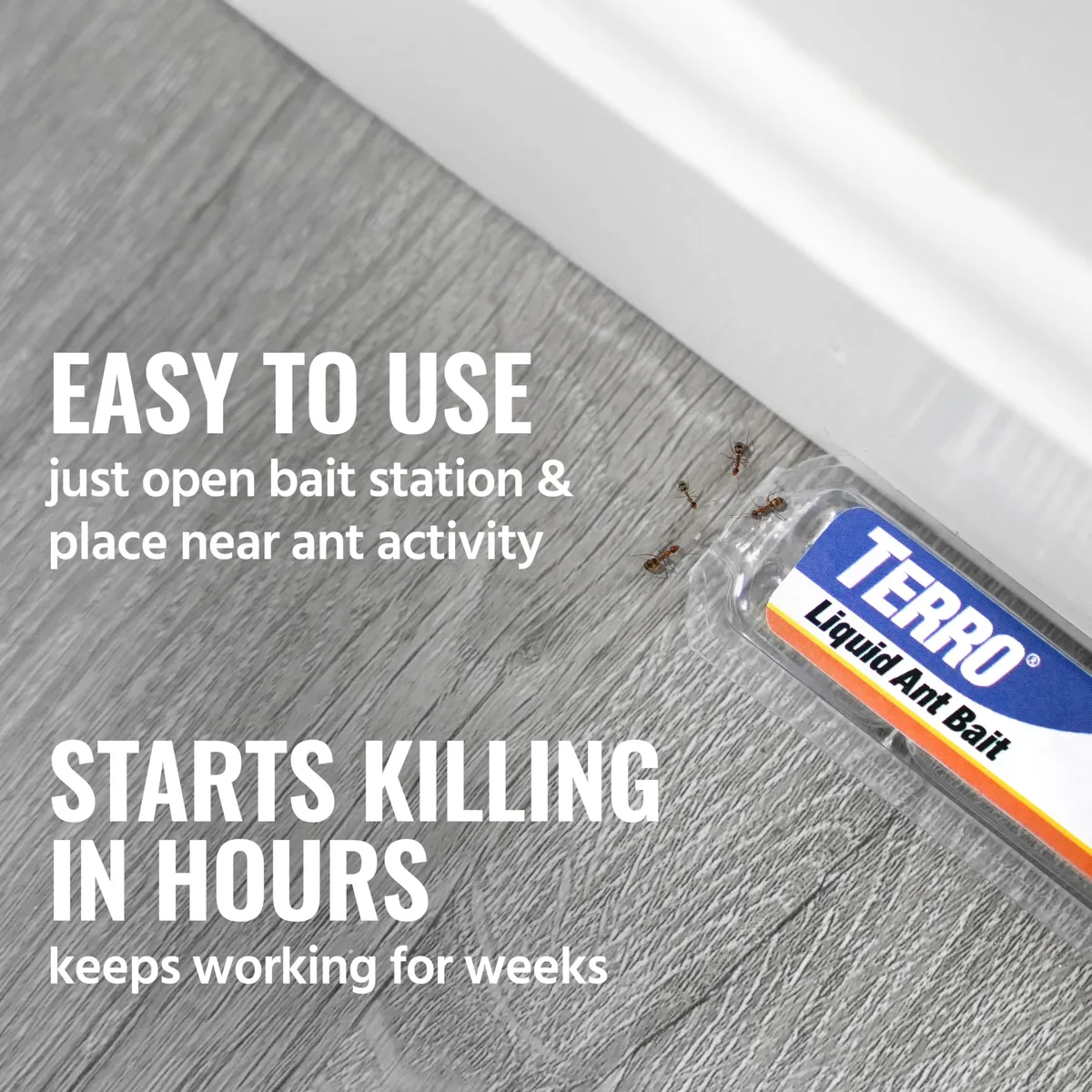
Open the flip-top. Set the station flat directly on the taped line. Ants should encounter it mid-trail.
If you place it two feet off the path, they'll bypass it for the food source. One station handles a ten-foot trail. For a longer run, add a second at the far end.
Don't move the first one.
The three-to-seven-day carry-back window
You'll see a surge on day one. Ants cluster at the open station. You'll want to wipe it or relocate it.
Don't. The workers are doing their job: eating, walking home, feeding the queen.
Per the EPA-registered label, re-entry for children and pets is "after the station is in place." The liquid stays inside the flip-top container. As long as the unit is intact and out of a child's reach, the space around it is fine to walk on immediately.
Check the station on day five. If the liquid line is still full and the trail is empty, you're in the kill window. If ants are still flowing heavy on day five, add a second station at the trail's other end.
If the trail is gone by day three, you likely hit a small satellite colony. Monitor a week before re-treating.
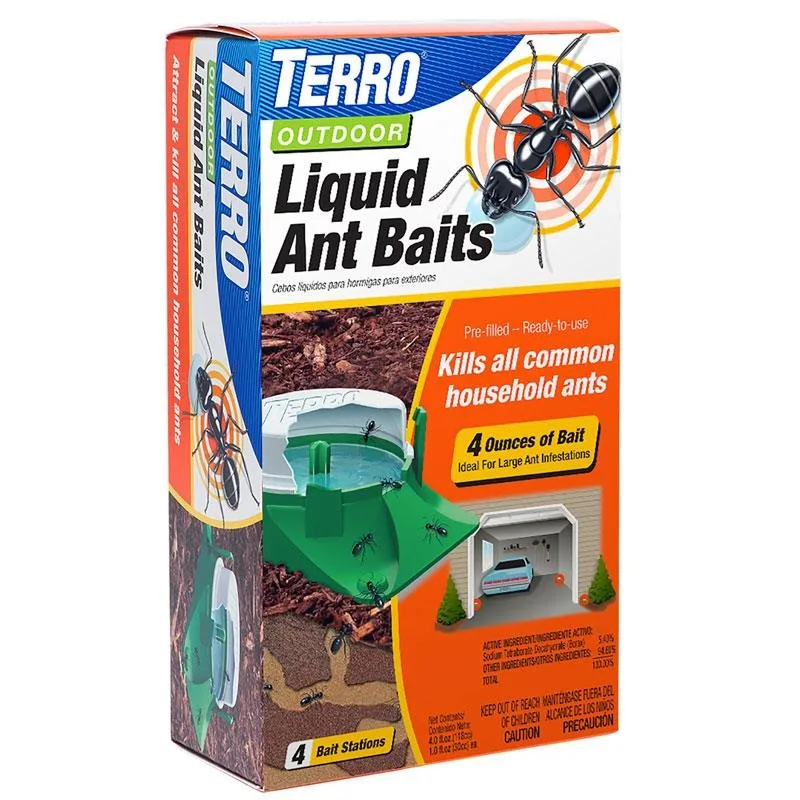
Step-by-Step: Using Terro Outdoor Ant Killer Around Your Home
The outdoor station has a heavier, weather-resistant base built for soil, concrete, and pavers. The sugar load is thicker to compensate for rain and sun.
Perimeter entry points and door thresholds
Walk your foundation. Look where soil meets siding, around sliding-door tracks, at porch step corners, and along patio slab edges. Place one station at each visible entry.
Space them 6 to 10 feet apart if the trail runs continuously along the wall.
Fire ant mounds in the Gulf South
If you're in Texas, Louisiana, the Florida panhandle, or Georgia and you've got mounds, set one station at the base where workers emerge. Set a second on the foraging trail radiating outward. Fire ant colonies are larger, so expect to monitor the full seven days.
If mound activity is still heavy on day five, add a third station 15 feet further along the trail.
Rain, irrigation, and station washout
The base holds for about 48 hours of steady rain. After a soaking storm or if your sprinkler zone runs over the station, check it. If the base is cracked or the liquid level is visibly low, replace the whole station.
In arid climates like Arizona, place stations in shade so midday sun doesn't evaporate the sugar before workers show up.
What to Do When the Station Isn't Working
Run this diagnostic:
No ant visits after 48 hours. You're in the wrong spot. The trail you marked was a dead end. Go back to the tracking exercise.
Find the actual line. Reposition.
Ants are visiting but the colony's still alive by day 7. Two likely causes: a second colony is feeding the same trail and one station isn't covering both, or a competing contact spray is giving workers a free kill that stops them carrying the full dose home. Remove competing sprays. Add a second station at the far end.
Give it another five days.
The trail reappears two weeks later. A satellite colony or a new entry point opened. This is a structural issue: a weeping wall gap, an expansion joint, a new crack. Seal the entry first, then re-bait.
Bait without exclusion is a treadmill.
You're seeing flying ants (alates), not foragers. Bait won't stop a reproductive swarm. The winged reproductives are leaving to start new nests. They don't stop for sugar.
You need to find and treat the parent nest. Terro won't reach it.
Six Mistakes That Turn a Working Bait Into a Waste of Time
- Placing the station on an open counter instead of on the trail. Ants bypass it for the food source.
- Moving the station on day two because "nothing's happening." You've interrupted the carry-back. Start the clock over.
- Using the outdoor station indoors. The base is too heavy and the geometry doesn't sit flush on a cabinet.
- Spraying a contact insecticide around the station to "help." Workers get a free kill and don't carry the full dose home.
- Expecting results in four hours. The biology is three to seven days. Any faster and you've got a different product.
- One station for a 40-foot trail. You need two, one at each end.
When Terro Bait Is the Wrong Tool
Terro's sugar-and-hydramethylnon formula is built for sweet-feeding, indoor-foraging species. Outside that range, the station won't solve it.
| Situation | Better tool | Why |
|---|---|---|
| Carpenter ants in structural wood | IGR granule or professional borate treatment | Sugar bait doesn't reach a wood-nesting colony |
| Six or more fire ant mounds per yard | Granular amitraz or professional broadcast | One station can't kill a 10,000-ant mound |
| Ants only at a door threshold, no trail | Seal the gap + peppermint or citrus oil spray at the crack | No foraging line to intercept |
| Pharaoh ants in a commercial kitchen | Professional gel bait, alternating actives | Single-ingredient bait triggers colony fission |
| One-time spring trail, gone by August | Re-bait each spring; seal the entry crack | Over-treating wastes money |
If you're in the structural or commercial column, Terro is a stopgap. The label won't cover those scenarios.
Keeping Kids, Pets, and Food Prep Zones Safe
The EPA registers hydramethylnon under a "Caution" signal word. That's the lowest consumer tier, but "lowest tier" doesn't mean "harmless to a two-year-old who bites the plastic."
- Never set a station on the floor in a room where a child plays. Elevate it behind a cabinet or in a baseboard gap.
- Dogs and cats investigate everything. If your pet chews on plastic, the station goes in a closed area it can't reach.
- Keep the station at least 12 inches from any food-prep surface. The label says "do not use on food contact surfaces."
- If a child ingests the liquid, call Poison Control at 1-800-222-1222. The sugar volume is the immediate concern, not the hydramethylnon dose from a single station.
- Store unopened stations in a cool, dry closet. Manufacturer specs confirm 24+ month shelf life below 85°F, out of direct sun.
What You're Actually Paying for
A 3-pack of indoor stations runs $5 to $7. A 6-pack outdoor version sits around $8 to $10. No refills, no subscription, no "system."
| Trail length | Stations needed | Cost |
|---|---|---|
| 10 ft indoor kitchen line | 1 to 2 | $3 to $7 |
| 50 ft outdoor perimeter | 4 to 6 | $8 to $10 |
| Single fire ant mound | 2 | $5 to $7 |
One station services roughly 50 to 200 active workers. If your colony is larger, you don't buy more stations. You reposition at the trail's far end.
Timing It Right: Season, Climate, and the Swarming Window
Peak foraging runs late March through September in most US zones. In the Gulf South and Florida, it's year-round. In the Pacific Northwest, you'll see indoor trails in January and February when the soil is cold.
Spring swarming (May through June) is when you'll spot winged reproductives. Bait before the swarm. If alates are already in flight, the colony's past its bait-responsive window.
You're looking at nest treatment, not station placement.
In arid climates, shift placement to early morning or evening. Midday heat dries the sugar matrix before workers show up.
Frequently Asked Questions
How long does Terro ant bait take to work?
Three to seven days. The colony doesn't die at the station. Workers carry hydramethylnon home and feed the queen.
Expect the trail to go quiet by day five.
Can I use Terro outdoors in the rain?
The outdoor station handles 48 hours of steady rain. After that, check the base. If it's cracked or the liquid level is low, replace it.
Don't top off an old station.
Will Terro kill fire ants?
It slows foraging but won't collapse a full mound. For six or more mounds per yard, you need a granular amitraz broadcast or a professional IGR treatment.
Is Terro safe around dogs?
The flip-top keeps the liquid contained, but a chewing pet will break the plastic. Elevate the station or tuck it where a dog's mouth can't reach. Call Poison Control at 1-800-222-1222 if ingestion occurs.
Do I need to wear gloves when handling the station?
No. The liquid stays inside the container. You're setting a sealed unit, not pouring or mixing.
Wash hands after placement as standard hygiene.
Your Terro Decision Guide: 30-Second Check Before You Buy
Run this before you hit the aisle:
- Sweet-feeding indoor ants, visible trail, no structural damage: Terro indoor station. You're set.
- Outdoor perimeter or fire ant mounds: Terro outdoor station, one per mound, spaced along the trail.
- Carpenter ants in wood, pharaoh ants in a commercial space, or six or more mounds: Terro is a stopgap. Call a licensed pest pro for IGR or granular treatment.
- One-time spring trail, gone by August: one station, seal the entry crack, re-bait next spring. Done.
Match the tool to the trail. Everything else is guessing.