How to Does Ant Killer Kill Spiders: Full Guide
You've got a spider web in the garage corner. You grab the can of ant killer from the shelf because it's already there. And you're wondering, does ant killer kill spiders?
The short version: maybe, but not the way you'd expect. The answer flips depending on which formulation you're holding and where that spider is hiding.
Manufacturer specs on pyrethroid aerosols as of 2026 show a 14 to 28 day residual window on vertical, non-porous surfaces. That's enough to knock down a house spider that wanders through the treated zone. But gel bait?
Useless on arachnids. And that distinction is where most people waste product. Let's sort out which can does what, and where each one actually fits.
You're Holding an Ant Killer and Staring at a Spider Web in the Corner
This is the exact moment. You spot a half-inch house spider tucked behind the garage door track. Or maybe it's a cellar spider in the basement ceiling corner, web strung tight.
You open the cabinet, grab the ant spray you bought last spring for the sugar-ant invasion in the kitchen. You point the nozzle at the web. You squirt.
And now you're waiting for something to happen.
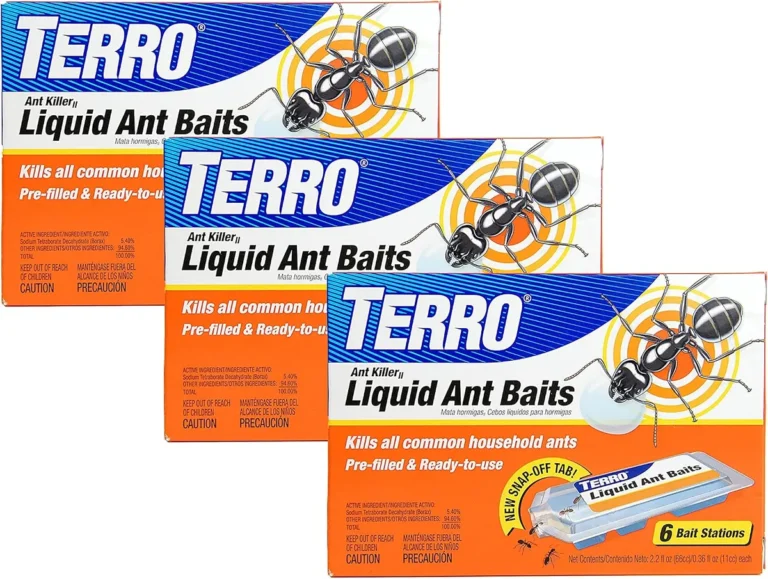
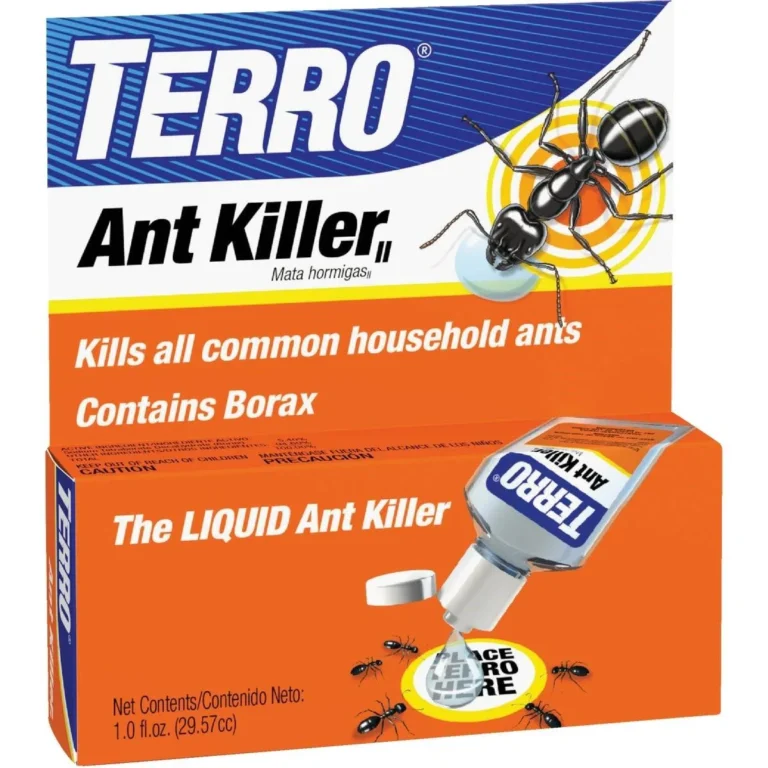
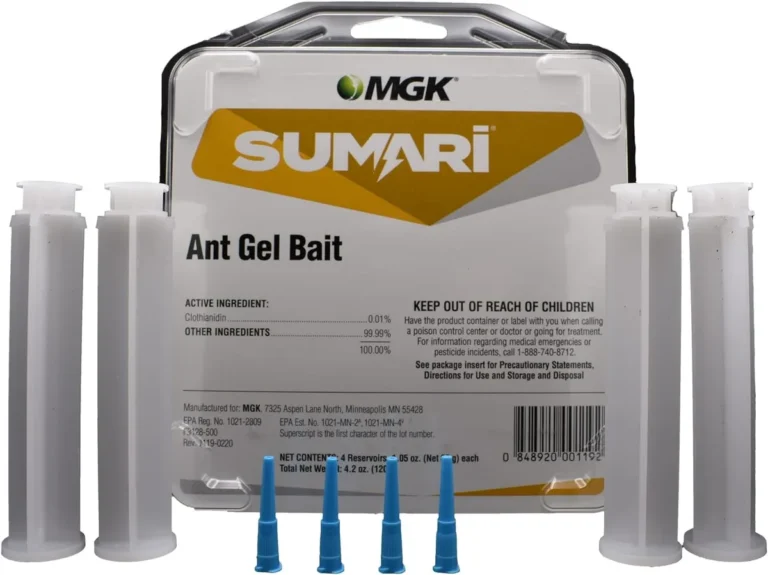
The problem is that "ant killer" isn't one product. It's four or five completely different delivery systems all under the same shelf label. A gel tube, an aerosol can, a dust bottle, a granule bag.
They all say "ant" on the front. But their chemistry, kill mechanism, and where they work are entirely different.
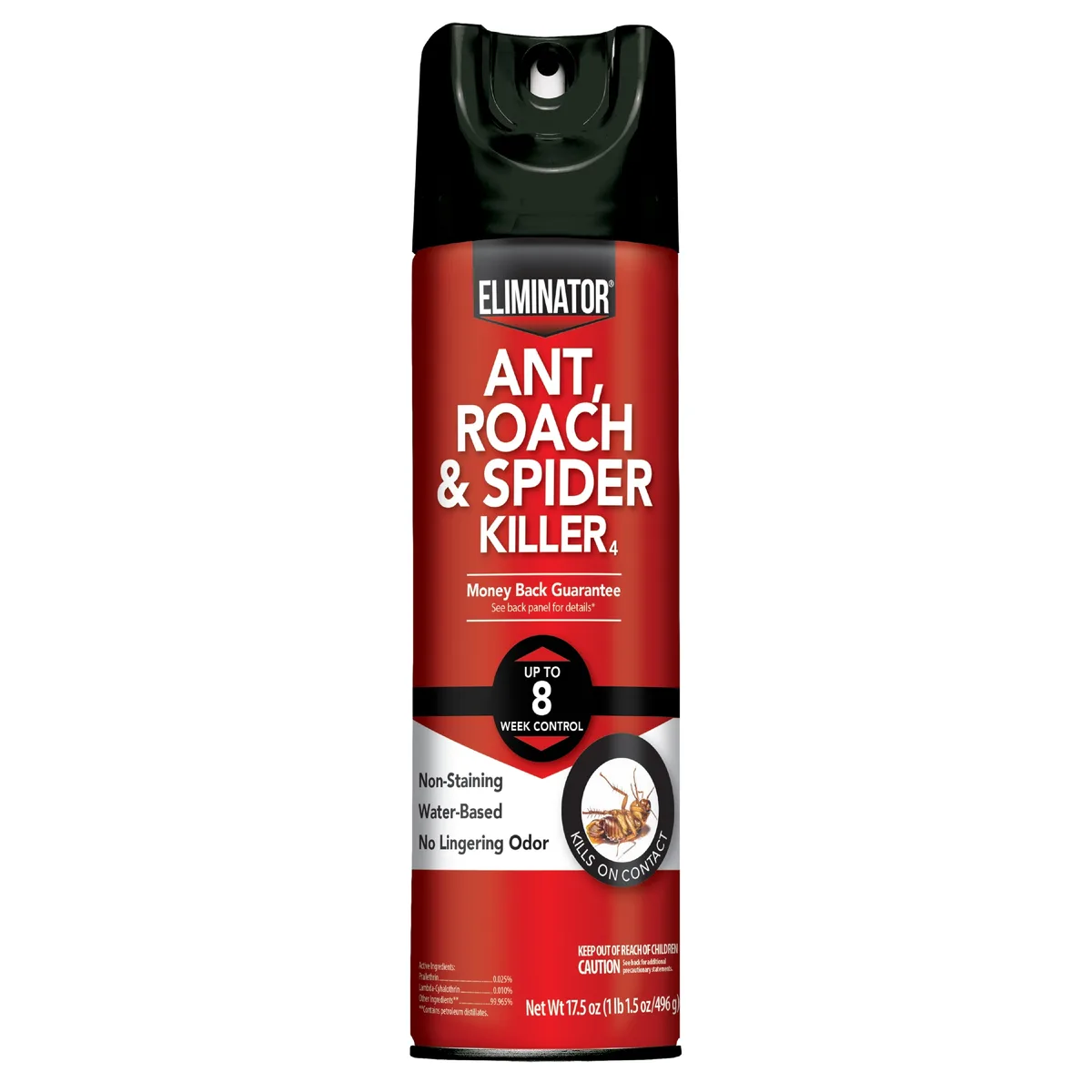
If the spider is visible and sitting on the web, a contact aerosol will drop it in about 30 to 90 seconds. That part's straightforward. Where it gets tricky is the spider you can't see.
The one building in a wall void, the one tucked behind the dryer, the one patrolling a crawlspace corner you haven't opened in two years. That spider needs a residual product, not a quick-hit spray.
And if you've got a gel tube in hand, you're starting from zero. Spiders don't eat that. They don't forage in a line.
They don't carry it home to a nest. The whole recruitment model that makes gel bait work on ants simply doesn't apply to a solitary arachnid.
Short Answer: It Depends on Which Can You're Holding
Does ant killer kill spiders? It depends on the formulation. Pyrethroid aerosol sprays kill on direct contact.
Dust products kill with a weeks-long residual. Gel bait does essentially nothing to spiders. Granule baits are too surface-bound to matter indoors.
The exception is a residual dust labeled for both ants and other crawling insects. That one covers spiders too.
Why Gel Bait Flat-Out Doesn't Work on Spiders
Gel bait works through a very specific chain. A foraging ant chews through the gel, ingests the active ingredient (usually imidacloprid or fipronil), and carries it back to the colony. The queen and workers eat the treated ant or share the bait.
The whole nest collapses in 48 to 72 hours. That's the design. It's a slow-kill social weapon.
Spiders break that chain at step one. They don't form foraging lines. They don't recruit nestmates to a food source.
A house spider or a wolf spider will walk over the gel bead and ignore it. Or, if a hunting spider traps an ant near the gel, the ant dies before it delivers the payload. The spider gets a protein meal.
No toxic transfer. No colony collapse. No mechanism.
Per the EPA Pesticide Registration database, most gel ant baits carry a labeled target of "ants" only. The active ingredient concentration is tuned for the small metabolic mass of an ant worker, not the different neuroreceptor profile of an arachnid. You're not just dealing with a behavior mismatch.
You're dealing with a pharmacology mismatch. The molecule isn't dosed for a spider's nervous system.
Bottom line: if you're holding a gel tube and staring at a spider web, put it down. It's not going to help. You need a contact or residual product instead.
The Formulations That Actually Kill Spiders, and What's Inside Them
Not every "ant killer" is created equal when it comes to arachnids. Here's what's actually in the four main formulations you'll find on the shelf, and how each one interacts with a spider.
Pyrethroid aerosol spray. Active ingredients are permethrin, bifenthrin, or lambda-cyhalothrin at 0.05 to 0.5 percent concentration. The kill is contact. The spider touches the mist, its sodium channels lock, it convulses, it drops.
Residual on painted drywall or metal runs about 14 to 28 days. On porous wood or concrete, it dries faster. You're treating the surface the spider is on, not the one it's about to land on three days later.
Residual dust (bifenthrin or cypermethrin based). This is the workhorse. You puff two to three inches of fine powder into a wall void, under an appliance, or into a crawlspace corner. The spider builds its web or patrols through the zone.
Silk traps the particles. The spider walks across its own coated web and picks up enough active ingredient to die within 24 to 48 hours. Manufacturer data shows 90 to 180 days of residual in a dry, undisturbed void.
That's months of coverage from one application.
Boric acid dust. No synthetic chemistry here. Boric acid desiccates the spider's exoskeleton and disrupts its gut lining on contact. It's slow.
A spider might take 48 to 72 hours to die after walking through a thin layer. But the layer never degrades as long as it stays dry. In a dry crawlspace or behind a baseboard, that's effectively permanent protection.
Perimeter granules (bifenthrin, cypermethrin, or fipronil). These dry into a residue along the foundation line outdoors. They work on ants and other foraging insects that walk across the treated band. For spiders, they're a minor benefit at best.
A house spider in your basement doesn't crawl across your exterior foundation granule line. This formulation solves the outside-in problem, not the inside hiding spot.
Side-by-Side: Every Ant Product Formulation Ranked by Spider Effectiveness
The table below ranks each common "ant killer" format by how well it actually handles spiders in a typical home.
| Formulation | Kills Spiders? | Residual Window | Best Spider Scenario |
|---|---|---|---|
| Gel bait (imidacloprid, fipronil) | No | None on spiders | None. Do not use for spiders. |
| Pyrethroid aerosol spray | Yes, contact only | 14 to 28 days | Visible spider on an open surface |
| Bifenthrin / cypermethrin dust | Yes, residual | 90 to 180 days (voids) | Wall voids, under sinks, attics |
| Boric acid dust | Yes, slow | Indefinite if dry | Crawlspace corners, behind baseboards |
| Perimeter granules | Marginal | 4 to 8 weeks outdoors | Exterior foundation line, entry points |
Read that table and the decision tree writes itself. If the spider is visible and on a surface you can see, grab the aerosol. Two or three quick bursts, 12 inches away, cover the web base and a two-foot radius below.
Done for this individual.
If the spider is inside a wall, behind a cabinet, or in a crawlspace you can partially access, dust is your move. You want the residual to outlast the spider's web-rebuilding cycle. A house spider rebuilds every 3 to 5 days.
A dust treatment that lasts four months means the web gets re-toasted every time it's rebuilt. The spider eventually moves on.
And if you're in the "I just grabbed the gel tube" scenario? Set it back in the cabinet. You don't need it for this problem.
Keep it for the ants in the kitchen where it actually works.
How to Treat a Spider With What You Already Have in the Garage
You probably don't need to drive to the store. Check what's already in that cabinet or workshop shelf. The right move depends on where the spider is hiding.
If the spider is visible on a wall, ceiling, or floor:
- Grab a pyrethroid aerosol (the "ant and roach" spray you already own).
- Remove the web first. Use a broom, a shop vac, or compressed air. You need to expose the spider and any egg sac before you spray.
- Hold the can 12 inches away. Two to three second bursts, aimed at the web base and the two-foot radius below it.
- The spider drops in 30 to 90 seconds. Wipe the surface dry before anything walks across it.
If the spider is in a wall void, behind an appliance, or in a crawlspace:
- Dust is your tool. Bifenthrin or cypermethrin dust, puffed in two or three short bursts into the gap.
- Don't overfill. A thick clump of powder is avoidable. The spider routes around it. You want a thin, barely visible layer that coats the silk.
- In a crawlspace corner, boric acid works the same way. Spread it so thin you can see the concrete through it. Thick piles just look like sand to a spider and it walks around them.
If the spider is outside, patrolling your foundation line:
- A granule perimeter treatment covers this. But that's a dual ant-and-spider scenario. The granules dry into a residue band that catches any arachnid crossing from the mulch into the house.
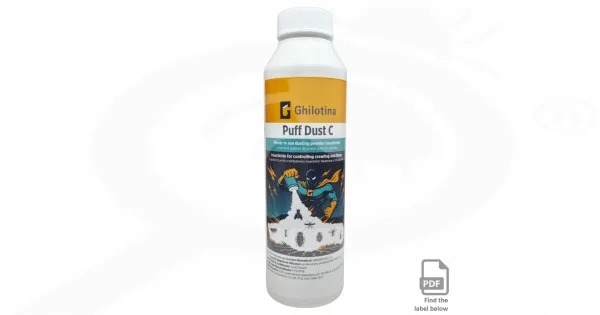
One pass of dust in a wall void gives you 90 to 180 days of residual. That means the spider rebuilds its web four or five times on a zone that's still toxic. Eventually it leaves.
You don't have to re-spray monthly.
The Mistakes That Make You Keep Re-Spraying the Same Corner Every Week
The most common frustration in pest-control Q&A threads goes like this: you spray the web, the spider dies, two weeks later there's a new web in the exact same spot. You spray again. Repeat.
You're not failing. You're just treating the symptom.
Here's what actually keeps happening:
- You didn't remove the egg sac. A house spider lays a white, half-inch sac tucked under a fold of webbing, behind a picture frame, or in a corner you can't see from standing position. The adult dies. The sac hatches in 7 to 14 days. New spider, same corner, same web.
- You sprayed under the web instead of through it. The spider sits on top of the silk. A mist that hits the bottom of the web doesn't transfer upward through dry silk. You need to hit the web surface where the spider actually is.
- You used gel bait and expected a kill. Spiders ignore it. The web stays. The spider stays. You waste two weeks and buy a new can.
- You didn't seal the entry point. The spider came through a gap behind the dryer, a cracked window seal, or an unsealed utility line. You kill the individual. Another one walks in from the same crack next Tuesday.
The fix is mechanical, not chemical. Vacuum or sweep the web. Check the base, the ceiling line, and the back of any furniture against that wall.
Look for a small white or tan ball, roughly three-quarters of an inch. If you find one, spray or dust it directly. Then caulk or seal the entry gap.
The spider doesn't come back because there's no reason to.
When Your Ant Killer Crosses Into Safety Territory
Most household spider scenarios are a nuisance, not a danger. But two situations change the math entirely.
Confirmed or suspected black widow / brown recluse. If you see a black body with a red hourglass marking, or a violin-shaped pattern on a tan body, stop. Do not spray and call it done. These spiders hide in sealed voids, mulch piles, and behind stored shoes.
A quick aerosol won't reach them. Per CDC spider bite guidance, a recluse bite can produce necrotic dermal lesions within 48 hours, and a widow bite needs antivenom within the first few hours for best outcomes. A licensed technician with a targeted trap or void-specific dust is the right call here.
Cats in the home. Pyrethroids are the active ingredient in most aerosol ant sprays. Cats lack a specific glucuronyl-transferase enzyme that breaks down permethrin. They accumulate the chemical.
Manufacturer SDS sheets for Ortho and United Labs products list "keep cats off treated surfaces until dry" as a re-entry warning. Dust products have a lower dermal load than a heavy aerosol mist, but they still settle on low surfaces where a cat paws. If your cat is a floor-dweller, use boric acid dust instead.
It's non-toxic to cats at the thin-layer concentrations you'd apply in a corner.
Boric acid near HVAC intakes. Do not puff boric acid into a return air vent. The fan pulls it through the duct system and deposits it on surfaces where kids crawl and pets lie. Keep boric acid applications to exterior crawlspace corners, behind baseboards, and inside sealed voids only.
Frequently Asked Questions
Can Raid ant spray kill a spider?
Yes, if it's a direct contact hit. Most Raid aerosol cans carry a pyrethroid active ingredient that kills on touch. The spider drops in under two minutes.
The catch is residual. On painted drywall, you get roughly 14 to 28 days of surface protection. After that, the treated zone is clean and the next spider walks through with no consequences.
Does ant gel bait hurt spiders at all?
No. Gel baits are dosed for insect neuroreceptors and rely on social foraging behavior. Spiders don't forage in lines, don't recruit nestmates, and don't carry bait to a colony.
The gel sits in the corner, the spider ignores it, and the web stays intact. It's the wrong tool entirely.
How long does dust treatment last for spiders in a wall void?
Manufacturer specs for bifenthrin and cypermethrin dust products show 90 to 180 days of effective residual in a dry, undisturbed void. Boric acid dust, if it stays dry, effectively lasts indefinitely. Moisture is the only thing that degrades boric acid's desiccation action.
Is it legal to use an ant-labeled product on spiders?
For nuisance arthropods in your own home, EPA enforcement of off-label household use is not practical. You're not applying a pesticide to crops or in a regulated setting. You're relying on the active ingredient's mode of action, not the label claim.
The label says "ants." The chemistry says "any arthropod that touches it." For your home, that gap is acceptable.
Should I just buy a product labeled "spider killer" instead?
You can, but you're buying the same pyrethroid or bifenthrin chemistry repackaged with a different label. A $12 dust can labeled "ant and other crawling insects" does the same job as a $14 can labeled "spider and scorpion" in a wall void. The label change doesn't change the residual window or the kill mechanism.
Quick Decision Guide: Pick the Right Can Before You Spray
Match the scenario to the tool. Skip the rest.
- Spider visible on an open surface: Aerosol spray. Two bursts. Done.
- Spider in a wall void or behind an appliance: Dust, puffed in two or three short bursts. Do not fill the gap.
- Spider in a crawlspace or under a floor panel: Boric acid, spread thin. Check moisture first.
- Spiders keep returning to the same corner: Remove the web. Find the egg sac. Seal the entry gap. Then re-treat.
- You see a red hourglass or a violin marking: Do not DIY. Call a licensed pest technician. Trap or targeted void treatment is the safe path.
- You have a gel tube in hand: Put it back. It's for the ants in the kitchen. Not for this.