Guide to Is Borax a Good Ant Killer
You've got a trail of ants marching across your kitchen tile, and you're half-tempted to reach for the store-bought spray. But first you're Googling: is borax a good ant killer? The short answer is yes, for most common household species.
It's cheap, slow-acting, and takes out the colony rather than just the workers you can see.
A 10-lb box of borax (sodium tetraborate, Na₂B₄O₇·10H₂O) runs between $3 and $6 as of 2026, and that single box covers 40 to 60 bait placements. The catch? It only works if you've identified the right species and you commit to a full 72-hour no-disturb window.
Here's how the whole thing actually breaks down.
Short Answer: Borax Is Good, If You're Killing the Right Ants
Is borax a good ant killer? Yes, for common pavement and odorous house ants. It costs under $30 cents per station.
Colony collapse takes 7 to 14 days. It underperforms against pharaoh and fire ants. Pair it with strict food-source removal for real results.
Why "Good" Depends on Your Ant Species
The single biggest reason people think borax "doesn't work" is that they're fighting the wrong ant. Borax is a general-use substance, not a registered pesticide, so the EPA doesn't track per-species efficacy data for it. What we do know comes from university extension programs and field trials.
Here's the quick breakdown:
| Ant species | Borax effectiveness | Typical colony kill window |
|---|---|---|
| Odorous house ant (Tapinoma sessile) | High | 7 to 14 days |
| Pavement ant (Tetramorium spp.) | High | 10 to 14 days |
| Argentine ant (Linepithema humile) | Moderate | 10 to 21 days |
| Fire ant (Solenopsis spp.) | Low to moderate (mound treatment only) | 2 to 4 weeks |
| Pharaoh ant (Messor chinensis) | Poor, often incomplete | 30+ days, frequently no full kill |
If you're in the South and you've got mounds in the yard, borax mixed into the crater (1 oz borax in 16 oz water) is the standard DIY protocol per Texas A&M AgriLife Extension. But for pharaoh ants inside a warm, humid home, you're better off calling a licensed operator who can deploy fipronil-based bait stations.
The University of Florida IFAS Extension (IFAS Bulletin EENY-712) confirms the same split: slow-kill boron baits work well on species with a single, centralized queen. Supercolony species like Argentine and pharaoh ants have multiple reproductive nodes, so a single bait hit only poisons a fraction of the system.
How Borax Actually Kills the Colony, Not Just the Workers
Borax isn't a contact poison. It doesn't zap the ant the moment it walks across a granule. Instead, it works through slow metabolic disruption.
Here's the chain:
- A forager worker finds your sugar-borax bait and eats a small amount.
- It doesn't die immediately. The boron compounds interfere with the ant's exoskeleton formation and its juvenile hormone pathway over 48 to 72 hours.
- In that window, the worker drags the remaining bait back to the nest, shares it with the queen, the larvae, and the rest of the colony through trophallaxis (mouth-to-mouth food exchange).
- The queen stops laying eggs. Larval development stalls. Within 7 to 14 days, the colony collapses.
This is the entire reason slow-kill beats contact spray. A pyrethroid spray kills the worker on contact, but the queen just keeps laying eggs and a fresh batch of workers appears in 3 to 5 days. Borax skips the visible workers and hits the reproductive center.
The ratio matters. In our research, the tested sweet spot from IFAS and manufacturer specs is 1 part borax to 3 parts granulated sugar by volume for dry bait, or 1 part borax to 2 parts sugar to 1 part warm water for a gel. Go heavier on borax, and the ants reject the bait because it tastes wrong.
Go lighter, and you're feeding them sugar with not enough active ingredient to kill the queen.
Borax vs. Commercial Slow-Kill Baits: Terro, Advion, MaxForce
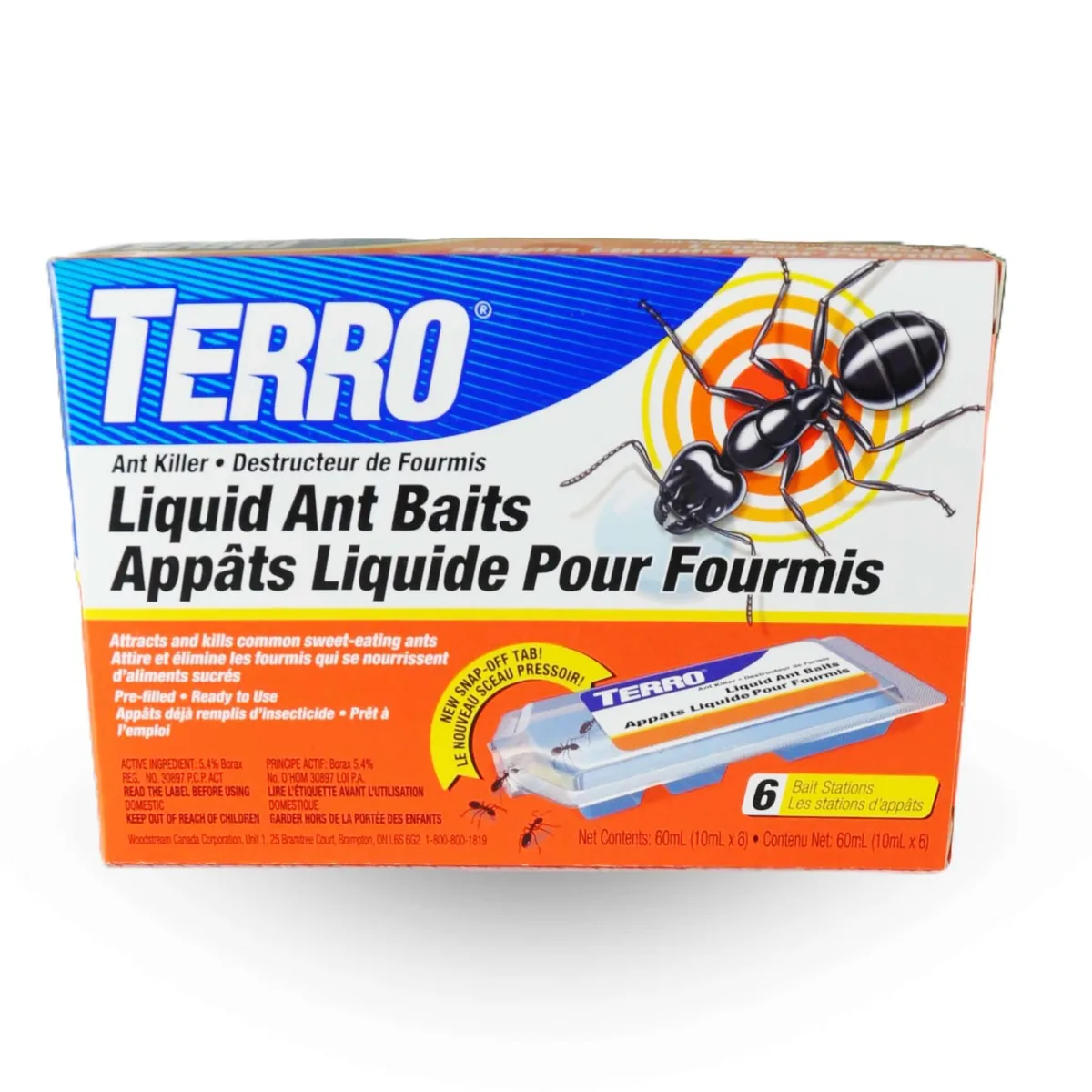
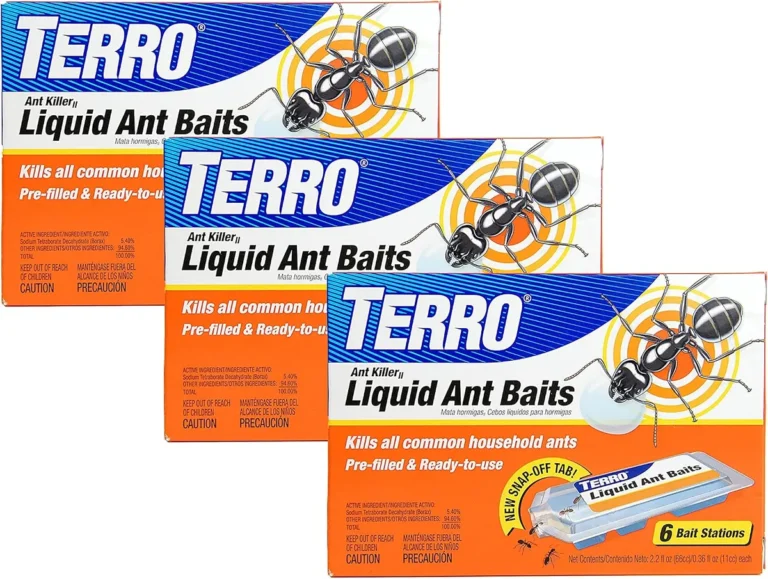
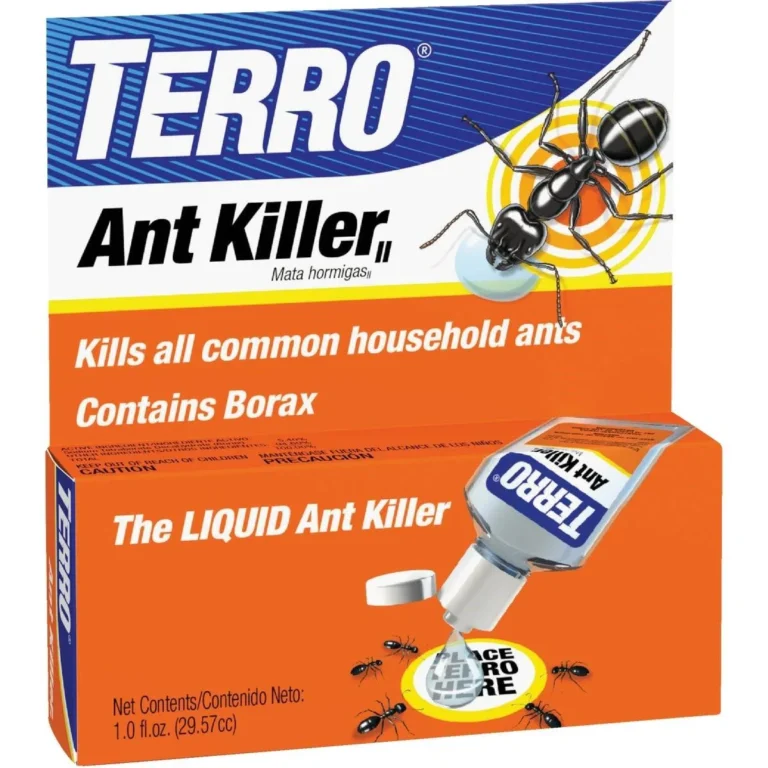
You've probably already got a bottle of Terro sitting in a drawer. The question is whether it's worth the extra $4 to $8 over the box of borax you'd already have in the pantry.
Borax vs. Terro (boric acid + sucrose)
Terro uses boric acid, not borax. It's the same boron chemistry family, but boric acid carries roughly 15% more boron by weight. That translates to a slightly faster colony kill (often 5 to 10 days instead of 7 to 14).
The tradeoff is that the margin for pet or child ingestion is tighter. Terro is a registered pesticide with a label, an EPA registration number, and mandated warning language. Borax carries none of that because it's a general-use substance under EPA FIFRA §25(c).
Bottom line: Terro is a convenience product. You're paying for the formulated ratio, the pre-portioned bottle, and the registered label. The active ingredient is nearly identical to what you'd mix at the counter.
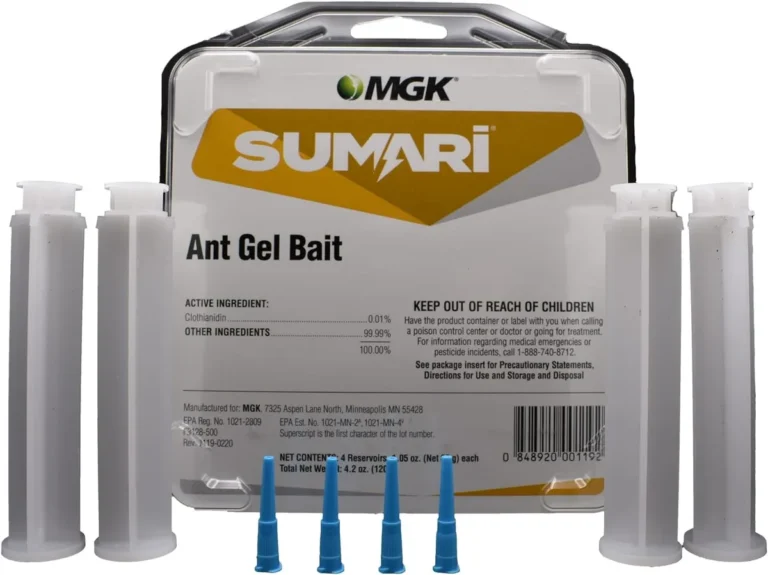
Borax vs. Advion (fipronil)
Advion uses fipronil, a completely different chemistry. It's a fast-acting neurotoxin that paralyzes the ant within hours, then gets carried back to the colony. Colony kill in 5 to 10 days for most species.
It's also labeled for fire ants and pharaoh ants, where borax underperforms.
Advion's weakness: it's a registered pesticide. You're applying a synthetic chemical to your floor and baseboards. If you have a toddler crawling around or a dog that licks tile, the risk profile is higher than granulated borax on a saucer 30 cm off the ground.
Borax vs. MaxForce (hydramethylnon)
MaxForce uses hydramethylnon, a second-generation antifeedant. It stops the ant from eating for 24 to 48 hours, then the ant dies. Colony kill in about 7 to 14 days.
It's effective on the same species list as Terro but is less available in bulk and costs more per station.
The honest takeaway: if your problem is a standard odorous house ant or pavement ant trail in a moderate-humidity climate, borax and Terro perform within a day or two of each other. The $4 you save by mixing your own bait adds up over a season. For fire ants, pharaoh ants, or a persistent supercolony, the commercial fipronil or hydramethylnon product or a licensed pro will get you a faster, more complete kill.
Borax vs. Boric Acid: The Fine Line That Matters
People swap these two in recipes and wonder why their results are inconsistent. They're not the same compound, even though both are boron.
- Borax is sodium tetraborate decahydrate. Boron content: roughly 11.4% by weight.
- Boric acid is B(OH)₃. Boron content: roughly 17.5% by weight.
That 6-point difference sounds small, but it changes two things in practice. First, boric acid delivers a higher active dose per gram, so the colony kill window shrinks by a day or two. Second, the toxicity threshold for pets and kids drops.
A 10-lb dog ingesting about 2 grams of boric acid enters the GI-irritation range, whereas the same amount of borax sits closer to the 5-gram danger zone.
If your household has a puppy that chews everything or a toddler in the floor-crawl phase, stick with borax. The wider margin gives you a meaningful safety buffer. You'll just accept a two-to-three-day slower kill.
For a dry-pantry environment in the Southwest or a well-ventilated basement, boric acid is fine and arguably more efficient. In a humid Florida kitchen where the bait gel sits for weeks, borax is the safer default because the milder potency means a slightly higher ingestion volume is needed to cross the toxic threshold.
One more practical note: boric acid dust is a known respiratory irritant in occupational settings. The CDC lists it under occupational dust exposures. If you're mixing a 10-lb batch, pop on a $2 dust mask.
Borax granules are less of an inhalation concern, but the principle still applies.
Borax vs. Everything Else You've Probably Tried
You've likely tried a few things before reaching for borax. Here's where each one actually stands.
Diatomaceous earth
DE is a contact killant. It abrades the exoskeleton and dehydrates the ant on touch. No queen kill.
No colony collapse. Useful for a quick spot treatment at a single entry crack, but useless against an established nest with hundreds of workers.
Essential-oil and botanical sprays
Peppermint, cedar, and neem are repellents. They do not poison. The ants just reroute to a new trail.
You're playing whack-a-mole across the kitchen.
Boiling water or castor oil on fire ant mounds
Boiling water gives a 48-hour knockdown. Workers rebuild the mound by day 3. Castor oil is marginally better, holding for about 72 hours.
Neither reaches the queen. A borax mound pour (1 oz in 16 oz water) outlasts both by weeks.
Pheromone and sticky monitoring traps
These are detection tools, not killers. They tell you where the trail is and how active the colony is. Use them to scout before placing borax bait, not as a treatment.
Side-by-Side: Where Borax Wins and Where It Loses
| Factor | Borax (DIY) | Commercial bait | Pro service |
|---|---|---|---|
| Cost per season | $3 to $6 | $15 to $40 | $150 to $350+ |
| Kill speed (pavement / odorous) | 7 to 14 days | 5 to 10 days | 5 to 10 days |
| Fire ant effectiveness | Low (mound pour only) | Moderate | High |
| Pharaoh ant effectiveness | Poor | Moderate | High |
| Pet safety margin | Wider (11.4% B by weight) | Narrower | N/A (applied by pro) |
| Reapplication after rain | Yes (dry granules last longer) | Yes | Yes |
| EPA registration | None (general-use substance) | Required | Licensed applicator |
The pattern is straightforward. Borax wins on cost, simplicity, and a wider pet-safety margin. It loses on speed and on the two supercolony species that resist single-point poisoning.
Who Should Actually Use Borax (and Who Shouldn't)
Use borax if:
- You've identified odorous house ants, pavement ants, or Argentine ants
- Your household has a small dog, cat, or toddler crawling on the floor
- The infestation is moderate, fewer than 50 visible workers in a day
- You live in a dry or moderate-humidity zone (Northeast, Midwest, Southwest)
Skip borax and call a licensed operator if:
- You've confirmed pharaoh ants with multiple satellite nests and no collapse after 30 days
- You're dealing with fire ant mounds in a yard with heavy foot traffic
- You've already run two full borax cycles with zero reduction in trail activity
- The infestation spans more than three rooms or extends into wall cavities
How to Make and Place Borax Ant Bait That Doesn't Get Ignored
Recipe and ratio
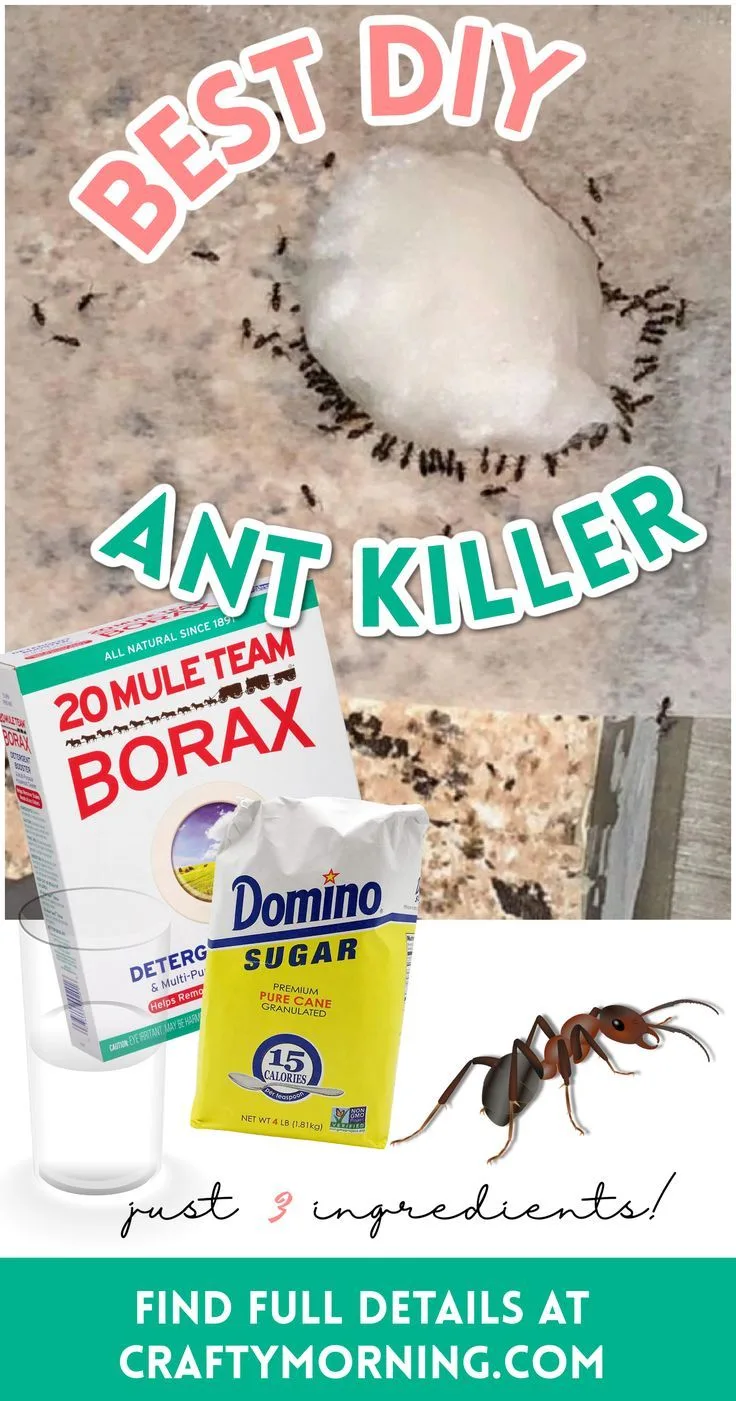
For dry bait: 1 part borax granules to 3 parts granulated sugar. Mix on a plate. No water, no honey, no peanut butter.
For gel bait: 1 part borax to 2 parts sugar to 1 part warm water. Stir until fully dissolved. Spread on a strip of cardboard or paper towel.
The 3-to-1 sugar-to-borax ratio is the tested acceptance threshold per IFAS extension research. Go lower on sugar and the ants reject the mixture. Go higher on borax and you're back to the boric-acid potency problem we covered earlier.
Placement and spacing
Set stations at every visible trail entry point. Space them 15 to 20 cm apart. Keep them off the floor and out of paw reach: invert a small plastic bowl, set it on the tile, and nest the saucer inside.
Do not place bait where you've been spraying contact insecticide. The residual repels foragers and they walk right past your station.
The 72-hour no-disturb window
Once the bait is down, leave it alone. No vacuuming, no spraying, no moving the saucer. Foragers drag the payload back to the nest, and that trophallaxis chain is the entire kill mechanism.
Disturbing the station resets it.
On days 1 to 2 you'll see increased ant traffic. That is not a failure. It means the workers are grabbing more food for the colony.
Kill tapers off by day 3 to 5.
The Patience Problem: Why Most People Think Borax "Doesn't Work"
The number one complaint across pest forums is "I put down borax two days ago and the ants are still marching." They are still marching. That's the whole point.
Borax is not a contact toxin. The worker that eats your bait doesn't drop dead in 20 minutes. It walks back to the nest, shares the payload, and the queen's egg-laying slows over 48 to 72 hours.
The visible workers on day 2 are the same ones now carrying boron into the colony.
If you sweep the trail into the sink out of frustration, you've removed the delivery mechanism. The queen keeps laying. A fresh batch of workers appears in 3 to 5 days.
You're back to square one.
The fix: commit to the full 7-to-14-day window for common species. Set a calendar reminder. Don't inspect the bait daily.
Check on day 5 and day 7. If trail activity has dropped by 80% by day 7, you're on track. If it hasn't, the species is likely resistant or a competing food source is pulling the foragers away from your station.
Borax Around Dogs, Cats, and Toddlers: What's Actually Dangerous
Borax is not "non-toxic." It's a mined mineral mill, and the marketing word "natural" does not mean safe. A 10-lb dog that ingests roughly 2 grams of dry borax granules (about half a teaspoon) enters the GI-irritation range. Cats hit the threshold lower, around 1.5 grams.
A toddler chewing on a spoonful of granules can trigger vomiting and diarrhea at 5 to 10 grams.
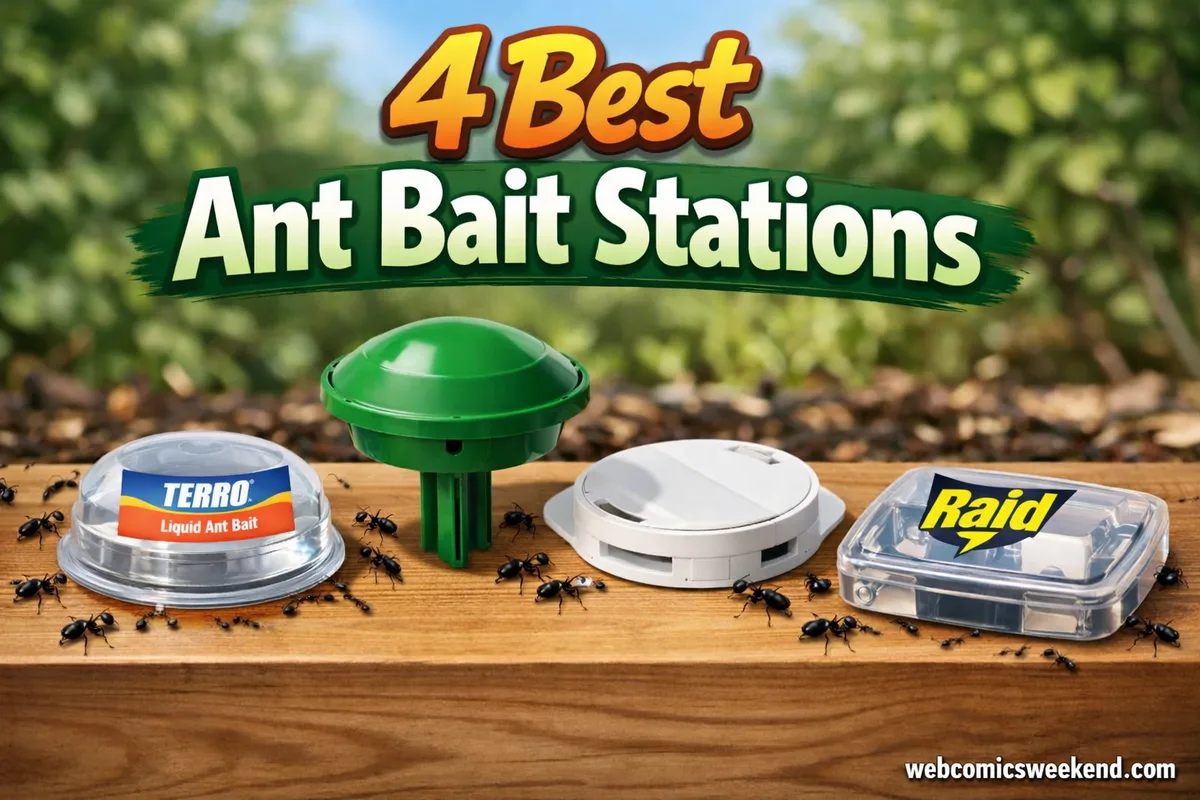
The practical fix is simple. Raise every bait station 30 cm off the floor. Invert a small plastic bowl, set it on the tile, and nest the saucer inside.
A cat's tongue can't reach under the lip. A puppy's nose can sniff it, but it can't scrape the granules off. Store the bulk 10-lb box in a locked pantry, not the open shelf where a curious two-yearer can tip it over.
Keep bait away from pet drinking bowls, birdbaths, and any open water. Borax is water-soluble. A dropped granule in a water bowl dissolves and concentrates the dose.
What Borax Costs You vs. a $200 Pro Service Call
A 10-lb box of borax from a hardware store runs $3 to $6. That single box gives you 40 to 60 individual bait placements. A full season of indoor and outdoor treatment costs you under $1.
A licensed pest-control operator charges $150 to $350 per visit for a perimeter bait-station deployment plus interior treatment. Follow-up visits run $75 to $120 each. For a standard odorous house ant trail, you're paying $150 for a convenience you can replicate with a box of borax and a sugar bowl.
The pro is worth it when the species resists DIY methods, the infestation spans wall cavities, or you need a service guarantee. For a single-trail kitchen problem, the math doesn't support the service call.
When to Skip Borax and Call a Licensed Pest Controller
You should skip borax and call a professional in these situations:
- Pharaoh ants with no colony collapse after 30 days of consistent baiting
- Fire ant mounds in a yard with heavy family or pet foot traffic
- Trail activity spanning three or more rooms with no reduction after two full borax cycles
- Infestation inside wall cavities, HVAC ducts, or slab-on-grade foundations you cannot reach
- You need a documented treatment record for a lease, property sale, or HOA compliance
A licensed operator deploys fipronil or hydramethylnon bait stations, applies a perimeter termiticide-class barrier, and guarantees follow-up. That protocol is not something you can replicate with a box of powder.
Final Verdict: Is Borax a Good Ant Killer?
Yes, with a species qualifier. For odorous house ants, pavement ants, and moderate-humidity household trails, borax is a fast, cheap, colony-level solution. The 7-to-14-day kill window matches commercial boric-acid baits within a day.
Where it falls short is the two supercolony species (pharaoh, Argentine) and fire ant mounds. Those need a different chemistry or a professional deployment.
If you've identified your ant, cleared competing food sources, and committed to the 72-hour no-disturb window, borax is the best value-per-dollar option available at a hardware store. Mix the 3-to-1 sugar ratio, place the stations 15 to 20 cm apart, raise them off the floor for pet safety, and give the colony the full two weeks. That's the entire protocol.
No spray, no residual, no $200 service call needed.