Yes, Raid bed bug spray can kill bed bugs and their eggs when applied correctly. However, one treatment may not eliminate an entire infestation because bed bugs hide in small cracks, furniture, and nearby rooms.
Bed bugs are a common household pest concern in the United States. They can spread through apartments, hotels, dorm rooms, rental homes, and used furniture. Finding them in a mattress or bedroom can be stressful, especially when they keep appearing after cleaning.
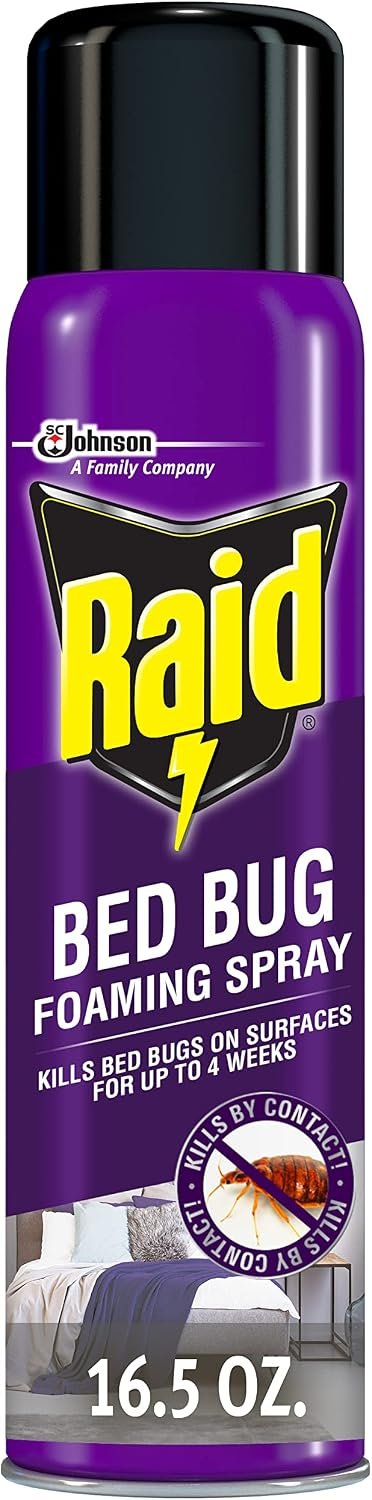
Raid offers several products made to target bed bugs. Its Bed Bug Foaming Spray is designed to kill bed bugs and their eggs, including strains described by the manufacturer as pyrethroid-resistant. The foam also helps cover places where these insects hide. The regular foaming product advertises residual control for up to four weeks on treated surfaces.
Still, killing the bugs that you can see is not the same as clearing a full infestation. Some insects may remain inside bed frames, wall gaps, carpet edges, and other hidden spots. Eggs may also survive treatments that are not designed or applied to kill them.
The best way to use Raid is as one part of a larger bed bug control plan. Cleaning, heat treatment, careful inspection, monitoring, and professional pest control may all be needed. This guide explains what Raid can do, where it works, how to apply it safely, and when another treatment is necessary.
Yes. Raid Bed Bug Foaming Spray is made to kill bed bugs when the product reaches them or the surfaces where they hide. The manufacturer lists adults, nymphs, and eggs among the life stages it targets.
This is useful because bed bugs do not stay in one place. They hide during the day and come out when they sense a nearby person. They may live in mattress seams, bed frames, furniture joints, carpet edges, and small gaps near sleeping areas.
The main limitation is coverage. A spray can only work where it reaches the insects or the surfaces covered by the product. A bug deep inside a wall opening may never come into contact with the treatment.
Therefore, Raid can help reduce an infestation, but the result depends on the product version, application method, hiding places, and size of the problem.
Source: m.media-amazon.com
Direct killing
The foaming formula is designed to kill bed bugs and their eggs when applied according to its label.
Surface treatment
The product can treat approved surfaces and hiding areas where bed bugs travel or rest.
Residual action
Some Raid formulas continue killing bed bugs on treated surfaces for a limited period after application.
Not a complete cure by itself
Hidden insects, untreated rooms, and new arrivals can keep an infestation going even after visible bugs die.
Does Raid Kill Adult Bed Bugs?
Yes. Raid Bed Bug Foaming Spray is designed to kill adult bed bugs. Adults are easier to spot than young insects because they are larger and have a more developed body.
However, an adult bed bug hiding deep inside a mattress seam or furniture joint may escape direct treatment. The foam must reach the relevant hiding place or leave an effective treated surface behind.
Best approach
Inspect and treat approved hiding areas instead of spraying only the center of the mattress.
Does Raid Kill Baby Bed Bugs?
Yes. Baby bed bugs are called nymphs. They are smaller than adults and can hide in narrow spaces that are difficult to inspect.
Raid’s foaming product is labeled for all bed bug life stages. However, this does not mean every nymph in a room will die. The product must reach the insect or an effective treated area.
Watch for new nymphs
Small bed bugs appearing after treatment may indicate that some eggs hatched or that hidden insects were missed.
Does Raid Bed Bug Spray Kill Bed Bug Eggs?
Raid Bed Bug Foaming Spray is specifically advertised to kill bed bug eggs before they hatch. This is an important feature because eggs can make infestations difficult to control.
Bed bug eggs are tiny, pale, and often attached to protected surfaces. You may find them in mattress seams, furniture joints, and narrow cracks. Their small size makes them easy to overlook during a normal cleaning routine.
Not all insecticides kill bed bug eggs. Some products mainly target moving insects, which means newly hatched nymphs may appear after an initial treatment. Raid’s foaming formula is marketed for egg control, but its effectiveness still depends on proper application and contact.
Do not assume that a room is clear just because you cannot see eggs or adult bugs after spraying. Continue inspecting the room and using monitoring tools.
Source: m.media-amazon.com
Egg coverage
Apply the product only to approved surfaces and locations identified on its label.
Hidden eggs
Eggs inside untreated cracks or inaccessible spaces may escape the application.
Continued monitoring
Check for new insects after treatment instead of relying only on the immediate appearance of the room.
Why Can Bed Bugs Return After Spraying?
Bed bugs may return because some eggs or insects were not reached. A single missed hiding place can allow the problem to continue.
They may also move between rooms or arrive through luggage, used furniture, clothing, or neighboring apartments. This is why inspecting nearby areas matters as much as treating the bed itself.
If new bed bugs appear, do not automatically spray more product. Check the label, inspect the room, and consider whether the treatment needs professional support.
Missed hiding places
Look around bed frames, furniture joints, baseboards, and carpet edges.
New arrivals
Check luggage, secondhand furniture, and shared walls or nearby rooms.
How Long Does Raid Bed Bug Spray Work?
The length of protection depends on the exact Raid product. Different formulas have different directions and residual claims, so it is important to check the container before use.
Raid Bed Bug Foaming Spray advertises continued killing for up to four weeks on treated surfaces. Raid Max Bed Bug Crack and Crevice Extended Protection Foaming Spray advertises protection for up to eight weeks on laminated wood surfaces.
These periods are product claims under the stated conditions. They should not be treated as a promise that an entire bedroom will remain free of bed bugs for that length of time.
Surface type, cleaning, product coverage, and the location of the insects can affect the practical result. A treated surface may lose some of its usefulness if it is cleaned or disturbed.
Source: instacart.com
Regular foaming spray
Advertises residual control for up to four weeks on treated surfaces.
Extended protection foam
Advertises protection for up to eight weeks on laminated wood surfaces.
Important condition
The stated protection period does not replace inspection, cleaning, or follow-up treatment when needed.
Does Raid Still Work After It Dries?
Some Raid bed bug formulas are designed to keep working after the treated surface dries. The regular foaming product advertises residual action for up to four weeks.
This is different from a simple contact spray that may only kill insects when directly sprayed. Residual products leave an active treatment on approved surfaces.
However, never assume that every Raid insect spray has the same effect after drying. Check the exact label and use restrictions before deciding where to apply it.
Allow drying
Keep people and pets away until all treated surfaces are completely dry.
Avoid unnecessary cleaning
Do not wash treated areas immediately if the label indicates that doing so would remove the treatment. Follow the stated cleaning and reapplication directions.
How Does Raid Bed Bug Spray Work?
Raid uses insecticidal ingredients that affect the nervous systems of insects. The exact ingredients depend on the product version.
The regular Raid Bed Bug Foaming Spray lists clothianidin, metofluthrin, and piperonyl butoxide as active ingredients. These ingredients have different roles in the formula.
Clothianidin belongs to the neonicotinoid class of insecticides. It affects insect nerve signaling. Metofluthrin is a pyrethroid insecticide that also affects the nervous system. Piperonyl butoxide is a synergist that can help certain insecticides work more effectively.
The foam is also useful as an application aid. It expands across treated areas and makes coverage easier to see. This can help when treating approved cracks, seams, and other locations where bed bugs may hide.
The formula is not a substitute for good coverage. If insects remain in untreated areas, they may survive even when the spray works as intended on the surfaces it reaches.
Source: m.media-amazon.com
Clothianidin
An insecticide that acts on insect nerve signaling.
Metofluthrin
A pyrethroid insecticide used as part of the product formula.
Piperonyl butoxide
A synergist that can increase the effectiveness of certain insecticides.
Foam delivery
Helps show the treated area and spread the product across suitable hiding places.
Does Raid Work on Pyrethroid-Resistant Bed Bugs?
Raid Bed Bug Foaming Spray is advertised as effective against pyrethroid-resistant bed bugs. This matters because some bed bug populations have developed resistance to common insecticides.
Resistance means that insects can survive exposure to a chemical that once killed more members of their population. The US Environmental Protection Agency explains that resistance can reduce pesticide effectiveness and contribute to treatment failure.
The Raid foaming formula contains more than one active insecticidal ingredient. This gives it a different chemical profile from a product that relies only on a pyrethroid.
Still, the manufacturer’s resistance claim should not be understood as proof that every resistant bed bug population will respond equally well. Local resistance patterns and application conditions can vary.
Avoid repeated guessing
If bed bugs survive treatment, investigate coverage and resistance rather than repeatedly applying the same pesticide.
Consider professional help
A pest management professional can select an appropriate treatment strategy when resistance or repeated failure is suspected.
How to Use Raid Bed Bug Spray Correctly
Correct application is one of the biggest factors in successful bed bug control. Start by identifying the exact Raid formula and reading its complete label.
The instructions for regular Bed Bug Foaming Spray and Raid Max Crack and Crevice Extended Protection Foam are not identical. Never transfer the directions from one container to another.
For the regular foaming product, the manufacturer recommends shaking the container, holding it upright, and spraying from about 8 to 10 inches away. The label also identifies approved treatment locations and explains how to prepare mattresses and other surfaces.
The following process provides a practical starting point. Always follow the actual directions on your product, especially where they differ from these general steps.
Source: m.media-amazon.com
Step 1: Confirm the product
Check that the container specifically identifies bed bugs and is registered for the intended indoor use.
Step 2: Inspect the room
Look for live insects, shed skins, eggs, and dark spots around mattress seams, bed frames, and nearby furniture.
Step 3: Prepare the area
Remove bedding and washable items. Keep food, utensils, and personal items away from treatment areas.
Step 4: Vacuum first
Vacuum suitable surfaces and crevices before treatment. Empty the vacuum contents into a sealed bag and dispose of them safely.
Step 5: Apply the spray
Use the labeled application method on approved surfaces and hiding places. Do not soak areas or exceed the label directions.
Step 6: Allow surfaces to dry
Keep people and pets away from treated areas until they are completely dry and the label’s reentry directions have been met.
Step 7: Monitor the results
Inspect the room regularly and use bed bug interceptors where suitable to detect remaining activity.
Where Should You Spray Raid Bed Bug Killer?
Bed bugs usually stay close to places where people rest. This makes the bed, nearby furniture, and surrounding floor edges important areas to inspect.
For the regular Raid foaming product, the manufacturer identifies several suitable treatment locations. Always confirm the exact surfaces permitted by your own container.
Mattress seams
Inspect seams, folds, tufts, and edges. Use the product only as permitted by its mattress directions.
Bed frames
Check joints, corners, screw holes, and other hiding spaces.
Headboards
Inspect joints and gaps where insects may rest.
Baseboards
Check the edges of walls and floors for hiding insects.
Upholstered furniture
Inspect seams, folds, and edges, applying the spray only where the label allows.
Carpet edges
Look beneath rugs and along carpet edges where bed bugs may hide.
Can You Spray Raid Directly on a Mattress?
The regular Raid Bed Bug Foaming Spray product page permits direct application to mattresses and box springs. It recommends focusing on seams, folds, tufts, and edges.
This permission does not mean every Raid insecticide is suitable for mattresses. Some products have different restrictions, including restrictions on surfaces that touch bedding or sleeping occupants.
Never spray bed linens unless the exact label expressly permits it. Remove infested sheets, seal them in a bag, and launder and dry them at high temperatures before reuse. Allow treated mattress surfaces to dry completely before putting clean bedding back on the bed.
Check the exact label
Confirm that mattress application is allowed for your specific product.
Never spray people
Bed bug pesticide is not a personal insect repellent.
Why Raid Bed Bug Spray May Not Work
Raid may fail to eliminate an infestation even when the product itself is effective. The most common explanation is that the treatment did not reach every insect or hiding place.
Bed bugs are small and can hide in very narrow spaces. A room may look clean while insects remain inside furniture joints, wall gaps, or other protected locations.
The EPA identifies several reasons pesticide treatments may fail. These include poor preparation, missed hiding places, untreated nearby rooms, incorrect application, resistance, and a lack of follow-up.
Understanding the cause is more useful than simply applying another layer of spray. More pesticide does not always mean better control, and excessive use can create avoidable exposure risks.
Source: m.media-amazon.com
Incomplete coverage
Some insects may remain in untreated cracks, furniture, or other protected locations.
Resistance
A local bed bug population may be less sensitive to one or more insecticides.
Untreated rooms
Bed bugs can move between nearby rooms or apartments.
Poor preparation
Clutter and missed laundry can leave insects and eggs in the room.
Incorrect use
Using too little, applying the wrong product, or ignoring label instructions can reduce results.
What If You Still See Bed Bugs After Spraying?
Seeing a bed bug after treatment does not automatically prove that the product failed. Some insects may have escaped the application, or the infestation may involve nearby hiding places.
First, confirm that the insect is actually a bed bug. Then inspect the mattress, bed frame, nearby furniture, and floor edges. Record where and when you find new insects.
Check the label before considering another application. Do not spray more frequently or use a heavier dose than directed.
If activity continues, a licensed or qualified pest management professional can inspect the property and recommend a more complete treatment plan.
Keep a record
Note the date, location, and number of insects found.
Check nearby spaces
Inspect furniture, adjoining rooms, and other likely hiding areas.
Avoid random chemicals
Do not mix pesticides or add unapproved products to the treatment.
Raid Bed Bug Spray Compared With Other Treatment Methods
Raid is one option for controlling bed bugs, but it is not the only method. A good treatment plan often combines insecticides with physical removal, heat, laundry, and ongoing inspection.
The US Environmental Protection Agency recommends integrated pest management, or IPM. This approach combines suitable chemical and nonchemical methods to control pests while reducing unnecessary exposure.
Each method has a different role. A spray can treat approved surfaces, a dryer can kill insects on washable items, and an interceptor can help detect insects moving around a bed.
Source: m.media-amazon.com
Raid foaming spray
Useful for treating approved hiding places and surfaces. It cannot guarantee that every insect in a room will be reached.
High-heat drying
The EPA recommends placing bedding and clothing in a dryer at high temperatures for 30 minutes to kill bed bugs.
Vacuuming
Helps remove visible insects and debris, but does not reliably eliminate an entire infestation.
Mattress encasements
Help trap bed bugs inside an encased mattress and make future inspections easier.
Professional heat treatment
Can treat large areas and difficult-to-wash belongings when performed with suitable equipment and temperature monitoring.
Bed bug interceptors
Help detect insects climbing furniture legs and provide information about continued activity.
Is Raid Better Than Heat Treatment?
Raid and heat treatment solve different parts of the problem. Raid applies an insecticide to approved surfaces, while professional heat treatment uses controlled high temperatures to kill bed bugs in treated areas.
The EPA explains that infested articles or areas may need to reach at least 120 degrees Fahrenheit for 90 minutes to ensure that eggs are killed. The actual treatment must maintain the required conditions throughout the relevant materials.
A household hair dryer or ordinary space heater is not a safe substitute for professional heat treatment. Improper heating can cause burns, fires, or property damage.
For a serious infestation, a pest control professional can decide whether chemical treatment, heat, or a combination is appropriate.
Raid
Suitable for specific labeled surface and crack treatments.
Professional heat
Can treat a wider range of hiding locations when the entire treatment area reaches the required conditions.
Is Raid Bed Bug Spray Safe to Use Indoors?
Raid bed bug products are designed for specific indoor pest control uses, but that does not make them harmless. They contain insecticides and must be handled according to the label.
The most important safety step is to follow the product’s approved application locations and exposure precautions. Do not apply more spray than directed, and do not use a product on a surface unless the label permits it.
The regular Raid Bed Bug Foaming Spray instructions say to allow treated surfaces to dry thoroughly before people or pets come into contact with them. The extended protection product also directs users to remove pets and birds, protect fish aquariums, and ventilate before reoccupying the treated room.
Keep the original container so you can check its ingredients, directions, first-aid instructions, and disposal guidance if needed.
Source: m.media-amazon.com
Children
Keep children away from treated surfaces until the label’s safety conditions have been met.
Pets
Remove pets during application and prevent contact with wet treated areas. Never spray animals directly.
Food and utensils
Remove or cover food and protect food preparation surfaces according to the label.
Ventilation
Follow the product’s room ventilation and reentry instructions.
Electrical equipment
Do not apply the regular Raid foaming product in, on, or around electrical equipment.
Storage
Keep the pressurized container away from heat, open flames, and children.
Can You Sleep in a Room After Spraying Raid?
Do not sleep in a treated room while sprayed surfaces are still wet or before the product’s reentry directions have been met.
For the regular foaming spray, the manufacturer says to allow treated surfaces to dry thoroughly before contact. The extended protection formula gives additional instructions to vacate and ventilate the room before reoccupying it.
Drying time can vary with the amount applied, surface type, airflow, and room conditions. Do not use a guessed waiting period in place of the label.
Before sleeping
Confirm that all treated surfaces are completely dry and that every reentry instruction has been followed.
Before replacing bedding
Make sure the mattress and other treated surfaces are ready for contact under the product directions.
Can Raid Bed Bug Spray Harm Pets?
Yes, exposure to insecticides can harm pets, particularly if they lick wet treated surfaces or come into direct contact with the spray.
Remove animals from the treatment area before spraying. Do not apply the product to pets, pet food, water bowls, toys, or bedding unless the exact label specifically allows the intended use.
If a pet comes into contact with the product or shows signs of illness after exposure, contact a veterinarian or an animal poison control service. Keep the product container available so its ingredients can be identified.
Never spray pets
Raid bed bug products are household pesticides, not treatments for animals.
Prevent licking
Keep pets away from treated surfaces until they are completely dry and safe to access.
Seek help after exposure
Contact a veterinarian if accidental exposure occurs or unusual symptoms appear.
How to Know Whether Raid Bed Bug Treatment Is Working
The best way to judge treatment success is to monitor bed bug activity over time. A few dead insects immediately after spraying show that the product reached those insects, but they do not prove that the infestation is gone.
Look for fewer live insects, fewer new signs of activity, and no new captures in monitoring devices. Check the same areas regularly so you can compare results from one inspection to the next.
The EPA recommends using monitoring devices such as bed bug interceptors as part of an integrated control plan. These devices can help show whether insects are still moving around the bed.
Avoid relying only on bites. Skin reactions vary from person to person, and some people do not develop visible marks after bed bug bites.
Source: instacart.com
Fewer live insects
A decline in visible bed bugs may indicate that treatment is reducing their numbers.
No new monitoring captures
Interceptors that remain clear over repeated checks provide useful evidence of reduced activity.
No fresh signs
A lack of new insects, shed skins, and other signs during regular inspections is encouraging.
Continued checks
Keep monitoring rather than declaring success after one quiet night.
How Long Should You Monitor After Treatment?
Continue checking the room after the initial treatment and follow any monitoring schedule recommended by your pest management professional.
There is no universal number of days that proves an infestation has ended. The size of the original infestation, the type of treatment, and the possibility of nearby insects all matter.
If you continue finding live bed bugs, arrange a follow-up inspection. A professional can determine whether the problem comes from missed hiding places, resistance, or reinfestation.
Inspect consistently
Check the bed, furniture, and interceptors on a regular schedule.
Keep records
Write down new findings to identify whether activity is decreasing.
Common Mistakes to Avoid When Using Raid
A good product can produce poor results when it is used incorrectly. Avoiding a few common mistakes can improve pest control while reducing unnecessary chemical exposure.
The most important rule is to use the exact product as directed. Bed bug formulas are not interchangeable with general household insect sprays, outdoor pesticides, or products made for other insects.
Do not try to speed up the process by applying more product. Excessive spraying can create avoidable risks without reaching insects that remain hidden.
Spraying only the mattress
Bed bugs may hide in bed frames, furniture, baseboards, and other nearby spaces.
Ignoring laundry
Washable bedding and clothing need suitable high-heat drying as part of the treatment plan.
Using too much pesticide
More spray does not guarantee better results and can increase exposure.
Ignoring the label
Different Raid formulas have different application and safety restrictions.
Using bug bombs
Total-release foggers often fail to reach the narrow hiding places where bed bugs live and may create additional exposure hazards.
Stopping inspection too soon
A temporary decline in visible insects does not establish that every bed bug has been eliminated.
Should You Mix Raid With Another Bed Bug Spray?
No. Do not mix Raid with another pesticide or household chemical unless the product labels explicitly authorize the combination.
Mixing products can create unexpected chemical exposure and may damage surfaces. It can also make it harder to identify which treatment caused a problem.
If one product does not work, investigate the reason and choose another approach with help from a qualified pest professional rather than combining chemicals yourself.
Use products separately
Follow each product’s own directions and restrictions.
Do not improvise
Avoid homemade pesticide mixtures and unapproved chemical combinations.
When Should You Call a Professional Pest Control Service?
Professional help is a sensible choice when bed bugs keep appearing after careful treatment, when several rooms are affected, or when an infestation involves a shared apartment building.
A professional can inspect places that are difficult to reach and determine how far the infestation has spread. They can also select suitable insecticides and nonchemical methods based on the property and the insects involved.
This is particularly important in multiunit housing. Treating one bedroom may not solve a problem if bed bugs are moving through adjoining spaces or shared areas.
Ask the company about its inspection process, proposed treatment methods, preparation instructions, follow-up visits, and monitoring plan. A reliable service should explain what it will do rather than promise instant results.
Repeated treatment failure
Live bed bugs continue appearing despite correct product use and careful inspection.
Large infestation
Bed bugs are found in several rooms or many pieces of furniture.
Apartment problems
Nearby units may also have bed bugs or share possible routes of spread.
Safety concerns
Children, pets, or people who may be sensitive to pesticides make careful treatment planning especially important.
Uncertain identification
You cannot confidently identify the insect or determine the source of the infestation.
What Should a Professional Bed Bug Treatment Include?
A complete service should begin with inspection and identification. The technician should locate likely hiding places and assess whether nearby rooms or furniture are affected.
The treatment may combine targeted insecticides, vacuuming, heat, encasements, and monitoring. The correct mix depends on the severity of the infestation and the property.
Follow-up checks are important because one treatment may not reach every insect. Ask how the company will measure progress and what happens if bed bugs remain.
Initial inspection
Identifies insects, hiding places, and the likely extent of the problem.
Treatment plan
Explains the chemical and nonchemical methods selected for the property.
Safety instructions
Provides clear preparation, reentry, and cleaning directions.
Follow-up monitoring
Checks whether bed bug activity has stopped and whether more treatment is needed.
Next-Question Gap Map: What Readers Need to Know After Buying Raid
The most useful follow-up questions concern eggs, residual action, mattress use, pet exposure, and treatment failure. These topics affect whether a reader can use the product correctly and recognize when a larger control plan is necessary.
The reviewed manufacturer and EPA resources provide direct information about application, product claims, safety, and integrated pest management. Some questions depend on the exact product label or the conditions in an individual home, so they should not receive a universal answer.
Does Raid kill eggs?
Reader stage: After buying. Basis: Observed question in the product information and supplied query. Competitor coverage: Answered by the manufacturer. Reader benefit: Explains why the exact formula matters. Priority: High.
How long does Raid last after drying?
Reader stage: During treatment. Basis: Inferred next need from residual-control claims. Competitor coverage: Answered at a product-claim level. Reader benefit: Separates surface protection from guaranteed room eradication. Priority: High.
Can Raid be used on mattresses?
Reader stage: Before application. Basis: Observed product-use question. Competitor coverage: Answered for the regular foaming product. Reader benefit: Prevents off-label application. Priority: High.
Is Raid safe around pets?
Reader stage: Before and after application. Basis: Inferred next need from household pesticide use. Competitor coverage: Addressed in manufacturer precautions. Reader benefit: Helps prevent accidental exposure. Priority: High.
What if bed bugs survive treatment?
Reader stage: After application. Basis: Observed concern in EPA treatment-failure guidance. Competitor coverage: Addressed by EPA. Reader benefit: Helps readers identify coverage problems and resistance. Priority: High.
How do you confirm bed bugs are gone?
Reader stage: Follow-up. Basis: Inferred next need from the goal of eradication. Competitor coverage: Addressed by EPA monitoring guidance. Reader benefit: Prevents premature claims of success. Priority: Medium.
Frequently Asked Questions
Q
Does Raid bed bug spray kill bed bugs instantly?
Raid can kill bed bugs when the spray reaches them, but the exact time depends on the formula and exposure. Do not assume that every insect will die immediately after application. Follow the product directions and monitor the treated areas.
Q
Does Raid Bed Bug Foaming Spray kill eggs?
Yes. The manufacturer advertises that Raid Bed Bug Foaming Spray kills bed bugs and their eggs before they hatch. However, eggs hidden in untreated areas may survive, so careful coverage and continued inspection remain important.
Q
Does Raid bed bug spray work on resistant bed bugs?
Raid’s foaming bed bug products are advertised as effective against pyrethroid-resistant bed bugs. Their active ingredients include chemicals from different insecticide classes. However, effectiveness can vary, and the manufacturer’s claim does not guarantee success against every local population.
Q
Can I sleep in my bed after spraying Raid?
Wait until all treated surfaces are completely dry and follow the exact label’s reentry directions. The regular foaming product permits certain mattress applications, but bed linens should not be treated. Put clean bedding back only when the treated surfaces are ready for use.
Q
Can Raid bed bug spray kill bed bugs in walls?
Raid may treat certain approved cracks and crevices, but spraying the surface of a wall will not necessarily reach insects deep inside a wall cavity. Do not inject pesticide into wall openings unless the product label specifically permits that use. A professional inspection may be needed.
Q
How many times should I spray Raid for bed bugs?
There is no universal number of applications. Follow the exact product label for application frequency and restrictions. If bed bugs remain, investigate missed hiding places, nearby rooms, and possible resistance instead of applying extra pesticide.
Q
Does Raid bed bug spray work on fleas too?
Some Raid products are labeled for more than one pest, including fleas and bed bugs. However, the approved pests and application directions vary by formula. Check the container rather than assuming that every Raid bed bug product controls fleas.
Q
Can Raid bed bug spray prevent future infestations?
It may provide residual control on certain treated surfaces, but it cannot guarantee that new bed bugs will never enter your home. Inspect used furniture, check luggage after travel, and monitor sleeping areas to reduce the chance of a new infestation.
✦ Wrapping Up
Conclusion
So, does Raid bed bug spray work? Yes. Raid Bed Bug Foaming Spray is designed to kill adult bed bugs, nymphs, and eggs when applied correctly to approved surfaces. Its regular formula advertises residual control for up to four weeks, while the Raid Max extended protection formula advertises up to eight weeks on laminated wood surfaces.
However, a successful product application does not always mean a successful room treatment. Bed bugs can hide in tiny spaces, move between rooms, and survive when parts of an infestation remain untreated. This is why a complete plan matters more than relying on one spray.
Use Raid according to its exact label, combine suitable treatment methods, and monitor the room after application. If live bed bugs keep appearing, consider professional pest control instead of repeatedly increasing the amount of pesticide.
💡 Key Takeaway
Before spraying, identify the exact Raid product, inspect the mattress and nearby furniture, remove washable bedding for high-heat drying, and read the full safety label. Apply only to approved surfaces, allow everything to dry, and monitor for continued activity. Seek professional help if the infestation persists.
You’ve got a spider web in the garage corner. You grab the can of ant killer from the shelf because it’s already there. And you’re wondering, does ant killer…
You’ve got a can of ant killer on the shelf and you’re wondering, will ant killer kill termites? You spray what you think is a termite. It dies on the spot.…