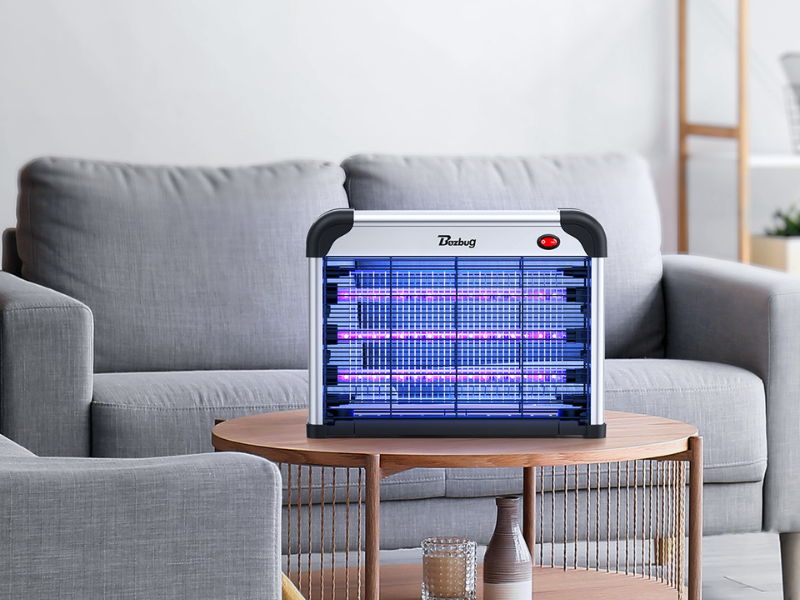
Yes, you can use a bug zapper indoors, but only if the manufacturer approves indoor use and you follow the safety instructions. Choose an enclosed indoor model rather than an outdoor high-voltage zapper.
In American homes, flying insects can become a problem during warm summers, humid weather, and rainy seasons. Mosquitoes may enter through open doors, while flies and gnats can gather around kitchens, houseplants, and trash cans. A bug zapper may seem like an easy way to deal with these pests without spraying insecticide around the house.
However, not every bug zapper belongs indoors. Some models are designed for outdoor use and can scatter dead insect fragments when they electrocute flying pests. Other models are made for indoor spaces and use a covered electric grid, a collection tray, or a sticky board to catch insects. The difference matters when people, pets, food, and furniture are nearby.
Before plugging in a bug zapper, check its product label and instruction manual. Look for clear approval for indoor use, safe placement rules, cleaning instructions, and electrical warnings. A device that works well on a patio is not automatically suitable for a bedroom, kitchen, or living room.
This guide explains when indoor use makes sense, which models to avoid, how to place a unit safely, and what to do if it does not catch the insects in your home. It also explains why a traditional electric zapper may not be the best choice for mosquitoes, fruit flies, or other common household pests.
Source: www.pinterest.com
Can You Use A Bug Zapper Indoors Safely?
Yes, an indoor-rated bug zapper can be used inside a home when the manufacturer permits it. The safest choice is a model designed for indoor spaces, with a protective housing that prevents accidental contact with its electrical parts. Always follow the exact instructions for the model you own.
A bug zapper uses light or another attractant to draw flying insects toward an electric grid. When an insect touches the energized grid, an electrical discharge kills it. Some units collect dead insects in a removable tray, while others allow insect remains to fall below the device.
The main safety concern is the high-voltage grid. A person or pet that reaches through an opening may receive an electric shock. This is why housing design, placement, and access restrictions matter more indoors than they might in an open outdoor area.
Indoor use also raises cleanliness concerns. Dead insects can collect inside the device, and some open-grid outdoor models may scatter small insect fragments. That makes model selection important, especially in homes where food is prepared or children spend time.
Source: buzbug.com
Choose an indoor-rated model
Check the package, product label, and manual for explicit indoor-use instructions. Do not assume that a product is suitable for indoor use just because it has a compact design.
Protect people and pets
Keep the device in a location where children, cats, dogs, and other household members cannot reach the electrical grid.
Keep the area dry
Place the unit away from sinks, bathtubs, wet floors, water containers, and other sources of moisture unless its instructions specifically permit the intended conditions.
Follow the cleaning instructions
Disconnect the power before emptying the collection tray or cleaning the unit. Use only the tools and methods approved by the manufacturer.
Indoor Bug Zappers Versus Outdoor Bug Zappers
Indoor and outdoor bug zappers may use the same basic electrical principle, but their construction and intended use can differ. Indoor units often have protective covers, controlled openings, removable trays, or glue boards. These features help contain insects and reduce accidental contact.
Outdoor models may have exposed grids and open designs. They are often intended for patios, yards, garages, or other areas where insect debris is less likely to fall near food or household surfaces. Texas A&M AgriLife Extension warns that outdoor high-voltage zappers should not be used indoors because they can scatter insect fragments and contaminate indoor areas.
The word indoor on a product listing is not enough by itself. Confirm the intended use on the actual product label and in the instruction manual.
Indoor models
Designed for approved indoor locations and may include protective housings, enclosed grids, collection trays, or adhesive boards.
Outdoor models
Designed for outdoor conditions and may have exposed electrical grids or open collection areas that are unsuitable for indoor environments.
Indoor-outdoor models
May be used in either setting, but only when the manufacturer provides instructions for both environments. Follow the correct placement and weather precautions.
How Does An Indoor Bug Zapper Work?
Most electric indoor bug zappers attract insects with ultraviolet light and kill them when they contact an energized grid. The light acts like a signal that draws certain flying insects toward the device. Once an insect enters the grid, electricity completes the killing process.
The process does not require an insecticide spray. This can make an electric trap useful in locations where a homeowner wants to avoid routine chemical spraying. However, an electric zapper is not automatically harmless or suitable for every indoor setting.
Different models use different collection methods. Some have a removable tray beneath the grid, while others use an adhesive board to hold insects after they approach the light. The collection method affects cleaning, insect containment, and maintenance.
UV light does not attract every flying insect equally. Different species respond to different signals. Mosquitoes, for example, use several cues to find people, including carbon dioxide, body heat, and odors. A light-only zapper may therefore catch some insects without meaningfully reducing mosquito activity.
Source: manuals.plus
The Role Of UV Light
UV light is used in many insect traps because certain flying insects respond to particular wavelengths. A trap uses this response to draw insects toward an electric grid or adhesive surface.
However, attraction to UV light varies by species and environment. Other light sources in a room, nearby windows, and the location of the trap can affect how many insects approach it. A bright lamp does not guarantee effective pest control.
Some insects that enter a zapper are harmless or beneficial species. Killing every insect attracted to a light is not the same as solving a household pest problem.
How The Electric Grid Kills Insects
An electric grid contains energized metal parts separated by small gaps. When an insect bridges the electrical contacts, current passes through its body and kills it.
The voltage and design vary by product. Never assume that a grid is safe to touch because it looks small or because the device has stopped making a buzzing sound. Follow the manufacturer’s power-off and cleaning procedure every time.
Some indoor models use adhesive boards instead of exposed high-voltage grids. These devices may reduce direct contact risks, although the adhesive boards still need proper handling and replacement.
Where Should You Place A Bug Zapper Inside Your Home?
Place an indoor bug zapper in a dry, stable location that follows the manufacturer’s recommended mounting height and clearance. Keep it away from children, pets, food, water, and areas where people regularly reach or walk.
The best location depends on the insect you want to catch. A unit intended for flying house flies may need a different position from a trap intended for small flying insects. Read the placement instructions instead of assuming that every zapper works best in the same spot.
A dark or relatively quiet corner may help some light traps stand out from competing light sources. However, do not place the unit in a hidden location if doing so makes cleaning difficult or increases the risk of accidental contact.
Avoid placing a zapper directly above a dining table, food preparation counter, or open food container. A collection tray or protective cover can help contain insect remains, but it does not remove the need for good hygiene.
Source: bobvila.com
Living room
Use an indoor-approved model in a secure location away from seating, children’s play areas, and pet access.
Kitchen
Keep the unit away from food, utensils, preparation surfaces, sinks, and cooking appliances. Consider a properly designed adhesive light trap for suitable flying insects.
Bedroom
Use only a model approved for indoor use. Keep it away from beds, curtains, clothing, and places where someone might touch it while getting up at night.
Basement or laundry room
Check the area for moisture before installation. Avoid damp floors, leaking pipes, washing machines, and exposed electrical connections.
Garage
Check whether the device is approved for the garage environment. Do not use it where flammable vapors, combustible dust, or other hazardous conditions may be present.
Should You Place A Bug Zapper Near A Window?
A window may seem like a natural place for a bug zapper because insects often enter through open windows. However, placing a bright UV trap near a window can create problems if the light is visible from outdoors.
For indoor fly control, Texas A&M AgriLife Extension recommends positioning suitable light traps so they are not visible from outside. This helps avoid drawing additional insects toward the building.
Repair damaged window screens and keep doors closed when possible. Preventing insects from entering is usually more useful than relying on a trap to catch every insect that gets inside.
Is An Indoor Bug Zapper Safe Around Children And Pets?
An indoor bug zapper can be used in a home with children or pets only when its design and placement prevent access to dangerous parts. The most important concern is the energized grid, which can cause an electric shock if someone touches it or inserts an object through its openings.
A protective outer cage can reduce the chance of direct contact, but it does not make every device childproof or pet-proof. Curious children may insert toys, fingers, or other objects into openings. Cats and dogs may also investigate a glowing device or knock it from an unstable surface.
Choose a stable, securely mounted model with a protective enclosure when appropriate. Keep cords out of reach and do not allow pets to chew them. If you cannot place the device where children and animals cannot access it, choose another form of pest control.
Also consider the location of the collection tray. Dead insects can fall out when the tray is removed, and the contents should not be accessible to children or pets. Dispose of collected insects according to the manufacturer’s instructions.
Source: storage.googleapis.com
Safety Precautions For Homes With Children
Never let a child handle, move, clean, or inspect an operating bug zapper. Explain that the glowing device is not a toy and that the internal grid must never be touched.
Mount the unit in a location that children cannot reach. Do not rely only on telling a child to stay away, especially if the device is placed in a bedroom, playroom, or shared living space.
Inspect the housing and power cord from time to time. Stop using the device if the protective cover is cracked, the cord is damaged, or the unit behaves in an unusual way.
Safety Precautions For Dogs And Cats
Dogs may sniff or paw at a bug zapper, while cats may jump toward its light. Place the unit where animals cannot reach it, knock it over, or pull on its cord.
Do not assume that a covered grid is harmless. Some models still contain energized electrical parts behind the protective housing. Keep pets away during operation and cleaning.
If a pet receives an electric shock, seek veterinary advice promptly. If the animal shows breathing difficulty, weakness, burns, collapse, or other serious symptoms, contact an emergency veterinarian.
Can You Use An Indoor Bug Zapper In The Kitchen?
You can use an indoor-rated insect trap in a kitchen if its instructions allow that location and you keep it away from food and preparation surfaces. However, a traditional open-grid bug zapper is often not the best option for a food preparation area.
When an insect is electrocuted, small body fragments may be scattered. This is a particular concern with open-grid outdoor zappers. Dead insects can also collect in a tray and create a cleaning issue if the tray is ignored.
A covered light trap with an adhesive board may be more suitable for some kitchens because it holds insects on a sticky surface rather than allowing them to fall from an exposed grid. It still needs careful placement and regular board replacement.
Do not install a trap directly above exposed food, clean dishes, or food preparation equipment. Keep the unit away from sinks and splashing water, and follow the product’s electrical safety instructions.
Better Ways To Control Kitchen Flies
The most effective approach depends on the type of fly. Fruit flies often breed around ripe produce, fermenting liquids, and food waste. Drain flies may develop in moist organic buildup inside drains, while fungus gnats often come from damp potting soil.
A bug zapper may catch some adult flying insects, but it will not remove the source of an infestation. Cleaning the breeding area is usually the most important step.
Remove overripe fruit, rinse recyclable drink containers, clean trash bins, and wipe up spills. If small flies keep appearing, inspect drains, plant pots, and other damp areas to find where they are breeding.
For fruit flies
Remove ripe or damaged fruit, clean food waste containers, and use a suitable bait trap to catch remaining adults.
For drain flies
Inspect and clean the affected drain to remove organic buildup where larvae may develop.
For fungus gnats
Check houseplant soil, avoid excess watering, and allow the soil to dry as appropriate for the plant.
For house flies
Use screens, remove food waste, keep bins covered, and consider an indoor adhesive light trap in a suitable location.
Do Indoor Bug Zappers Work For Mosquitoes?
Indoor bug zappers can kill some mosquitoes, but traditional UV-only models are generally not a reliable way to reduce mosquito bites. Mosquitoes do not depend on light alone when searching for people. They also respond to carbon dioxide, body heat, and human odors.
This means a mosquito can remain interested in a person even when a bug zapper is operating in the same room. The device may catch other flying insects without removing enough mosquitoes to make a meaningful difference.
Colorado State University Extension explains that conventional bug zappers are ineffective at reducing mosquito biting rates. The University of Maryland Extension also advises against using bug zappers for mosquito control because they kill very few mosquitoes and may kill beneficial insects.
If mosquitoes are the main problem, focus on preventing entry and removing breeding sites. Repair window and door screens, close doors, and remove standing water from containers around the home.
Better Indoor Mosquito Control Methods
Start by checking how mosquitoes enter your home. Small gaps in screens, open doors, and damaged window frames can provide easy entry points. Repairing these openings helps reduce the number of mosquitoes that get inside.
Next, inspect indoor and outdoor containers that hold water. Mosquitoes can lay eggs in or near standing water, depending on the species. Empty and scrub suitable containers regularly, including flowerpot saucers and other water-holding items.
If mosquitoes remain indoors, use a product specifically labeled for indoor mosquito control and follow its directions. The CDC recommends screens, closing doors, removing water sources, and using appropriate indoor control measures when needed.
Repair screens
Fix holes and gaps in window and door screens so mosquitoes cannot enter easily.
Close entry points
Keep doors closed when possible, including garage doors, and avoid leaving them open for long periods.
Remove standing water
Empty and scrub water-holding containers every week to help remove mosquito eggs and larvae.
Use suitable indoor controls
If mosquitoes remain, select an indoor-labeled control product and follow all label precautions.
Are Mosquito-Specific Traps Better Than UV Zappers?
Some mosquito traps use additional attractants, such as carbon dioxide or other compounds, rather than relying on UV light alone. Their design aims to imitate some of the signals mosquitoes use when searching for a host.
These traps are not interchangeable with ordinary electric bug zappers. Their effectiveness depends on the species, attractant, location, maintenance, and environmental conditions.
Before using a mosquito trap, check whether it is designed for indoor or outdoor use. Do not assume that a device marketed as a mosquito trap will work safely or effectively in every room.
What Types Of Indoor Bug Zappers Can You Use?
Several types of insect traps are available for indoor use, but they do not all work in the same way. The right option depends on the pest, the room, and the level of protection needed around people and pets.
An enclosed electric zapper uses a protective housing around an energized grid. A glue-board light trap attracts insects toward an adhesive surface. A plug-in insect trap may use a compact design for smaller spaces.
Read the label before buying or using any of these devices. Check the target insects, intended location, maintenance requirements, and safety warnings rather than choosing a product based only on its light output or advertised coverage.
Enclosed electric bug zapper
Uses an electric grid behind a protective outer housing. It may be suitable for indoor use when the manufacturer explicitly approves the location and provides safe placement instructions.
UV glue-board trap
Uses light to attract certain flying insects onto an adhesive board. The board holds insects for removal and can help contain insect remains.
Compact plug-in insect trap
A small device designed for a limited indoor area. Confirm its target pests and intended room before use.
Bait-based insect trap
Uses a specific attractant rather than relying only on light. It may be more useful for pests such as fruit flies when the correct bait is selected.
Which Type Is Best For A Small Room?
A compact indoor trap may be practical in a small room because it takes up less space and can be easier to position. However, a smaller device is not automatically safer or more effective.
Look for clear indoor-use instructions, a stable design, suitable electrical protection, and an easy way to clean or replace the collection system. Avoid placing any device where someone could accidentally touch it while sleeping or walking through the room.
Which Type Is Better For Kitchens And Food Areas?
An adhesive light trap may be a better option than an exposed electric grid in some food-related settings because it holds insects on a board. Commercial food facilities often use insect light traps designed to contain captured insects.
The device should still be placed away from exposed food and clean equipment. Follow the manufacturer’s instructions and any applicable food-safety requirements for the location.
How To Set Up An Indoor Bug Zapper Correctly
A safe setup begins with the product manual, not the power switch. Before installation, confirm that the exact model is approved for indoor use and that the intended location meets its requirements.
You should also inspect the unit before plugging it in. Look for damage to the housing, electrical cord, plug, protective screen, and collection tray. Do not use a damaged device.
Signs of correct operation
The device operates as described in its manual, remains stable, shows no signs of electrical damage, and captures insects that the product is designed to attract.
Signs that require attention
Repeated electrical noises outside normal operation, a damaged housing, an unusually hot cord, smoke, burning odors, or a loose electrical connection.
Step 1: Read The Product Manual
Check the model number and the manufacturer’s instructions. Confirm whether the unit is intended for indoor use, whether it needs wall mounting, and what clearance it requires from nearby objects.
Look for warnings about moisture, flammable materials, extension cords, children, pets, and cleaning. If the manual does not clearly establish that indoor use is permitted, contact the manufacturer before operating the device inside.
Step 2: Select A Safe Location
Choose a dry location with a stable mounting surface or approved stand. Keep the unit away from curtains, paper, bedding, clothing, and other materials that could obstruct it or create a hazard.
Make sure the device is not within easy reach of children or pets. Avoid locations where people might bump into the unit or pull on its power cord.
Step 3: Check The Electrical Connection
Use a compatible electrical outlet that meets the product’s specifications. Do not use a damaged plug, frayed cable, loose outlet, or unapproved extension cord.
Keep the plug and cord dry. If the outlet becomes warm, the cord shows damage, or the device produces an unusual smell or sound, switch it off and disconnect it if you can do so safely.
Step 4: Turn On The Device
Once the unit is installed and inspected, operate it according to the manufacturer’s directions. Do not remove its protective housing or try to adjust the electrical grid while it is connected.
Observe the device during its first use. Check for unusual heat, sparking outside the intended grid, damaged parts, or other signs of malfunction. Stop using it if anything appears abnormal.
Step 5: Monitor And Maintain The Trap
Check the collection tray or adhesive board at the intervals specified by the manufacturer. A full tray or worn glue board can reduce the device’s usefulness.
Keep a simple record of whether the trap catches the target insects. If it catches few pests after a reasonable period, reconsider its location or whether the device is suitable for that insect.
How To Clean An Indoor Bug Zapper Safely
Always disconnect an electric bug zapper from its power source before cleaning it. The electrical grid can cause a shock if someone touches it while energized, so switching off a button alone may not be enough.
Follow the exact waiting period and cleaning method in the product manual. Some models have capacitors or other electrical components that require time to discharge after unplugging.
Use the supplied cleaning brush or another tool specifically approved by the manufacturer. Do not insert metal objects, wet cloths, or fingers through the protective openings.
Cleaning A Removable Collection Tray
After disconnecting the device and following its waiting instructions, remove the collection tray carefully. Dead insects may fall out when the tray is removed, so handle it gently.
Empty the contents into an appropriate waste container. Clean the tray only as directed by the manufacturer, then allow it to dry fully if washing is permitted before putting it back.
Cleaning An Electric Grid
Use only the cleaning method approved for your model. A supplied brush may be suitable for removing insect debris from some grids, but other devices require a different process.
Never spray water, household cleaner, or insecticide into an electrical grid. Do not wash the unit under a tap or immerse it in water unless the manufacturer explicitly permits a specific removable component to be washed.
If the grid is damaged, bent, or difficult to clean, stop using the device and contact the manufacturer. Do not attempt an electrical repair yourself.
Replacing A Glue Board
Adhesive boards should be replaced according to the manufacturer’s schedule or when they become too full to capture insects effectively. Wear gloves if the product instructions recommend them.
Dispose of the used board safely and install the correct replacement. Do not use a homemade adhesive surface unless the manufacturer specifically permits it.
Common Mistakes When Using A Bug Zapper Indoors
Many indoor bug zapper problems come from using the wrong device or placing it in the wrong location. A zapper can be electrically functional and still fail to control the pest that is causing trouble.
Avoid these common mistakes before deciding that the device is defective or that you need a more powerful model.
Using an outdoor-only zapper indoors
Outdoor units may have exposed grids and can scatter insect fragments. Replace an unsuitable model with one specifically approved for indoor use.
Expecting it to eliminate mosquitoes
A UV-only trap may catch some mosquitoes but is not a dependable way to prevent bites. Use screens, remove standing water, and choose appropriate mosquito controls.
Placing it near food
Insect remains can fall or scatter near food and kitchen equipment. Keep traps away from preparation areas and exposed food.
Ignoring the instruction manual
Different models have different electrical, placement, and cleaning requirements. Follow the instructions for your exact device.
Leaving the collection tray full
A full tray can interfere with collection and make cleaning unpleasant. Inspect it regularly.
Using the device near water
Moisture can increase electrical hazards and damage equipment. Use the zapper only in approved dry conditions.
Assuming a protective cage makes it completely safe
A cage reduces access to the grid but does not make the device a toy. Keep children and pets away.
Using a damaged power cord
A damaged cable or plug can create a shock or fire risk. Stop using the device and arrange an appropriate replacement or repair.
What Should You Do If Your Indoor Bug Zapper Does Not Work?
If an indoor bug zapper catches very few insects, first check whether it is designed for the pest you are trying to control. A UV-only device may attract certain flying insects but perform poorly against mosquitoes or insects that respond more strongly to food odors and other signals.
Next, review its location and maintenance. A trap that is blocked by furniture, competing with bright lights, or filled with dead insects may not work as intended. Make changes only when the product manual permits them.
Problem: The Bug Zapper Turns On But Catches Nothing
Possible causes include the wrong target insect, poor placement, a dirty collection area, or competing light sources. Check the manufacturer’s guidance on target pests and placement.
Clean the device after disconnecting it and following the required waiting period. If the lamp appears damaged or the unit does not operate normally, contact the manufacturer.
Problem: The Bug Zapper Makes A Buzzing Sound
A brief sound may occur when an insect contacts an electric grid. However, repeated unusual buzzing, crackling, sparking outside the normal operating area, or a burning smell can indicate a problem.
Turn the unit off and disconnect it if you can do so safely. Do not open the housing or attempt to repair the electrical components. Seek help from the manufacturer or a qualified repair professional.
Problem: Insects Keep Returning
A zapper catches insects that reach it, but it does not necessarily stop new insects from entering or breeding inside the home. If the source remains, the problem can continue.
Inspect window screens, doors, trash areas, drains, houseplants, and standing water. Identify the insect before choosing another control method.
Problem: The Collection Tray Fills Quickly
A rapidly filling tray may indicate that the trap is catching many insects or that a nearby breeding or entry source is supplying them. Empty the tray according to the manual and inspect the surrounding area.
If the insects are fruit flies, gnats, or drain flies, focus on removing their breeding sources. A zapper alone may only reduce the visible adults for a short time.
Indoor Bug Zapper Safety Comparison
The following comparison shows how common insect-control options differ in their intended use and practical limitations. It is a general guide, not a guarantee that every model has the same safety features or performance.
Always check the exact product label and instructions before using an electrical trap, adhesive board, or insecticide inside your home.
Indoor electric bug zapper
Can be appropriate for certain flying insects when the device is specifically designed for indoor use. Requires electrical precautions and regular cleaning.
Outdoor electric bug zapper
Generally unsuitable for indoor use unless the manufacturer explicitly approves indoor operation. Open-grid designs can scatter insect remains.
Indoor glue-board light trap
Uses adhesive material to hold insects. Can be useful for monitoring and capturing certain flying insects without an exposed electric grid.
Fruit fly bait trap
Targets fruit flies through an attractant. Works best when paired with removal of fermenting food and other breeding sources.
Window and door screens
Help prevent insects from entering the home and do not require electricity or insect-killing chemicals.
Indoor-labeled insecticide
Can control certain pests when used exactly as directed. Requires attention to label precautions, ventilation, children, pets, and food surfaces.
When Should You Choose Another Pest Control Method?
Choose another method when the bug zapper is not designed for your target insect, cannot be placed safely, or does not provide meaningful control. A device should solve a specific problem without creating a larger safety or cleanliness concern.
For mosquitoes, repairing screens and removing standing water are more useful starting points than relying on a UV-only zapper. For fruit flies, removing spoiled produce and cleaning food waste areas addresses the source. For drain flies, cleaning the affected drain is more important than catching adults.
If you have a persistent infestation, identify the insect before applying treatments. Some small flies look alike but breed in very different places. A pest management professional can help identify the source and recommend suitable control measures when home methods fail.
The main goal is not to kill every insect that enters your home. It is to prevent unwanted pests from entering, remove conditions that allow them to breed, and use a suitable trap or treatment when needed.
When To Contact A Pest Control Professional
Consider professional help when insects continue appearing despite cleaning and exclusion, when you cannot identify the source, or when the infestation affects a large part of the home.
Professional advice is also useful when pests may be breeding inside walls, plumbing areas, or other locations that are difficult to inspect. Ask about the target pest, treatment method, product label, and any precautions needed before people or pets return to the treated area.
A few details can change whether an indoor bug zapper is a practical choice. Consider the room’s purpose, the type of insects present, the device’s collection system, and how often someone can maintain it.
A trap placed in an unused room may be easy to keep away from children, but it may also be less useful if the target insects spend most of their time elsewhere. A unit in a kitchen may catch insects, but the risk of debris near food may outweigh the benefit of using an open-grid model.
Think about the whole pest problem before choosing a device. The best control plan often combines prevention, cleaning, and a targeted trap instead of depending on one electric appliance.
Room activity
Consider whether people, children, or pets regularly use the area and whether the unit can remain safely out of reach.
Target insect
Check whether the trap is intended for house flies, gnats, mosquitoes, or another specific group of insects.
Collection method
Compare removable trays and adhesive boards based on how well they contain insects and how easy they are to maintain.
Long-term maintenance
Consider replacement boards, lamp maintenance, cleaning frequency, and access to the correct replacement parts.
Frequently Asked Questions
Q
Can I leave an indoor bug zapper on all night?
You can leave an indoor-rated bug zapper operating overnight only if its manufacturer permits continuous operation. Follow the manual’s instructions for placement, electrical connections, ventilation, and operating time.
Keep the unit away from bedding, curtains, children, and pets. Do not leave a damaged or malfunctioning device running while you sleep.
Q
Can a bug zapper cause a fire indoors?
A properly maintained indoor bug zapper used according to its instructions should not be treated as a normal fire source. However, damaged wiring, faulty electrical connections, improper placement, or use near flammable materials can create hazards.
Keep the device away from curtains, paper, clothing, and other combustible materials. Stop using it if you notice smoke, unusual heat, a burning smell, or damaged electrical parts.
Q
Can I use an outdoor bug zapper in my bedroom?
Do not use an outdoor-only bug zapper in a bedroom unless the manufacturer explicitly approves indoor use. Many outdoor models have open electrical grids that can scatter dead insect fragments.
Choose a model designed for indoor use, keep it away from the bed and other objects, and follow its safety instructions.
Q
Do indoor bug zappers attract more bugs into the house?
A light trap can attract certain flying insects from nearby areas. Whether insects enter from outdoors depends on the trap’s location, visibility, light output, and the surrounding environment.
For indoor fly control, Texas A&M AgriLife Extension recommends placing suitable light traps so their light is not visible from outside. Keep window and door screens in good condition to reduce insect entry.
Q
Can I use a bug zapper near my television or computer?
Use a bug zapper near electronic equipment only if the manufacturer’s instructions permit that location and the device can be kept safely away from the equipment. Avoid placing it where dead insects, cleaning debris, or accidental contact could affect your electronics.
Keep electrical cords organized and away from walkways. Never place the zapper where it could fall onto a television, computer, or other device.
Q
Are indoor bug zappers safe for babies?
An indoor bug zapper should not be placed within a baby’s reach or in a location where a child could pull it down. A protective housing does not guarantee that every model is childproof.
If you cannot secure the unit in an inaccessible location, use another pest-control method, such as window screens or a suitable enclosed trap placed beyond the child’s reach.
Q
Can I use a bug zapper in a kitchen with food?
An indoor-approved trap may be used in a kitchen when its instructions permit that setting, but it should not be placed over exposed food or food preparation surfaces.
A glue-board light trap may be more suitable than an open-grid zapper in some food areas because it holds insects on an adhesive surface. Good sanitation and removal of food waste remain essential.
Q
Do bug zappers kill fruit flies indoors?
A bug zapper may catch some fruit flies, but it should not be the only control method. Fruit flies commonly breed around ripe produce, food waste, fermenting liquids, and damp organic material.
Remove their breeding sources, clean affected surfaces, and use a suitable bait trap when needed. This addresses the cause instead of relying only on catching adult flies.
Q
Should I unplug an indoor bug zapper when I am not home?
Follow the manufacturer’s instructions for unattended operation. If the manual does not clearly state that continuous or unattended use is permitted, contact the manufacturer before leaving it operating.
Unplug the device before cleaning, maintenance, or moving it. Never leave a damaged or malfunctioning unit connected to power.
Q
What should I do if someone touches the electric grid?
Disconnect the power source if you can do so without touching the energized device or putting yourself at risk. Do not grab someone who is still in contact with an energized electrical source.
Seek urgent medical help if the person has a significant shock, burns, chest pain, trouble breathing, loss of consciousness, or other concerning symptoms. Do not assume that every electrical injury is harmless because the contact was brief.
✦ Wrapping Up
Conclusion
So, can you use a bug zapper indoors? Yes, but the device must be approved for indoor use and installed according to its manufacturer’s instructions. An enclosed indoor model or a suitable adhesive light trap is generally a better choice than an outdoor zapper with an exposed electrical grid.
Pay close attention to placement, electrical safety, and cleaning. Keep the unit away from children, pets, food, water, and flammable materials. Unplug it before maintenance and never touch the electrical grid while the device is connected.
Also remember that a bug zapper does not solve every insect problem. Traditional UV-only models are not reliable mosquito control tools, and traps cannot remove breeding sites. Screens, good sanitation, standing-water removal, and pest-specific traps often provide better long-term results.
A safe indoor pest-control plan starts with identifying the insect and finding out why it is inside your home. Once you know the cause, you can choose a trap or treatment that addresses the actual problem without adding unnecessary risks.
💡 Key Takeaway
Before using a bug zapper indoors, check the product manual for indoor-use approval, choose a secure and dry location, keep children and pets away, and unplug the device before cleaning. If mosquitoes or recurring flies are the problem, identify and remove their entry points or breeding sources rather than relying on a zapper alone.