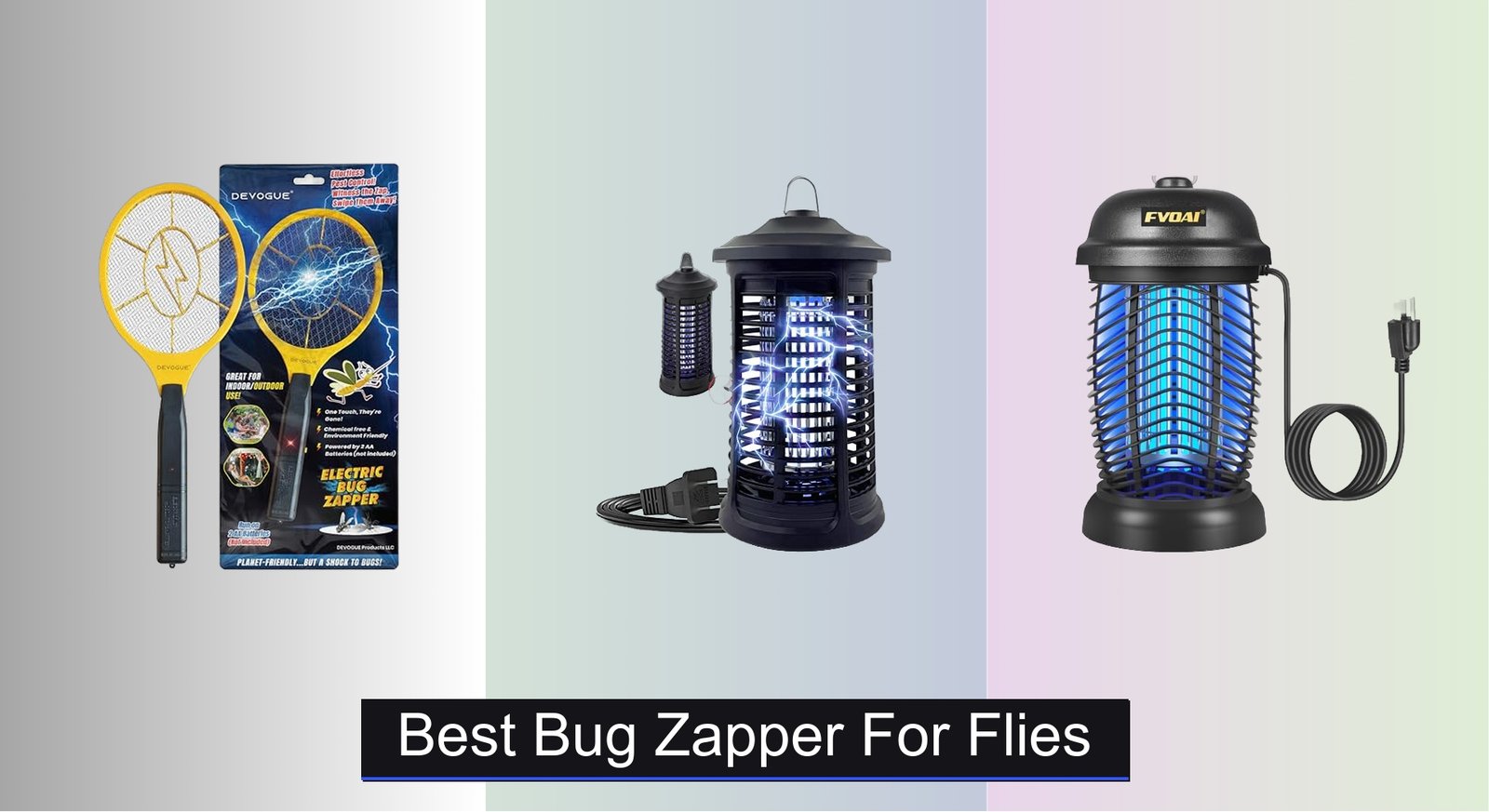
Yes. An electric bug zapper can kill flies when they touch its charged metal grid, but it will not eliminate every fly or solve the source of an infestation.
From summer cookouts in Texas to backyard barbecues in Florida and outdoor dining in California, flies can quickly spoil time spent outside. They land on food, circle trash cans, and find their way into kitchens through open doors and windows. An electric bug zapper may help reduce some flying insects, but its results depend on the type of fly, the device, and where you place it.
Most traditional bug zappers use ultraviolet light to attract flying insects toward an electrical grid. When a fly makes contact with the charged wires, an electric current kills it. However, not all flies respond to UV light in the same way. Some are more interested in food, moisture, animal waste, or decaying material than in an artificial light source.
This difference matters when choosing a fly control method. A zapper may catch some house flies, but a sticky fly trap, baited trap, or simple sanitation plan may work better for other species. I will explain how these devices work, which flies they can catch, where to use them, and why they should never be placed near food preparation areas.
Source: storage.googleapis.com
How Does a Bug Zapper Kill Flies?
A traditional electric bug zapper kills flies through electrical contact. It usually contains a UV or black-light bulb surrounded by a metal grid connected to a high-voltage electrical circuit. The light attracts some flying insects, and the grid delivers an electrical shock when an insect touches it.
The electric current kills or severely damages the insect almost instantly. In many traditional models, the insect falls through the bottom of the device or remains on the collection area. Some designs also produce a loud popping sound when an insect completes the electrical circuit.
The process is simple, but attraction is the important part. A fly must notice the light, approach the device, and touch the energized grid. If it stays near a food source or rests on a wall, the zapper may never catch it.
Source: tiendamia.com
UV light attraction
The bulb produces light that attracts certain flying insects. Its effectiveness depends on the insect species, surrounding light, and device design.
Electrical contact
The insect touches the charged metal grid and receives an electrical shock.
Insect removal
The dead insect may fall into a collection tray or onto the ground, depending on the zapper design.
Does the Electric Shock Kill Flies Instantly?
In most cases, a fly that makes proper contact with a functioning high-voltage grid dies very quickly. The shock disrupts the insect’s nervous system and damages its body. A visible flash or popping sound often indicates that the electrical circuit has been completed.
However, a popping sound does not tell you exactly how many insects the device has killed or whether it has reduced the fly population around your home. A zapper can make noise throughout the night while leaving many flies untouched.
Can a Fly Survive a Bug Zapper?
A fly can sometimes avoid being killed if it touches only part of the grid without completing an effective electrical connection. It may also approach the device without touching the wires at all. Damaged grids, dirty electrical components, and failing bulbs can further reduce performance.
A fly that survives an unsuccessful encounter may fly away and return later. Therefore, seeing a fly near a zapper does not always mean the device has caught or killed it.
What Types of Flies Can a Bug Zapper Kill?
A bug zapper can kill several types of flies, but its success varies by species. Some flies respond to light and may enter the electrical grid. Others spend more time searching for food, moisture, or breeding material.
House flies are among the more familiar flying insects that may be caught by light-based traps. Small flies can also enter some devices, although their size and behavior may make capture less predictable. The key is to match the trap to the insect rather than assume that every flying pest responds to the same attraction method.
Source: walmart.com
House flies
House flies may approach UV light and can be killed when they contact an electric grid. However, food waste, animal waste, and other odors can compete with the light.
Fruit flies
Some small fruit flies may enter light traps, but they are usually more strongly associated with fermenting fruit, sugary spills, and moist organic waste. Baited traps are often more useful.
Blow flies
Some blow flies may be caught by electric zappers, but they are often drawn to decaying animal material. Removing the source is more important than relying on a light trap.
Drain flies
Drain flies may occasionally encounter a light trap, but adults usually stay near the drains where they develop. Cleaning the drain and removing the organic film is the better solution.
Small nuisance flies
Some small flying insects may be caught, depending on their behavior and the size of the device openings. Identification is important because not every small fly has the same breeding source.
Do Bug Zappers Kill House Flies?
Yes, traditional electric zappers can kill house flies. House flies may respond to certain light sources, especially when other attractive food sources are less accessible. However, their attraction to UV light does not mean they will always choose a zapper over garbage, pet waste, or food.
House flies can also carry disease-causing organisms from contaminated materials to food and other surfaces. For this reason, reducing their access to kitchens and dining spaces is important. A zapper should never replace proper food protection, cleaning, and exclusion.
Do Bug Zappers Kill Fruit Flies?
They can catch some fruit flies, but a standard outdoor bug zapper is not usually the best tool for a fruit fly problem. Fruit flies are attracted to fermenting sugars and organic material, including overripe bananas, spilled juice, and unwashed recycling containers.
A small baited trap can be more useful because it targets the food-related behavior of these insects. Remove the breeding material first, then use an appropriate trap to catch remaining adults.
Do Bug Zappers Kill Drain Flies?
A zapper may kill an occasional adult drain fly, but it will not remove the material where drain fly larvae develop. These insects often breed in the slimy organic film inside drains, floor drains, and other wet areas.
Scrubbing the drain walls and removing the buildup is more effective than depending on an electric device. If flies keep returning, inspect nearby drains and other damp organic material for a hidden breeding site.
Are Bug Zappers Effective Against Flies?
Bug zappers can kill individual flies, but their ability to control a large fly population is limited. Their main weakness is that they depend on insects approaching a light source instead of directly targeting the place where flies feed and reproduce.
For example, imagine a backyard with an uncovered garbage can, spilled food, and dog waste near a patio. A zapper may kill some flying insects, but the attractive materials remain. More flies can continue to arrive, and new adults may emerge from breeding sites.
The University of California Statewide Integrated Pest Management Program explains that removing fly breeding material is a preferred way to manage pest flies. It also warns that electric zappers can scatter insect body parts, making them unsuitable near food preparation areas.
This means a zapper should be viewed as one possible part of a broader control plan, not a complete solution. Its usefulness depends on the location, fly species, and other control steps.
Source: airfryerbite.com
Why Do Some Flies Ignore Bug Zappers?
Flies do not all respond to light in the same way. Their behavior depends on species, activity patterns, food sources, and environmental conditions. A house fly searching for food may have little reason to approach a UV bulb if a nearby trash can offers a stronger attraction.
Bright outdoor lighting can also make a zapper less noticeable. Sunlight, porch lights, landscape lighting, and other artificial light sources may compete with the device. Air movement can affect how insects travel around a yard or building as well.
Some flies spend much of their time close to the surface where they feed or reproduce. A hanging zapper may be poorly positioned to intercept them, even if its electrical grid is working correctly.
Competing food sources
Rotting fruit, uncovered garbage, pet waste, and food scraps may attract flies more strongly than UV light.
Wrong insect type
Some fly species respond poorly to the light used by traditional zappers.
Poor placement
A device hidden behind furniture or placed far from normal insect flight paths may catch very few flies.
Outdoor light competition
Sunlight and other bright lights can reduce the relative attraction of a UV device.
Does a Bug Zapper Reduce the Entire Fly Population?
No. Killing adult flies does not automatically remove eggs, larvae, or pupae. These immature stages may remain in garbage, manure, damp drains, compost, and decaying organic material.
A new generation can emerge even when an electric zapper catches adult insects every night. This is why sanitation and breeding-site removal have a greater long-term role in fly control.
The best results come from reducing the number of places where flies can reproduce and limiting their access to indoor spaces. A trap can then help manage some of the adults that remain.
Where Should You Place a Bug Zapper for Flies?
Place an outdoor bug zapper away from people, food, and seating areas, while keeping it near an appropriate insect activity zone. The goal is to let the device intercept some flying insects without attracting them directly toward the places where people gather.
A location near a yard boundary or away from an outdoor dining space may be more practical than hanging the zapper over a patio table. Follow the manufacturer’s instructions for mounting height, weather exposure, and electrical clearance.
For indoor fly control, choose a purpose-built light trap with a sticky board rather than an exposed high-voltage grid. This design captures insects without creating the same risk of scattered body fragments.
Source: ninjachoice.blog
Best Places for an Outdoor Bug Zapper
Outdoor placement depends on the layout of the property and the type of flying insects you want to catch. A covered but well-ventilated location may protect a device from rain, provided its label allows that type of installation.
Avoid placing it directly beside a door or window that people use often. If a device attracts insects near an entrance, some may move toward the building instead of reaching the electrical grid.
Away from dining areas
Keep the device away from outdoor tables, grills, food preparation surfaces, and places where people eat.
Near insect activity
Choose an area where flying insects are commonly seen, while following the manufacturer’s placement instructions.
Away from competing lights
Reduce nearby bright lighting when practical so the UV source is more visible to insects.
Protected from weather
Use only outdoor-rated equipment in approved locations and protect plugs and connections as directed.
Can You Put a Bug Zapper in the Kitchen?
You should not use a traditional open-grid electric bug zapper in a kitchen or near food preparation surfaces. When insects touch the energized wires, their bodies can break apart and spread small fragments over nearby surfaces.
This is a food hygiene concern. A device that kills flies can still create a contamination problem if it is installed close to uncovered food, cooking equipment, or dishes.
If you need to control flies indoors, consider an enclosed UV light trap that uses a sticky adhesive board. Place it according to the manufacturer’s instructions and away from direct sunlight and competing light sources.
Where Should an Indoor Fly Light Trap Go?
Texas A&M AgriLife Extension describes indoor light traps that use UV light to draw flies toward either a sticky board or a low-voltage electric grid. It notes that these traps can be useful for larger flies, including house flies.
Its guidance gives a typical installation height of 4 to 6 feet above the floor for indoor light traps, based on the usual flight height of house flies. This is guidance for suitable indoor light traps, not a universal mounting rule for every consumer zapper.
Keep the device out of direct view from outside where possible. This can help avoid drawing insects toward open doors or windows. Always follow the specific product instructions.
Bug Zapper vs. Other Fly Control Methods
A bug zapper is only one of several ways to control flies. The best method depends on whether you have a few adult house flies, a fruit fly problem in the kitchen, or a larger outdoor infestation.
Some traps use light, while others use food-based attractants or sticky surfaces. Sanitation and exclusion work differently because they reduce the conditions that allow flies to enter and reproduce.
The following comparison explains what each method does and where it is most useful. These are general use cases rather than a guarantee that one method will work for every property.
Source: amazon.co.uk
Electric Bug Zapper
An electric zapper attracts certain flying insects with light and kills those that touch its electrical grid. It may help catch some adult house flies and other flying insects, particularly outdoors.
Its main limitations are inconsistent attraction, non-target insect deaths, and the risk of scattering insect fragments. It is not a suitable device for placement near food preparation areas.
Best use
Selected outdoor insect control away from people and food.
Main limitation
It does not remove breeding sites or reliably catch every fly.
UV Sticky Fly Trap
A UV sticky fly trap uses light to attract insects toward an adhesive board. Instead of electrocuting them, the device holds them on a replaceable sticky surface.
This type of trap can be useful indoors because it avoids the insect fragmentation associated with open-grid zappers. It is commonly considered for suitable commercial and residential spaces where food hygiene matters.
Best use
Indoor monitoring and capture of suitable flying insects.
Main limitation
It still depends on insect attraction to light and regular replacement of the adhesive board.
Sticky Fly Paper
Sticky fly paper catches flies when they land on its adhesive surface. It does not need electricity or a UV bulb, which makes it a simple option for small indoor fly problems.
It can be useful for catching a few house flies in confined spaces. However, it may become less useful during a heavy infestation and needs careful placement away from children, pets, and food.
Best use
Small numbers of flies in suitable indoor areas.
Main limitation
The exposed adhesive can collect dust and may catch non-target insects.
Baited Fly Traps
Baited fly traps use food odors or other attractants to draw flies into a container or enclosed trap. They can be especially useful for species that respond more strongly to food than to light.
Some outdoor traps use attractants that produce unpleasant odors. Place them away from occupied areas and follow the label directions. They may help reduce adult fly numbers but cannot replace the removal of nearby breeding material.
Best use
Targeting flies that respond to food-based attractants, including certain outdoor fly species.
Main limitation
Odors can be unpleasant, and nearby garbage or animal waste may compete with the bait.
Fly Swatter
A fly swatter offers direct control when you see an individual fly. It is inexpensive and does not need electricity, replacement bulbs, or bait.
However, do not use a fly swatter near exposed food or food preparation areas. Insect body parts may spread onto nearby surfaces.
Best use
Removing a few visible flies in suitable areas.
Main limitation
It requires direct action and does not prevent new flies from entering.
How to Control Flies More Effectively at Home
The most reliable way to reduce flies is to remove the materials they need for food and reproduction. Adult flies are easy to notice, but the source of the problem may be hidden inside a trash can, drain, compost pile, or damp area.
The University of California Statewide Integrated Pest Management Program identifies sanitation and exclusion as major parts of house fly management. Removing larval habitats helps break the life cycle rather than simply killing adults that are already flying around.
You do not need a complicated plan to begin. A few consistent cleaning and prevention steps can make your home less attractive to flies.
Source: storage.googleapis.com
Step 1: Remove Food Sources
Start by removing exposed food, spilled drinks, and overripe fruit. Store food in sealed containers and clean countertops after meals. Do not leave dirty dishes in the sink overnight if flies are already a problem.
Check areas that are easy to overlook, such as spaces under kitchen appliances, recycling bins, and the bottom of trash cans. Small amounts of spilled liquid can create a food source for tiny flies.
Store food properly
Keep fruit, vegetables, leftovers, and other exposed foods covered or refrigerated when appropriate.
Clean spills quickly
Remove sugary drinks, juice, sauces, and food scraps from floors and counters.
Wash recycling
Rinse cans, bottles, and food containers before storing them.
Step 2: Keep Garbage Areas Clean
Garbage is one of the common places where house flies find food and suitable breeding material. Use trash cans with tight-fitting lids and empty them regularly, especially during hot weather.
Wash the inside and outside of trash containers when food or liquid spills occur. Keep outdoor garbage areas clean and remove rotting organic material before it attracts more insects.
Use covered bins
Choose trash containers with lids that close securely.
Remove wet waste
Do not allow food scraps and liquid waste to collect at the bottom of bins.
Clean outdoor areas
Remove decaying material and keep garbage storage areas away from entrances where practical.
Step 3: Remove Pet Waste and Decaying Material
Pet waste, animal manure, and rotting organic material can provide breeding sites for certain flies. Pick up dog waste regularly and keep animal housing clean. Remove fallen fruit and other decaying plant material from the yard.
If flies gather around an outdoor garbage area or animal enclosure, inspect the ground and nearby containers for wet organic waste. Cleaning these areas can have a greater long-term effect than adding another electric trap.
Step 4: Repair Window and Door Screens
Preventing flies from entering is easier than catching them after they get inside. Install properly fitted window screens and repair holes or loose edges. Close doors promptly, especially when preparing food.
Check gaps around exterior doors and windows. Weather stripping and door sweeps can help reduce openings that allow flies to enter.
Step 5: Identify the Fly Before Choosing a Trap
A large fly circling a window may need a different control method from tiny flies gathering around a kitchen sink. Look at the insect’s size, appearance, and usual location.
Fruit flies often gather near fermenting food, while drain flies are commonly found around wet drains. House flies are larger and may enter from outside. Identifying the likely species helps you find the breeding source and choose an appropriate trap.
Large flies around food or garbage
Inspect trash, animal waste, and other decaying organic material.
Tiny flies around fruit
Check overripe produce, recycling containers, and sugary spills.
Small flies near sinks
Inspect drain walls and other wet areas for organic buildup.
Why Is Your Bug Zapper Not Killing Flies?
If your bug zapper runs but catches very few flies, the problem may be its placement, light output, electrical grid, or the type of insect in your home. A working device does not guarantee that every fly will approach it.
Before replacing the unit, check the simple causes. A dirty grid or worn bulb may reduce performance, while an unsuitable location may prevent insects from noticing the light.
Source: tiendamia.com
The UV Bulb May Be Weak
Some fluorescent UV bulbs lose useful UV output as they age, even when they still appear to produce visible light. A bulb that looks bright to your eyes may not provide the same insect attraction as a new one.
Check the replacement schedule in the manufacturer’s manual. If the bulb is damaged, flickering, or past its recommended service life, replace it with the specified compatible part.
The Electrical Grid May Be Dirty
Dead insects, dust, and other debris can collect around the electrical grid. Heavy buildup may interfere with normal operation and make the device less effective.
Disconnect the power before cleaning or servicing the zapper. Follow the manufacturer’s cleaning instructions and never touch the energized grid with your hands or a cleaning tool.
The Device May Be in the Wrong Location
A zapper placed beside a bright outdoor light or far from the insects’ normal flight paths may catch very little. Nearby food sources can also attract flies away from the device.
Review the manufacturer’s placement guidance. For outdoor models, choose an approved location away from people, food, and competing light sources.
The Device May Not Target Your Type of Fly
A light-based zapper may be useful for some adult house flies but less effective against fruit flies and drain flies. These smaller pests may be more interested in food odors or moist breeding material.
If the same insects keep appearing around fruit, drains, or garbage, investigate those areas rather than assuming the zapper is defective. A suitable baited or sticky trap may be more effective.
The Power Supply May Be Faulty
A loose connection, damaged cable, faulty switch, or electrical failure can stop the grid from working correctly. Some devices may still show a light even when the electrical killing function has failed.
Unplug the device before inspecting its external cable and plug. Do not open electrical components or attempt repairs unless the manufacturer specifically provides safe repair instructions. Replace damaged equipment or contact the manufacturer.
Are Bug Zappers Safe to Use Around People and Pets?
Bug zappers can be used safely when they are properly designed, installed, and maintained, but they still have electrical and hygiene risks. An exposed high-voltage grid should never be treated like an ordinary household light.
Keep the device out of reach of children and pets. Use a protective outer cage when the product includes one, and follow all mounting and electrical instructions. Never insert fingers or objects into the grid.
Outdoor models must be rated for the conditions in which they will operate. Do not assume that a device is waterproof because it is marketed for general outdoor use. Check its actual weather rating and the manufacturer’s instructions.
Source: amazon.co.uk
Can Children Touch a Bug Zapper?
Children should not touch or play with a bug zapper. The electrical grid can cause a shock, and the device may contain hot or fragile parts. Install it in a location where children cannot reach it or pull it down.
Never allow children to clean, open, or repair an electric zapper. An adult should disconnect and maintain the device according to its instructions.
Can Pets Be Around Bug Zappers?
Keep pets away from exposed electrical grids, cords, and collection trays. Curious animals may investigate the device or try to reach insects caught inside it.
Choose a stable mounting location that pets cannot access. If the device becomes damaged or has loose electrical parts, disconnect it and stop using it until it is repaired or replaced.
Can Bug Zappers Spread Germs?
Traditional electric zappers can break insects apart when they contact the charged wires. Small body fragments may travel beyond the device and land on nearby surfaces.
This is a major reason to avoid open-grid zappers near food, dishes, cooking areas, and dining spaces. House flies may carry microorganisms from waste and other contaminated materials, so scattered insect remains are an avoidable hygiene concern.
For indoor areas where food is handled, an enclosed UV sticky-board trap is generally a more suitable design. Regular cleaning and proper fly prevention remain necessary.
Do Bug Zappers Kill Beneficial Insects?
Yes. Traditional electric bug zappers are not selective. They can kill non-target insects, including moths, beetles, and other species that are not household pests.
Some flying insects support pollination, food webs, and natural pest control. Using a broad-spectrum zapper outdoors may therefore harm insects that provide ecological benefits.
For a specific fly problem, targeted traps, sanitation, and physical barriers may reduce unnecessary insect deaths. Use an electric zapper only when its benefits fit the actual pest problem.
How Long Does a Bug Zapper Take to Kill Flies?
A bug zapper can kill a fly as soon as the insect makes effective contact with the energized grid. However, there is no fixed amount of time in which a device will catch every fly in a yard or room.
The time needed to catch insects depends on their numbers, species, flight behavior, and access to the device. A zapper may catch several insects in a short period in one location and very few in another.
It is better to judge performance by the number of target flies caught over several comparable periods rather than by how often the device makes a popping sound. Also check whether the number of flies around the property is actually decreasing.
Source: airfryerbite.com
How Can You Tell Whether the Zapper Is Working?
A functioning device should show the signs described in its manual, such as an illuminated bulb and an active electrical grid. Some models produce a visible flash or sound when an insect makes contact.
Check the collection tray or surrounding area for dead insects, but remember that not every insect caught will be a fly. A large number of moths or beetles does not prove that the device is solving a house fly problem.
If there is no visible evidence of activity, inspect the bulb, power supply, and grid after disconnecting the device. Do not touch internal electrical parts while it is plugged in.
When Should You Replace a Bug Zapper Bulb?
Replace the bulb according to the manufacturer’s recommended schedule. UV output can decline with use, even if the lamp still appears to glow.
Use only the correct replacement bulb for your model. A bulb that fits physically may still have the wrong electrical rating or light output.
What Is the Best Approach for Different Fly Problems?
The most useful fly control method depends on where the insects appear and what attracts them. A device that works for adult house flies may not solve a fruit fly or drain fly problem.
Use the following guide to choose a practical first step. It focuses on the source of the problem rather than relying on one device for every situation.
Source: storage.googleapis.com
House flies around the home
Repair screens, close doors, remove garbage and pet waste, and consider a suitable indoor sticky light trap for remaining adults.
Flies around outdoor trash cans
Clean the bins, use tight-fitting lids, remove waste regularly, and consider a properly placed baited outdoor trap.
Fruit flies in the kitchen
Remove overripe fruit, clean sugary spills, rinse recycling containers, and use an appropriate fruit fly bait trap.
Drain flies near sinks
Scrub drain walls to remove organic buildup and inspect other wet areas where larvae may develop.
Flies around animal areas
Remove manure and animal waste regularly, clean feeding areas, and consider targeted outdoor fly control.
Flies around an outdoor patio
Keep food covered, clean outdoor surfaces, remove nearby waste, and position any approved zapper away from seating and dining areas.
When Should You Call a Pest Control Professional?
A few flies usually do not require professional treatment. However, a large or recurring infestation may indicate a hidden breeding site, plumbing issue, animal waste problem, or other source that is difficult to locate.
Consider contacting a qualified pest control professional when flies continue to appear despite careful cleaning and exclusion. This is especially useful when large numbers of flies emerge from walls, ceilings, drains, or areas that are difficult to inspect.
Ask the professional to identify the fly species and breeding source before recommending treatment. A good control plan should address the cause rather than depend only on killing visible adults.
Frequently Asked Questions
Q
Does a bug zapper kill flies at night?
Yes. Traditional UV bug zappers can attract and kill certain flying insects at night when they touch the electrical grid. Darkness may make the UV light more noticeable because there are fewer competing light sources.
However, results depend on the fly species, device placement, and nearby food sources. A zapper will not necessarily catch every fly that enters your yard.
Q
Will a bug zapper kill flies during the day?
Yes, a bug zapper can kill flies during daylight hours if they approach and touch the energized grid. However, strong sunlight and other bright light sources may make the device less noticeable to insects.
Some flies may also spend more time around food and waste during the day. This can reduce the number that approach a UV light trap.
Q
Do electric bug zappers attract more flies to my yard?
A UV zapper can attract certain flying insects toward its location, but it does not attract every fly species equally. The effect depends on the light, the insect, and the surrounding environment.
Placing a zapper close to a patio, doorway, or dining area may bring flying insects closer to people. Position it away from occupied spaces and follow the manufacturer’s instructions.
Q
Can a bug zapper kill flies without chemicals?
Yes. A standard electric bug zapper kills insects through electrical contact rather than spraying an insecticide. Its UV bulb attracts some flying insects, and the charged grid delivers the killing shock.
However, chemical-free does not mean risk-free. Electrical safety, insect fragments, and deaths of non-target insects are important concerns.
Q
Is a bug zapper better than a sticky fly trap?
Neither method is always better. An electric zapper may be useful for some flying insects outdoors, while a sticky fly trap can be more suitable for capturing selected indoor flies without scattering insect fragments.
For kitchens and food-related spaces, an enclosed UV sticky-board trap is generally a more appropriate option than an exposed high-voltage grid. The correct choice depends on the fly species and location.
Q
Why does my bug zapper kill mosquitoes but not flies?
Different insects respond to light and other environmental signals in different ways. Your device may catch some insects that approach its UV bulb while house flies remain near food, garbage, or other attractive materials.
Check whether the device is suitable for your target insects. If house flies are the main problem, improve sanitation and consider a suitable fly-specific trap.
Q
Can I leave my bug zapper on all night?
You may be able to operate an outdoor-rated bug zapper overnight if the manufacturer permits continuous operation and the device is installed correctly. Follow its instructions for weather exposure, electrical connections, and cleaning.
Keep the device away from children, pets, and food. Turn it off and disconnect the power before cleaning, servicing, or inspecting the grid.
Q
Do bug zappers kill flies that are already inside my house?
They can kill some indoor flies if those insects approach the light and touch the electrical grid. However, an open-grid zapper is not a good choice for kitchens, dining rooms, or other areas where food is handled.
For indoor use, consider an enclosed UV sticky trap. Also check screens, doors, drains, garbage, and other possible sources of the flies.
Q
Will a bug zapper eliminate a fly infestation?
No. A zapper mainly targets adult flying insects and does not remove fly eggs, larvae, or pupae. New adult flies can continue to emerge when breeding material remains nearby.
Remove decaying organic matter, clean garbage areas, manage pet waste, and repair screens. If the infestation continues, identify the breeding source or seek professional help.
Q
Are UV fly traps and electric bug zappers the same thing?
No. Both may use UV light to attract insects, but their capture methods differ. Traditional electric zappers use an energized grid to kill insects, while UV sticky traps draw insects toward an adhesive board.
Sticky-board models are often more suitable for indoor food-related spaces because they avoid the insect fragments produced by open-grid zappers.
✦ Wrapping Up
Conclusion
So, does a bug zapper kill flies? Yes. An electric bug zapper can kill house flies and some other flying insects when they touch its energized grid. However, its success depends on the fly species, UV light attraction, placement, and nearby food sources.
A zapper should not be your only method of fly control. It does not remove eggs or larvae, and it cannot stop new flies from entering your home. Outdoor models can also kill beneficial insects, while open-grid designs may spread insect fragments onto nearby surfaces.
For better results, keep garbage covered, remove pet waste, clean food spills, repair window screens, and identify where flies are breeding. Use an appropriate sticky or baited trap when the fly species and location call for one. For indoor food preparation areas, avoid traditional open-grid zappers and choose a suitable enclosed trap instead.
The main lesson is simple: killing a few adult flies is not the same as solving a fly problem. When you remove the source and use the right trap, you have a much better chance of keeping flies away for the long term.
💡 Key Takeaway
Start by identifying the type of fly and removing its food or breeding source. Use a properly placed outdoor zapper only as an additional control method, and choose an enclosed UV sticky-board trap for suitable indoor spaces.
Does Orthene Fire Ant Killer kill roaches? Learn how acephate affects roaches, why fire ant formulas differ, safety limits, and better roach control options.