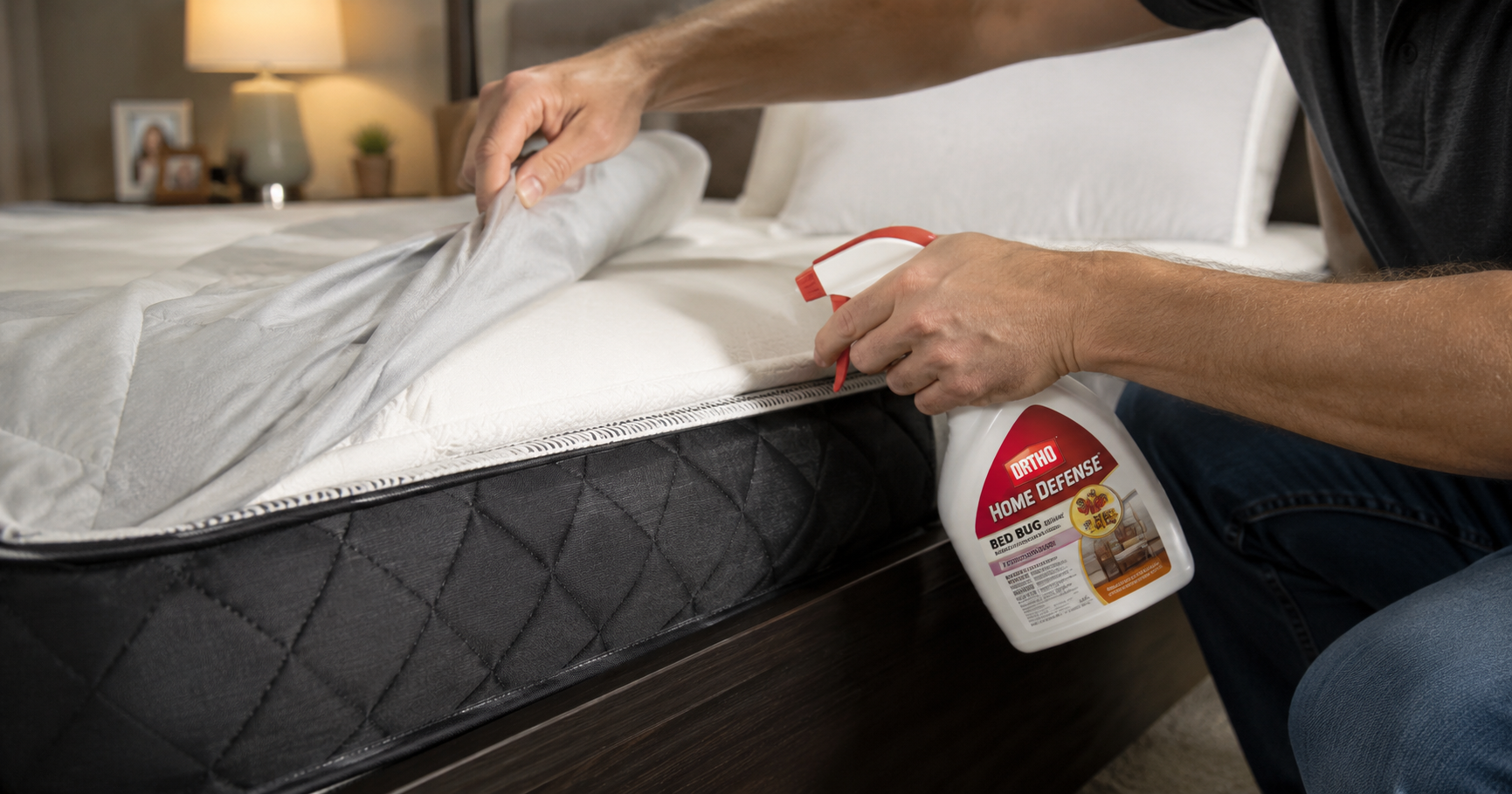
Yes, bed bug spray can kill bed bugs, but one application rarely eliminates an entire infestation. Results depend on the active ingredient, insect resistance, application method, and whether hidden bugs and eggs are also treated.
Bed bugs are a common household pest in the United States. They can enter homes through luggage, used furniture, clothing, and other items. Once inside, they hide in mattress seams, bed frames, wall cracks, and other small spaces. Finding them can be stressful, especially when bites keep appearing after cleaning.
Bed bug sprays can help control these insects, but not every spray works in the same way. Some products kill bugs only when the liquid touches them. Others leave a residue that can kill insects when they cross a treated area. Some use drying agents that damage the insect’s outer coating. Knowing the difference helps you choose the right treatment.
The US Environmental Protection Agency (EPA) explains that a pesticide’s success depends on proper use, coverage, preparation, and the bed bug population’s resistance to the active ingredient. Even a registered product may fail when insects remain hidden or the treatment misses important areas.
The best approach is to combine a suitable bed bug spray with heat, careful cleaning, physical removal, and ongoing checks. This method gives you a better chance of controlling the infestation without relying on repeated chemical applications. It also helps protect children, pets, and other people in the home.
Source: m.media-amazon.com
Does Bed Bug Spray Actually Work?
Yes, bed bug spray works when it contains an effective insecticide and is used according to its label. Some products kill bed bugs quickly when sprayed directly on them. Other products treat the places where insects hide or travel. However, killing a few visible bugs does not mean the entire infestation is gone.
Bed bugs spend much of their time hiding near places where people sleep. They can fit into narrow cracks, mattress seams, furniture joints, and gaps behind headboards. A spray that reaches only open surfaces may leave most of the insects untouched.
The EPA requires products making bed bug control claims to have supporting data for those claims. Still, product effectiveness in a real home depends on the size of the infestation, treatment coverage, insect life stages, and resistance. A product that kills bed bugs under test conditions may not eliminate every insect in a crowded bedroom.
This explains why some people see dead insects after spraying but continue finding live ones days later. The spray may have killed exposed bugs while missing others in nearby hiding places. Eggs may also hatch after the first treatment.
Source: bugoffcontrol.com
It can kill visible bed bugs
A suitable contact insecticide can kill bed bugs when the spray reaches them directly and the product is used as directed.
It may control hidden insects
Some labeled products can treat cracks, furniture joints, and other hiding places. Their effectiveness depends on the product and correct application.
It may not eliminate eggs
Many insecticides do not kill all eggs. Newly hatched insects can create the appearance that treatment has failed.
It cannot guarantee complete control alone
A full treatment plan needs inspection, cleaning, physical control, suitable pesticides, and continued monitoring.
Why One Spray May Not Be Enough
A bed bug infestation includes insects at different stages of life. Adult bed bugs, young nymphs, and eggs may be present in the same room. One treatment may kill exposed adults but leave eggs or hidden insects behind.
Bed bugs also move between hiding places. An insect may stay deep inside a furniture joint during spraying and emerge later. If nearby rooms or apartments are infested, more insects may enter the treated area after the initial work.
For these reasons, follow-up checks are essential. Do not assume that a room is clear just because you see fewer bugs or stop noticing bites.
Hidden insects
Bugs inside cracks, joints, and other protected spaces may escape direct contact.
Newly hatched nymphs
Eggs that survive treatment can hatch and restart the problem.
Nearby infestations
Untreated rooms or adjoining apartments can allow bed bugs to return.
How Does Bed Bug Spray Kill Bed Bugs?
Bed bug sprays work through different chemical or physical actions. The active ingredient determines how the product affects an insect and whether it continues working after the spray dries.
Understanding these differences matters because a contact spray and a residual treatment do not offer the same protection. A product that kills quickly may have little effect on insects that never touch the wet spray. A product with a slower action may keep working for a longer period under suitable conditions.
Always check the active ingredients and directions on the container. The product name alone does not tell you how well it will work against the bed bugs in your home.
Source: indianseeds.in
Pyrethrins and pyrethroids
These insecticides affect an insect’s nervous system. They are used in many pest control products, but some bed bug populations have developed resistance to certain chemicals in this group.
Desiccant products
These products damage or remove the protective outer coating of an insect. The insect then loses moisture and dies. Silica gel is one example of a desiccant used in approved bed bug control products.
Neonicotinoids
Some products use these insecticides to affect nerve signaling. They may be useful against certain bed bug populations, including some that resist pyrethroids, depending on the exact product and resistance pattern.
Insect growth regulators
These chemicals interfere with normal insect development. They are not the same as fast-acting contact killers and should not be expected to remove adult bed bugs immediately.
Botanical insecticides
Some products use plant-derived ingredients. Their effectiveness varies by formulation, concentration, and approved use. Natural ingredients do not automatically mean a product is safe or effective.
Contact Spray vs. Residual Spray
Contact sprays kill insects when the chemical reaches their bodies. They may provide a quick result when you see and spray an exposed bed bug. However, they usually cannot reach insects hiding deep inside a mattress seam or furniture joint.
Residual sprays are designed to leave an active layer on approved surfaces. A bed bug may receive a dose after crossing a treated area. How long that effect lasts depends on the formulation, surface, cleaning, exposure, and product label.
Some products have both contact and residual effects. Read the label rather than assuming that every bed bug spray continues working after it dries. This is one of the most useful details to check before buying a product.
Choose contact action for exposed insects
Direct treatment may kill visible insects when the product label allows that application.
Check residual claims for hiding areas
Look for clear label directions about treated surfaces, target insects, and how long the product is intended to remain effective.
Why Bed Bug Resistance Matters
Insecticide resistance occurs when some insects survive exposure to a chemical that once killed more members of the population. Those survivors may reproduce and pass resistance traits to later generations.
Resistance is a major concern with some pyrethroid insecticides. This means a familiar household bug spray may have little effect on a particular bed bug population. In some cases, an insecticide may cause bugs to move out of their hiding places without killing them.
Using more of the same product does not solve resistance. Applying extra spray can increase exposure to people and pets without improving control. If correctly applied treatment does not work, ask a qualified pest control professional to assess the active ingredient and the wider treatment plan.
Do not judge by brand name alone
Check the actual active ingredients because different products may contain chemicals from the same insecticide group.
Avoid repeated overapplication
More pesticide does not mean better results and may create unnecessary exposure.
Which Types of Bed Bug Sprays Work Best?
The most suitable bed bug spray is one that is registered for the intended use, contains an effective active ingredient, and matches the treatment area. There is no single spray that works equally well in every home.
The EPA maintains a searchable list of registered bed bug pesticides. This is a useful starting point for checking whether a product has an approved bed bug claim. Registration does not mean that every product is suitable for every surface or that it will eliminate an infestation without other methods.
Compare products by their active ingredients, target insects, approved application sites, and safety directions. Avoid choosing a spray only because its packaging promises instant results or uses words such as natural, powerful, or professional strength.
Source: trap-anything.com
Ready-to-use insecticide sprays
These products are sold for direct use and may be suitable for certain cracks, crevices, or other approved locations. Check the label before treating a room.
Residual bed bug sprays
These are designed to keep working on approved treated surfaces. Their remaining effect depends on the formulation and conditions.
Desiccant treatments
Approved desiccant products can provide a different mode of action from conventional insecticides. Some are applied as dust rather than liquid spray.
Aerosol contact products
These may be useful for exposed insects and specific labeled applications, but they should not be treated as a complete room treatment.
Are Natural Bed Bug Sprays Effective?
Some plant-based products can kill bed bugs when used as directed. However, the word natural does not establish that a spray will eliminate an infestation or remain effective after drying.
Plant oils and botanical ingredients can vary in concentration and performance. A product may kill insects under direct laboratory exposure but have limited reach in a real bedroom where bugs hide in narrow spaces.
Check whether the product is registered for bed bug control and whether its label allows the intended indoor application. Do not rely on homemade essential oil mixtures as a substitute for a tested pest control plan.
Check the active ingredient
Look beyond marketing claims and identify what actually kills the insects.
Review approved uses
Confirm that the product is labeled for bed bugs and for the exact surface or location you plan to treat.
Consider resistance and coverage
A botanical product still needs to reach the insects and may not affect every life stage.
Do Bed Bug Sprays Kill Eggs?
Some specially formulated products have label claims for bed bug eggs, but many ordinary sprays do not kill every egg. Bed bug eggs are attached to protected surfaces and may survive treatments that kill exposed adults.
This is why a single spray is often not enough. Eggs that survive can hatch into young bed bugs. A follow-up treatment may be needed at the interval stated on the product label.
Do not spray eggs with a product that is not approved for that use. Physical removal, suitable heat treatment, and professional pest management can help address life stages that a particular spray misses.
Look for an egg-kill claim
The label should clearly support this claim. Do not assume that a product kills eggs just because it kills adult insects.
Inspect after treatment
Check seams, furniture joints, and other known hiding areas for newly hatched insects.
How to Use Bed Bug Spray Correctly
Correct application is just as important as the spray itself. Even a suitable product can fail when the user misses hiding places, treats the wrong surfaces, or ignores the label directions.
Start by confirming that the insects are bed bugs. Then inspect the sleeping area and nearby furniture. A careful inspection helps identify where treatment may be needed and prevents unnecessary spraying.
The following steps provide a practical starting point for a consumer treatment plan. The pesticide label always takes priority because application methods differ between products.
Source: propelrc.com
Step 1: Confirm the infestation
Look for live insects, shed skins, eggs, and dark spotting around mattress seams, bed frames, and nearby furniture. A professional can help confirm uncertain findings.
Step 2: Read the product label
Check the active ingredient, approved locations, application rate, protective equipment, drying time, and instructions for people and pets.
Step 3: Prepare the room
Reduce clutter and place washable bedding and clothing in sealed bags before moving them. This helps prevent insects from spreading to other rooms.
Step 4: Wash and dry suitable fabrics
Wash items according to their care instructions and use a high-temperature dryer cycle when the material allows it. The EPA recommends placing bedding and clothing in a dryer on high heat for 30 minutes.
Step 5: Treat approved hiding areas
Apply the product only to the locations listed on its label. These may include bed frame joints, cracks, crevices, or certain furniture seams.
Step 6: Let treated areas dry
Follow the required drying and reentry instructions. Keep people and pets away for the time stated on the label.
Step 7: Inspect and monitor
Check treated areas regularly. Use suitable bed bug interceptors and other monitoring methods to identify remaining activity.
Where Should You Spray for Bed Bugs?
Bed bugs tend to hide close to their feeding areas. Start your inspection around the bed, then check nearby furniture and places where insects could move between rooms.
Possible treatment locations include bed frame joints, headboard connections, furniture cracks, baseboards, and other approved hiding areas. Some products also allow treatment of specific mattress seams or folds.
Never assume that every part of a mattress can be sprayed. Some products prohibit treatment of sleeping surfaces or bedding. Others allow limited treatment of seams and edges. Follow the exact label directions.
Bed frame
Inspect joints, screw holes, corners, and connections where insects can hide.
Headboard
Check the rear surface, mounting points, and gaps between the headboard and wall.
Nearby furniture
Inspect sofa seams, chair joints, bedside tables, and drawers close to the sleeping area.
Baseboards and cracks
Look for small gaps and protected spaces near the bed. Treat only when the product label allows it.
How Often Should You Apply Bed Bug Spray?
There is no universal reapplication schedule for bed bug spray. Some products allow another application after a specified number of days, while others require a longer interval or professional application.
Follow the exact directions on the container. The EPA warns that many treatments fail because people do not follow the correct treatment schedule or allow enough time for slower products to work.
Do not spray every day simply because you see another insect. First determine whether the previous application was used correctly, whether eggs have hatched, or whether the insects may be resistant. A pest control professional can help decide whether another treatment or a different approach is needed.
Follow the label interval
Never apply the product more frequently than permitted.
Allow time for the treatment
Some products, especially desiccants, may take time to kill insects.
Check for continuing activity
Use monitoring devices and inspections rather than relying only on bites or visible dead bugs.
Why Does Bed Bug Spray Sometimes Fail?
Bed bug spray can fail for several reasons, and the chemical itself is not always the problem. Poor preparation, missed hiding places, insect resistance, and untreated neighboring rooms can all affect the result.
The EPA identifies several common reasons for unsuccessful pesticide treatments. These include failing to find all insects, missing resting areas, using incorrect application rates, and not treating nearby places where bed bugs may have moved.
Before buying another bottle, look at the entire treatment process. Repeating the same mistake with a different brand may produce the same result.
Source: bugmancanada.ca
Wrong product
A general household insect spray may not contain an ingredient or approved claim suitable for bed bug control.
Insecticide resistance
Some bed bug populations can survive exposure to certain insecticides, making those products less effective.
Poor coverage
Spraying only the mattress surface may leave bugs in the frame, headboard, nearby furniture, or cracks.
Eggs survive treatment
Newly hatched insects may appear after the first treatment if eggs were not affected.
Reinfestation
Untreated rooms, neighboring apartments, used furniture, or infested belongings can introduce bed bugs again.
What to Do When Bed Bugs Return After Spraying
If you find live bed bugs after treatment, do not immediately apply another heavy layer of pesticide. First, check the product label and inspect the places where insects were previously found.
Look for evidence of missed hiding places, newly hatched insects, or activity in nearby furniture. Check interceptors and mattress encasements if you use them. Record where and when you find live insects so you can identify the pattern.
If activity continues despite correct treatment, contact a licensed pest management professional. Ask whether the active ingredient may be affected by resistance and whether a different control method is appropriate.
Inspect again
Check the mattress, bed frame, headboard, furniture, and nearby cracks.
Review the label
Confirm that you used the right amount and treated only approved locations.
Check nearby areas
Look for insects in adjoining rooms and other places where they may be hiding.
Get professional help
Seek an inspection when the infestation continues or the treatment plan is unclear.
Do Bed Bug Foggers and Bug Bombs Work?
Bug bombs and total-release foggers are not a reliable way to eliminate bed bugs. They release pesticide into the air, but the mist does not reach many of the small spaces where these insects hide.
Bed bugs often stay behind headboards, inside furniture joints, under mattress seams, and in narrow wall gaps. A fogger cannot provide the precise coverage needed to treat these protected locations.
The spray can also expose people and pets to unnecessary pesticide. In some situations, foggers may cause insects to move into other hiding places. The Florida Department of Agriculture and Consumer Services also warns that foggers are ineffective for bed bug control and can create safety risks.
Do not use a bug bomb as your main treatment method. If a particular fogger label includes bed bugs, that does not make it a complete solution. EPA guidance still calls for a comprehensive treatment plan and careful attention to safety.
Source: perfectfitliving.com
Limited penetration
Fog cannot reliably reach deep cracks, enclosed furniture spaces, and protected hiding places.
Unnecessary exposure
A fogger can spread pesticide through areas where people and pets live.
Possible insect movement
Some treatments may disturb insects without eliminating the hidden population.
Incomplete control
A fogger does not replace inspection, targeted treatment, heat, and monitoring.
Why Direct Treatment Is Often More Useful
Targeted treatment allows you to focus on known hiding places instead of filling an entire room with pesticide. A product with the correct label directions can be applied to specific cracks, joints, and other approved locations.
However, targeted spraying still requires a careful inspection. Spraying random areas without finding the insects can waste product and leave important hiding places untreated.
Find the hiding place
Inspect the room before deciding where treatment is needed.
Use a labeled product
Choose a treatment approved for the specific surface and application.
What Works Better When Spray Alone Is Not Enough?
A combination of chemical and nonchemical methods offers a more complete approach to bed bug control. This strategy is called integrated pest management, or IPM. It uses inspection, physical removal, heat, monitoring, and carefully selected pesticides.
The EPA recommends IPM because bed bug infestations are difficult to control with one method. Each technique addresses a different part of the problem. Heat can kill insects in treated items, vacuuming removes exposed bugs, encasements help contain insects, and suitable pesticides target approved hiding areas.
The best plan depends on the size of the infestation, the building, the available equipment, and the people living in the home. A professional inspection is especially useful when insects have spread into several rooms.
Source: m.media-amazon.com
Heat treatment
Professional heat treatment can raise the temperature of infested areas to levels that kill bed bugs and their eggs. The EPA describes heating infested areas to at least 120 degrees Fahrenheit for 90 minutes to ensure eggs are killed.
Hot dryer cycles
Place suitable bedding and clothing in a dryer on high heat for 30 minutes. Follow fabric care instructions and handle treated items carefully.
Vacuuming
A vacuum can remove exposed insects and eggs from suitable surfaces. Empty and dispose of the contents in a sealed bag immediately.
Mattress encasements
Special bed bug encasements trap insects inside and reduce hiding places. Use products designed for bed bug control and keep them intact.
Bed bug interceptors
These devices fit under bed legs and help detect insects moving toward or away from the bed.
Professional pest control
A trained technician can inspect difficult areas, select suitable treatment methods, and plan follow-up visits.
Can Steam Kill Bed Bugs?
Yes, properly applied steam can kill bed bugs and their eggs when the heat reaches them. It can be useful for mattress seams, furniture joints, and other surfaces that can safely tolerate steam.
The EPA recommends a steam temperature of at least 130 degrees Fahrenheit. The steam should not have a forceful airflow because strong air movement can scatter insects into other hiding places. A suitable diffuser helps reduce this risk.
Steam treatment requires care. Excess moisture can damage furniture, fabrics, and electrical components. Test delicate surfaces first and never direct steam toward electrical outlets or equipment.
Use suitable equipment
Choose a steamer that can deliver the required temperature and controlled airflow.
Move slowly
Give heat enough time to reach the treated area rather than rushing across the surface.
Protect delicate materials
Avoid steam on surfaces that may be damaged by heat or moisture.
When Should You Hire a Bed Bug Exterminator?
Professional help is a sensible option when bed bugs appear in several rooms, return after correctly applied treatments, or are difficult to locate. It is also useful when children, older adults, pets, or people with special safety needs live in the home.
A qualified pest management professional can inspect furniture, sleeping areas, and nearby rooms. They can also identify whether the current treatment has missed important hiding places or whether a different insecticide class may be needed.
Before hiring a company, ask about its inspection process, treatment methods, preparation requirements, follow-up visits, and monitoring plan. A promise to remove every bed bug with one quick spray should be treated with caution.
Ask about experience
Choose a company with specific experience in bed bug treatment.
Request a treatment plan
The plan should explain the methods, safety steps, and follow-up schedule.
Understand the costs
Ask what the quoted service includes and whether additional inspections or treatments may be needed.
Bed Bug Spray Safety: What You Should Never Do
Bed bug insecticides must be handled carefully because they can harm people and pets when used incorrectly. A product intended for outdoor use may be dangerous inside a bedroom. A pesticide approved for cracks may not be approved for mattresses or bedding.
The EPA advises users to follow all pesticide label directions. The label explains where the product can be used, how much to apply, what protective equipment is needed, and when people can safely return to the treated area.
Never assume that using more spray will make it work faster. Excessive application can increase exposure without improving insect control. Keep the original container and follow its storage and disposal instructions.
Source: mothkill.co.uk
Never spray pesticides on your body
Bed bug insecticides are not skin repellents. Use only products specifically approved for the intended purpose.
Do not spray outdoor pesticides indoors
Products intended for gardens, lawns, or outdoor spaces may create serious indoor exposure risks.
Do not soak mattresses
Only treat mattress areas when the label specifically permits it. Never saturate sleeping surfaces.
Keep children and pets away
Follow the label’s instructions for removal, drying, ventilation, and reentry.
Do not mix chemicals
Mixing pesticides, cleaners, bleach, or other household chemicals can create dangerous reactions or exposure.
Avoid unapproved powders
Food-grade diatomaceous earth and pool-grade products are not substitutes for registered bed bug control products. Inhaling dust can harm the lungs.
Is Bed Bug Spray Safe Around Pets?
Bed bug spray is not automatically safe around dogs, cats, birds, or other pets. Risk depends on the active ingredient, exposure level, treated surface, and animal species.
Remove pets from the treatment area when the label requires it. Keep food bowls, toys, bedding, and water containers away from application areas. Do not let animals walk on or lick treated surfaces before the product is safe for reentry.
Birds and other sensitive animals may be especially vulnerable to airborne chemicals. If you are unsure about a product, contact a veterinarian and follow the pesticide manufacturer’s safety instructions.
Read pet safety directions
Check the label for restrictions involving pets and treated surfaces.
Remove pet supplies
Move food, water, toys, and bedding before treatment.
Wait for safe reentry
Do not allow pets back until the required conditions are met.
Can You Sleep in a Room After Spraying?
You should sleep in a treated room only after meeting all label instructions. Some products require the area to dry, while others specify ventilation or a certain waiting period.
There is no single waiting time for every bed bug spray. Check the exact product directions instead of relying on a general rule found online.
If a product was applied incorrectly, used on an unapproved surface, or caused irritation, leave the affected area and contact a medical professional or poison control service for advice. In the United States, Poison Control can be reached at 1-800-222-1222.
Wait for the required drying time
Do not use treated surfaces before the label permits it.
Ventilate when instructed
Follow the manufacturer’s directions for opening windows and allowing fresh air into the room.
Do not ignore symptoms
Seek medical advice if anyone develops breathing problems, dizziness, or other symptoms after pesticide exposure.
How Do You Know If the Bed Bug Spray Worked?
The clearest sign of success is a sustained lack of live bed bugs during careful inspections and monitoring. Seeing dead insects after treatment is encouraging, but it does not prove that the infestation has ended.
Bed bug bites are not a reliable way to measure treatment success. Some people react strongly to bites, while others show little or no visible reaction. Skin marks can also have other causes.
Use physical evidence instead. Inspect the mattress, bed frame, furniture, and monitoring devices at regular intervals. Record any live insects, new spotting, shed skins, or other signs that may indicate continuing activity.
A successful treatment plan should reduce activity over time and eventually show no evidence of surviving insects. Continue monitoring after the apparent problem has stopped because a new introduction or missed insect can restart the infestation.
Source: bugmancanada.ca
Positive sign: Dead bed bugs
Dead insects in treated locations suggest that the product reached at least some of the population.
Positive sign: Fewer live insects
A declining number of live insects during repeated inspections can indicate that the treatment is reducing the infestation.
Positive sign: Empty interceptors
No insects in properly placed monitoring devices over time is encouraging, although it does not prove complete eradication by itself.
Warning sign: New live insects
New sightings may indicate surviving insects, newly hatched nymphs, or activity from an untreated nearby area.
Warning sign: Continuing physical evidence
Fresh spotting, shed skins, and confirmed live insects deserve another inspection.
How Long Does Bed Bug Spray Take to Work?
The time needed to kill bed bugs depends on the product. Some contact insecticides act quickly when sprayed directly on insects. Other products, especially desiccants, can take longer because they work by causing gradual moisture loss.
Residual products also vary. Some may continue affecting insects that cross treated surfaces after application, but the strength and duration of that effect depend on the formula and conditions.
Follow the product’s stated performance and reapplication instructions. Do not judge a treatment after only a few hours if the label describes a slower action.
Contact insecticides
May act quickly when the insect receives a sufficient direct dose.
Desiccant products
Can take longer because insects die through gradual dehydration.
Residual treatments
May affect insects that cross treated areas, depending on the product and surface.
How to Choose a Bed Bug Spray That Is Worth Using
Choose a bed bug spray by checking its registration, active ingredients, approved application areas, and instructions. A high price or attractive package does not prove that a product will eliminate bed bugs.
In the United States, look for an EPA registration number on the pesticide label. Use the EPA’s bed bug product search tool to check registered products and their intended uses. Registration means the product has been reviewed within the scope of the regulatory process, not that it will work in every infestation.
Pay close attention to the difference between products for direct contact, crack-and-crevice treatment, and residual surface treatment. The best option depends on where insects are hiding and which surfaces need treatment.
Source: trap-anything.com
EPA registration
Check for an EPA registration number and confirm that bed bugs are included on the product label.
Active ingredients
Identify the chemicals or other active substances and consider whether resistance may affect their performance.
Application instructions
Confirm whether the spray is suitable for mattresses, furniture, cracks, or other intended locations.
Egg-kill claims
Check whether the label specifically supports treatment of bed bug eggs if that feature matters to your plan.
Safety directions
Review instructions for ventilation, protective equipment, pets, children, drying, and reentry.
Follow-up requirements
Look for clear directions about inspections, retreatment, and the time needed for the product to work.
Questions to Ask Before Buying
Before purchasing a product, make sure it fits the problem you are trying to solve. A spray intended for exposed insects may not be suitable for treating deep furniture cracks. A product that treats certain surfaces may not be approved for a mattress.
Read the full label rather than relying on a short online description. If the instructions are unclear, choose a different product or ask a qualified pest management professional.
Does the label list bed bugs?
The product should specifically identify bed bugs as a target insect.
Where can I apply it?
The approved application sites should match the areas you need to treat.
Does it leave a residual effect?
Look for label information about how the product works after drying.
What happens if it fails?
Check whether the label provides follow-up instructions or recommends professional treatment for persistent infestations.
Frequently Asked Questions
Q
Does bed bug spray kill bed bugs instantly?
Some contact sprays can kill exposed bed bugs quickly when the product reaches the insect. However, other treatments work more slowly. Desiccant products, for example, kill insects through gradual dehydration. Always follow the product’s stated directions and do not assume that every spray provides instant results.
Q
Can bed bugs survive after being sprayed?
Yes. Bed bugs can survive if the spray does not reach them, if they hide in untreated areas, or if they have resistance to the active ingredient. Eggs may also survive some treatments and hatch later. Continued monitoring and correctly timed follow-up treatment are important.
Q
Does spraying the mattress get rid of bed bugs?
Spraying a mattress may kill some bed bugs if the product is specifically labeled for that use. However, it will not necessarily reach insects hiding inside the bed frame, headboard, box spring, or nearby furniture. Never apply a pesticide to a mattress unless the label explicitly permits it, and follow all drying and reentry instructions.
Q
Can bed bugs become resistant to spray?
Yes. Some bed bug populations have developed resistance to certain insecticides, especially some pyrethroid chemicals. This can make a product less effective even when it is applied correctly. A pest control professional can help select a suitable alternative with a different mode of action.
Q
Does bed bug spray kill bed bug eggs?
Some products have specific claims for killing eggs, but many sprays do not kill every egg. Surviving eggs can hatch after treatment and produce new nymphs. Check the label for an egg-kill claim and follow the recommended inspection and retreatment schedule.
Q
Can I use regular household bug spray on bed bugs?
You should not rely on regular household insect spray unless its label specifically lists bed bugs and approves the intended indoor use. Products designed for ants, flies, or other insects may not provide effective bed bug control. Some can also cause unnecessary exposure or scatter insects into new hiding places.
Q
Do bed bug sprays work on clothes and bedding?
Only use a pesticide on clothing or bedding when the product label specifically allows that application. A safer control option for suitable washable items is to use a high-temperature dryer cycle. The EPA recommends drying bedding and clothing on high heat for 30 minutes.
Q
Will bed bug spray keep bed bugs away permanently?
No spray can guarantee permanent protection against future bed bugs. A residual product may continue working for a period on approved surfaces, but its effect depends on the formulation and conditions. Bed bugs can also enter a home again through luggage, furniture, and other belongings. Monitoring and prevention remain important.
Q
Should I throw away my mattress if I have bed bugs?
Not always. Many mattresses can be treated and protected with a suitable bed bug encasement. Throwing away furniture without proper precautions can spread insects through hallways, vehicles, or other rooms. Ask a pest management professional whether the mattress can be safely treated before replacing it.
Q
How long should I wait before spraying again?
The correct interval depends on the product and its active ingredients. Some labels allow follow-up applications after a stated number of days, while others have different restrictions. Never apply more often than the label permits. If bed bugs remain active, inspect the treatment process and consider professional help.
✦ Wrapping Up
Conclusion
So, does the bed bug spray work? Yes, the right product can kill bed bugs, but spraying alone is rarely enough to eliminate a complete infestation. Some sprays kill insects on contact, while others leave a residual effect or work through dehydration. Their results depend on the active ingredient, insect resistance, treatment coverage, and correct use.
For better control, combine an approved bed bug spray with careful inspection, hot dryer cycles, vacuuming, suitable heat treatment, mattress encasements, and monitoring devices. Pay special attention to bed frames, headboards, furniture joints, and other places where insects can hide.
Safety matters just as much as effectiveness. Follow the pesticide label, keep children and pets away during treatment, and never apply a product to an unapproved surface. Avoid relying on bug bombs, excessive spraying, or homemade chemical mixtures.
If live bed bugs continue appearing after correctly applied treatment, consider hiring a qualified pest management professional. A complete inspection and a treatment plan based on the infestation are more useful than repeatedly buying different sprays without knowing why the previous one failed.
💡 Key Takeaway
Choose an EPA-registered product labeled for bed bugs, check its active ingredients and approved application areas, and use it as part of an integrated pest management plan. Inspect regularly, follow the label’s retreatment instructions, and seek professional help if live bed bugs continue to appear.