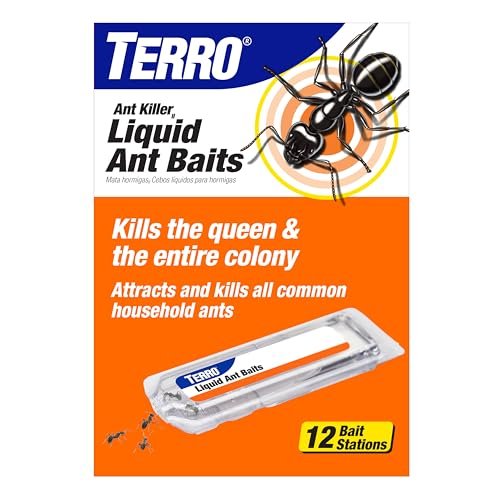
Liquid ant traps attract worker ants with sweet bait, which they carry back to the colony. The bait contains an insecticide that can kill ants beyond the ones that visit the trap.
If you spot ants marching across your kitchen counter in an American home, you may reach for a liquid ant trap before trying a spray. These small bait stations can help control indoor ants without coating an entire room with insecticide. They work by using the ants’ own food-gathering habits to deliver bait to more members of the colony.
The basic idea is simple. A liquid bait draws hungry worker ants to a station. The workers feed on it and may carry some back to their nest, where they share food with other ants. If the bait contains a suitable slow-acting insecticide, that sharing can expose ants that never visit the trap themselves. Results depend on the ant species, bait formula, colony location, and how the traps are placed.
Liquid ant traps are not instant killers, and a busy trap does not always mean the colony is growing. More ants may appear at first because the bait gives them a reason to gather in one place. With the right bait and proper placement, activity may decline over several days, although some infestations take longer. Understanding the process helps you avoid common mistakes and decide when another control method is needed.
Source: www.pinterest.com
How Do Liquid Ant Traps Work?
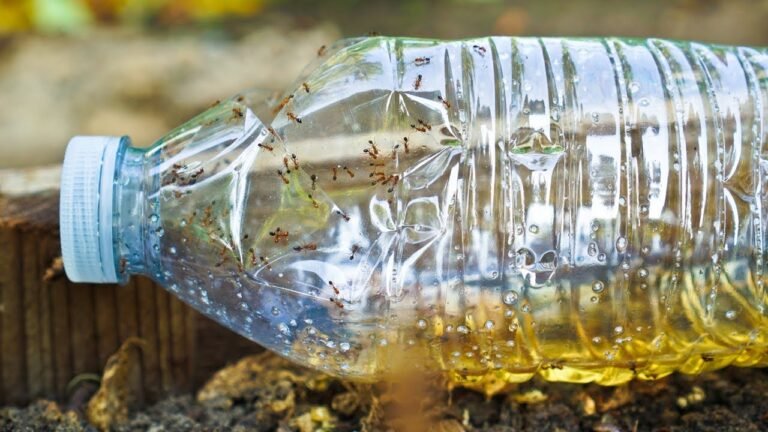
Liquid ant traps work by turning food into a delivery system for insecticide. The liquid contains an attractant, often a sweet substance, along with an active ingredient designed to kill ants. Workers find the bait while searching for food, feed on it, and may transport some of it back to the colony.
This approach takes advantage of how many ants live and work together. A worker that finds food can share it with nestmates through a process called trophallaxis. During trophallaxis, ants pass liquid food from one mouth to another. If the shared food contains enough of a suitable insecticide, other ants may also receive a dose.
The goal is to affect more than the workers gathered around the station. Depending on the species and bait, exposure may extend to other workers, larvae, and the queen. However, a trap does not guarantee that every ant in the colony will consume enough bait to die.
Unlike a contact spray, which mainly kills ants that the spray reaches, a bait station can carry the active ingredient into hidden areas. Ant nests may sit behind walls, beneath floors, in soil, or in other places that are difficult to reach directly. A bait station can help address those hidden populations when the ants accept the bait and carry it into the colony.
Source: wisheme.com
Attraction
The liquid smells or tastes like a food source that the target ants want to eat.
Feeding
Worker ants enter the station or reach its feeding opening and consume the liquid.
Transport and sharing
Some workers carry food back to the nest or share it with other colony members.
Colony control
The insecticide affects ants that receive a sufficient dose, which may reduce the colony over time.
Why Does the Bait Need to Work Slowly?
Many ant baits use an active ingredient that does not kill a feeding worker immediately. This delay gives the worker time to return to the nest and share food before the insecticide takes effect. If the bait kills too quickly, fewer ants may have time to carry it to other colony members.
The ideal speed depends on the formula, dose, and target species. Not every liquid ant trap uses the same active ingredient or acts at the same rate. Always follow the product label rather than assuming that every bait works on the same schedule.
Slow action
Can allow more time for bait to reach ants inside the nest.
Immediate contact action
May kill exposed ants quickly but does not necessarily reach hidden nestmates.
Do Liquid Traps Kill the Queen?
They can contribute to killing a queen, but they do not guarantee it. The queen usually depends on workers to bring her food, so bait that reaches and affects those workers may also reach the queen indirectly. Whether this happens depends on the ant species, the bait, the colony’s food-sharing behavior, and how much bait reaches the nest.
Some colonies have more than one reproductive female, and some ant species form large or interconnected colonies. If a bait station reduces visible workers but does not reach the relevant nest or reproductive ants, the infestation may return. Persistent activity may require a different bait or a broader control plan.
Possible outcome
A suitable bait may reach the queen through worker feeding and food sharing.
Important limit
A single station cannot guarantee the elimination of every queen or connected colony.
What Is Inside a Liquid Ant Trap?
A liquid ant trap usually contains an attractant, a liquid carrier, an active ingredient, and a housing that controls access to the bait. The exact ingredients vary by product. Reading the label is the best way to identify the active ingredient, understand the intended target ants, and learn the required precautions.
Many indoor ant baits use sugar or another food source because numerous household ants seek carbohydrates. Other ants may prefer protein or fat, especially at certain stages of colony development. This difference helps explain why a bait that attracts one ant species may be ignored by another.
The active ingredient is the substance that harms or kills the ants. Different products use different insecticides, and the amount, concentration, and mode of action vary. Do not assume that a liquid bait contains borax or boric acid just because another familiar ant bait does.
The station housing also matters. It keeps the bait in a defined area and limits casual access, although it does not make the product completely safe to touch or ingest. Some stations are sealed units, while others have openings that allow ants to reach the liquid. Use the package directions for setup and disposal.
Source: routinelyshares.com
Food attractant
Draws ants to the station. It may be sugar-based or use another food source suited to the target ants.
Active ingredient
Provides the insecticidal effect. Check the label for the exact chemical and concentration.
Liquid carrier
Keeps the bait in a form that ants can feed on and, in some cases, transport to the nest.
Station housing
Holds the bait and helps control access, but still requires careful placement.
Do All Liquid Ant Traps Use Borax?
No. Borax is a common ingredient in some ant-bait recipes and products, but commercial liquid ant baits may use other active ingredients. Borax is a boron compound, while boric acid is a related but distinct chemical. Neither term should be treated as a universal description of every liquid ant trap.
The distinction matters because products differ in concentration, directions, and hazard information. A homemade mixture is not automatically equivalent to a registered commercial bait. For indoor use, choose a product labeled for the intended pest and location, and do not change the formula or concentration unless the product instructions specifically allow it.
Check the active ingredient
Find it on the product label instead of guessing from the brand name or the liquid’s appearance.
Follow the listed use
Do not assume that a recipe, outdoor product, or bait made for another insect is suitable for your home.
Why Do Ants Keep Coming to the Trap?
Ants keep visiting a liquid bait station because it offers a food source that workers can find and use. When a forager finds suitable food, it may recruit other workers or leave chemical trails that help nestmates reach the same area. As a result, a trap can appear busier after you first set it out.
This early increase in visible activity is not proof that the bait has made the colony larger. It may simply mean the ants have discovered an attractive food source. If workers continue to feed, they may transport bait to other colony members.
The number of ants at the station can vary throughout the day. Temperature, moisture, competing food, ant species, and the colony’s current needs can all affect feeding. A quiet station does not automatically mean the product has failed, but it can mean the bait is not attractive to that particular group of ants.
Avoid wiping out the ants at the station just because their numbers look alarming. If you use a bait intended for colony control, those workers may be the route through which the active ingredient reaches the nest. Instead, check whether the station is accessible, fresh, and placed along an active trail.
Source: smartgiftguide.org
A busy station
Often means workers have found the bait. Keep observing and follow the label.
A quiet station
May indicate low activity, an unattractive bait, poor placement, or a different food preference.
Ants around but not feeding
May suggest that the station opening is hard to reach or that the bait does not suit the species.
Should You Kill the Ants Feeding on the Bait?
Usually, you should leave feeding workers alone when using a slow-acting colony bait as directed. Killing them immediately with a spray can reduce the number of workers that carry the bait back to the nest. It can also contaminate or repel ants from the bait area.
You can still clean up food crumbs and protect food-storage areas. Just avoid cleaning directly over the station or removing the bait before the label says to replace it. If ants pose an immediate food-safety concern, keep them away from exposed food and place the station in a safe, suitable location.
Let baiting continue
Allow ants to feed if the product label directs you to use it as a colony bait.
Remove competing food
Seal food, clean crumbs, and wipe sugary spills away from the bait’s immediate feeding area.
How to Use Liquid Ant Traps Correctly
Good placement and consistent use make a major difference in bait performance. You do not need to spread traps throughout every room without a plan. Start by finding the routes ants use to reach food or water, then place the stations according to the product label.
Before setting a trap, identify where ants are entering and whether they are following a clear trail. Common indoor routes include gaps around windows, doors, pipes, baseboards, and cabinets. Do not put bait directly on a food-preparation surface or in a place where a child or pet could easily reach it.
Use the number of stations and the spacing listed on the label. More bait is not always better, and placing stations too far from the trail may prevent ants from finding them. Keep stations level and stable so liquid does not spill.
Once the station is in place, observe whether ants feed on it. Avoid moving it repeatedly if workers have begun to use it, unless the position creates a safety problem. Check it as often as the label directs and replace it when needed.
Source: wishesexpert.com
Step 1: Find the trail
Watch where the ants travel and look for their likely entry point without disturbing the trail unnecessarily.
Step 2: Read the label
Confirm that the bait is intended for indoor use and for the target ants. Review placement, replacement, and safety directions.
Step 3: Place the station
Set it near an active route, in a stable location, and away from children, pets, food, and food-contact surfaces.
Step 4: Allow feeding
Give the workers time to find and carry the bait. Do not spray the ants or the station.
Step 5: Monitor results
Check activity and bait condition according to the label. Replace depleted or expired stations as directed.
Where Should You Place Liquid Ant Traps?
Place liquid ant traps near active ant routes, not randomly in the middle of a room. Areas beside baseboards, near a suspected entry point, or along a cabinet edge may be suitable if the label allows those locations. Choose a stable, dry spot where the station will not be bumped or tipped.
Keep traps away from sinks, wet floors, heat sources, and places where water may dilute or wash away the bait. Do not place a station inside an appliance, on a surface used to prepare food, or in any location prohibited by its instructions. If the ants are outdoors, use only a product labeled for outdoor placement.
Useful locations
Suitable indoor routes and entry points where ants are active and the station can remain undisturbed.
Poor locations
Wet areas, food-preparation surfaces, exposed locations accessible to pets or children, and places not allowed by the label.
Should You Use More Than One Trap?
You may need more than one station when ants travel along several routes or appear in separate areas. Follow the label’s directions for the number and spacing of stations. A single station may not attract ants that forage far from its location.
Do not assume that doubling the number of stations will double the speed of control. The right setup depends on the product, the size and spread of the infestation, and how ants move through the building. If the ants ignore every station, investigate bait preference and placement before adding more.
Several active trails
Use the number of stations allowed by the label to cover the relevant routes.
One active trail
A correctly placed station may be sufficient for initial monitoring, depending on the product directions and infestation.
How Long Do Liquid Ant Traps Take to Work?
Liquid ant traps usually take longer to reduce an infestation than a contact spray takes to kill an exposed ant. Some users may notice changes in activity within several days, while complete control can take longer. The exact timeline depends on the active ingredient, bait acceptance, ant species, colony size, and distance between the station and the nest.
The label is the best source for the expected treatment period for a particular product. A general timeline cannot promise when a specific colony will disappear. A large colony, multiple nests, or an unsuitable bait can delay results.
During the early phase, ant numbers at the station may rise as more workers find the food. Later, activity may decline if enough ants receive the bait. Look for the overall trend across the treatment period rather than judging the result from one brief observation.
If the station remains unused, the ants may prefer another food source or may not be the species the bait targets. If activity stays high beyond the period stated on the label, check the station, nearby food sources, and possible entry routes. You may need a different labeled bait or a pest-control professional.
Source: moonagedaydream.film
Early stage
Workers may gather around the bait as they discover it. Increased activity alone does not prove failure.
Treatment stage
Workers may carry and share bait. Follow the label and avoid interfering with feeding.
Progress stage
A sustained decline in activity may suggest that the bait is reducing the number of active ants.
No improvement
Review bait acceptance, placement, competing food, product condition, and whether the target species matches the product.
How Can You Tell Whether the Bait Is Working?
The clearest sign of progress is a steady decline in ant activity over time, not simply the death of a few workers. You may first see ants feeding at the station and then notice fewer ants following the original trail. This pattern can indicate progress, but it is not proof that every nest has been eliminated.
Keep a simple record of where ants appear and whether the station is still being used. Compare activity at similar times of day because ant movement naturally changes. If new trails appear in other rooms, the colony may have multiple routes or more than one nest.
Signs of progress
A gradual, sustained drop in visible activity and fewer ants reaching food sources.
Signs to investigate
No feeding, a dried or empty station, unchanged activity beyond the expected period, or new trails elsewhere.
Liquid Ant Traps vs. Ant Sprays
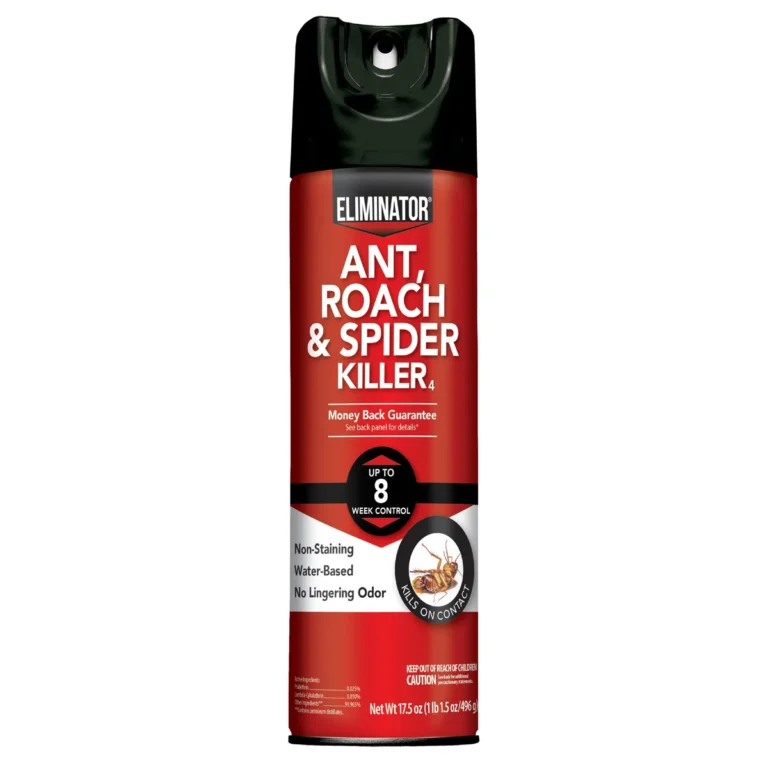
Liquid ant traps and contact sprays solve different parts of an ant problem. A spray may kill ants it directly reaches, making it useful for certain immediate pest-control tasks when the product label permits the intended use. A bait station aims to deliver insecticide through feeding behavior and may affect ants that remain hidden in a nest.
The main trade-off is speed versus colony reach. A contact spray can produce a quick visible effect, but that does not mean it has eliminated the colony. A suitable bait may take longer to show results, yet it can reach nestmates through food sharing.
Using both methods in the same area can undermine baiting if the spray repels ants or contaminates the feeding route. If you are using a liquid bait, avoid spraying near the station unless the product instructions specifically support that combination. Choose a control method based on the target species and the location of the infestation.
Source: www.pinterest.com
Liquid ant traps
Best suited to feeding-based control when ants accept the bait and can carry it back to the nest.
Contact sprays
Can kill exposed ants quickly, but may not reach hidden nestmates or eliminate the source of the infestation.
Prevention
Sealing entry points, storing food securely, and removing spills help reduce the reasons ants enter.
Can You Spray Ants While Using Liquid Bait?
Avoid applying a repellent spray on or around an active bait station unless the product labels explicitly permit it. A spray may discourage ants from approaching the bait and reduce the feeding needed for colony control. Some insecticides may also contaminate the station or nearby surfaces.
If you need to clean a food-contact area, follow the cleaning product directions and keep bait away from that surface. Place the station where it can remain undisturbed while still being inaccessible to children and pets. If the infestation is severe, a coordinated treatment plan from a licensed pest-control professional may be more effective than mixing products on your own.
Avoid conflicting treatments
Do not spray the bait or its immediate feeding route unless both product labels allow the combination.
Use an integrated approach
Combine appropriate baiting with sanitation, moisture control, and sealing entry points.
Why Liquid Ant Traps Sometimes Fail
A liquid ant trap may fail because the ants do not want its bait, cannot reach it, or do not carry enough of it back to the nest. A station can also lose effectiveness if its liquid dries out, becomes contaminated, or is placed far from active trails. These problems are often easier to fix than simply buying more traps.
Ant species is a key factor. Some ants prefer sweets, while others seek protein or fat. Food preference can also shift with the colony’s needs, so a sweet bait that worked before may attract fewer ants at another time. If ants consistently ignore a liquid bait, a different labeled bait formulation may be necessary.
Competing food can draw workers away from the station. Open drink containers, pet food, crumbs, grease, and sugary spills can all provide alternatives. Cleaning up these sources helps make the bait easier to find without requiring excessive amounts of insecticide.
Some infestations involve several nests or colonies that use different entry points. In that case, one station may control only part of the activity. If the problem persists despite correct use, identify the ant species if possible and consider professional help, especially when ants repeatedly appear from walls, electrical areas, or other difficult-to-access locations.
Source: wisheme.com
Wrong bait preference
Try a different product labeled for the target ants if the current bait remains untouched.
Poor placement
Move the station only as needed and only to a safe location near an active trail.
Competing food
Seal food containers, clean crumbs, and remove sugary or greasy spills.
Dry or depleted bait
Inspect and replace the station as directed by the manufacturer.
Multiple nests
Consider whether ants are entering through several routes or whether the infestation needs a broader treatment plan.
What If Ants Ignore the Liquid Bait?
First, check whether the station is intact, fresh, and positioned where ants actually travel. Do not open or alter a sealed station unless the label directs you to do so. Watch from a distance to see whether workers approach the opening and whether they feed.
Next, remove competing food and confirm that the product is intended for the ant species and the place where you are using it. If the ants still show no interest, choose another labeled bait type rather than adding unapproved ingredients or making the mixture stronger.
If several bait types fail, the ants may have a different food preference, the nest may be elsewhere, or the insects may not be the household ant species you assumed. A pest-control professional can identify the species and recommend a suitable treatment.
Inspect
Check the station’s condition, location, and access opening.
Reduce alternatives
Remove exposed food and water sources while keeping the bait station accessible to ants.
Reassess
If the problem continues, review the product label and seek help with identification or treatment.
Are Liquid Ant Traps Safe Around Children and Pets?
Liquid ant traps contain pesticide bait, so they must be handled with care even when the station has a protective housing. A child or pet may bite, chew, move, or break the station. Liquid may spill, and direct contact or ingestion can cause harm depending on the product and the amount involved.
Read the full product label before use. Choose a station approved for the intended indoor setting, and put it where children and pets cannot reach, knock over, or play with it. Do not place bait beside pet bowls, on counters used for food preparation, or in areas where a toddler may crawl and handle it.
Never assume that a product is harmless because it uses a small amount of active ingredient or because its packaging says it is convenient for indoor use. The risk depends on the ingredient, concentration, exposure route, and amount. A sealed station reduces some opportunities for contact but does not remove the need for safe placement.
If a person or pet bites into a station, swallows bait, or has direct exposure, follow the label’s emergency instructions and seek prompt guidance from an appropriate poison-control service or veterinary professional. In the United States, Poison Control can be reached at 1-800-222-1222 for human exposures. For pets, contact a veterinarian or an animal poison-control service. Do not induce vomiting or give home remedies unless a qualified professional directs you to do so.
Source: smartgiftguide.org
Keep stations inaccessible
Place bait where children and pets cannot touch, chew, drag, or overturn it.
Protect food areas
Keep traps away from food, dishes, utensils, and food-contact surfaces.
Prevent spills
Use the station as directed and replace damaged or leaking units according to label instructions.
Respond to exposure
Use the product label and seek poison-control, medical, or veterinary guidance as appropriate.
What Should You Do If a Trap Leaks?
Keep children and pets away from the spill. Follow the product label for cleanup, protective equipment, and disposal. Avoid touching the liquid with bare hands or spreading it across a larger surface.
If the liquid reaches a food-preparation area, keep food and utensils away until the area has been cleaned as directed by the label. Do not pour leftover bait into a sink, toilet, or outdoor drain unless the instructions specifically permit that disposal method. If exposure has occurred, consult the label and an appropriate poison-control or medical service.
Secure the area
Prevent contact until the spill can be handled according to the product directions.
Clean as directed
Use the label’s cleanup and disposal guidance rather than guessing which household cleaner is appropriate.
How to Prevent Ants From Returning
Baiting works best when you also remove the things that attract ants indoors. A liquid trap can reduce activity, but it does not seal the gaps ants use to enter a house. Prevention helps reduce new trails and makes it less likely that workers will find other food sources before they find the bait.
Start with the kitchen, pantry, pet-feeding area, and places where plumbing enters walls. Wipe up spills, clean crumbs, and store food in tightly closed containers. Rinse recyclable drink containers before storing them, and avoid leaving sweet drinks uncovered.
Moisture can also attract some household ants. Fix leaking pipes, dry wet areas, and avoid leaving standing water where it can be removed safely. Keep pet water available as needed, but clean the surrounding area and do not place pesticide bait where a pet can reach it.
Seal suitable gaps around doors, windows, pipes, and baseboards once you have identified likely entry routes. Use an appropriate sealant for the gap and surface. If ants continue to appear despite good sanitation and correctly used bait, the nest may be hidden in a wall, beneath a floor, or outside near the building.
Source: www.pinterest.com
Store food securely
Use closed containers and avoid leaving sweets, crumbs, or pet food exposed for long periods.
Remove moisture
Repair leaks and dry damp areas that may support ant activity.
Seal entry points
Close appropriate gaps around doors, windows, pipes, and other routes into the home.
Monitor after treatment
Watch the original trail and nearby areas so you can spot recurring activity early.
When Should You Call a Pest-Control Professional?
Consider professional help when ant activity persists despite correct bait use, spreads across several rooms, or repeatedly returns after treatment. A professional may be able to identify the species, locate nesting areas, and determine whether the colony needs a different bait or another control method.
Get help sooner if you suspect carpenter ants and notice damaged or damp wood, or if the infestation involves hard-to-reach building spaces. Carpenter ants can nest in wood, although their presence does not by itself prove that structural damage has occurred. A qualified professional can assess the situation and recommend an appropriate response.
Persistent infestation
Visible activity continues beyond the expected treatment period despite correct product use.
Unclear ant species
Several bait attempts fail, or the insects may require a different control strategy.
Possible building damage
You see signs that could indicate carpenter ants or nesting in damp wood and wall spaces.
Common Mistakes to Avoid When Using Liquid Ant Traps
Most baiting mistakes come from rushing the process or using the station in a way that conflicts with its purpose. Liquid bait needs ants to find it, feed on it, and in many cases carry it back to the nest. Actions that repel workers, contaminate the bait, or remove it too early can make the treatment less effective.
One common mistake is spraying the trail while the bait is active. Another is placing the station where ants do not travel or where water and cleaners can reach it. People also sometimes replace a station too soon, move it repeatedly, or assume that more product will always improve results.
The simplest plan is to follow the label, observe ant activity, and change one factor at a time if the bait does not work. This makes it easier to identify whether the issue is placement, bait preference, station condition, or a larger infestation.
Source: wishesexpert.com
Using repellent spray nearby
May stop ants from approaching the bait or interfere with their feeding route.
Placing bait too far from trails
Makes it less likely that workers will discover the station.
Ignoring the label
Can lead to unsafe placement, incorrect use, or poor treatment results.
Leaving food uncovered
Gives ants other options and may reduce their interest in the bait.
Expecting instant colony removal
Overlooks the time needed for feeding, food sharing, and insecticide effects.
Using a damaged station
Can lead to leaks, unwanted contact, or reduced bait quality.
A Simple Troubleshooting Checklist
If a liquid ant trap does not seem to work, start with the safest and easiest checks. Confirm that the station is intact and that ants can reach the bait. Then verify that the product is suitable for the target ants and the place where you have set it.
Next, remove competing food, check for moisture or contamination, and compare activity with the product’s expected treatment period. Avoid combining products without label support. If the ants continue to ignore the bait or the infestation spreads, seek a different labeled product or professional identification.
Check the station
Make sure it is not damaged, empty, dried out, or blocked.
Check access
Confirm that ants can reach the feeding opening from their active trail.
Check the environment
Remove competing food and keep the station away from water, sprays, and cleaning products.
Check progress
Use the label’s timeline to decide when to reassess or replace the bait.
A Practical Comparison of Liquid and Other Ant Baits
Liquid ant traps are one type of bait, but they are not the only option. Gel baits, granular baits, and solid bait stations use different forms to deliver food and insecticide. The best option depends on the ant species, the feeding location, moisture conditions, and the product’s approved use.
Liquid baits can suit ants that readily feed on sweet liquids. Gel baits may allow more precise placement in some approved locations, while granular baits may be designed for particular outdoor uses. Solid stations can be useful where a liquid would be difficult to keep stable, although the actual advantages depend on the product design.
No bait form is best for every ant infestation. Check the label for the target species, location, and conditions. Avoid placing outdoor-only products inside a home or using an indoor-only station in a garden unless its label permits that use.
Source: www.pinterest.com
Liquid bait stations
Useful when target ants accept liquid food and the station can remain level and protected.
Gel bait
May allow precise placement in certain labeled locations, but must be kept away from contact surfaces and children or pets.
Granular bait
May suit specific outdoor settings and ant species when the label permits the intended use.
Solid bait stations
May be easier to place in some settings, but effectiveness still depends on bait acceptance and correct use.
Which Type Should You Choose?
Start with the ants’ feeding behavior and where you see them. If workers feed readily on a sweet liquid, a labeled liquid station may be a sensible option. If they ignore it, do not keep adding identical stations without reassessing the problem.
For an infestation that continues after careful baiting, species identification can be more useful than switching products at random. A licensed pest-control professional can help select an appropriate bait and determine whether entry-point sealing or other methods are also needed.
Choose for the target ants
Select a product whose label includes the relevant species or intended pest group.
Choose for the location
Confirm whether the bait is approved for indoor, outdoor, or specific use areas.
Choose for safe placement
Use a station that can remain secure and inaccessible to children and pets.
What the Evidence Can and Cannot Tell You
The basic mechanism of liquid ant bait is well established in pest-control practice: an attractant brings workers to the bait, and a suitable insecticide can affect ants that consume it. Ants that share liquid food may carry the active ingredient beyond the first workers that find the station. The result depends on how the product and the target species interact.
A product label documents the approved uses, active ingredient, directions, and precautions for that product. It does not mean the bait will eliminate every colony in every home. Real-world results can vary with placement, competing food, moisture, the size of the infestation, and the location of the nest.
Likewise, a busy station is evidence that ants are visiting it, not proof that the queen has received a lethal dose. A decline in visible workers is a useful sign, but hidden colonies or additional nests may remain. These distinctions help set realistic expectations and prevent unnecessary changes during treatment.
This guide explains the general mechanism and practical use of liquid ant bait. It does not report a laboratory test of a particular brand, independently verify the performance of a named product, or establish a universal time to eliminate an infestation. For product-specific claims, consult the current label and any relevant official pesticide information.
Source: moonagedaydream.film
Documented mechanism
Food attractants and bait delivery can expose feeding workers and, through food sharing, other colony members.
Product-specific evidence
The label establishes the intended use, ingredients, and instructions for that product.
Not guaranteed
Visible activity, colony size, and the chance of queen exposure vary with conditions.
How to Make an Informed Decision
Use a liquid ant trap when the product is labeled for the target ants and the location, workers are willing to feed, and the station can be placed safely. Give the bait the time specified on the label, and judge progress by changes in overall activity.
If those conditions are not met, correct the placement or competing-food problem first. If the ants continue to ignore the bait or return after treatment, identify the species and reassess the control plan rather than assuming all ant traps work in the same way.
Best starting point
Use a suitable labeled bait near an active trail and monitor it as directed.
Best next step
Investigate bait preference, placement, and entry routes when results are poor.
Best escalation
Seek professional help for persistent, widespread, or hard-to-identify infestations.
Frequently Asked Questions
Q
Do liquid ant traps attract more ants at first?
Yes, they can. A fresh bait station offers a food source, so more workers may gather after they find it. This early increase does not necessarily mean the infestation is getting worse. Watch the overall trend and follow the product label.
Q
How long should I leave a liquid ant trap out?
Leave it in place for the period and under the conditions specified on the product label. Some stations are designed to remain active for an extended period, while others may need replacement when the bait is depleted or no longer usable. Check the station as directed, and do not leave a damaged or leaking unit in place.
Q
Why are ants not eating my liquid bait?
The ants may prefer another food, the bait may not suit their species, or the station may be poorly placed. Competing crumbs, spills, pet food, and moisture can also affect feeding. Check the station, reduce competing food sources, and consider another labeled bait if the ants continue to ignore it.
Q
Can liquid ant traps kill an entire colony?
They can help eliminate a colony when workers carry a suitable slow-acting bait back to the nest and enough colony members receive an effective dose. However, no station guarantees that every worker, queen, or connected nest will be eliminated. Results depend on the ant species, bait acceptance, colony structure, and correct use.
Q
Can I use liquid ant traps in a kitchen?
Use a liquid ant trap in a kitchen only if its label permits indoor use and the planned placement. Keep it away from food, dishes, utensils, and surfaces used to prepare or serve food. Choose a stable location that children and pets cannot reach, and follow the label for handling and cleanup.
Q
Are liquid ant traps safe for dogs and cats?
They can pose a risk if a pet chews the station, swallows bait, or comes into contact with spilled liquid. Use only a product appropriate for the location and keep it completely inaccessible to pets. If your pet bites or swallows a station, contact a veterinarian or animal poison-control service for advice based on the exact product and exposure.
Q
Should I clean up dead ants near the trap?
You can remove dead ants when needed, using a method that avoids direct contact with bait or pesticide residue. Do not spray the station or contaminate the feeding route while cleaning. Follow the label for cleanup, handwashing, and disposal.
Q
What if ants return after the traps seem to work?
Ants may return because a nest remains active, a new colony has entered, or the original treatment did not reach every nest. Recheck entry points, food storage, moisture, and station condition. If the ants repeatedly return despite correct bait use, seek species identification and consider professional pest control.
✦ Wrapping Up
Conclusion
Liquid ant traps work by using food to attract worker ants and deliver an insecticide through feeding. When the bait suits the species and acts slowly enough, workers may carry it to the nest and share it with other ants. That process can help control hidden colony members instead of killing only the insects you can see.
The best results come from using the right bait in the right place and allowing the treatment to work according to its label. Avoid sprays near active stations, remove competing food, keep the bait away from children and pets, and monitor changes in ant activity over time. If the bait is ignored or the infestation persists, reassess the species, placement, and control method rather than assuming every liquid trap will work the same way.
💡 Key Takeaway
Find an active ant trail, select a liquid bait labeled for the target ants and location, place it safely as directed, and monitor feeding and activity. If results remain poor beyond the label’s expected treatment period, check competing food and bait placement, then consider a different labeled bait or professional help.
You’ve got a spider web in the garage corner. You grab the can of ant killer from the shelf because it’s already there. And you’re wondering, does ant killer…