To use STEM bug spray, read the directions on your exact bottle, shake it if the label says to, and spray only the listed pests and approved surfaces. Keep people and pets away during application, allow treated areas to dry as directed, and follow all label instructions.
In the United States, homeowners often use household insect sprays to deal with ants, roaches, flies, spiders, and other pests. STEM bug spray is one option, but the right way to use it depends on the exact product. The brand sells different formulas for different uses, including household insects and plants.
Before spraying, check the front and back labels. Look for the insect names, approved application sites, active ingredients, directions, and safety warnings. A bottle made for household insects may have different instructions from one made for plants.
The main goal is to apply only the amount the label allows, in the correct place. More spray does not always mean better pest control. A careful application can reduce unnecessary exposure while helping the product work as intended.
Source: stemforbugs.com
What Is STEM Bug Spray?
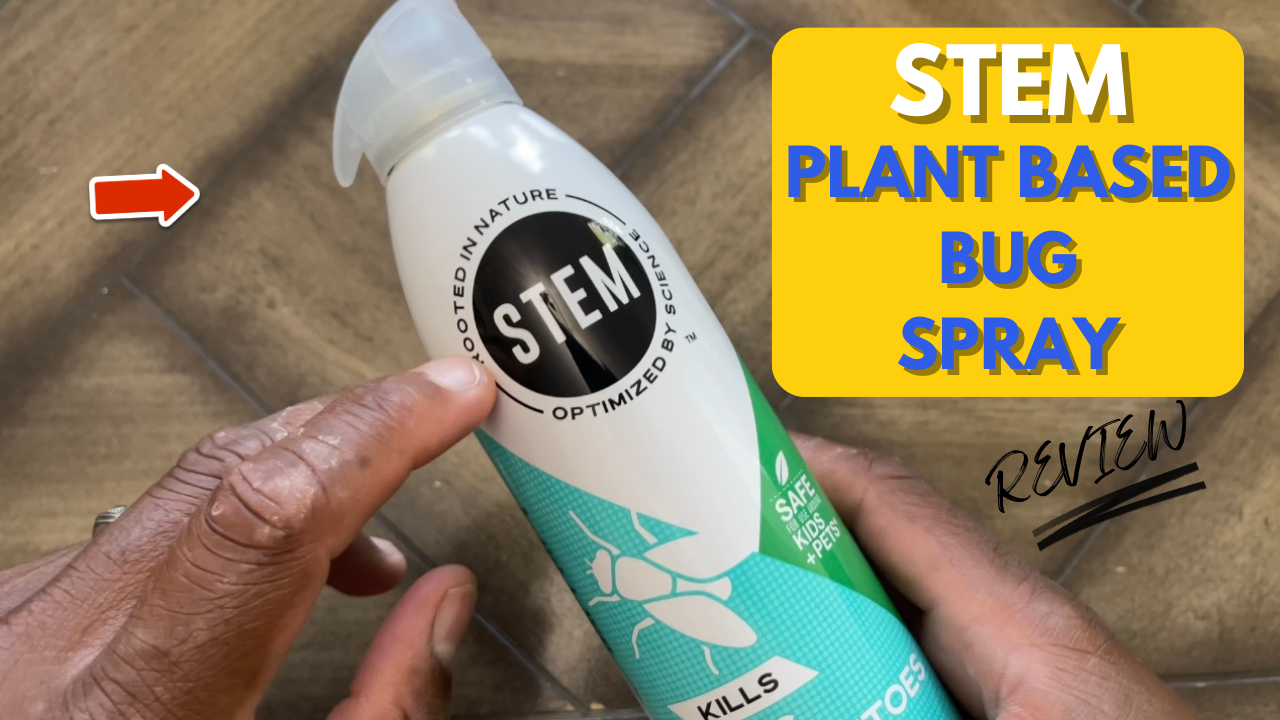
STEM is a household pest-control brand that offers insect sprays for different uses. Some products are designed to kill common household insects, while others are made for use on plants. This difference matters because the correct application method depends on the specific formula.
Some STEM household sprays use plant-derived active ingredients. However, plant-based does not mean harmless. An insecticide can still affect people, pets, beneficial insects, and other organisms if it is used incorrectly.
The bottle label is the best source for product-specific instructions. It tells you which insects the spray targets, where you may apply it, and what precautions you need to follow.
Source: ralphsway.com
Household insect spray
A formula intended for the insects and application sites listed on its label. Some versions target ants, roaches, and flies.
Plant insect spray
A separate type of product intended for specified plants and plant pests. Follow its plant-specific directions rather than household spray directions.
Active ingredients
These are the chemicals that control the target pest. Check the exact bottle because ingredients and concentrations can vary by product.
Why the Exact STEM Formula Matters
Two bottles with the same brand name may not have the same purpose. One may be labeled for indoor household insects, while another may be intended for plants or a different group of pests.
Never transfer directions from one STEM product to another. If your bottle does not list a particular insect or application site, do not assume the product is approved for it.
Check the product name
Match the full product name and bottle size to the directions you are reading.
Check the intended use
Confirm whether the product is for indoor use, outdoor use, plants, or another specific setting.
What to Do Before Using STEM Bug Spray
Good preparation helps prevent accidental exposure and makes application easier. Before opening the bottle, identify the pest and inspect the area where you plan to spray.
Remove items that should not come into contact with insecticide. Store food, drinks, dishes, toys, and pet supplies away from the treatment area. Follow the label for any extra preparation steps.
If the product is intended for indoor use, check its ventilation instructions. If the label calls for ventilation, open suitable doors or windows when you can do so safely.
Source: storage.googleapis.com
Identify the insect
Look closely at the pest. Ants, roaches, flies, and spiders may require different control methods.
Read the full label
Check the application directions, approved surfaces, warnings, first-aid information, and storage instructions.
Protect people and pets
Move children and animals away from the treatment area. Remove pet bowls, food, toys, and bedding.
Protect food-contact items
Put away food and cooking tools. Do not spray dishes, utensils, food, or food preparation surfaces unless the label specifically allows the use and explains the required precautions.
Prepare the spray area
Clear clutter so you can reach the approved treatment site without spraying unrelated objects.
Should You Wear Gloves?
Use the personal protective equipment listed on your bottle. If the label calls for gloves, choose the specified type and wear them during application. Do not assume that ordinary household gloves provide the protection required by every formula.
Avoid touching your eyes, mouth, or face while handling the product. Wash your hands after use, even if you wore gloves.
Follow label protection rules
Wear the gloves, clothing, or other protective equipment required by the product instructions.
Avoid direct contact
Do not deliberately touch wet spray or treated areas before the label permits contact.
How to Use STEM Bug Spray Step by Step
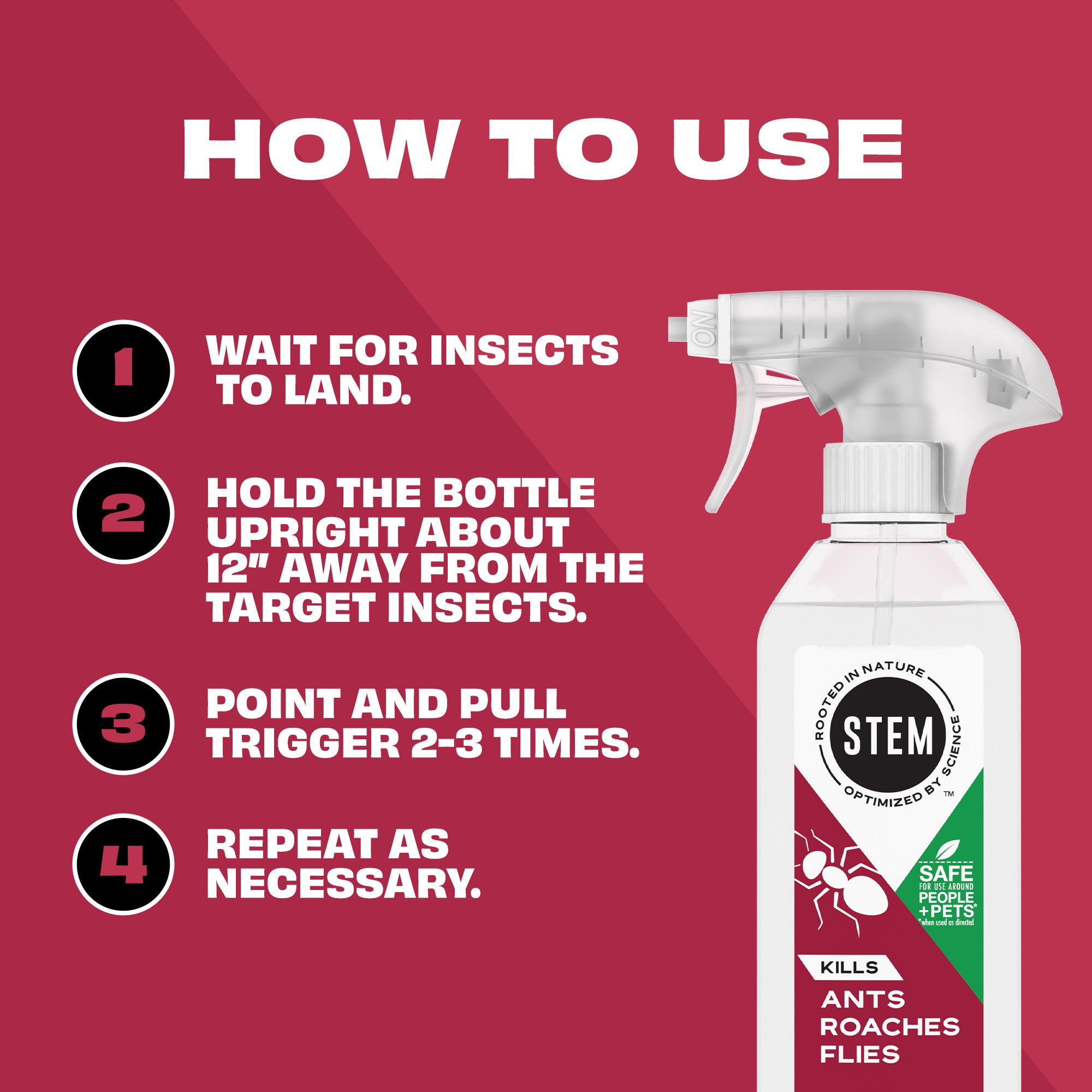
The safest way to use STEM bug spray is to follow the instructions printed on the exact product. The following process provides a practical checklist, but the bottle label takes priority whenever its directions differ.
Do not spray every corner of a room simply because you have seen an insect. First find the pest activity, then apply the product only to approved treatment areas.
Source: www.homedepot.com
Step 1: Confirm the product
Check that your bottle is intended for the insect and location you want to treat. Do not use a plant spray as a household spray or the other way around.
Step 2: Read the directions
Find the application method, distance, amount, and any restrictions on indoor or outdoor use. Shake the bottle only if its instructions tell you to.
Step 3: Prepare the area
Remove food, dishes, toys, pet supplies, and other items that could be exposed. Move people and animals away.
Step 4: Position the nozzle
Hold the bottle as directed. Point the nozzle toward the approved treatment area and keep it away from your face.
Step 5: Apply as directed
Use the labeled amount and spray pattern. Avoid excessive application, drifting mist, and contact with unapproved surfaces.
Step 6: Leave the area if required
Follow the label’s instructions about ventilation, people, and pets. Do not remain in a room if the directions require you to leave.
Step 7: Allow the area to dry
Keep people and pets away until the product has dried and all other reentry conditions on the label have been met.
Step 8: Store the bottle safely
Close the container and store it in its original packaging, away from children, pets, heat, and direct sunlight, as directed on the label.
Where Should You Spray STEM Bug Spray?
The correct treatment location depends on the product label. If your formula lists indoor use and permits application to certain surfaces, treat only those surfaces and locations.
Do not automatically spray mattresses, sofas, clothing, carpets, kitchen counters, or children’s play areas. These surfaces may have special restrictions or may not be approved for treatment.
Approved pest activity areas
Treat only the locations named on the bottle where the target insects are present or active.
Cracks and crevices
Use this method only if the product label specifically permits it and provides directions.
Outdoor areas
Apply outdoors only when the exact formula allows outdoor use. Consider wind, runoff, nearby water, and exposure to beneficial insects.
How Much STEM Bug Spray Should You Use?
Use only the amount stated on the label. There is no safe universal number of sprays for every STEM bottle, room, or pest.
Applying extra insecticide can increase exposure without solving the reason insects keep returning. A small, correctly targeted application is preferable to covering an entire area without a clear need.
Follow the stated amount
Use the label’s coverage, spray distance, and application rate rather than guessing.
Avoid repeated spraying
Check the minimum interval and maximum application frequency before treating the same area again.
How to Use STEM Spray for Different Insects
The insect you are treating affects where and how you apply the product. Always confirm that the target insect appears on your bottle before using the spray.
A spray that kills an insect on direct contact may not eliminate a nest, hidden colony, or breeding site. Correct identification and follow-up prevention are often just as important as the initial treatment.
Source: amazon.com
Ants
Look for the ant trail and entry point. Treat only approved locations according to the label, then remove food sources and seal suitable entry gaps.
Roaches
Identify areas of activity, such as spaces near food or water. Follow the labeled application method and improve sanitation to reduce conditions that attract roaches.
Flies
Remove food waste and other breeding sources. Do not spray food, food containers, or surfaces that contact food unless the label expressly allows it.
Spiders
Remove webs and reduce insects that serve as prey. Use the spray only if the exact product lists spiders as a target.
Does STEM Bug Spray Kill Insects on Contact?
Some insect sprays are designed to kill listed insects when the insects receive a direct application. That does not mean every insect hidden behind a wall, under an appliance, or inside a nest will be affected.
Check the product claims for the exact pest and application method. Do not assume that visible results on one insect prove that a whole infestation has been eliminated.
Direct contact
An insect must receive the exposure described by the product’s directions for contact-based control.
Hidden insects
Insects outside the treated area may remain active. Look for the source of the infestation and use suitable prevention methods.
How to Use STEM Bug Spray Around Pets and Children
Keep children and pets away from the treatment area during application and for the period stated on the label. Do not rely on the phrase plant-based or on a pleasant scent as proof that a pesticide is safe to touch or breathe.
Animals may lick treated surfaces, walk through wet spray, or groom residue from their paws. Children may touch low surfaces and then put their hands in their mouths. These behaviors make careful application and restricted access especially important.
If your bottle does not clearly explain the conditions for pets or children to return, contact the manufacturer or a qualified poison-control resource before use.
Source: towerlandscapedesign.com
Remove pet items
Take away food bowls, water bowls, toys, bedding, and other items that may be exposed.
Keep children away
Prevent access to the treatment area until all label conditions are satisfied.
Protect aquariums
Keep spray and airborne mist away from fish tanks and aquatic animals. Follow the label and seek manufacturer guidance if the product’s restrictions are unclear.
Prevent accidental access
Store the bottle in a secure place that children and animals cannot reach.
Is STEM Bug Spray Safe After It Dries?
Drying is an important condition for many pesticide applications, but it is not a guarantee that every treated surface is safe for every person or animal. The label may include additional reentry or cleaning instructions.
Follow the exact directions for the product you own. Do not allow pets to lick treated surfaces or let children play on treated areas unless the label permits that use.
Wait for the stated drying period
Do not guess how long drying takes. Follow the product’s specific instructions.
Check surface restrictions
Some surfaces may need special handling or may not be approved for application at all.
How to Use STEM Bug Spray on Plants
Use a STEM plant spray only when its label identifies the plants and pests you want to treat. A household insect spray is not automatically suitable for leaves, flowers, vegetables, or indoor houseplants.
Plant sensitivity can vary by species, growing conditions, and formula. Follow the plant product’s directions for coverage, timing, repeat applications, and any test application it requires.
Avoid spraying flowers when pollinators are visiting. Follow all label restrictions around bees and other beneficial insects, and do not allow spray to drift onto nearby plants or water.
Source: storage.googleapis.com
Confirm the plant is listed
Check whether the label permits use on the specific plant or plant group.
Confirm the pest is listed
Make sure the product is labeled for the insect affecting the plant.
Follow the application method
Use the stated distance, coverage, and frequency. Do not soak leaves unless the label directs you to do so.
Protect pollinators
Follow bee warnings and avoid exposure of visiting pollinators.
Can You Use Household STEM Spray on Houseplants?
Do not use a household STEM spray on houseplants unless its label specifically allows that application. The presence of plant-derived ingredients does not establish that a formula is suitable for every plant.
If you need to treat a houseplant, choose a product whose label covers that use. Follow any instructions for testing a small area and watching for leaf damage.
Check the label first
Look for explicit directions covering indoor ornamental plants or the specific plant type.
Watch for plant stress
Stop using the product if the plant shows unexpected damage and seek product-specific guidance.
How Long Does STEM Bug Spray Take to Work?
The time needed to see results depends on the exact formula, target insect, exposure, and application method. Do not assume every STEM spray kills every listed pest at the same speed.
Some insects may show an effect after direct exposure, while others may remain active if they were not treated. A visible reduction in insects is useful feedback, but it does not always mean the infestation has ended.
Use the label’s performance claims and repeat-treatment instructions. Avoid applying another dose simply because you want faster results.
Source: towerlandscapedesign.com
Observe the treated area
Check whether the target insects are still active after the application.
Look for the source
Check for food scraps, standing water, entry gaps, webs, and other conditions that support pest activity.
Follow repeat-use limits
Never exceed the stated frequency or amount, even when insects remain visible.
What If the Bugs Keep Coming Back?
Repeated sightings may mean that insects are entering from another location, breeding nearby, or avoiding the treated area. A contact spray may affect visible insects without removing the source.
Clean food spills, store food in sealed containers, repair leaks, empty standing water, and close suitable entry gaps. If the infestation continues, consider a pest-control professional who can identify the source and recommend a suitable treatment plan.
Check entry points
Inspect gaps around doors, windows, pipes, and other openings.
Remove attractants
Keep food waste sealed, clean crumbs, and fix moisture problems.
Avoid overapplication
Use the label’s repeat-treatment schedule rather than spraying more often.
Common Mistakes to Avoid When Using STEM Spray
Most avoidable problems come from using the wrong formula, spraying the wrong surface, or ignoring the label. A careful check before application can prevent these mistakes.
Pesticides are designed for specific uses. Treating them as general-purpose cleaning sprays can lead to unnecessary exposure and poor pest control.
Source: amazon.com
Using the wrong formula
Do not use a plant product for household pests or a household product on plants unless the label permits it.
Spraying too much
Extra product does not guarantee better results and may increase exposure.
Ignoring ventilation instructions
Follow the exact indoor-use and ventilation directions.
Spraying food or dishes
Never contaminate food, utensils, or food-contact surfaces. Follow any label-specific cleaning instructions.
Letting pets walk through wet spray
Keep animals away until the label’s return conditions are met.
Mixing insecticides
Do not combine STEM with another pesticide, cleaner, or homemade mixture.
Ignoring the pest source
Spraying visible insects without fixing leaks, food access, or entry points may allow the problem to continue.
What Should You Do If You Spray the Wrong Area?
Stop applying the product. Keep people and pets away, and check the label for accidental-contact and cleanup directions. Do not use another chemical to remove the spray.
If food, dishes, or a food-contact surface may have been contaminated, follow the label’s cleanup instructions and contact the manufacturer or poison-control service if you are unsure whether an item can be safely used again.
Stop the application
Put the bottle down and prevent further exposure.
Check the label
Use the product’s specific spill, cleanup, and first-aid instructions.
Get appropriate help
Contact a poison-control center or medical professional if exposure or symptoms occur.
What to Do After Using STEM Bug Spray
After application, follow the label’s instructions for drying, ventilation, cleanup, and storage. Do not assume that all products need the same waiting period or that every treated surface should be washed.
Wash your hands after handling the bottle. Clean or dispose of protective equipment as the label directs, and store the container securely in its original packaging.
Keep a record of the product name and application date. This makes it easier to check the repeat-treatment interval and avoid accidental overuse.
Source: towerlandscapedesign.com
Follow reentry directions
Allow the area to meet all stated drying, ventilation, and access conditions.
Clean only as directed
Do not wash treated areas immediately unless the label tells you to do so.
Store the product correctly
Keep it closed, in its original container, and away from children, pets, and unsuitable storage conditions.
Dispose of the container properly
Follow the label and local waste rules. Do not reuse an empty pesticide container.
What If Someone Gets STEM Bug Spray on Their Skin?
Stop the exposure and follow the first-aid directions on the product label. For skin contact, the label may instruct you to remove contaminated clothing and rinse the affected skin with plenty of water.
If the product enters the eyes, is swallowed, or causes symptoms, follow the label’s emergency instructions and seek appropriate medical or poison-control guidance. Keep the bottle available so the product and its ingredients can be identified.
In the United States, Poison Control can be reached at 1-800-222-1222. Call 911 for a severe or life-threatening reaction.
Identify the product
Keep the container or a clear photograph of its label available when seeking help.
Follow first-aid directions
Use the exact label instructions rather than trying an unverified home remedy.
Seek urgent help when needed
Do not delay medical attention for serious symptoms or significant exposure.
A Practical STEM Bug Spray Application Checklist
Use this checklist before and after each application. It helps you confirm that you have selected the right formula and followed the key safety steps.
The checklist does not replace the label. If a direction on your bottle conflicts with a general step here, follow the product label.
Source: www.homedepot.com
Before spraying
Confirm the pest, product type, approved location, active ingredients, and label directions.
Prepare the area
Remove food, dishes, pet items, and toys. Keep people and animals away.
During application
Use the labeled method, amount, distance, and protective equipment.
After application
Follow ventilation, drying, reentry, and cleanup directions.
For follow-up
Observe pest activity, correct the conditions that attract insects, and respect repeat-treatment limits.
When Should You Call a Pest-Control Professional?
Consider professional help when pests keep returning despite correct product use, when the infestation is widespread, or when you cannot identify the insect. A professional can inspect hidden sources and choose a treatment that fits the building and pest.
Professional help is also sensible when the infestation involves sensitive areas, repeated pesticide exposure, or pests that need specialized control. Avoid repeated spraying when you do not know why the first treatment failed.
Persistent infestation
Seek an inspection when activity continues despite appropriate prevention and label-compliant treatment.
Unidentified pest
Get the insect identified before choosing another pesticide.
Sensitive environment
Ask a qualified professional for help when children, pets, food areas, or vulnerable occupants make treatment more complex.
Frequently Asked Questions
Q
Do you need to shake STEM bug spray before using it?
Shake the bottle only if the directions on your exact STEM product say to do so. Different formulas may have different preparation instructions, so check the label before spraying.
Q
How long should you wait after spraying STEM bug spray?
The waiting period depends on the formula and application site. Follow the label’s drying, ventilation, and reentry instructions before allowing people or pets back into the area.
Q
Can you use STEM bug spray indoors?
Some STEM products are intended for indoor household use, while others have different purposes. Check your exact bottle for indoor-use approval and follow its surface restrictions and ventilation directions.
Q
Can you spray STEM bug spray directly on insects?
Only use a direct application if the label describes that method for the target insect. Aim the spray as directed and avoid spraying people, pets, food, or unapproved surfaces.
Q
Can you use STEM bug spray around cats and dogs?
Keep cats and dogs away during application and until all label conditions for returning have been met. Do not let pets lick treated surfaces or walk through wet spray. Contact the manufacturer or a veterinarian if you are unsure whether your exact formula is suitable for a particular setting.
Q
Can STEM bug spray be used on plants?
Use a STEM product on plants only when its label specifically permits that use. Household insect spray is not automatically safe for leaves, flowers, vegetables, or houseplants.
Q
Can you use STEM bug spray every day?
Do not apply it daily unless the exact product label expressly allows that frequency. Follow the maximum application rate and minimum interval. If insects continue to appear, investigate the source instead of increasing the dose.
Q
What should you do if STEM bug spray does not kill the insects?
Check whether the insect is listed on the label and whether you used the approved application method. Hidden insects, untreated entry points, food sources, and nearby breeding areas can keep an infestation active. Follow the label’s repeat-use limits and consider professional pest control if the problem continues.
✦ Wrapping Up
Conclusion
Learning how to use STEM bug spray starts with choosing the correct formula and reading its full label. Identify the target insect, confirm the approved application site, prepare the area, and apply only the amount and method stated in the directions.
Safety matters just as much as pest control. Keep children and pets away during treatment, protect food and household items, follow ventilation and drying instructions, and store the bottle securely. Never assume that plant-based ingredients make an insecticide harmless.
If insects return, look for the source of the problem rather than spraying more often. Clean food residue, remove standing water, seal suitable entry gaps, and seek qualified help when an infestation is difficult to control.
💡 Key Takeaway
Before using STEM bug spray, read the exact bottle label and confirm the target insect, approved application site, amount, protective steps, and reentry instructions. The label is your most reliable guide to safe and correct use.
The question “is Amdro ant killer safe for pets” usually comes up right after a dog has nosed around a can of granules on the porch or a cat has batted a gel…