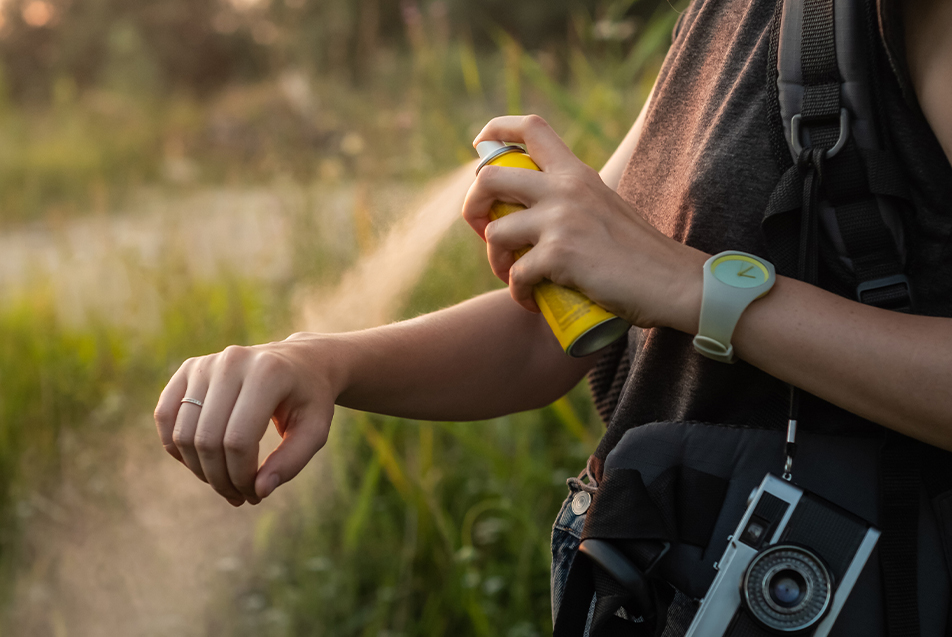
Bug spray can be harmful to humans if swallowed, inhaled in large amounts, or used incorrectly. However, EPA-registered insect repellents are generally safe for adults and children when used according to their product labels.
Across the United States, people use bug spray during summer hikes, backyard cookouts, camping trips, and everyday outdoor activities. These products help keep mosquitoes, ticks, and other biting insects away. They can also lower the risk of insect-borne illnesses, such as Lyme disease and West Nile virus. Still, many people wonder whether putting chemicals on their skin is safe.
The answer depends on the product, its active ingredients, the amount used, and how a person comes into contact with it. Common ingredients include DEET, picaridin, IR3535, and oil of lemon eucalyptus. These ingredients have different properties, but EPA-registered products are evaluated for safety and effectiveness when used as directed.
Problems can occur when someone sprays too much, breathes in the mist, gets the product in their eyes, or accidentally swallows it. Young children may also face extra risks because they often touch their faces and put their hands in their mouths. Knowing how to apply and remove bug spray can help prevent these problems.
This guide explains the possible health effects of bug spray, which ingredients deserve attention, what to do after accidental exposure, and how to choose a suitable repellent. The goal is not to make you afraid of insect repellents. It is to help you use them wisely while protecting yourself from insect bites.
Source: foxchase.org
Is Bug Spray Actually Harmful to Humans?
Bug spray is not automatically harmful to humans. Many insect repellents are designed for direct application to exposed skin or clothing, and their ingredients have been evaluated for their intended use. The Environmental Protection Agency (EPA) registers many skin-applied repellents and provides rules for their safe use.
The important difference is between normal use and excessive exposure. Applying the correct amount to exposed skin is very different from drinking the product, spraying it into someone’s face, or breathing a cloud of mist in a small room. The same ingredient can present different risks depending on how it enters the body.
The National Pesticide Information Center explains that insect repellent toxicity varies by ingredient and exposure route. Skin exposure during normal use is generally associated with low or very low toxicity for common repellents. Swallowing or inhaling a product can create different concerns.
This does not mean every bug spray is suitable for every person. Someone with sensitive skin may develop a rash, while another person may have no reaction. The product label is the best starting point because it explains the intended use, age restrictions, warnings, and first-aid instructions.
Source: www.parkview.com
Normal skin application
An EPA-registered repellent used according to its label generally presents a low risk for most people.
Excessive application
Using more than directed or applying the product too often can increase unnecessary exposure and the chance of irritation.
Accidental swallowing
Ingesting bug spray can cause poisoning. Even a small exposure deserves product-specific advice from Poison Control.
Breathing spray mist
Inhaling airborne droplets can irritate the nose, throat, and lungs, particularly in poorly ventilated spaces.
Why Does the Amount of Exposure Matter?
Think of exposure as a matter of dose and contact. A small amount applied to the skin as directed is not the same as a large amount entering the body through the mouth or lungs. The formula and the person’s age and health can also change the risk.
For example, an adult who applies a suitable repellent to their arms before a walk is using the product for its intended purpose. A child who sprays the same product into their mouth has experienced a different type of exposure and needs prompt advice.
Product type
A skin repellent, an indoor insecticide, and a mosquito-control fogging product are not interchangeable.
Exposure route
Skin contact, inhalation, eye contact, and swallowing have different health risks.
Which Bug Spray Ingredients Can Affect Human Health?
The active ingredient is one of the most important details to check before using an insect repellent. It is the substance that provides protection against biting insects. Other ingredients may help dissolve, preserve, or spread the formula.
Common EPA-registered repellent ingredients include DEET, picaridin, IR3535, and oil of lemon eucalyptus. Para-menthane-diol (PMD) is another recognized repellent ingredient. Each has specific directions and age-related precautions.
A product being plant-based does not automatically make it safer. Some plant oils can irritate the skin or trigger allergic reactions. Pure essential oils should not be treated as equivalent to tested, formulated, EPA-registered insect repellents.
Read the active ingredient panel rather than judging a product by its smell, color, or natural label. Also check the EPA registration number and the insects listed on the product label.
Source: suzukilj80.de
DEET
DEET is a widely used repellent that helps prevent mosquito and tick bites. It is considered suitable for use when the product is applied according to its directions. Skin irritation and eye discomfort can occur, especially after improper use.
Picaridin
Picaridin is an established alternative to DEET. It helps repel mosquitoes and ticks and is available in different concentrations. Follow the specific product label for application and reapplication.
IR3535
IR3535 is another EPA-registered repellent ingredient. It is used in products designed to protect against certain biting insects.
Oil of lemon eucalyptus
EPA-registered oil of lemon eucalyptus products can provide insect protection. These products are different from pure lemon eucalyptus essential oil. OLE and PMD products should not be used on children younger than three years.
Permethrin
Permethrin is an insecticide used to treat certain clothing, footwear, and outdoor gear. It is not intended for direct application to human skin. Follow the product label and let treated items dry as directed.
Is DEET Dangerous to Humans?
DEET is not automatically dangerous when used correctly. It has been used in insect repellents for decades, and EPA evaluates products containing it for their intended uses. The CDC includes DEET among the recommended active ingredients in registered insect repellents.
Some people may experience skin irritation or a rash after using a DEET product. Eye exposure can cause discomfort, and swallowing a large amount can cause serious poisoning. These risks are reasons to follow the label, not proof that normal use is unsafe.
Choose a concentration that provides enough protection for the length of your outdoor activity. A higher concentration generally provides longer protection rather than automatically offering stronger protection against bites.
Use only as directed
Apply the amount and frequency stated on the product label.
Protect sensitive areas
Keep the product away from eyes, mouth, cuts, and irritated skin.
Avoid unnecessary exposure
Do not apply under clothing or use more product than needed.
Are Natural Bug Sprays Safer?
Natural bug sprays are not automatically harmless. Essential oils and plant extracts can cause skin irritation, allergic reactions, or eye discomfort. Their ability to prevent insect bites can also vary widely.
A formulated, EPA-registered oil of lemon eucalyptus repellent is not the same as a bottle of pure essential oil. The registered product has specific directions and has undergone the relevant regulatory evaluation. Pure essential oil should not be assumed to provide the same safety or effectiveness.
Choose a product based on its active ingredient, registration, intended use, and age restrictions. A natural label alone is not enough to establish that a product is safe.
Check the formulation
Look for an EPA-registered repellent rather than relying only on natural marketing claims.
Watch for allergies
Stop using a product if it causes a rash, swelling, or another unexpected reaction.
What Are the Possible Side Effects of Bug Spray?
Bug spray can cause side effects, but the type and severity depend on the formula and exposure. Most problems associated with ordinary topical use are mild, such as skin irritation or temporary eye discomfort. More serious symptoms are possible after swallowing the product or experiencing substantial exposure.
A reaction does not always mean that someone has been poisoned. For example, a person may develop a local rash because their skin is sensitive to an ingredient. However, a severe reaction, breathing problem, or unusual symptom should never be ignored.
Pay attention to when symptoms begin and where the product contacted the body. This information can help a healthcare professional or poison specialist assess the exposure.
Source: tsf-store.com
Skin redness
The treated area may become red, itchy, or irritated. Wash the area and stop using the product if a reaction develops.
Burning or stinging
Some formulas can cause discomfort, especially on damaged or sensitive skin.
Eye irritation
Spray droplets can cause watering, redness, and a burning feeling if they reach the eyes.
Coughing or throat irritation
Breathing in spray mist may irritate the respiratory tract.
Headache or dizziness
These symptoms can occur in some exposure situations, but they are not specific to bug spray. Seek advice if they develop after exposure.
Nausea or vomiting
These symptoms can occur after accidental swallowing or significant exposure and require prompt medical guidance.
Can Bug Spray Cause Skin Problems?
Yes. Some people develop contact irritation or an allergic skin reaction after using an insect repellent. Symptoms can include redness, itching, small bumps, or a burning sensation in the treated area.
The reaction may depend on the active ingredient, other formula ingredients, the amount applied, and the condition of the skin. Applying repellent to cuts, wounds, sunburn, or already irritated skin can make discomfort worse.
If irritation occurs, stop using the product and wash the area with soap and water. Seek medical advice if the rash spreads, becomes painful, develops blisters, or does not improve.
Mild reaction
Wash the treated skin and avoid applying the same product again until the cause is clear.
Severe reaction
Get medical help if you develop significant swelling, blistering, or worsening pain.
Can Bug Spray Affect Breathing?
Breathing in aerosol or pump-spray mist can irritate the nose, throat, and lungs. This is more likely when someone sprays close to their face or uses a product in a small, enclosed area.
People with asthma or other respiratory conditions should take extra care to avoid spray mist. This does not mean every properly used repellent will trigger an asthma attack, but avoiding unnecessary inhalation is a sensible precaution.
Move to fresh air if you breathe in a large amount of spray or develop coughing or breathing discomfort. Seek urgent medical help for serious breathing symptoms.
Spray outdoors
Use aerosol repellents in a well-ventilated outdoor area.
Keep the nozzle away
Never spray directly toward your nose or mouth.
Use another format if needed
A lotion or suitable wipe may help reduce airborne spray exposure.
What Happens If You Inhale or Swallow Bug Spray?
Inhaling or swallowing bug spray can be more concerning than normal application to the skin. The health effects depend on the product’s ingredients, the amount involved, and the person’s age and health. A skin repellent should never be treated as safe to drink or breathe intentionally.
Accidental exposure can happen when someone sprays too close to their face, uses a product in a closed room, or leaves an open container where a child can reach it. A small child may also put treated fingers in their mouth.
Do not wait for symptoms to become severe before asking for advice. If someone swallows an insect repellent, contact Poison Control in the United States at 1-800-222-1222. Have the container or product label available so the specialist can identify the formula.
Source: greenchoicelifestyle.com
After inhalation
Move the person to fresh air. Get medical advice if coughing, dizziness, nausea, or breathing discomfort develops.
After swallowing
Contact Poison Control promptly. Do not induce vomiting unless a medical professional or the product label specifically instructs you to do so.
After eye contact
Rinse the eye with clean, gently flowing water for at least 15 to 20 minutes and follow product-specific first-aid directions. Seek medical guidance.
After heavy skin contact
Remove contaminated clothing and wash the skin and hair thoroughly with soap and water.
How to Recognize Possible Bug Spray Poisoning
Possible poisoning symptoms vary with the ingredient and exposure route. A person may develop nausea, vomiting, headache, dizziness, coughing, or unusual skin and eye symptoms. More serious exposure may affect the nervous system or breathing.
These symptoms do not prove that bug spray caused the problem. Other illnesses and exposures can produce similar signs. A poison specialist or healthcare professional can help determine whether the product and amount involved create a medical concern.
Call 911 in the United States if the person collapses, has a seizure, becomes unconscious, or has trouble breathing. Do not try to manage a severe reaction at home.
Emergency warning signs
Unconsciousness, seizures, severe breathing problems, or inability to wake the person require emergency help.
Other concerning symptoms
Repeated vomiting, severe dizziness, or worsening symptoms after exposure deserve prompt professional assessment.
What Information Should You Give Poison Control?
The product name and active ingredients are important because different repellents have different toxicity profiles. Keep the bottle or take a photograph of the label if it is safe to do so.
Explain whether the product was swallowed, inhaled, splashed into the eyes, or applied to the skin. Give the person’s age, the estimated amount involved, and the time of exposure. Do not guess at a dose if you do not know it.
Product details
Provide the brand, active ingredient, concentration, and EPA registration number when available.
Exposure details
Describe the route, estimated amount, and time of contact.
Current symptoms
Report any rash, vomiting, coughing, headache, dizziness, or breathing changes.
Is Bug Spray Safe for Children and Babies?
Some insect repellents are suitable for children, but parents must follow the age restrictions and application instructions on the exact product. A repellent that is suitable for an adult may have restrictions for a young child.
The EPA states that DEET products can be used on children when label directions are followed. However, oil of lemon eucalyptus and PMD products should not be used on children younger than three years. Other products may have different age limits, so never assume that all formulas are the same.
Children are more likely to touch treated skin and then rub their eyes or put their fingers in their mouths. Adults should handle the application rather than allowing a young child to spray themselves.
For infants, use physical protection such as suitable clothing and mosquito netting when appropriate. Always check the product label and seek advice from a pediatric healthcare professional if you are unsure whether a particular repellent is suitable.
Source: www.sheknows.com
Apply with adult hands
An adult should spray repellent onto their own hands before carefully applying it to a child’s face.
Avoid the hands
Do not apply repellent to a child’s hands because children often put their hands in their mouths or rub their eyes.
Protect the eyes and mouth
Keep the product away from the eyes, lips, nostrils, and any cuts or irritated skin.
Wash after outdoor use
Wash treated skin and clothing with soap and water when the child returns indoors.
Store safely
Keep every repellent container out of children’s reach and never leave it open or unattended.
Can Pregnant Women Use Bug Spray?
Pregnant women can use EPA-registered insect repellents when they follow the product label. The CDC identifies DEET, picaridin, IR3535, and other approved active ingredients as options for preventing insect bites.
Avoiding insect bites can be important during pregnancy because some mosquitoes and ticks carry diseases that can affect both the pregnant person and the developing baby. Using an appropriate registered repellent can help reduce this risk.
Pregnant people should not assume that every natural or homemade formula is safer. Check the label and speak with a healthcare professional if a specific ingredient or product raises concern.
Choose a registered product
Look for an EPA registration number and an active ingredient recommended for the insects you need to avoid.
Follow the directions
Use only the amount needed and follow the stated reapplication interval.
Is Bug Spray Safe While Breastfeeding?
CDC guidance supports the use of EPA-registered insect repellents during breastfeeding when used as directed. The main practical concern is preventing the product from reaching the baby’s mouth, hands, or skin through direct contact with freshly treated areas.
Wash your hands after applying repellent and avoid letting a baby touch or lick treated skin. Follow the product label and ask a healthcare professional if you have concerns about a particular formulation.
Wash your hands
Clean your hands after applying repellent before handling your baby.
Avoid direct transfer
Do not allow the baby to mouth freshly treated skin or clothing.
How to Use Bug Spray Without Increasing Health Risks
The safest approach is to use the smallest amount needed for the protection described on the product label. You do not need to cover your entire body if the product is intended for exposed skin and clothing.
Before applying anything, read the label from beginning to end. Check the active ingredient, age limits, approved application areas, reapplication instructions, and first-aid information.
Use spray products outdoors or in a well-ventilated area. Keep food, drinks, and cooking surfaces away from the spray, and avoid breathing the mist. Never apply a skin repellent under clothing unless the product label specifically permits it.
Source: healthrangerstore.com
Step 1: Read the label
Confirm that the product is designed for human insect protection and is suitable for your age and intended use.
Apply spray outdoors in an area with good airflow, away from food and open flames.
Step 3: Apply carefully
Use enough to cover exposed skin and clothing as directed. Never spray directly into the face.
Step 4: Protect sensitive areas
Avoid the eyes, mouth, nostrils, cuts, wounds, and irritated skin.
Step 5: Follow reapplication directions
Reapply only at the intervals and within the limits stated on the product label.
Step 6: Wash after use
When you return indoors, wash treated skin with soap and water and clean treated clothing as directed.
How Should You Apply Bug Spray to Your Face?
Never spray insect repellent directly onto your face. Instead, spray a small amount onto your hands and gently spread it over your face, keeping it away from your eyes and mouth.
Do not apply repellent around your eyes or directly to your lips. Avoid inhaling the spray while applying it, and wash your hands after use.
Use your hands
Apply the product to your palms first rather than spraying toward your face.
Keep away from openings
Avoid your eyes, nostrils, and mouth.
Can You Use Bug Spray With Sunscreen?
Yes, sunscreen and insect repellent can generally be used during the same outdoor activity. The CDC recommends applying sunscreen first and insect repellent afterward.
Separate products are often easier to use correctly than combination sunscreen-repellent formulas. Sunscreen may need more frequent application than repellent, so a combination product can lead to unnecessary repellent exposure if it is reapplied too often.
Apply sunscreen first
Follow the sunscreen label and allow the product to settle as directed.
Apply repellent second
Use the repellent according to its own instructions.
Keep reapplication separate
Reapply each product according to its individual label.
Bug Spray Safety: Common Mistakes to Avoid
Many problems with insect repellents happen because people use them in ways the manufacturer did not intend. A product designed for exposed skin is not a general-purpose chemical spray. Its safety instructions matter just as much as its active ingredient.
Some mistakes may seem harmless, such as applying another layer because you cannot smell the first one. However, smell is not a reliable way to judge whether a repellent is still working. Follow the stated protection time and reapplication directions instead.
It is also important to distinguish insect repellents from insecticides. A mosquito repellent is designed to discourage bites, while an indoor insecticide may contain chemicals intended to kill insects. Their application rules and exposure risks can be very different.
Source: healthrangerstore.com
Spraying inside a closed room
This can increase airborne exposure. Follow the label and avoid spraying in enclosed spaces.
Applying too much
A thick layer does not necessarily provide better protection and can increase skin contact.
Using repellent on damaged skin
Do not apply it to cuts, wounds, sunburn, or irritated areas.
Allowing children to apply it alone
Young children should not handle repellent containers or apply products without adult supervision.
Using human repellent on pets
Do not apply human insect repellent to animals unless the product label specifically allows that use.
Ignoring the label
Different products have different ingredients, age restrictions, and first-aid requirements.
Is Indoor Bug Spray More Dangerous Than Outdoor Repellent?
Indoor insect-control sprays and skin-applied repellents serve different purposes. Indoor sprays may contain insecticides intended to kill insects on contact or leave a treated surface. They are not necessarily suitable for direct application to human skin.
The risk from an indoor spray depends on its active ingredients, the amount used, ventilation, and whether people contact wet treated surfaces. Some products require people and pets to leave the area during application and remain away until the label’s stated conditions are met.
Never assume that a product is safe simply because it is sold for household use. Read its instructions for room ventilation, food preparation areas, bedding, children, and pets.
Identify the product
Check whether it is a skin repellent, surface treatment, or indoor insecticide.
Follow room restrictions
Use the required ventilation and reentry precautions stated on the label.
Keep people away when required
Do not allow children or pets to enter treated areas until the label permits it.
Is It Safe to Sleep With Bug Spray on Your Skin?
For most routine outdoor use, it is sensible to wash repellent from your skin when you return indoors. The EPA advises washing treated skin and clothes after returning inside.
Leaving repellent on overnight when it is no longer needed can create unnecessary contact with the product. Follow the label for removal and avoid applying additional product before bed unless its intended use and instructions support that application.
Wash treated skin
Use soap and water after outdoor exposure when protection is no longer needed.
Change clothing
Remove treated clothing and wash it according to the garment and product instructions.
What Should You Do After Accidental Bug Spray Exposure?
The right response depends on where the product contacted the body. Stop the exposure first, then follow the product’s first-aid instructions and contact a poison specialist when needed.
Do not assume that every exposure requires the same treatment. A small amount on intact skin is different from swallowing the product or getting a large amount into the eyes. The product label can provide important instructions for that exact formula.
In the United States, Poison Control is available at 1-800-222-1222. The service can help assess an exposure based on the person’s age, product, amount, and symptoms. If someone has severe symptoms, call 911 instead.
Source: huffpost.com
Skin exposure
Remove contaminated clothing and wash the affected skin and hair thoroughly with soap and water.
Eye exposure
Rinse the eye gently with clean running water for at least 15 minutes. Seek product-specific medical advice.
Inhalation
Move to fresh air immediately. Get medical assistance if symptoms occur or breathing becomes difficult.
Swallowing
Call Poison Control immediately. Do not make the person vomit unless a professional specifically tells you to.
When Should You Seek Emergency Medical Help?
Some symptoms require immediate emergency care rather than home treatment. A person who has difficulty breathing, collapses, experiences a seizure, or cannot be awakened needs emergency assistance.
Do not drive an unconscious or severely affected person to the hospital yourself. Call emergency services and follow the instructions provided by the dispatcher.
For less severe symptoms, contact Poison Control or a healthcare professional. Keep the product container nearby so the exact ingredient and concentration can be identified.
Call 911
Seek emergency assistance for unconsciousness, seizures, severe breathing difficulty, or collapse.
Call Poison Control
Use 1-800-222-1222 for advice about accidental swallowing, significant exposure, or uncertain symptoms.
Keep the label available
The product name, ingredients, and first-aid directions help professionals assess the situation.
How to Choose a Bug Spray With a Lower Exposure Risk
Choosing a suitable repellent starts with identifying the insects you need to avoid and how long you will be outdoors. A short trip to the garden may need a different protection period from a full day of hiking in an area with ticks.
Look for an EPA registration number on products marketed for preventing insect bites. The registration indicates that the product has undergone the relevant EPA review for its intended use. The label also explains which insects the product protects against and how to apply it.
Compare active ingredients and concentrations based on the protection time you need. A higher concentration often provides longer-lasting protection, but it does not automatically mean that the product is better for every user.
Avoid choosing a product only because it says natural, chemical-free, or non-toxic. Such phrases do not replace ingredient information or directions. A properly formulated and registered product can be a more dependable choice than an untested homemade mixture.
Source: www.sheknows.com
Check the active ingredient
Look for recognized ingredients such as DEET, picaridin, IR3535, or registered oil of lemon eucalyptus formulations.
Check the target insects
Confirm that the product protects against the mosquitoes, ticks, or other insects in your area.
Match protection time
Choose a concentration that provides suitable protection for your planned activity.
Read age restrictions
Check whether the product is appropriate for children and other intended users.
Consider the application format
A lotion, wipe, or pump spray may be more convenient than an aerosol for people who want to limit airborne mist.
Bug Spray Ingredients and Important Safety Differences
The following table summarizes common ingredients and practical precautions. It is not a toxicity ranking because different products, concentrations, and exposure conditions cannot be compared using ingredient names alone.
DEET and picaridin
Established topical repellent ingredients that can be used on exposed skin when the specific product label permits it.
IR3535
A recognized repellent ingredient used in registered products. Follow the individual product’s application directions.
OLE and PMD
Recognized repellent ingredients with an important age restriction: do not use these products on children younger than three years.
Permethrin
Used for certain clothing and gear treatments. It must not be applied directly to human skin.
Frequently Asked Questions
Q
Can using bug spray every day harm your health?
Daily use of an appropriate EPA-registered insect repellent is not automatically harmful when you follow the product label. However, unnecessary or excessive application can increase exposure and the chance of skin irritation. Use the product only when protection is needed and follow its reapplication limits.
Q
Can bug spray cause cancer?
There is no sound basis for claiming that ordinary label-directed use of every insect repellent causes cancer. Cancer risk depends on the specific chemical, exposure level, and available scientific evidence. A frightening claim about all bug sprays should not be treated as proof. Choose an EPA-registered product and follow its directions rather than assuming that every repellent has the same health effects.
Q
Is DEET harmful if it gets on your skin?
DEET is intended for application to exposed skin in products whose labels permit that use. Normal label-directed application is generally considered safe for most people. It can still cause irritation or other reactions in some users. Avoid applying it to damaged skin, and wash it off when outdoor protection is no longer needed.
Q
How long should you leave bug spray on your skin?
Follow the product label for the recommended use and removal instructions. In general, the EPA advises washing treated skin with soap and water after returning indoors. You do not need to leave repellent on your skin longer than necessary for protection.
Q
Is it dangerous to breathe in a small amount of bug spray?
A brief, minor exposure may cause no symptoms or temporary irritation, but the risk depends on the formula and amount inhaled. Move to fresh air if you breathe in spray mist. Contact Poison Control at 1-800-222-1222 if you are concerned, especially if coughing, dizziness, or other symptoms develop. Severe breathing problems require emergency care.
Q
Can bug spray make you sick if you accidentally swallow it?
Yes. Swallowing insect repellent can cause poisoning, and the possible effects depend on the ingredient and amount. Contact Poison Control immediately in the United States. Do not induce vomiting unless a medical professional specifically instructs you to do so.
Q
Is bug spray safe for people with asthma?
People with asthma should take care to avoid inhaling aerosol or spray mist. Choose an application method that limits airborne exposure when appropriate, and use the product in a well-ventilated area. If a repellent causes coughing, wheezing, or breathing discomfort, stop using it and seek medical advice.
Q
Should you wash bug spray off before going to bed?
Washing treated skin before bed is a sensible way to remove repellent after outdoor activities. The EPA recommends washing treated skin and clothing after returning indoors. Follow the product’s label for cleaning instructions and wash your hands before touching food or your face.
✦ Wrapping Up
Conclusion
So, is bug spray harmful to humans? It can be harmful under certain conditions, but that does not mean all insect repellents are dangerous. EPA-registered products containing ingredients such as DEET, picaridin, and IR3535 are generally considered safe when used according to their labels.
The biggest concerns involve improper use, excessive exposure, accidental swallowing, and breathing in spray mist. Children also need extra care because they may touch treated skin and put their hands in their mouths. Choosing an appropriate product and following its directions can greatly reduce avoidable exposure.
Do not let fear of chemicals stop you from protecting yourself against disease-carrying insects. Mosquitoes and ticks can spread illnesses, and suitable repellents are an important prevention tool. The best approach is to choose a registered product, apply it correctly, and wash it off when protection is no longer needed.
If accidental exposure occurs, follow the product’s first-aid instructions and contact Poison Control for advice. For severe symptoms such as seizures, unconsciousness, or serious breathing problems, call 911 immediately.
💡 Key Takeaway
Before your next outdoor activity, check the EPA registration number, active ingredient, and age instructions on your bug spray. Apply only the amount directed, avoid breathing in the mist, keep the product away from children’s hands, and wash treated skin after returning indoors. For suspected poisoning in the United States, call Poison Control at 1-800-222-1222.
You’ve probably sprinkled sugar on a counter, watched a line of tiny workers trudge past, and wondered why the next morning looked exactly the same. If you’ve…
You’ve got a trail of ants marching across your kitchen tile, and you’re halftempted to reach for the storebought spray. But first you’re Googling: is borax a…
Most ant killers won’t kill spiders. A colony bait is built for social insects. Spiders don’t forage in groups or share food. A labeled residual contact spray…