EPA-registered insect repellents containing DEET, picaridin, IR3535, oil of lemon eucalyptus, or other CDC-listed ingredients can help protect people against flea bites. However, most ordinary bug sprays are not reliable flea repellents. Choose a product whose label specifically supports the intended use, and control fleas on pets and in the home.
Fleas can be a problem in American homes, especially where dogs and cats spend time indoors and outdoors. A walk through a grassy yard, a visit to a home with infested pets, or contact with stray animals can expose people to these tiny jumping insects. Flea bites often appear around the ankles and lower legs, where skin is easy for fleas to reach.
The right spray depends on where you want protection. A product for human skin is different from a flea treatment for carpets, furniture, pets, or outdoor areas. Using the wrong type can waste money and may expose people and animals to harmful chemicals.
The Centers for Disease Control and Prevention recommends EPA-registered insect repellents for preventing flea bites. However, the Environmental Protection Agency also warns that most general insect repellents do not work against fleas. This makes the product label especially important. A mosquito spray should not automatically be treated as a proven flea repellent.
This guide explains which ingredients to look for, how to choose a suitable spray, and what to do when fleas keep coming back. It also covers pet safety, home treatments, natural products, and practical ways to reduce exposure.
Source: walmart.com
What Bug Spray Repels Fleas Best?
The best choice is an EPA-registered personal insect repellent whose label supports protection against fleas. Products containing DEET or picaridin are common options to investigate, but their presence alone does not prove that a particular formula repels fleas. Always check the listed pests and approved uses.
The CDC lists several EPA-registered active ingredients for preventing flea bites. These include DEET, picaridin, IR3535, oil of lemon eucalyptus, para-menthane-diol, and 2-undecanone. These ingredients appear in different products, so the finished product label matters more than the ingredient name alone.
There is an important difference between repelling an insect and killing it. A personal repellent aims to make treated skin or clothing less attractive to biting insects. A flea insecticide may kill fleas on contact or affect their development. One product may not perform both jobs.
Source: business.walmart.com
DEET
A widely used repellent ingredient. It is an option to consider when the specific EPA-registered product label includes flea protection.
Picaridin
A common alternative to DEET in personal insect repellents. Check the finished product label rather than assuming it works against fleas.
IR3535
An EPA-registered repellent ingredient used in some products for personal insect protection.
Oil of lemon eucalyptus and PMD
Repellent ingredients listed by the CDC. Product age restrictions and label directions must be checked before use.
2-undecanone
Another registered repellent ingredient included in the CDC’s flea-bite prevention guidance.
Why the EPA Registration Number Matters
An EPA registration number helps you identify a product that has undergone the required EPA evaluation for its approved pesticide uses. Look for the words EPA Reg. No. on the container. The number is usually printed near the product information or directions.
Do not confuse an EPA registration number with an EPA establishment number. An establishment number identifies the facility where a product was made or packaged. It does not independently establish that the product is effective against fleas.
You can use the EPA’s insect repellent search tool to check registered products. Read the full label and confirm that the intended pest and application method are covered.
Check the pest list
Look for fleas or the specific biting insect named in the product’s approved claims.
Check the application area
Confirm whether the product is intended for exposed skin, clothing, or another surface.
Follow the label
Use only the listed amount and repeat application at the stated intervals.
Does Every DEET or Picaridin Spray Repel Fleas?
No. This is a common misunderstanding. Many products containing DEET or picaridin are marketed for mosquitoes and ticks, not fleas. The active ingredient does not guarantee equal protection against every insect.
The EPA specifically states that most general insect repellents do not work against fleas. Therefore, do not assume a popular mosquito spray will stop fleas from jumping onto your legs. Look for flea-specific evidence and approved label claims before relying on a product.
Which Bug Spray Ingredients Should You Look For?
Start by identifying where you need protection. A person walking through a flea-prone yard needs a personal repellent or protective clothing. A home with fleas needs a different product designed for indoor pest control.
Ingredients have different roles. Some discourage insects from approaching treated skin, while others kill insects or interrupt their growth. Understanding this difference helps you avoid buying a product that cannot solve your problem.
The following table compares common ingredients and their practical uses. It does not rank them by flea-repelling strength because that depends on the exact registered formulation and its label.
Source: walmart.com
DEET
DEET is a common ingredient in personal insect repellents. It is used in products designed to reduce bites from certain insects. Some people prefer it because many familiar brands offer several concentration options.
For flea protection, check the exact product label. A DEET spray designed only for mosquitoes and ticks should not be treated as a guaranteed flea solution. More DEET does not automatically mean better flea protection.
Best use
Personal insect protection when the product label includes the intended pest.
Important caution
Avoid spraying into the eyes or mouth, and follow age restrictions and application directions.
Picaridin
Picaridin is another widely used personal repellent ingredient. It is available in sprays and lotions. Many people like its relatively light feel compared with some traditional repellents.
It can be considered for personal protection when the finished product is registered and labeled for the insects you need to avoid. Do not rely on a mosquito-only label for flea protection.
Best use
Personal insect protection for the pests listed on the label.
Important caution
Use the correct formulation and follow its directions for skin or clothing.
IR3535 and Plant-Derived Repellents
IR3535 is a registered repellent ingredient used in certain personal insect products. Oil of lemon eucalyptus and PMD are also recognized in CDC guidance. These options may appeal to people looking for alternatives to DEET.
Natural does not always mean safer or more effective. Essential oils such as peppermint, clove, rosemary, and cedarwood are often promoted for insect control, but reliable evidence for their use against fleas is limited. Some can also irritate skin or harm pets if swallowed or improperly applied.
Oil of lemon eucalyptus
Use a formulated product with suitable registration and follow the age restrictions on its label. Do not substitute pure essential oil.
PMD
A repellent ingredient found in certain products. Check the label for the approved pests and use directions.
Peppermint and cedarwood oils
Do not assume these oils provide reliable flea protection simply because they have a strong smell.
Does Permethrin Spray Keep Fleas Away?
Permethrin-treated clothing can help protect people from certain biting insects, including fleas. The CDC includes clothing and gear treated with 0.5% permethrin in its flea-bite prevention advice.
Permethrin works differently from a standard skin repellent. It is an insecticide that affects insects that come into contact with treated fabric. It can kill insects rather than simply making the wearer less attractive to them.
This option may be useful for people working outdoors, visiting areas with flea problems, or spending time around animals. However, permethrin products intended for clothing must never be sprayed directly onto skin.
Source: amazon.co.uk
Use it on suitable clothing
Apply a clothing-treatment product only as directed. Alternatively, purchase clothing already treated with permethrin.
Treat clothing away from your body
Never spray clothing while wearing it. Apply the product outdoors or in the location specified by its label.
Allow complete drying
Let treated clothing dry fully before wearing it or allowing pets to contact it.
Follow washing instructions
The length of protection depends on the product and its directions. Some treated fabrics remain protective through several washes.
Can You Use Permethrin on Your Skin?
No. Clothing-treatment permethrin sprays are not intended for direct skin application. Choose a personal insect repellent that is specifically labeled for use on human skin instead.
Also keep treated materials away from cats while they are wet. Permethrin exposure can be especially dangerous to cats, particularly through concentrated products or inappropriate use. Keep animals away during treatment and follow all drying and contact instructions.
Never spray directly on skin
Use a product specifically registered and labeled for personal skin application.
Protect pets
Prevent animals from contacting wet treated fabrics or surfaces.
What Bug Spray Repels Fleas on Pets?
Pets need products specifically designed for their species, age, weight, and health status. A human bug spray is not a substitute for a veterinary flea treatment. Likewise, a household flea spray should never be applied to an animal unless its label clearly permits that use.
Dogs and cats can carry fleas into the home. Treating the animal is one of the most important steps in stopping a flea problem. A veterinarian can help select an appropriate oral medication, topical treatment, or flea collar.
The CDC recommends keeping pets free of fleas to reduce the chance of people being bitten. This approach is more reliable than repeatedly spraying your legs or furniture while the animals continue to carry fleas.
Source: amazon.co.uk
Veterinary flea treatments
Oral and topical medications can kill adult fleas or provide ongoing protection, depending on the product.
Pet flea collars
Some collars provide longer-term flea control. Choose a product approved for the specific animal.
Flea combs
A flea comb helps detect and remove adult fleas. It can support treatment but may not eliminate an infestation alone.
Pet shampoos
Some shampoos remove or kill fleas present during bathing, but they may not provide lasting protection.
Why Dog Flea Spray May Be Dangerous for Cats
Never assume that a flea spray made for dogs is safe for cats. Some dog flea products contain concentrated permethrin, which can cause serious poisoning in cats.
Signs of a possible reaction include excessive drooling, vomiting, tremors, poor coordination, weakness, and seizures. If a cat is exposed to an unsuitable flea product, contact a veterinarian or emergency animal clinic immediately.
Read the entire label before treating an animal. If you have both dogs and cats, ask your veterinarian how to separate them safely during and after treatment.
Check the species
Use a product only on the animal named on its label.
Check the weight and age
Different formulations have different minimum age and weight requirements.
Watch for reactions
Contact a veterinarian promptly if an animal develops unusual symptoms after treatment.
Should You Spray Your Pet Every Day?
No. Never apply flea spray more often than the product label allows. Repeated applications can increase exposure and may cause harmful reactions.
Some products are designed for one-time use, while others have specific repeat-treatment schedules. Follow the manufacturer’s directions and ask a veterinarian before combining sprays, collars, shampoos, and oral medications.
What Spray Kills or Repels Fleas in the House?
Indoor flea sprays are designed to treat suitable household surfaces, not human skin. Depending on the product, they may kill adult fleas, affect flea larvae, or prevent immature fleas from developing.
Some household treatments combine an adult flea insecticide with an insect growth regulator. An insect growth regulator, or IGR, interferes with the flea life cycle. Ingredients such as pyriproxyfen and methoprene can prevent immature fleas from developing into adults.
A household spray works best as part of a larger cleaning plan. Fleas can hide in carpets, rugs, upholstered furniture, cracks, and pet bedding. Spraying only the middle of a room may leave many of the insects untouched.
Source: amazon.co.uk
Carpet and room sprays
Choose products specifically labeled for indoor flea control and the surfaces you intend to treat.
IGR products
These help interrupt flea development but generally do not kill adult fleas by themselves.
Residual insecticides
Certain household formulations kill adult fleas and may provide continued activity when used as directed.
How to Apply Household Flea Spray Safely
Begin by reading the complete product label. Remove pets, children, toys, food, and other items as directed. Some products require furniture or bedding to be moved before application.
Vacuum carpets, rugs, and upholstered furniture before treatment when the label or product directions recommend it. Pay special attention to places where pets sleep and rest.
Apply the spray only to approved surfaces. Never spray food, dishes, pet bowls, or a sleeping animal. Keep people and pets away until the product has dried and the label says the treated area can be used again.
After treatment, continue vacuuming and cleaning according to the product instructions. A single application may not remove every flea because some pupae can survive treatment and emerge later.
Prepare the room
Remove people, pets, food, toys, and other items specified on the label.
Target flea hiding places
Focus on approved areas around pet resting spots, carpet edges, furniture, and crevices.
Allow proper drying
Keep everyone out of treated areas for the full period specified by the manufacturer.
Continue cleaning
Vacuum regularly and wash suitable bedding to remove flea debris and newly emerged adults.
Are Flea Bombs Better Than Flea Sprays?
Not necessarily. Total-release foggers, often called flea bombs, release pesticide into the air. The spray may not reach protected areas beneath furniture, inside cracks, or deep within carpet fibers where fleas and their immature stages can hide.
Targeted treatment can be more useful because it allows you to focus on the places where fleas live. The University of Minnesota Extension also notes that foggers are generally ineffective for household flea control.
If an infestation is severe or keeps returning, consider a licensed pest management professional. A professional can inspect the affected areas and select a treatment suited to the home.
How to Keep Fleas Out of Your Yard
Outdoor flea control starts with removing the conditions that help fleas survive. Fleas prefer shaded, humid areas where animals rest. They are less likely to thrive in exposed, sunny spaces with dry soil.
If your dog spends time in a shaded kennel, under a deck, or near dense shrubs, those areas may deserve attention. Treating the entire lawn without checking where fleas are active can waste pesticide and expose useful insects.
Outdoor flea sprays are different from personal repellents. Choose a product labeled for the specific outdoor area and intended pest. Check restrictions involving children, pets, plants, water, and beneficial insects.
Source: amazon.com
Mow the lawn
Keep grass short so more sunlight can reach the ground.
Remove yard debris
Clear leaves, brush, and clutter that create shaded resting areas for flea-carrying animals.
Avoid excess watering
Reduce unnecessary moisture in areas where fleas may develop.
Clean outdoor pet areas
Wash suitable bedding and clean kennels, dog runs, and other resting spots.
Limit wildlife access
Secure trash and pet food to discourage rodents and other animals that may bring fleas onto the property.
When Should You Use Outdoor Flea Spray?
Consider outdoor treatment when fleas are repeatedly found in areas where pets rest or spend time. A product labeled for yard flea control may be appropriate for these specific locations.
Do not spray flowering plants or areas visited by bees unless the product label specifically allows the use and all pollinator precautions can be followed. Some common flea-control insecticides are highly toxic to bees and other beneficial insects.
For a small problem, cleaning and changing the outdoor environment may be enough. For a larger problem, ask a qualified pest control professional to inspect the property before using pesticides.
Natural Bug Sprays That Claim to Repel Fleas
Natural flea sprays often contain plant oils such as peppermint, cedarwood, rosemary, lemongrass, clove, or eucalyptus. These products may smell pleasant, but a strong scent is not proof that fleas will stay away.
Some plant oils have shown insect-repelling activity in certain settings. However, that does not establish reliable protection against fleas in everyday household conditions. Many essential oils also evaporate quickly, which can limit any short-term effect.
The University of Minnesota Extension advises against relying on essential oils for flea control because supporting effectiveness data are limited and ingestion may harm dogs and cats.
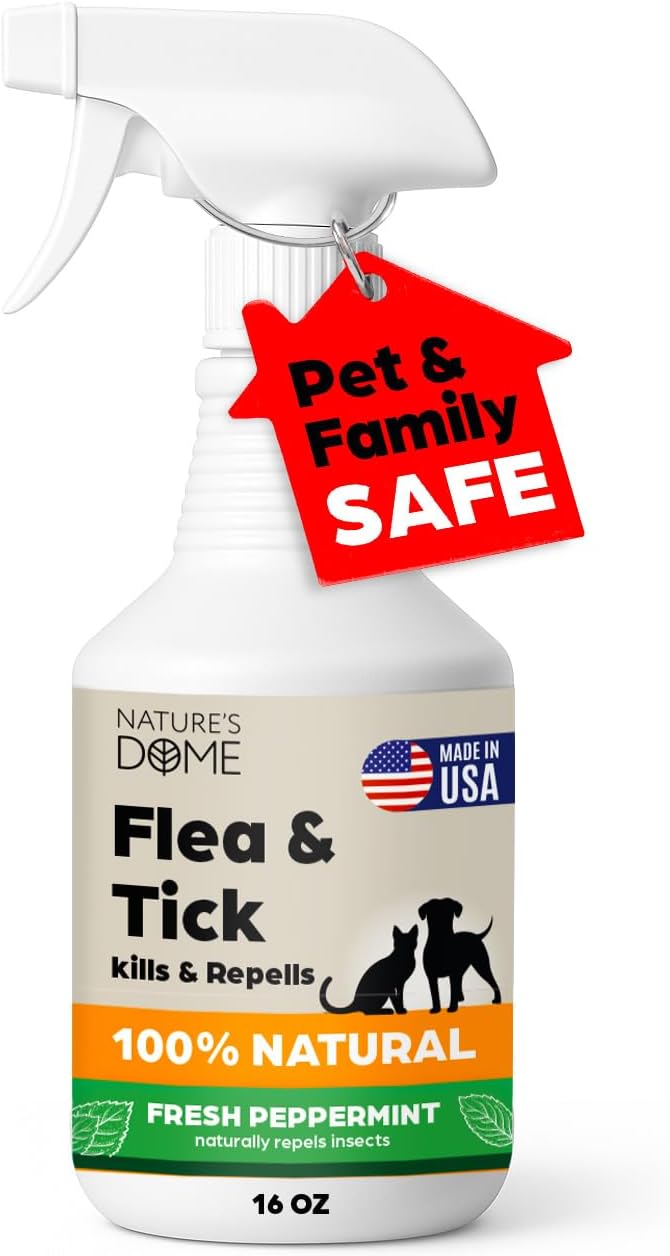
Source: walmart.com
Peppermint oil
Often marketed as a natural insect deterrent, but reliable flea protection should not be assumed.
Cedarwood oil
Found in some natural pest products. Check the exact formulation, approved use, and animal safety directions.
Rosemary oil
Sometimes included in plant-based insect products, but it is not a substitute for a proven flea-control program.
Lemongrass oil
May have insect-repelling properties in some settings, but household flea protection is not guaranteed.
Are Natural Flea Sprays Safe for Pets?
Not automatically. Essential oils can cause irritation or poisoning if pets lick, inhale, or absorb unsuitable formulations. Cats can be particularly sensitive to certain concentrated oils because they process some compounds differently from humans.
A natural product should still be treated as a pesticide when its purpose is to kill or repel pests. Read the complete label and confirm that it is specifically approved for the animal or surface you intend to treat.
Avoid homemade mixtures that combine essential oils with alcohol, vinegar, or other ingredients. These mixtures may cause skin irritation, and their flea-control effects are not established.
Do not apply pure essential oils
Concentrated oils are not the same as tested, formulated pet products.
Check animal restrictions
A product suitable for a home surface may not be suitable for direct contact with a pet.
Ask a veterinarian
Get advice before using plant-based flea products on cats, dogs, kittens, or puppies.
How to Stop Flea Bites When You Go Outside
Protecting your skin and clothing can reduce exposure, but personal spray is only one part of flea prevention. Fleas often jump from nearby animals, bedding, grass, and other infested surfaces. Avoiding those sources is just as important.
In the United States, flea bites commonly affect the ankles and lower legs. Wearing long socks, closed shoes, and long pants can reduce the amount of exposed skin. This simple change can help when walking through areas where fleas may be present.
If you are visiting a home with a known flea problem, avoid sitting on infested carpets or upholstered furniture. Keep your clothing and bags away from areas where animals sleep.
Source: amazon.co.uk
Wear long pants
Cover your lower legs, where flea bites commonly occur.
Wear long socks
Tuck pant legs into socks when walking through flea-prone areas.
Choose closed shoes
Avoid exposing bare feet and ankles in areas with known flea activity.
Use a suitable personal repellent
Choose an EPA-registered product with appropriate flea protection claims and follow its label.
Avoid infested resting areas
Do not sit or lie on surfaces used by flea-infested animals.
What to Do After Possible Flea Exposure
After returning indoors, inspect your clothing and skin. Remove clothing that may have contacted infested surfaces and wash it according to its care instructions. Showering can help remove insects that have not attached to a host.
If you have pets, check their fur with a flea comb. Pay attention to the neck, belly, and base of the tail. Small dark specks that turn reddish-brown when wet may be flea dirt, which consists of digested blood.
Vacuum areas where you suspect fleas were carried indoors. If you find repeated bites or live fleas, investigate the source rather than depending on body spray alone.
Inspect your clothing
Look for fleas before placing outdoor clothing on beds or upholstered furniture.
Check pets
Use a flea comb and look for adult fleas or flea dirt.
Clean exposed areas
Wash suitable fabrics and vacuum the areas where fleas may have entered.
Common Mistakes When Choosing Flea Repellent
Many flea problems continue because people use a product for the wrong purpose. A mosquito spray may not repel fleas, a carpet treatment may not be safe for skin, and a pet spray may not be suitable for every animal.
The easiest way to avoid these problems is to match the product to the target. Read the label before buying, applying, or combining treatments. If the instructions do not clearly support your intended use, choose another product or ask a qualified professional.
Source: business.walmart.com
Assuming all bug sprays repel fleas
Most general insect repellents do not work against fleas. Check the specific product claims.
Using household spray on skin
Carpet and room treatments may contain ingredients that are unsafe for direct skin contact.
Applying dog products to cats
Some dog flea products contain ingredients that can seriously poison cats.
Relying only on natural oils
Plant-based ingredients do not guarantee effective flea protection.
Ignoring the pet infestation
Fleas can continue breeding on untreated animals even after you spray the home.
Applying more than the label allows
Extra pesticide does not guarantee better protection and may increase exposure risks.
What If Fleas Keep Biting After You Spray?
First, check whether you used a product intended for fleas. If you used a general mosquito repellent, it may not have provided the protection you expected. Switch to an appropriate product only after checking its approved use.
Next, inspect pets and their resting areas. Fleas may continue emerging from pupae in carpets or furniture after an initial household treatment. These protected stages can survive many treatments and produce new adult fleas later.
Continue vacuuming and washing suitable bedding. Make sure all pets in the household receive appropriate flea control at the same time. If the problem continues despite these steps, contact a veterinarian or licensed pest control professional.
Recheck the product label
Confirm that the product is intended for fleas and the surface or body area where you applied it.
Inspect every pet
A single untreated animal can keep the household flea problem active.
Repeat cleaning
Vacuum carpets and wash pet bedding according to a regular cleaning plan.
Seek professional help
Arrange an inspection if fleas continue to appear after appropriate treatment.
Frequently Asked Questions
Q
Does regular bug spray keep fleas away?
Not always. Many regular insect sprays are designed for mosquitoes, ticks, or other insects rather than fleas. The EPA warns that most general insect repellents do not work against fleas. Check the product label for flea-specific protection before relying on it.
Q
Does DEET repel fleas?
DEET is an established personal insect repellent ingredient, and the CDC includes DEET-containing EPA-registered repellents in its flea-bite prevention guidance. However, not every DEET product is labeled or demonstrated to repel fleas. Choose a suitable registered product and check its listed pests.
Q
Does peppermint spray keep fleas away?
Peppermint spray is marketed as a natural flea deterrent, but strong scientific evidence for dependable flea protection is limited. Concentrated peppermint oil may also irritate people and harm pets if improperly used. Do not use it as a replacement for an appropriate flea-control treatment.
Q
Can I spray bug repellent on my clothes to stop fleas?
Only if the product label allows clothing application. Some personal repellents are intended for exposed skin, while others can be used on clothing. Permethrin clothing treatments are a separate option, but they must not be applied directly to skin. Always follow the specific product directions.
Q
What is the best spray for fleas in carpets?
Choose a household flea spray labeled for carpet treatment. Products containing an adult flea insecticide and an insect growth regulator may help address different life stages. Follow the label for preparation, application, drying time, and re-entry. Vacuum regularly to help remove newly emerged fleas.
Q
Can flea spray kill fleas on humans?
A household flea insecticide should never be used on human skin. Personal insect repellents are made for specific application areas and may help prevent bites when their labels support flea protection. If fleas are biting you, identify and treat the source of the infestation.
Q
Is flea spray safe around children?
Safety depends on the product, active ingredients, application method, and exposure. Keep children away while household pesticides are being applied and until the label permits re-entry. Store all sprays securely and never let children handle insecticide containers. For personal repellents, follow the age restrictions and application instructions.
Q
How do I stop fleas from biting my ankles?
Wear long pants, long socks, and closed shoes when entering areas where fleas may be present. Use an appropriate EPA-registered personal repellent if its label supports flea protection. Keep pets free of fleas and avoid sitting on infested carpets or furniture.
Q
Can fleas live in a house without pets?
Yes. Fleas may enter through visiting animals, rodents, wildlife, or previously infested belongings. Flea pupae can remain protected in their cocoons and emerge later when they detect signs of a nearby host. Vacuuming, cleaning, and investigating possible animal entry points can help.
Q
How long does flea spray last?
There is no single duration for all flea sprays. Personal repellents, clothing treatments, household insecticides, and pet medications have different protection periods. Check the label for the specific reapplication interval or residual activity. Never apply a product more often than directed.
✦ Wrapping Up
Conclusion
The right bug spray for fleas depends on whether you want to protect your skin, clothing, pets, home, or yard. EPA-registered personal repellents containing ingredients such as DEET, picaridin, IR3535, oil of lemon eucalyptus, PMD, or 2-undecanone appear in CDC guidance for preventing flea bites. However, the exact product label matters because most ordinary insect repellents do not work against fleas.
For outdoor protection, cover your legs and consider properly treated clothing. For household flea problems, use a product designed for the affected surface, clean pet bedding, and vacuum regularly. Treat pets with veterinary-approved products rather than relying on human bug spray or household insecticides.
The most effective long-term approach combines personal protection with control at the source. Removing fleas from pets and their surroundings reduces the chance of repeated bites. If an infestation remains difficult to control, professional pest management and veterinary advice can help identify the cause.
💡 Key Takeaway
Before buying a flea repellent, identify where you need protection. Check the EPA registration number, the listed pests, and the approved application area. Use a suitable personal repellent for your skin, permethrin only as directed for clothing, veterinary-approved products for pets, and labeled household treatments for indoor infestations.