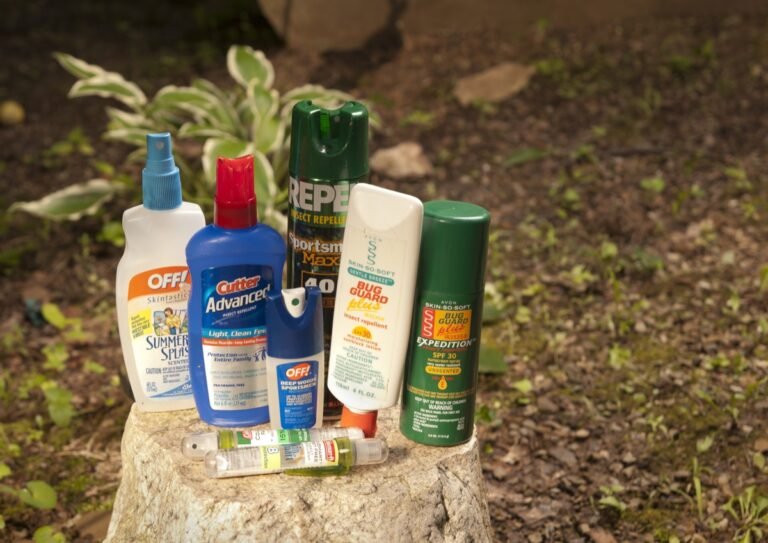
DEET-free bug spray is an insect repellent made without DEET. It may contain ingredients such as picaridin, IR3535, oil of lemon eucalyptus, or plant-based oils that help keep mosquitoes and other biting insects away.
In the United States, bug spray is a common part of outdoor life. Families use it during backyard cookouts, camping trips, fishing, gardening, hiking, and summer evenings on the porch. However, not everyone wants to use a repellent that contains DEET. Some people prefer other active ingredients because of their smell, feel, or personal product preferences.
DEET-free bug spray offers another way to reduce insect bites. These products do not all work in the same way. Some contain ingredients with established insect-repellent performance, while others rely on essential oils or botanical blends that may offer shorter or less predictable protection.
The most useful way to choose a product is to look beyond the words natural and DEET-free. Check its active ingredients, EPA registration status, listed target insects, and expected protection time. A product without DEET can still provide useful protection, but the exact formula and label instructions matter.
The U.S. Environmental Protection Agency recognizes several active ingredients for use in registered skin-applied insect repellents. These include picaridin, IR3535, oil of lemon eucalyptus, para-menthane-diol, and 2-undecanone. Therefore, avoiding DEET does not mean giving up all well-established repellent options.
Source: amazon.ae
What Does DEET-Free Bug Spray Mean?
DEET-free bug spray is a product designed to repel insects without using DEET as an active ingredient. DEET stands for N,N-diethyl-meta-toluamide. It is a widely used insect repellent found in many products sold across the United States.
Instead of DEET, these sprays may use synthetic ingredients, plant-derived compounds, essential oils, or a blend of different substances. Their main purpose is to make people less attractive or accessible to biting insects.
The term DEET-free describes what a product does not contain. It does not tell you how well the spray works, how long it lasts, or whether it is suitable for children. Two products with the same DEET-free claim can have very different formulas and levels of protection.
For example, a registered repellent containing picaridin and a homemade spray containing a small amount of citronella are both DEET-free. However, their evidence, expected performance, and protection periods may differ greatly.
Source: aerohealthcare.com
No DEET
The formula does not use DEET as its insect-repelling active ingredient.
Alternative ingredients
The product may use picaridin, IR3535, oil of lemon eucalyptus, PMD, or other repellent substances.
Different protection levels
Not every DEET-free formula provides the same level or duration of protection.
Is DEET-Free the Same as Chemical-Free?
No. DEET-free does not mean chemical-free. Everything made from matter, including water, plant oils, and essential oils, contains chemicals. A DEET-free spray simply uses ingredients other than DEET.
Some alternatives are synthetic. Picaridin and IR3535 are examples. Others are derived from plants or are based on plant-derived compounds. Both types can be useful, depending on their formulation and testing.
The better question is whether the product contains a suitable active ingredient and has clear directions for safe use. The source of an ingredient alone cannot establish how effective or safe a finished spray will be.
Synthetic does not mean unsafe
A synthetic ingredient can be an effective repellent when it is properly formulated and used according to its label.
Natural does not mean harmless
Plant oils can cause irritation or allergic reactions, and some natural formulas may offer limited protection.
What Ingredients Are Used in DEET-Free Bug Spray?
DEET-free repellents use several different active ingredients. Some have a strong evidence base and appear in EPA-registered products. Others are commonly found in botanical sprays but may have less reliable or shorter-lasting performance.
Reading the active ingredient section is more useful than relying on the front of the bottle. It tells you what is intended to repel insects and helps you compare products with similar purposes.
The following ingredients are especially useful to understand when shopping for a DEET-free repellent in the United States.
Source: naturalcitizen.com
Picaridin
Picaridin is a synthetic insect repellent that works against mosquitoes and ticks. It is an established alternative to DEET and is available in different concentrations. It is often selected by people who prefer a repellent with little noticeable odor and a less greasy feel.
IR3535
IR3535 is a synthetic repellent related to a naturally occurring amino acid. It is used in products designed to repel mosquitoes and other insects. Its protection period depends on the concentration and finished formula.
Oil of lemon eucalyptus
Oil of lemon eucalyptus, commonly called OLE, is a plant-derived repellent ingredient. Properly formulated EPA-registered OLE products can help protect against mosquitoes. It should not be confused with ordinary lemon eucalyptus essential oil.
Para-menthane-diol
Para-menthane-diol, or PMD, is a repellent compound associated with oil of lemon eucalyptus. It is used in some DEET-free mosquito repellents and has established repellent uses.
2-undecanone
2-undecanone is a plant-derived repellent ingredient used in certain registered insect repellent products. It offers another option for people who want to avoid DEET.
Citronella
Citronella is a plant-derived oil found in many natural insect sprays. It can repel mosquitoes for a limited period, but protection may be shorter than that of some established alternatives.
Other essential oils
Some products use peppermint, lemongrass, cedarwood, geraniol, or other botanical ingredients. Their performance varies, and a pleasant scent does not prove that a spray offers reliable protection.
Which DEET-Free Ingredients Have Stronger Evidence?
Picaridin, IR3535, OLE, PMD, and 2-undecanone are among the alternatives recognized by the CDC for use in EPA-registered repellents. These ingredients are more useful starting points when protection from disease-carrying mosquitoes or ticks matters.
Citronella and other essential oils may have a place in some outdoor products, but their protection can be less consistent. A botanical formula should not be assumed to provide the same protection as a registered repellent with a documented label.
The exact product matters. An ingredient’s presence alone does not tell you how long the finished formula will work.
For longer outdoor activities
Compare registered products with labeled protection periods that match the time you expect to spend outdoors.
For short outdoor activities
A shorter-lasting botanical product may be suitable when its label supports the intended use and the risk of insect exposure is low.
How Does DEET-Free Bug Spray Work?
DEET-free bug spray works by changing the way insects respond to a person. Many biting insects use chemical signals, body odors, and other cues to locate people. A suitable repellent makes it harder for them to approach and bite treated skin.
Different active ingredients work through different chemical and sensory effects. The precise biological action can vary by ingredient and insect species. The practical result is that properly applied repellent helps reduce the chance of insect bites.
A repellent is not necessarily an insect killer. Most skin-applied bug sprays are designed to keep insects away rather than poison or kill them. This is why a mosquito may fly near someone wearing repellent without landing or biting.
Coverage also matters. If you leave areas of skin untreated, insects may still find those spots. A repellent cannot provide complete protection when it is applied incorrectly or when its protection period has ended.
Does DEET-Free Spray Kill Mosquitoes?
Most personal DEET-free repellents are designed to repel mosquitoes, not kill them. Their job is to reduce contact between mosquitoes and treated skin.
This differs from insecticide sprays designed to kill flying or crawling insects in the home. A skin repellent should never be treated as a substitute for a household insecticide, and household insecticide should not be applied to skin unless its label specifically permits that use.
If your goal is to reduce mosquitoes around a yard, use suitable outdoor mosquito-control measures instead of expecting a body spray to treat the entire area.
Personal protection
Apply an approved skin repellent to exposed skin as directed.
Yard control
Remove standing water, maintain outdoor areas, and use appropriate labeled mosquito-control products when needed.
Is DEET-Free Bug Spray Effective?
Yes. Some DEET-free bug sprays can provide effective protection against mosquitoes and other biting insects. However, effectiveness depends on the active ingredient, its concentration, the formulation, the target insect, and how the product is used.
The CDC recommends EPA-registered repellents containing DEET or suitable alternatives such as picaridin, IR3535, OLE, PMD, and 2-undecanone. These products have been evaluated for their intended repellent use.
A major mistake is assuming that every DEET-free product offers equal protection. A registered picaridin spray and an unregistered essential-oil mixture should not be treated as interchangeable simply because neither contains DEET.
Protection also changes with outdoor conditions. Sweat, water exposure, rubbing, and the passage of time can affect the amount of repellent remaining on the skin. Always use the product label to determine when another application is allowed.
Source: storage.googleapis.com
Active ingredient
Choose an ingredient with documented repellent use for the insects you want to avoid.
Concentration
The concentration can affect protection time, but higher percentages do not automatically make every formula better.
Application
Cover the intended exposed skin evenly and follow the label.
Outdoor conditions
Water, sweat, and rubbing can affect protection. Follow the label rather than relying on a fixed universal time.
How Long Does DEET-Free Bug Spray Last?
There is no single protection time for all DEET-free bug sprays. Some products may protect for a relatively short period, while others are formulated to provide several hours of protection.
For example, product information from the American Academy of Pediatrics describes certain picaridin formulations at 5% as providing approximately 3 to 4 hours of protection, while some 20% formulations may provide approximately 8 to 12 hours. These figures are examples, not guarantees for every product or condition.
OLE products also vary by concentration and formulation. Some lower-concentration products offer shorter protection, while certain higher-concentration products can provide longer protection.
The best source for a specific product’s protection period is its label. Do not assume that a spray will last all day simply because it contains a recognized active ingredient.
Check the stated protection period
Look for the manufacturer’s labeled mosquito or tick protection information.
Follow reapplication instructions
Apply again only when the label permits it. More frequent application is not automatically better.
Consider the activity
A short walk and an extended camping trip may require different protection periods.
DEET-Free Bug Spray vs. DEET Bug Spray
The main difference between DEET-free and DEET-based bug spray is the active ingredient. Both types can help prevent insect bites when they are properly formulated and used according to their labels.
DEET has a long history of use and is supported by extensive evidence. However, people who prefer another ingredient have several alternatives, including picaridin and IR3535.
There is no universal winner for every person or outdoor activity. The right choice depends on the insects present, expected exposure time, personal preferences, age restrictions, and the protection stated on the product label.
DEET-based spray
Contains DEET as its active ingredient. It is a well-established option for mosquito and tick protection.
Picaridin spray
Avoids DEET and can offer effective protection against mosquitoes and ticks. Some people prefer its relatively mild odor and feel.
IR3535 spray
Uses a different synthetic active ingredient and is another established repellent option.
Botanical spray
May use plant oils or botanical compounds. Protection varies considerably between products.
Does DEET-Free Mean Safer Than DEET?
Not automatically. Safety depends on the active ingredient, concentration, formulation, exposure, and proper use. A DEET-free label does not prove that a product has fewer health risks.
DEET is an EPA-reviewed active ingredient with a long record of use. EPA-registered alternatives are also considered safe and effective when used according to their labels.
Some essential oils can irritate skin or cause allergic reactions. Certain botanical products also have limited evidence for long-lasting protection. Therefore, choosing a product based only on the word natural can lead to a poor decision.
For most consumers, the sensible approach is to select a suitable registered product, follow its directions, and avoid unnecessary exposure.
Compare actual ingredients
Read the active ingredient and concentration rather than relying on marketing claims.
Check age restrictions
Some ingredients have specific restrictions for young children.
Watch for skin reactions
Stop using a product if it causes irritation or an allergic response.
How to Choose the Right DEET-Free Bug Spray
Choose a DEET-free bug spray by matching its active ingredient and labeled protection to your outdoor activity. A product for a short backyard visit may not be the best choice for a long hike through areas with mosquitoes and ticks.
Start by identifying the insects you want to repel. Mosquitoes, ticks, biting flies, and other insects do not always respond equally to the same formula. A product that lists mosquitoes on its label should not automatically be assumed to provide tick protection.
Next, check the EPA registration information. For many personal insect repellents, an EPA registration number is a useful sign that the product has submitted information about its intended effectiveness and has an approved label.
Finally, consider who will use the product. Children, adults with sensitive skin, and people who spend many hours outdoors may need different products or application methods.
Check the EPA Registration Number
The EPA registration number is one of the most useful details to check on an insect repellent sold in the United States. It helps identify a pesticide product registered with the agency.
The CDC advises consumers to choose EPA-registered insect repellents. Its guidance explains that these products have been evaluated for their intended use and that the registration number can be found on the product label.
Some products may qualify for a minimum-risk pesticide exemption under federal rules. These products are not necessarily EPA-registered, so the absence of a registration number should not be interpreted as proof of effectiveness or as proof that a product is dangerous. However, their performance may not have been evaluated through the same registration process.
Look at the label
Find the active ingredient, concentration, directions, precautions, and any EPA registration number.
Check the target insect
Make sure the label lists the mosquitoes, ticks, or other insects relevant to your activity.
Avoid unsupported claims
Words such as natural, clean, non-toxic, and chemical-free are not substitutes for product-specific effectiveness information.
Match the Formula to Your Outdoor Activity
For a short period outside, you may prefer a simple spray that fits the expected exposure. For longer activities, look for a registered product with a protection period that covers the time you plan to spend outdoors.
Camping, hiking, fishing, and travel can expose people to mosquitoes and ticks for extended periods. In these situations, a product with clearly documented protection is generally a more practical choice than a formula with uncertain performance.
If you spend time in areas where mosquito-borne illnesses occur, do not rely on an untested homemade mixture as your only protection.
Backyard use
Choose a product labeled for the insects commonly found around your home.
Camping and hiking
Consider a registered product with appropriate mosquito and tick protection.
Travel
Check local insect risks and public-health recommendations before choosing a repellent.
How to Apply DEET-Free Bug Spray Correctly
Correct application is essential for getting the protection listed on a bug spray label. Even a suitable repellent may not work as intended if it is applied unevenly, used on the wrong surfaces, or reapplied incorrectly.
Before using a new product, read its full label. Different sprays may have different instructions for skin, clothing, age limits, and reapplication.
Step-by-Step Application
Step 1: Read the label. Confirm that the product is intended for the insects you want to repel and is suitable for your age group.
Step 2: Apply the product as directed. Use an even layer on exposed skin when the label permits skin application. Do not spray underneath clothing.
Step 3: Protect your face carefully. Never spray directly into your eyes or mouth. Spray onto your hands first, then apply carefully to your face while avoiding the eyes and lips.
Step 4: Allow the product to dry as directed. Avoid unnecessary contact with treated skin or surfaces.
Step 5: Reapply only as instructed. Do not assume that sweating or a strong mosquito presence gives permission to exceed the label’s application limits.
Step 6: Wash treated skin with soap and water after returning indoors when you no longer need the protection. Follow the label for cleaning treated clothing and equipment.
Apply outdoors
Use spray products in an open area to reduce the chance of breathing in the mist.
Avoid damaged skin
Do not apply repellent to cuts, wounds, or irritated skin unless the product label specifically allows it.
Keep it away from children
Store the bottle securely and supervise children during application.
Can You Use Bug Spray With Sunscreen?
Yes. You can use separate sunscreen and insect repellent products during the same outdoor activity. The CDC recommends applying sunscreen first and insect repellent second.
This order helps you follow the separate instructions for each product. Sunscreen often needs more frequent application than insect repellent, so a combined sunscreen-and-repellent product may make it harder to follow both schedules correctly.
Use each product according to its own label. Do not mix two products together in your hands or in a container.
First
Apply sunscreen according to its directions.
Second
Apply the insect repellent as directed on its label.
Is DEET-Free Bug Spray Safe for Children?
Some DEET-free bug sprays can be used on children, but the correct choice depends on the active ingredient and the product label. A product marketed as natural or family-friendly is not automatically suitable for infants or young children.
One important restriction involves oil of lemon eucalyptus and PMD. The CDC advises against using products containing these ingredients on children younger than 3 years.
Other products have their own age directions. Always check the specific bottle before applying any repellent to a child. If the label does not clearly address your child’s age, ask a healthcare professional for guidance.
For babies younger than 2 months, the American Academy of Pediatrics advises against using insect repellents. Clothing that covers the skin and mosquito netting over strollers or carriers can help protect young infants.
Source: smallbatchgarden.com
How to Protect Children During Application
An adult should handle the application rather than allowing a young child to spray the product. This helps prevent accidental contact with the eyes, mouth, or hands.
For a child’s face, spray the repellent onto an adult’s hands first and apply it carefully. Avoid the eyes, mouth, and irritated skin. Do not apply repellent to a child’s hands because children may put their hands in their mouths or rub their eyes.
After outdoor activities, wash treated skin with soap and water when protection is no longer needed. Keep the container out of reach and follow the product’s storage instructions.
Use suitable clothing
Choose long sleeves and long pants when practical.
Use mosquito netting
Cover strollers and baby carriers with suitable mosquito netting.
Follow age limits
Never assume that an adult product is appropriate for a young child.
Can You Make Homemade DEET-Free Bug Spray?
People sometimes make homemade bug sprays with essential oils, water, and other household ingredients. These mixtures may have a noticeable scent, but that does not establish how well they prevent insect bites.
A homemade formula may also separate, change over time, or contain ingredients that irritate the skin. Without suitable testing, you cannot reliably predict its protection period or effectiveness against different insects.
The main concern is relying on an untested mixture in an area where mosquitoes or ticks may carry disease. A pleasant-smelling spray is not necessarily an effective substitute for a registered repellent.
Why Essential Oil Recipes Can Be Unreliable
Essential oils are concentrated plant substances. Their composition can vary, and some may cause skin irritation or allergic reactions. Certain oils may also lose their scent and repellent effect relatively quickly after application.
Adding more essential oil does not automatically improve a homemade spray. Higher concentrations can increase the chance of skin irritation, while the final mixture may still lack reliable protection data.
If you prefer botanical ingredients, look for a finished product with a clearly identified active ingredient and appropriate label information rather than assuming a homemade recipe provides equal protection.
Uncertain concentration
Homemade mixtures may not provide a consistent amount of active repellent.
Possible irritation
Some essential oils can irritate sensitive skin or trigger an allergic reaction.
Unknown protection time
Without product-specific testing, the time a mixture repels insects is not established.
Common Mistakes to Avoid With DEET-Free Bug Spray
Many problems with insect repellent come from choosing a product based on its advertising rather than its label. A few simple checks can help you avoid weak protection, unnecessary exposure, and misuse.
The most important rule is to treat the product label as the main guide. Never assume that every DEET-free spray has the same instructions or safety limits.
Assuming natural means safe
Plant-based ingredients can still irritate skin or cause allergic reactions. Check the formula and use instructions.
Ignoring the active ingredient
A DEET-free claim does not identify what actually provides the repellent effect. Read the ingredient panel.
Expecting all-day protection
Protection periods vary. Check the label and follow its reapplication schedule.
Using adult products on young children
Some active ingredients have age restrictions. Verify the label before applying a product to a child.
Applying too much spray
More product does not necessarily mean better protection. Use only the amount and frequency allowed by the label.
Spraying near the eyes and mouth
Avoid sensitive areas and apply facial repellent carefully with your hands.
Ignoring tick protection
A product labeled for mosquitoes may not offer the same protection against ticks. Check the listed insects.
Relying only on bug spray
Use clothing, mosquito netting, and measures to reduce standing water as additional protection.
DEET-Free Bug Spray Comparison Guide
The following comparison summarizes common ingredients found in DEET-free repellents. It is intended to help readers understand the main differences, not to rank products or promise a specific protection time.
Actual performance depends on the finished product, its concentration, the insect involved, and the directions on the label.
Picaridin
Type: Synthetic repellent. Main use: Mosquito and tick protection. Key consideration: Established alternative to DEET with product-specific protection periods.
IR3535
Type: Synthetic repellent. Main use: Protection against certain biting insects. Key consideration: Check the finished product’s target insects and labeled duration.
Oil of lemon eucalyptus
Type: Plant-derived repellent. Main use: Mosquito protection. Key consideration: Avoid use on children younger than 3 years.
PMD
Type: Repellent compound associated with lemon eucalyptus. Main use: Mosquito protection. Key consideration: Not suitable for children younger than 3 years.
2-undecanone
Type: Plant-derived repellent ingredient. Main use: Repellent protection in certain registered products. Key consideration: Check the exact label for target insects.
Citronella
Type: Plant oil. Main use: Short-term mosquito repellency in some products. Key consideration: Protection may be limited and needs product-specific verification.
Other essential oils
Type: Botanical ingredients. Main use: Found in natural repellent blends. Key consideration: Performance and skin tolerance vary.
What Is the Best DEET-Free Ingredient?
There is no single best ingredient for every situation. Picaridin is a practical alternative for people who want established mosquito and tick protection without DEET. IR3535 and properly formulated OLE products are other recognized options.
For longer outdoor activities, compare the actual product labels rather than selecting an ingredient based on reputation alone. Choose a formula that covers the insects you expect to encounter and provides an appropriate protection period.
If you are choosing a product for a young child, pay close attention to age restrictions. For children younger than 3 years, avoid OLE and PMD products.
For everyday use
Consider a registered picaridin or IR3535 product with suitable label directions.
For botanical preferences
Look for a properly formulated and registered OLE product when it is suitable for the intended user.
For high insect exposure
Prioritize documented protection against the specific mosquitoes or ticks in your area.
Additional Ways to Prevent Insect Bites
Bug spray is only one part of insect protection. Clothing, mosquito netting, and changes around your home can also reduce contact with biting insects.
These steps are especially useful during outdoor activities when mosquitoes are active or when you are spending time in areas with ticks.
Wear protective clothing
Wear long-sleeved shirts, long pants, and closed shoes when practical.
Use treated clothing and gear
Permethrin-treated clothing and gear can help protect against ticks and mosquitoes. Permethrin products intended for clothing must not be applied directly to skin.
Remove standing water
Empty containers, buckets, plant saucers, and other places where water collects around your home.
Use window screens
Repair damaged screens and use suitable barriers to keep mosquitoes outside.
Use mosquito netting
Use properly fitted netting around beds, strollers, or other areas where people need protection.
Check for ticks
After outdoor activities in tick-prone areas, check your clothing and body carefully.
Frequently Asked Questions
Q
What is DEET-free bug spray made of?
DEET-free bug spray can contain picaridin, IR3535, oil of lemon eucalyptus, PMD, 2-undecanone, citronella, or other botanical ingredients. The exact formula depends on the product. Some ingredients are synthetic, while others are plant-derived.
Q
Does DEET-free bug spray really work?
Yes. Certain DEET-free products provide effective insect protection. Picaridin, IR3535, OLE, PMD, and 2-undecanone are recognized active ingredients in EPA-registered repellents. However, not every natural or DEET-free spray has the same level of evidence or protection time.
Q
Is DEET-free bug spray better than regular bug spray?
Not necessarily. DEET-free products can work well, but DEET is also an established repellent. The better option depends on your needs, preferred ingredients, target insects, and expected time outdoors. Compare product labels instead of assuming one category is always safer or more effective.
Q
Can I use DEET-free bug spray on babies?
It depends on the active ingredient and the product label. The American Academy of Pediatrics advises against insect repellents for babies younger than 2 months. The CDC advises against using OLE and PMD products on children younger than 3 years. Use clothing and suitable mosquito netting for young infants.
Q
Is picaridin a DEET-free ingredient?
Yes. Picaridin is a separate active ingredient and does not contain DEET. It is used in EPA-registered insect repellents and can provide protection against mosquitoes and ticks. Its protection time depends on the concentration and specific formulation.
Q
Is oil of lemon eucalyptus the same as lemon eucalyptus essential oil?
No. The repellent ingredient called oil of lemon eucalyptus is a formulated product ingredient associated with PMD. Ordinary lemon eucalyptus essential oil is not interchangeable with EPA-registered OLE repellent. The CDC does not recommend pure lemon eucalyptus essential oil as a substitute for a tested insect repellent.
Q
Can DEET-free bug spray prevent mosquito-borne diseases?
An effective insect repellent can reduce mosquito bites and therefore help reduce exposure to mosquito-borne diseases. However, no repellent guarantees complete protection. Use an EPA-registered product, follow its label, and combine it with clothing and other mosquito-control measures.
Q
Can DEET-free bug spray cause skin irritation?
Yes. Some active ingredients, essential oils, and other formula components can cause irritation or allergic reactions. Stop using a product if you develop a rash, burning, or other unusual symptoms. Wash the affected skin and seek medical advice if the reaction is severe or does not improve.
Q
Does DEET-free bug spray expire?
Some insect repellents have expiration dates or storage instructions that affect their expected performance. Check the container for an expiration date and follow the manufacturer’s storage guidance. Avoid using a product that has changed significantly in appearance, smell, or consistency.
Q
Can I use DEET-free bug spray every day?
Some registered repellents can be used whenever needed, provided you follow the label’s directions and precautions. Do not exceed the allowed application frequency. Wash treated skin when protection is no longer necessary, and choose a product suitable for your age group and intended use.
✦ Wrapping Up
Conclusion
DEET-free bug spray is an insect repellent that does not use DEET as its active ingredient. It may contain picaridin, IR3535, oil of lemon eucalyptus, PMD, 2-undecanone, citronella, or other ingredients designed to keep biting insects away.
Some DEET-free products provide well-established protection against mosquitoes and ticks. Others, especially certain essential-oil blends, may offer shorter or less predictable protection. That is why the active ingredient, concentration, EPA registration information, and product label matter more than the words natural or DEET-free.
For everyday outdoor protection, choose a product that matches your activity and the insects in your area. Follow the application instructions, check age restrictions, and use clothing and other protective measures when needed. A well-chosen DEET-free repellent can be a useful part of a practical insect-bite prevention plan.
💡 Key Takeaway
Before buying DEET-free bug spray, check its active ingredient, EPA registration information, target insects, protection period, and age restrictions. For established DEET-free protection, compare properly labeled picaridin, IR3535, and oil of lemon eucalyptus products, and always follow the directions on the exact product you choose.
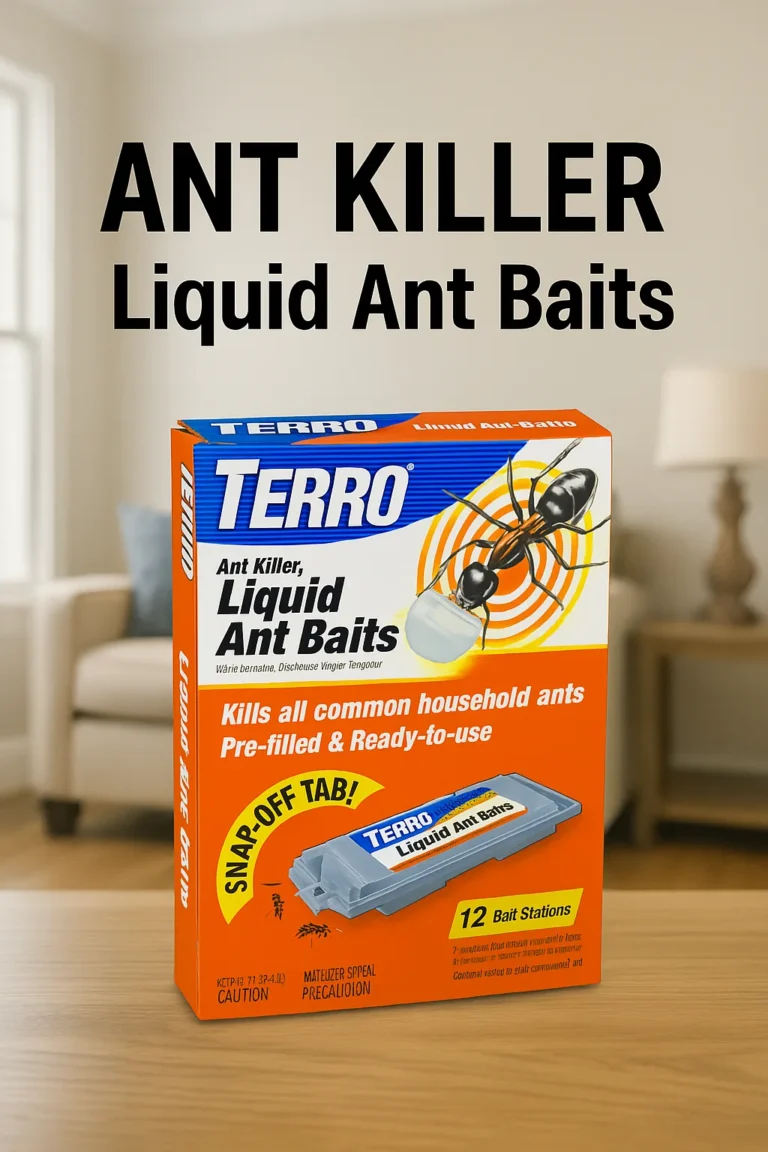
You see a black ant the size of a pencil tip crawling along your baseboard at 2 a.m. You grab the Terro from the garage shelf, set it on the counter, and wait.…
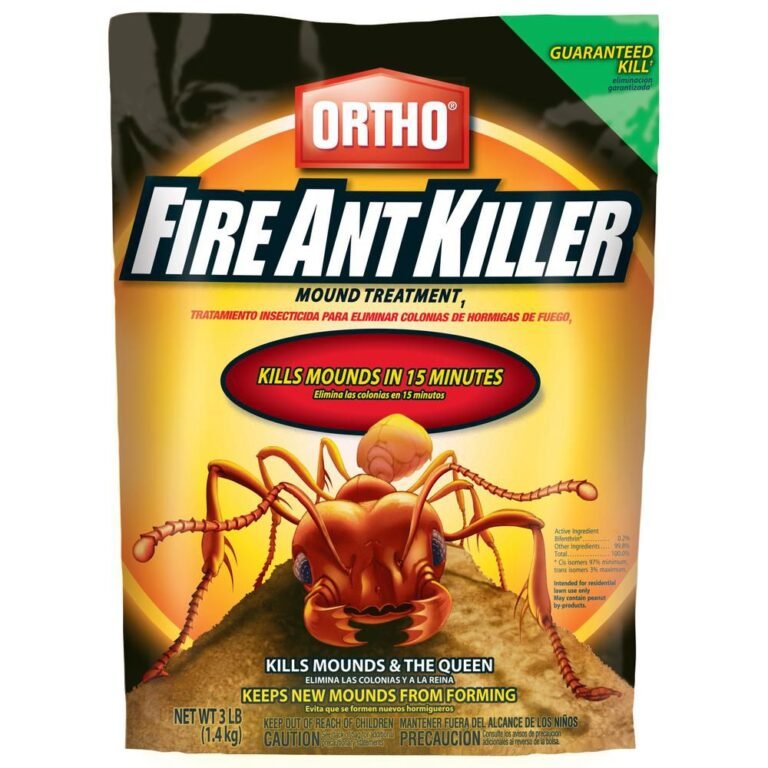
Will fire ant killer kill regular ants? Learn how fire ant baits work, which ants they affect, why results vary, and how to choose the right ant control product.